
Inflation Trends, CPI & Price Stability in India (Economic Survey 2025–26)
Global inflation has moderated significantly after the post-pandemic surge, driven by easing commodity prices, supply-side improvements, and tighter monetary policies. Advanced economies now exhibit stable inflation near target levels, while emerging economies show varied outcomes.
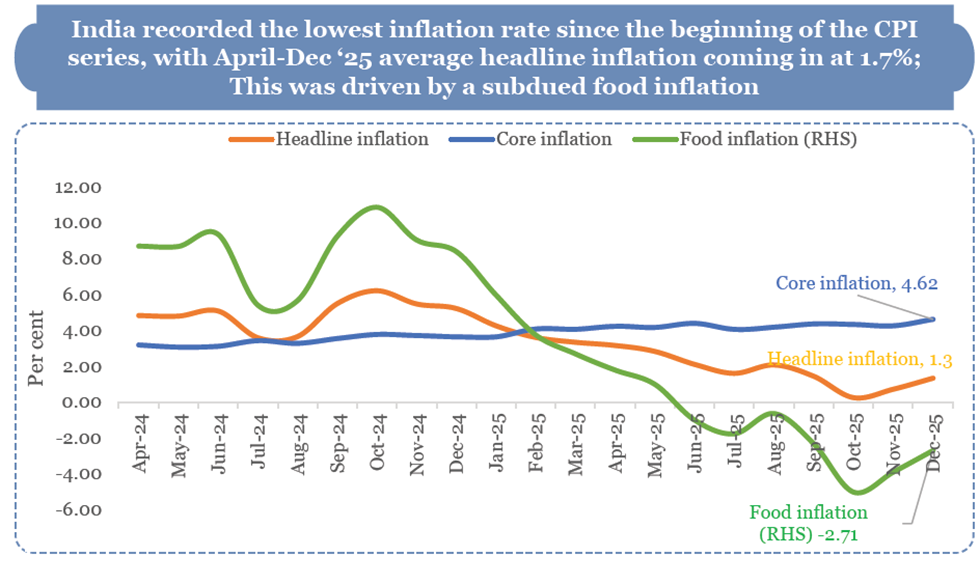
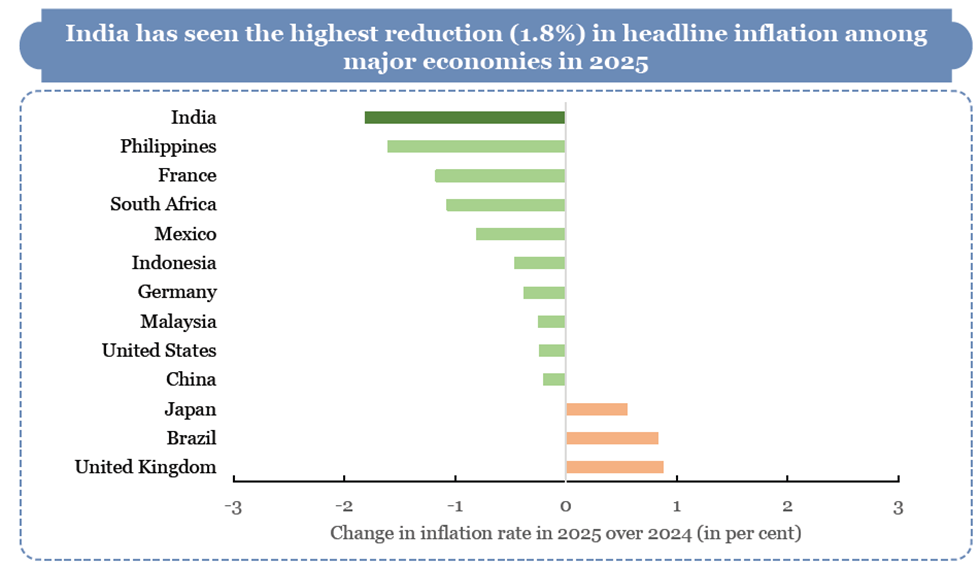
India stands out for achieving sharp disinflation alongside strong economic growth, reflecting effective macroeconomic management and credible inflation targeting. Domestically, retail inflation has declined to historic lows, primarily due to food price deflation supported by favourable agricultural conditions and proactive policy interventions.
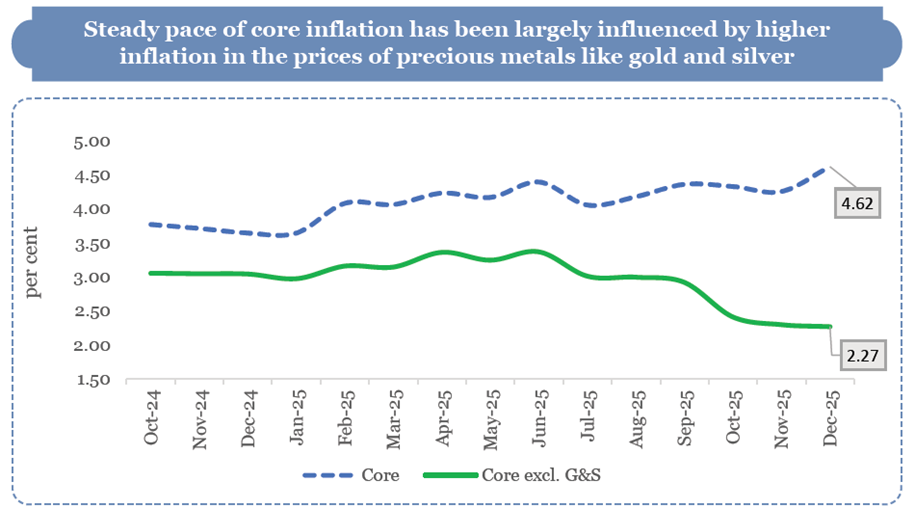
Core inflation appears sticky at first glance but is largely influenced by rising precious metal prices; underlying core pressures remain subdued. The inflation trajectory in India has been significantly shaped by base effects and supply-side factors rather than demand overheating. Structural factors such as agricultural output, trade policies, and global commodity trends play a key role in price dynamics.
Going forward, inflation is expected to rise moderately but remain within the RBI’s target range, supported by stable food prices and soft global commodity trends. Sustained inflation control will depend on maintaining supply-side efficiency, export competitiveness, and macroeconomic stability.
Key Points
1. Global Inflation Trends
- Global inflation declined from 8.7% (2022) to 4.2% (2025) due to easing commodity prices.
- Advanced economies stabilised around 2–3% inflation, while EMDEs moderated to ~5.3%.
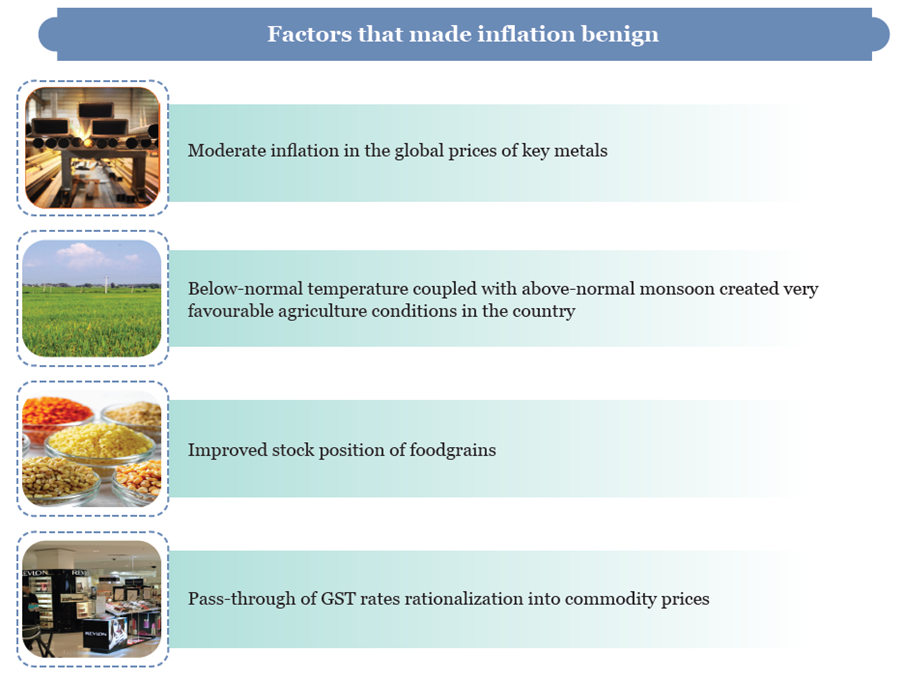
- Commodity deflation (oil, food, metals) significantly reduced input costs.
- Divergence persists across countries due to domestic factors and policy responses.
2. Monetary Policy Response Globally
- Major central banks reduced policy rates by 75–100 basis points amid easing inflation.
- RBI reduced repo rate by 125 basis points, supporting growth.
- Japan remains an outlier with rate hikes due to rising inflation.
- Monetary policy reflects balancing growth and inflation stability.
3. India’s Inflation Performance
- CPI inflation declined sharply to 1.7% (FY26 Apr–Dec) from 6.7% in FY23.
- Inflation reached historic lows, marking strongest disinflation phase.
- WPI inflation remained lower than CPI, reinforcing disinflation trend.
- Inflation decline occurred alongside strong GDP growth (~8%), indicating stability.
4. Food Inflation Dynamics
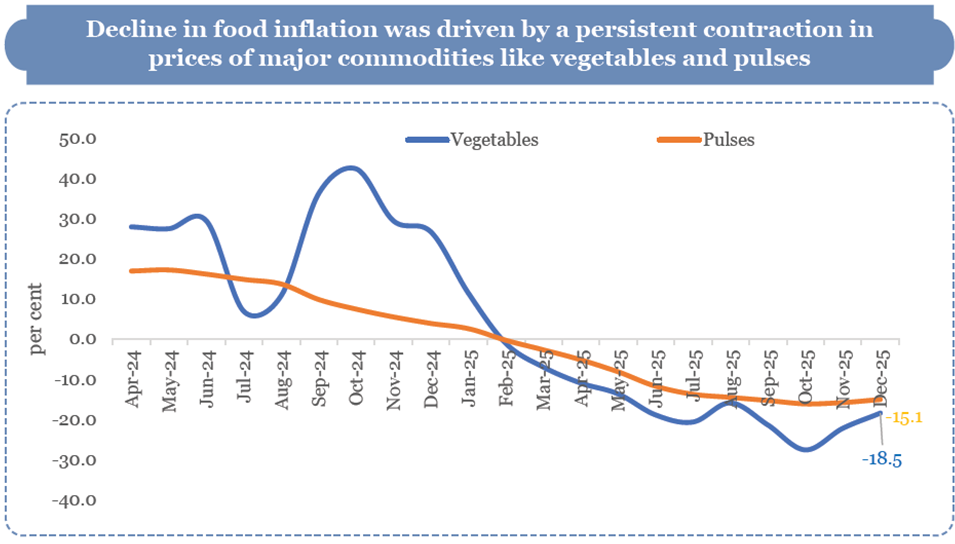
- Food inflation entered deflation since June 2025, driving overall disinflation.
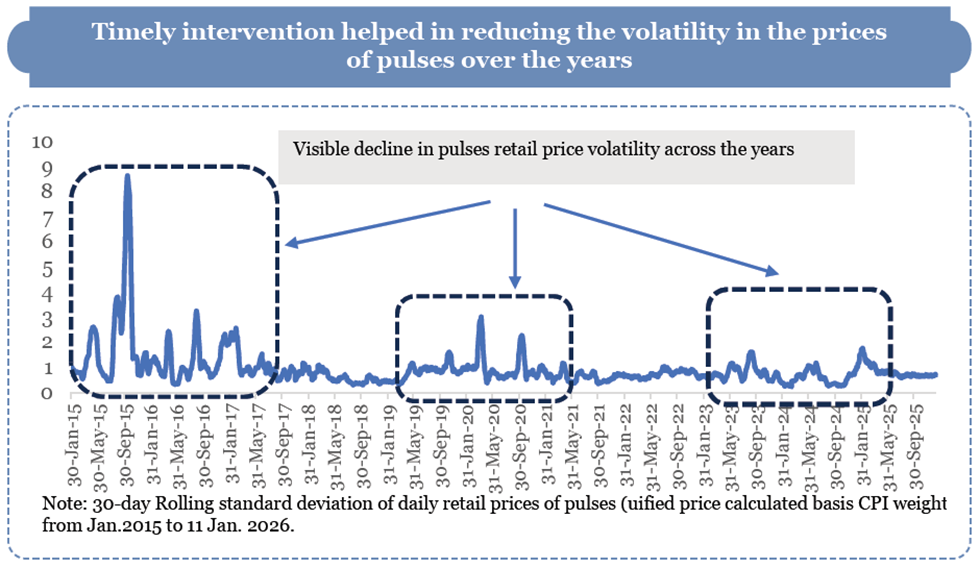
- Key contributors: vegetables, pulses, cereals, and spices.
- Government interventions (buffer stocks, trade policies) stabilised prices.
- Agricultural output and favourable monsoon conditions improved supply.
5. Core Inflation Trends
- Core inflation increased to ~4.6%, appearing sticky.
- Rise largely driven by gold and silver prices (safe-haven demand).
- Excluding precious metals, core inflation shows declining trend.
- Indicates absence of broad-based demand-driven inflation.
6. Base Effect Dominance
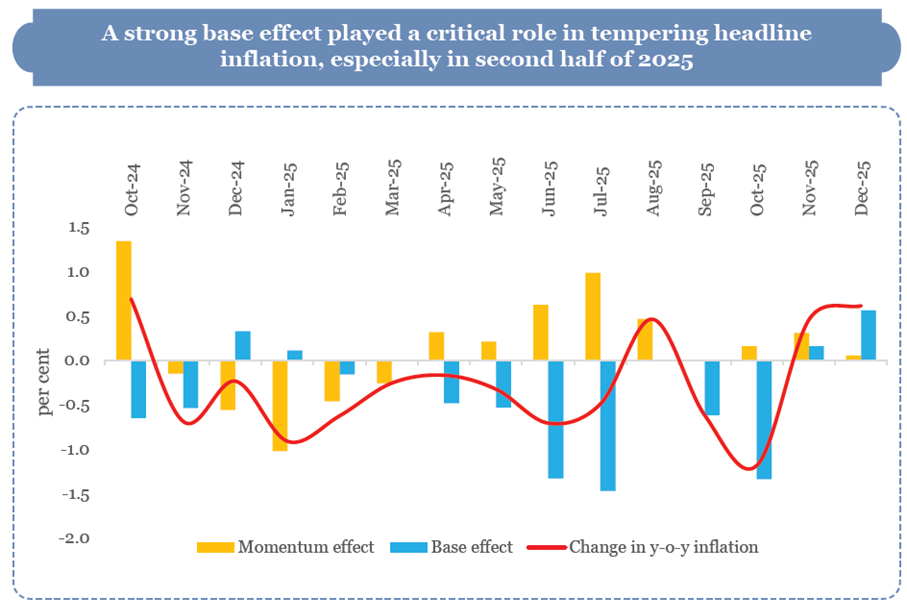
- Inflation decline mainly due to favourable base effect.
- Base effect dominated in 7 out of 9 months in FY26.
- Momentum (current price pressures) remained relatively subdued.
- Highlights importance of statistical factors in inflation trends.
7. Agricultural Contribution
- Strong agricultural output (record cereal production) supported price stability.
- Good monsoon and higher sowing improved food supply.
- Government policies ensured buffer stocks and market intervention.
- Agriculture played a central role in disinflation.
8. Components of Core Inflation
- Major components: housing, health, transport, clothing.
- Housing and health show stable inflation due to administered pricing.
- Clothing and transport reflect faster adjustment to market conditions.
- Overall trend shows gradual easing in core components.
9. Terms of Trade (Manufacturing vs Agriculture)
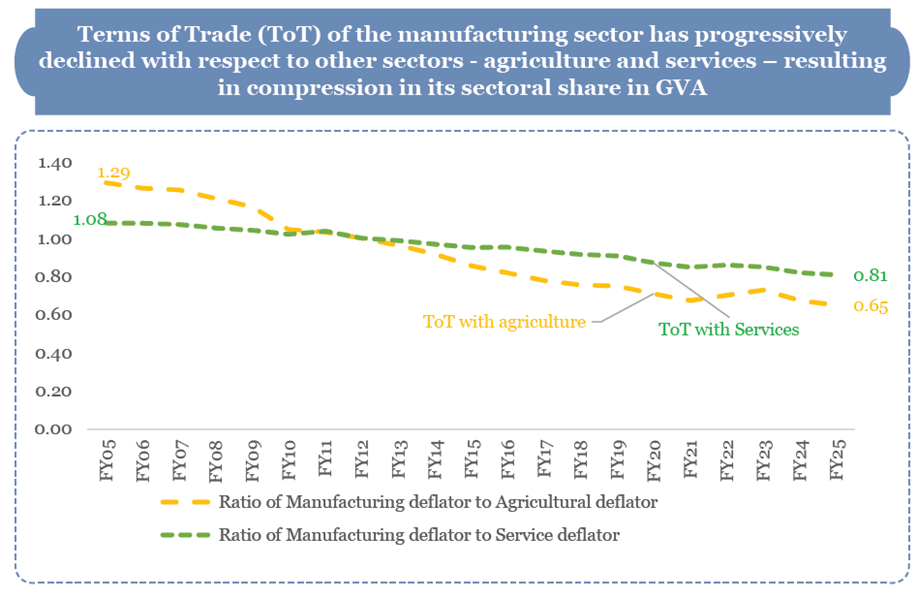
- Agricultural prices grew faster than manufacturing prices.
- Manufacturing terms of trade declined over time.
- Leads to lower manufacturing profitability and investment concerns.
- Reflects structural pricing dynamics in Indian economy.
10. Regional Inflation Trends
- Rural inflation was higher than urban due to food weight in consumption.
- Gap narrowed as food inflation declined in FY26.
- State-level inflation largely within RBI tolerance band (2–6%).
- Some states show persistent inflation differentials due to local factors.
11. Determinants of Inflation (State Level)
- Higher wage growth correlates with higher inflation.
- GSDP growth positively associated with inflation.
- Industrial share reduces inflation through supply-side efficiency.
- GST found to be broadly price-neutral.
Data & Facts
- Global inflation: 4.2% (2025)
- India inflation: ~1.7% (FY26 Apr–Dec)
- Food inflation: Negative since June 2025
- Core inflation: ~4.6% (headline core)
- CAD-safe inflation range: 2–6% (RBI target)
- Remains among lowest inflation economies globally
Concepts
- Headline Inflation: Overall inflation including all items.
- Core Inflation: Inflation excluding volatile items like food and fuel.
- Base Effect: Impact of previous year’s prices on current inflation.
- WPI vs CPI: WPI measures wholesale prices; CPI reflects retail consumer prices.
- GDP Deflator: Broad measure of inflation across the entire economy.
- Terms of Trade: Relative prices between sectors (e.g., manufacturing vs agriculture).
Analysis
India’s inflation story reflects a strong shift from demand-driven inflation to supply-driven stability. The dominance of food disinflation and base effects indicates that inflation control has been largely achieved through favourable supply conditions and policy interventions rather than contractionary demand policies.
The apparent stickiness in core inflation is misleading, as it is concentrated in specific components like precious metals. Structurally, the declining terms of trade for manufacturing raise concerns about long-term industrial competitiveness. Regional disparities in inflation suggest the importance of local economic structures. Going forward, sustaining low inflation will depend on agricultural stability, global commodity trends, and maintaining policy credibility.
One Comment