
Employment Trends, Unemployment & Skill Development (Economic Survey 2025–26)
India’s labour market is undergoing a structural transformation driven by regulatory reforms, formalisation, and targeted skill development initiatives. Recent data indicate improving employment conditions, with declining unemployment rates and stabilising labour force participation.
The implementation of Labour Codes marks a major institutional reform, simplifying compliance while extending social security coverage to a broader workforce, including gig and platform workers. At the same time, increasing formalisation, supported by digital systems and policy interventions, is improving job quality and productivity.
Skill development initiatives, along with education and apprenticeship frameworks, are enhancing employability and aligning workforce capabilities with industry needs. However, challenges remain in ensuring sustained job creation, improving female labour force participation, and addressing skill mismatches.
The evolving nature of work, particularly with the rise of gig economy and technological changes, requires continuous adaptation in policy and training systems. Overall, India’s employment landscape reflects gradual strengthening, with reforms laying the foundation for a more flexible, inclusive, and productivity-driven labour market.
Key Points
1. Labour Market Trends
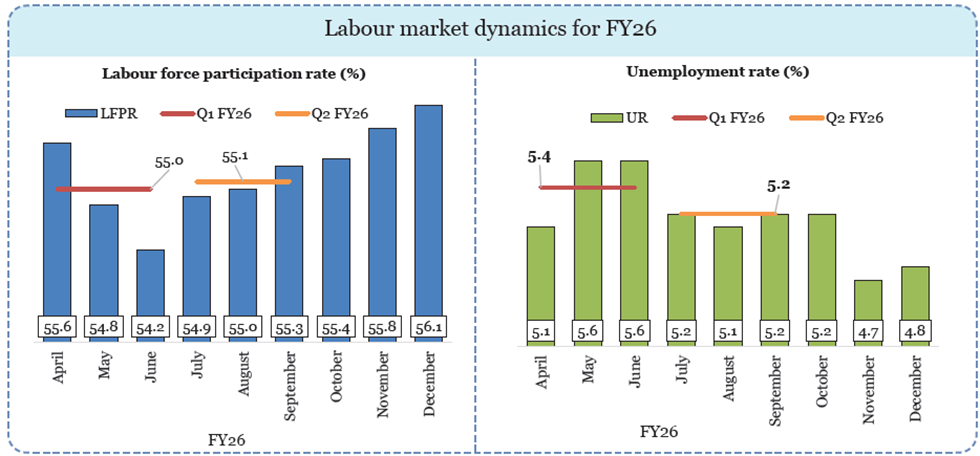
- Labour market indicators show improvement with declining unemployment rates in recent periods.
- Labour force participation rate has remained broadly stable with seasonal variations.
- Employment conditions have strengthened alongside economic growth and policy support.
- Data from PLFS suggests a steady recovery after pandemic-related disruptions.
2. Labour Force Participation and Employment Quality
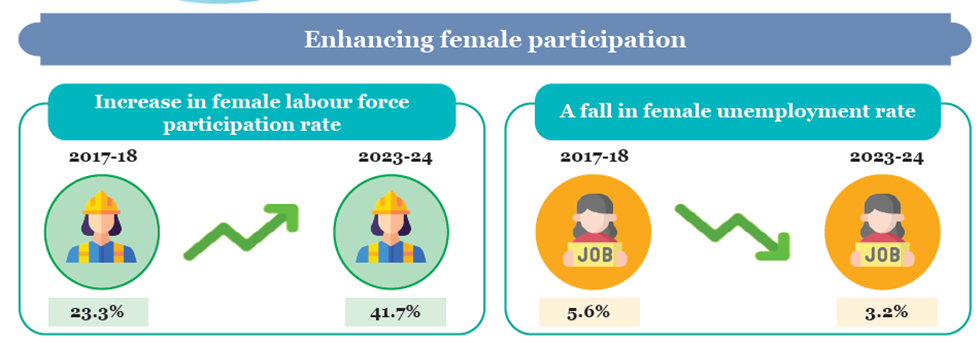
- Rising participation, particularly among women, indicates gradual inclusivity in the labour market.
- Formalisation of employment has improved access to social security and job stability.
- Employment quality is improving with better compliance and structured labour frameworks.
- However, informal employment continues to remain significant in the economy.
3. Labour Codes and Regulatory Reforms
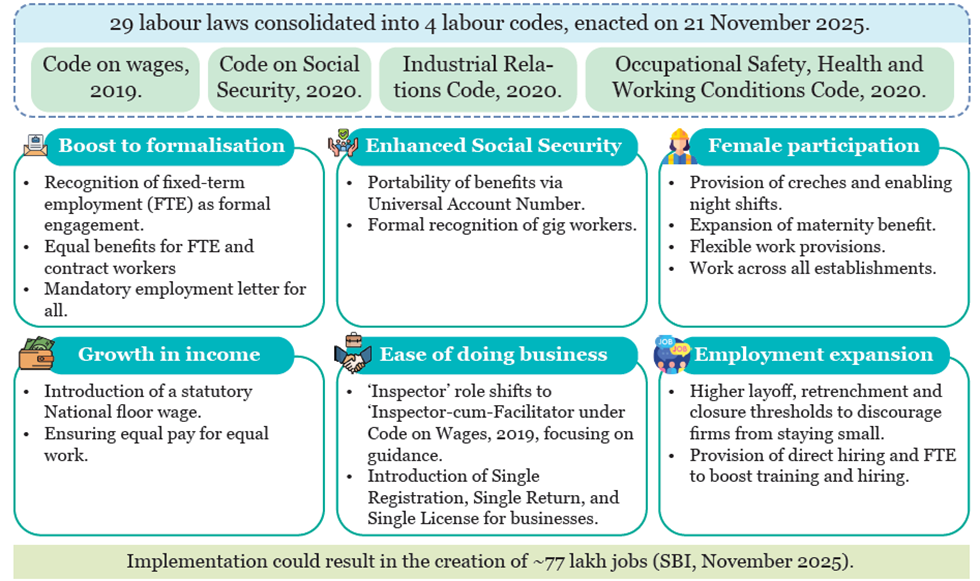
- Consolidation of 29 labour laws into four Labour Codes simplifies regulatory compliance.
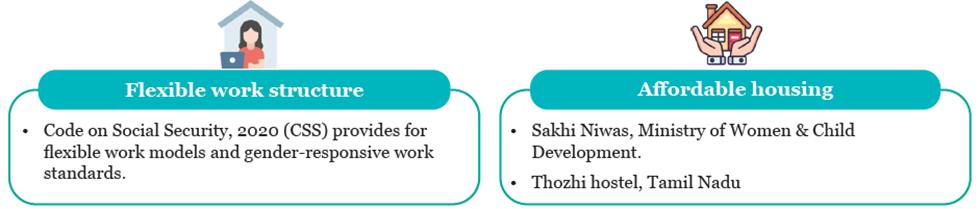
- Labour Codes aim to enhance labour market flexibility while ensuring worker protection.
- Provisions include safeguards for wages, occupational safety, and social security.
- Recognition of gig and platform workers marks a shift towards modern labour frameworks.
- Implementation of Labour Codes is expected to reduce regulatory frictions and improve ease of doing business.
4. Formalisation of Workforce
- Increasing use of digital systems and compliance frameworks is driving formalisation.
- Expansion of social security coverage is bringing more workers into the formal sector.
- Formalisation improves productivity, tax compliance, and economic efficiency.
- However, the transition from informal to formal employment remains gradual.
5. Skill Development and Employability
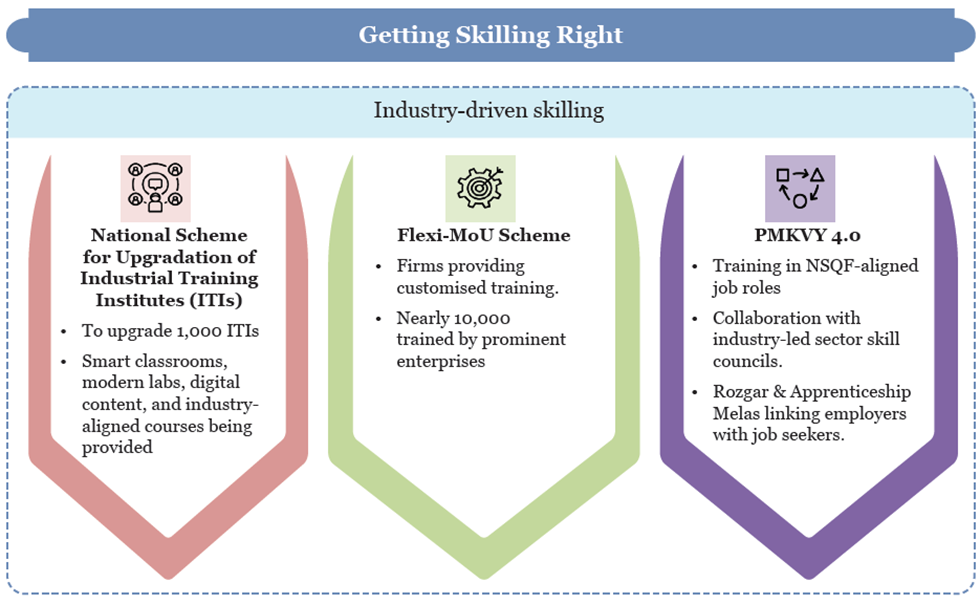
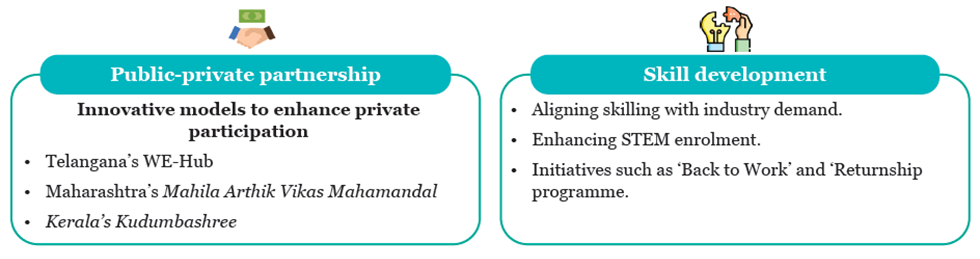
- Skill development initiatives focus on improving workforce capabilities and employability.
- Apprenticeship programs and vocational training are being expanded.
- Education and training systems are increasingly aligned with industry requirements.
- Skill development plays a crucial role in supporting productivity and growth.
6. Emerging Employment Trends
- Gig and platform-based employment is expanding rapidly.
- Technological changes are reshaping job roles and skill requirements.
- Demand for high-skilled labour is increasing in sectors like services and technology.
- Structural shifts in the economy require continuous reskilling and upskilling.
7. Challenges in Employment Sector
- Job creation needs to keep pace with a growing workforce.
- Skill mismatch remains a significant concern.
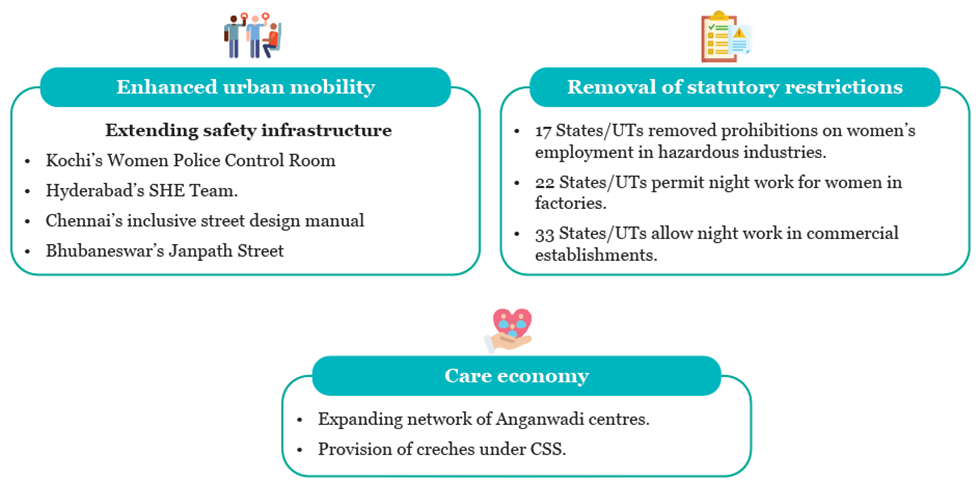
- Female labour force participation, although improving, remains relatively low.
- Informality continues to dominate large segments of employment.
- Regional disparities in employment opportunities persist.
Data & Facts
- Unemployment rate: Declining trend (PLFS data)
- Labour force participation rate: Stable with slight improvements
- Gross NPAs (banking context affecting credit & jobs): ~2.2% (FY26)
- Formalisation indicators: Rising EPFO enrolments and digital compliance
- Labour Codes: 4 codes replacing 29 central labour laws
Concepts
- Labour Force Participation Rate (LFPR): Percentage of working-age population that is employed or actively seeking work.
- Unemployment Rate: Percentage of labour force that is without work but actively seeking employment.
- Formalisation: Process of shifting workers from informal to formal employment with legal and social security benefits.
- Gig Economy: Labour market characterised by short-term, flexible, platform-based jobs.
- Employability: Skills and abilities that make a person capable of getting and maintaining a job.
Analysis
India’s employment landscape reflects a transition from a largely informal and rigid system to a more structured and flexible labour market. The implementation of Labour Codes and the recognition of gig workers indicate a forward-looking policy approach. Formalisation and skill development are key pillars supporting this transformation.
However, the challenge lies in generating sufficient quality jobs and ensuring that workforce skills match evolving industry demands. Bridging these gaps is essential for translating economic growth into inclusive employment outcomes.
One Comment