
Global Wildlife Conservation and International Efforts
Regulating Trade in Wildlife — Understanding CITES
Let us begin with a simple question: Why does international wildlife trade need regulation?
Because the demand for exotic animals, plants, skins, medicines, pets, timber, etc., often becomes so high that it pushes species toward extinction. To prevent this, the global community created CITES.
What is CITES?
Convention on International Trade in Endangered Species of Wild Fauna and Flora (CITES)
— also called the Washington Convention.
Think of CITES as an international “traffic police” for wildlife trade.
Its job is not to ban all wildlife trade, but to ensure trade does not threaten the survival of species.
Key Points
- It is a multilateral treaty drafted in 1963 by IUCN members.
- It entered into force in 1975.
- Today, 185 Parties (including the EU) are members.
Important Clarification
CITES is legally binding, but it does not override national laws.
Rather, it provides a framework, and each country must pass its own domestic legislation to implement CITES.
Conference of Parties (CoP)
The CITES CoP, also known as the World Wildlife Conference, meets every 2–3 years.
Here, members:
- review how wildlife trade is functioning,
- add or delete species from the Appendices,
- tighten or relax trade rules.
Essentially, whatever changes you see in CITES Appendices happen through the CoP.
How Does CITES Function?
CITES regulates trade through a global licensing system. Whenever an Appendix-listed species is imported or exported, permits are mandatory. To manage this, each country appoints:
A. Management Authorities
Handle permits and administrative work.
India’s Management Authority:
- Director of Wildlife Preservation, MoEFCC
- Wildlife Crime Control Bureau (WCCB) — issues permits.
B. Scientific Authorities
Advise whether trade will harm the species. Scientific Authorities in India ® Zoological Survey of India, Botanical Survey of India, Wildlife Institute of India and others.
CITES Appendices — Levels of Protection
CITES classifies species into three Appendices, depending on how threatened they are:
Appendix I — Highest Protection
- Species threatened with extinction.
- Commercial trade is generally prohibited.
- Only exceptional trade allowed (e.g., scientific research, captive breeding).
Appendix II — Moderate Protection
- Species not yet endangered, but may become so if trade is not regulated.
- Trade allowed with permits and controls.
Appendix III — Country-Specific Protection
- Species protected by at least one country, which seeks help from other countries to control trade.
How are Appendices updated?
At CoP meetings, Parties submit proposals → discussions → voting → amendments approved or rejected.
Highlights from Major CoP Meetings
Note: For detailed information about each species, please follow the provided hyperlinks.
A. CoP18 — Geneva, 2019
India made several proposals:
India Proposed Moving to Appendix I (Stricter Protection):
- Smooth-Coated Otter (VU)
- Asian Small-Clawed Otter (VU)
- Indian Star Tortoise (VU)
- Tokay Gecko (LC)
- Wedgefish (CR)
India Proposed Removing from Appendix II:
What was accepted?
- Star Tortoise, Smooth-Coated Otter, Asian Small-Clawed Otter → shifted to Appendix I
→ Complete ban on their international commercial trade.
B. CoP19 — Panama, 2022
52 proposals were discussed, dealing with sharks, elephants, turtles, reptiles, etc.
Key Outcomes
- Operation Turtshield, India’s turtle-protection effort, was acknowledged.
- First World Wildlife Trade Report released
- Showed that most CITES-regulated trade involves artificially propagated plants or captive-bred animals.
- Only 18% involved wild-sourced species.
India’s Proposals at CoP19
- Move to Appendix I:
- Include in Appendix II:
- Jeypore Ground Gecko (EN)
This proposal was accepted.
- Jeypore Ground Gecko (EN)
All three proposals were accepted.
C. CoP20 — Samarkand, Uzbekistan, 2025
- Focused on trade regulation for big cats, timber species, sea cucumbers, and sharks.
- Adopted new resolutions shaping the next 3-year agenda.
- India did not submit independent species proposals.
Monitoring the Illegal Killing of Elephants (MIKE)
Let us begin with a basic idea:
Elephants are among the world’s most heavily poached animals — mainly for ivory.
If we want to fight wildlife crime, we must first understand where, how, and why elephants are being killed.
This is exactly what MIKE does.
What is MIKE?
MIKE = Monitoring the Illegal Killing of Elephants
- It is an international monitoring system created under a CITES Resolution (1997).
- Its primary goal is to track trends in elephant mortality across Africa and Asia.
Think of MIKE as the “data intelligence network” for elephant conservation.
Why is MIKE important?
Because global decisions on ivory trade, elephant protection measures, enforcement strategies ® all depend on accurate, scientific data.
Objectives of MIKE
- Track elephant mortality trends: Is poaching rising or falling? Which regions are high-risk?
- Identify causes of elephant deaths: Natural causes? Conflict? Poaching?
- Build capacity in elephant-range countries: Many countries lack staff, training, or technology. MIKE helps strengthen monitoring systems and enforcement skills.
- Support decision-making at CITES: Every year, MIKE’s findings are presented at CITES meetings, influencing policies on ivory trade and elephant conservation.
MIKE Sites in Asia
Across Asia, MIKE operates in 28 sites, spread over 13 countries. India has the highest number: 10 MIKE sites.
Other Asian countries have:
- 2 sites each → Cambodia, Indonesia, Lao PDR, Malaysia, Myanmar, Thailand
- 1 site each → Bangladesh, Bhutan, China, Nepal, Sri Lanka, Vietnam
This wide network helps compare trends across regions.
Implementation by IUCN (from 2017)
Since 2017, IUCN has been implementing the MIKE programme in Asia, divided into two subregions:
| South Asia | Southeast Asia |
| India | Cambodia |
| Nepal | China |
| Bhutan | Indonesia |
| Bangladesh | Lao PDR |
| Sri Lanka | Malaysia |
| Myanmar | |
| Thailand | |
| Vietnam |
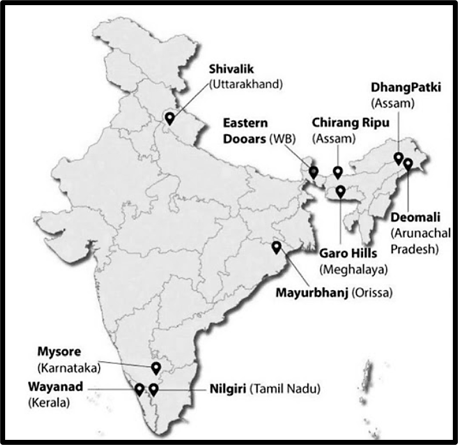
Funding of MIKE
MIKE does not have its own permanent budget. It is fully dependent on donor support. The European Union (EU) has been the largest donor supporting the Africa programme since 2001, and Asia since 2017.
The Wildlife Trade Monitoring Network (TRAFFIC)
Now let us look at TRAFFIC, because students often confuse CITES (a treaty) with TRAFFIC (an NGO).
What is TRAFFIC?
TRAFFIC is an international NGO, founded in 1976, as a joint programme of WWF (World Wide Fund for Nature), and IUCN. Headquarters → Cambridge, UK
Where CITES creates rules, TRAFFIC monitors and investigates wildlife trade on the ground.
Role and Mission of TRAFFIC
- It studies illegal and legal wildlife trade trends,
- identifies key trafficking routes,
- analyses impacts on species,
- provides data and insights to governments and conservation bodies.
Its mission: Ensure that wildlife trade does not become a threat to nature.
In simple terms: CITES makes the laws; TRAFFIC studies the market.
Coalition Against Wildlife Trafficking (CAWT)
Next, we look at CAWT, a more political and diplomatic initiative.
What is CAWT?
Founded in 2005, CAWT is a US-led international coalition that brings governments and NGOs together to fight wildlife trafficking. India is a member. CAWT works through information sharing, capacity building AND coordinated enforcement campaigns.
Founding Partners of CAWT
Some of its initial partners include:
- Conservation International
- Save the Tiger Fund
- Smithsonian Institution
- TRAFFIC International
These partners contribute scientific knowledge, funding, and investigative support.
Convention on Migratory Species (CMS)
As the famous line from the film Refugee puts it — ‘Panchhi, nadiyan, pawan ke jhonke… koi sarhad na inhe roke’ — the natural world does not recognise human boundaries.
Migratory species move freely across continents, and their survival depends on cooperation beyond political borders. This foundational idea lies at the heart of the Convention on Migratory Species (CMS).
A bird may breed in one country, spend the winter in another, and travel through several more on the way. So, unless countries cooperate, conservation becomes impossible. CMS was created precisely for this purpose.
What is CMS?
CMS = Convention on the Conservation of Migratory Species of Wild Animals
- Adopted in 1979 in Bonn, Germany
- Came into force in 1983
- Negotiated under the UN Environment Programme (UNEP)
CMS is also called:
- Bonn Convention
- Global Wildlife Conference
Why is CMS special?
It is the only global UN-based treaty exclusively dedicated to the conservation of terrestrial migratory animals, aquatic migratory animals AND avian (bird) migrants throughout their entire migratory range
In simple words: CMS protects animals that must cross borders to survive.
CMS Appendices
CMS also uses a two-tier protection system, but it is different from CITES.
Appendix I — Strict Protection
Species threatened with extinction. Parties must ® provide strict protection, conserve habitats, remove barriers to migration.
Appendix II — Cooperation Needed
Species that are not necessarily endangered, but whose conservation requires international cooperation (e.g., coordinated agreements, action plans).
CoP13 — India’s Role
- Hosted in: Gandhinagar, Gujarat (2020)
- Why important? India became the President of CMS CoP for 3 years.
Key Outcomes of CoP13
Ten new species added to CMS Appendices. Out of these, 7 were added to Appendix I — the highest protection.
Major species added to Appendix I at CoP13: Asian Elephant (EN), Great Indian Bustard (CR), Bengal Florican (CR), Little Bustard (NT) (and others). This is important because these species face sharp declines due to habitat fragmentation, power lines, and poaching pressures.
Gandhinagar Declaration (CoP13)
One of the landmark decisions. It called for integrating ecological connectivity (i.e., uninterrupted movement corridors) into the Post-2020 Global Biodiversity Framework.
In essence: Conservation planning must ensure that migratory species can move safely across landscapes.
CMS CoP-14 (2024)
- CMS now has 133 Parties.
- CoP-14 was held in Samarkand, Uzbekistan (12–17 Feb 2024) under theme: “Nature knows no borders.”
- Parties adopted 14 new listing proposals — adding new migratory species under protection.
- A “Samarkand Strategic Plan for Migratory Species 2024–2032” was adopted. Key targets:
- Maintain and restore habitats and migration corridors.
- Significantly reduce direct mortality of migratory species caused by human-made infrastructure by 2032.
- For the first time, CMS released the “State of the World’s Migratory Species” report — highlighting global trends (declines in many species, high extinction risk for fish, etc.) to help guide conservation priorities.
Central Asian Mammals Initiative (CAMI)
CMS runs various regional programmes; CAMI is one of the most important for India because many Central Asian species enter or pass near Indian landscapes.
Objective: Conserve 15 major migratory mammal species and their habitats across Central Asia.
Timeframe: CAMI workplan approved for 2021–2026.
It may receive funding support from the IUCN Save Our Species – Central Asia initiative.
Major Species Covered Under CAMI
Here is a simple, India-focused list with locations (where applicable):
1. Wild Yak (VU)
- Found in Aksai Chin (Ladakh region)
2. Snow Leopard (VU)
- Himalayas (India: Ladakh, Himachal, Uttarakhand, Sikkim, Arunachal)
3. Asiatic Wild Ass / Khulan (NT)
- Rann of Kutch (though Khulan historically ranged here; the current Indian wild ass is Indian Wild Ass of LR/LC category — the ‘Khulan’ refers mainly to Mongolian populations)
4. Cheetah (VU) / Asiatic Cheetah (CR)
- Historically native to India
- Now critically endangered in Iran
- Reintroduced in Kuno National Park (MP) (African cheetahs, not Asiatic)
5. Saiga Antelope (CR)
- Not found in India
- Native to Kazakhstan, Mongolia, Russia
- Known for its iconic bulbous nose
6. Wild / Bactrian Camel (CR)
- Not found in India
- Native to Mongolia & China
7. Argali / Mountain Sheep (NT)
- Found in the Trans-Himalayan zones (Ladakh)
8. Kiang / Tibetan Wild Ass (LC)
- Common in the Tibetan Plateau and Indian regions of Ladakh
9. Chiru / Tibetan Antelope (NT)
- Found in Ladakh
- Poached for Shahtoosh wool
10. Tibetan Gazelle (NT)
- High-elevation grasslands of Tibet & Ladakh
11. Chinkara / Indian Gazelle (LC)
- Western & Central India (Rajasthan, Gujarat, MP)
12. Leopard (VU)
- Widely distributed in India
- Mostly below 2,500 m elevation
(Note: The full CAMI list includes 15 species; only major UPSC-relevant ones are highlighted here.)
International Union for Conservation of Nature (IUCN)
Let us begin with a simple question: When the world wants to know how threatened a species is, who gives the final authoritative answer? The answer is: IUCN.
What is IUCN?
IUCN = International Union for Conservation of Nature
- A global NGO, not a treaty or government body
- Headquarters → Gland, Switzerland
- Established to work on: nature conservation, sustainable use of natural resources, scientific research, advocacy, policy guidance, on-ground field projects, public education.
Why is IUCN important?
Because it produces the IUCN Red List, the world’s most trusted assessment of species’ risk of extinction. No conservation document is referenced more frequently than the Red List.
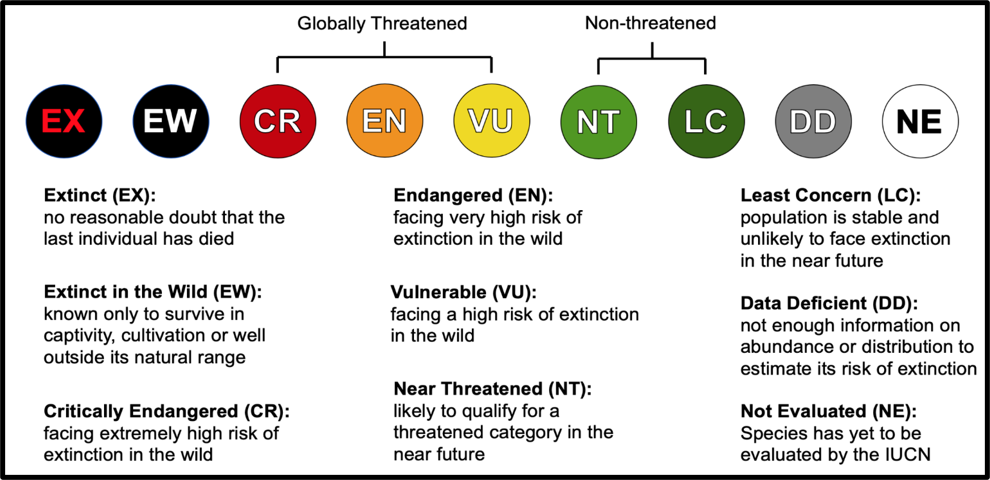
IUCN Red List of Threatened Species
The IUCN Red List, also called Red Data List, or Red Book was founded in 1964.
What does it do?
It provides the most comprehensive global database on which species are thriving, which are declining, and which are on the brink of extinction.
Important UPSC Concept: “Threatened Species”
IUCN uses “threatened” as a combined term for:
- Critically Endangered (CR)
- Endangered (EN)
- Vulnerable (VU)
So whenever you read “threatened species,” it refers to all three categories together.
Special Pages in the Red Data Book
- Pink Pages → Critically Endangered species
- Green Pages → Species earlier endangered but now recovered (no longer threatened)
A symbolic point: Pink pages keep increasing faster than green pages, reflecting growing global conservation concerns.
Criteria for Critically Endangered (CR)
The IUCN uses quantitative scientific criteria. Some important ones are:
1. Population Reduction ≥ 90% (in last 10 years or 3 generations)
This indicates a species on the edge.
2. Very Small Population (< 50 mature individuals)
This rule isn’t applied rigidly — some CR species may have slightly larger populations, but still meet other risk criteria.
3. High Probability of Extinction
The chance of a species going extinct ≥ 50% within 10 years (or 3 generations).
These numerical thresholds help keep assessments objective and globally comparable.
Phoenix Species Project
Launched in 2026, the Phoenix Species Project is a global species-recovery initiative led by Re:wild and the Bezos Earth Fund, in collaboration with the IUCN Species Survival Commission (SSC).
It aims to recover 100 species facing imminent extinction across 30 countries, focusing particularly on species classified as Critically Endangered (CR) and Extinct in the Wild (EW) on the IUCN Red List. Recovery measures include habitat restoration, conservation breeding, translocation, disease management and control of invasive species, with strong participation of local communities and conservation organisations.
Significance: It demonstrates the shift from merely assessing extinction risk through the IUCN Red List to actively financing and implementing species recovery.
BirdLife International (BI)
Let’s move to another important body linked to IUCN, specifically for birds.
BirdLife International is the world’s largest partnership of conservation organisations, with:
- 120+ national NGOs as members
- A strong, research-oriented global network
Mission
To conserve: birds, their habitats, and broader biodiversity, while promoting sustainable use of natural resources.
BirdLife International’s Role in the Red List
BirdLife International is the official Red List Authority for birds. That means: It provides all scientific assessments for bird species to IUCN. If a bird is classified as CR/EN/VU, BirdLife’s data is the backbone of that decision.
Important Bird and Biodiversity Areas (IBAs)
BirdLife identifies special sites called IBAs.
What are IBAs?
Locations that have significant populations of threatened bird species, or host large numbers of migratory birds, or hold unique bird assemblages.
Global and Indian Numbers
- 13,000+ IBAs worldwide
- 554 IBAs in India
Key Indian Partner
- Bombay Natural History Society (BNHS): Indian partner of BirdLife International, Plays major role in identifying IBAs in India
International Efforts Towards Tiger and Snow Leopard Conservation
Let us begin with a foundational idea: Tigers and Snow Leopards are apex predators. When they disappear, entire ecosystems collapse. Because their ranges cross multiple countries, conservation requires international alliances, shared commitments, and coordinated action.
This section covers exactly those global collaborations.
Global Tiger Initiative (GTI)
What is GTI?
Launched in 2008, the Global Tiger Initiative is a worldwide coalition of governments, NGOs, conservation scientists, civil society institutions.
Its foundational aim: Prevent wild tigers from going extinct.
Expansion to Snow Leopards
In 2013, the GTI expanded its mandate to include Snow Leopards (VU), recognising the similar threats they face.
Founding Partners of GTI
GTI was supported by some of the world’s strongest conservation institutions:
- World Bank – major funding and policy leadership
- GEF (Global Environment Facility) – funding support
- Smithsonian Institution – scientific research
- Save the Tiger Fund – supported Asian tiger conservation (1995–2011)
- International Tiger Coalition – network of 40+ NGOs
Tiger Range Countries (TRCs) — Leadership of GTI
GTI is led by 13 tiger range countries: Bangladesh, Bhutan, Cambodia, China, India, Indonesia, Laos, Malaysia, Myanmar, Nepal, Russia, Thailand, Vietnam.
India is one of the most important TRCs due to its largest wild tiger population globally.
Global Snow Leopard and Ecosystem Program (GSLEP)
When GTI expanded to include Snow Leopards in 2013, member countries adopted the Bishkek Declaration.
Objective of Bishkek Declaration
Identify and secure: “20 Snow Leopard Landscapes by 2020” — a goal shortened to “Secure 20 by 2020”.
GSLEP Member Countries
- Kyrgyzstan (host of the declaration)
- Afghanistan
- Kazakhstan
- Mongolia
- Pakistan
- The 13 Tiger Range Countries (as Snow Leopards live across many Asian mountain systems)
Snow Leopard Population Assessment in India
For a long time, India did not have a national snow leopard population estimation protocol. This changed with: Population Assessment of the World’s Snow Leopard (PAWS) under GSLEP.
India launched Snow Leopard Population Assessment in India (SPAI)—the first national-level initiative to systematically count snow leopards.
This marks a crucial step for planning protection measures in the Himalayas and Trans-Himalayan landscapes.
St. Petersburg Declaration (2010)
In 2010, leaders of Tiger Range Countries met at St. Petersburg, Russia, for the International Tiger Forum. They adopted: St. Petersburg Declaration on Tiger Conservation
Goal: Double global wild tiger numbers by 2022 — known as TX2.
Baseline (2010): ~ 3,200 tigers; Target (2022): 7,000 tigers
Successes
- India: from 1706 (2010) → 2226 (2015)
- Nepal & Russia also reported significant recovery.
Failures
- Southeast Asia (Cambodia, Laos, Vietnam) saw severe declines.
- According to WWF, global count is still only ~3,900 tigers in the wild.
International Consortium on Combating Wildlife Crime (ICCWC)
Given the scale of illegal wildlife trade (tigers, snow leopards, pangolins, ivory, rhino horn), global enforcement needed stronger coordination. Established in 2010 (St. Petersburg Tiger Forum)
Objective: Strengthen criminal justice systems at national, regional, and international levels to fight wildlife crime.
Partner Agencies: CITES Secretariat, INTERPOL, UNODC (UN Office on Drugs and Crime), World Bank, World Customs Organization (WCO). Together, these agencies form the most powerful international enforcement alliance for wildlife protection.
TX2 & Associated Awards
Remember: TX2 = Tiger × 2 = double tiger population by 2022
A global commitment made under the St. Petersburg Declaration (2010) to: → Double the global wild tiger population by 2022
Baseline (2010): ≈ 3,200 tigers; Global Estimate (2023): ~5,574 tigers
To encourage and reward excellence:
A. TX2 Award
Given to one site that achieves a remarkable increase in tiger numbers since 2010.
Winner (2020): Pilibhit Tiger Reserve (Uttar Pradesh, India) → First-ever TX2 Award winner.
Winner (2021)
- Bardia National Park (Nepal) → Tiger population increased nearly fivefold.
- Sathyamangalam Tiger Reserve (Tamil Nadu, India) → One of India’s fastest-growing tiger populations.
B. Tiger Conservation Excellence Award
Recognises one site excelling in at least two of these five themes:
- Tiger & prey population monitoring
- Effective site management (CA|TS assessments)
- Enhanced law enforcement
- Community-based conservation & conflict mitigation
- Habitat & prey management
Winner (2020):
- Transboundary Manas Conservation Area (India–Bhutan)
→ 500 km² Manas National Park (Assam, India)
→ 1,057 km² Royal Manas National Park (Bhutan)
Winner (2021)
- Khata Forest Conservation Area (India–Nepal Transboundary Landscape) → Celebrated for community-led conservation & cross-border wildlife movement.
CA|TS — Conservation Assured | Tiger Standards
What is CA|TS?
A globally recognised set of standards to evaluate whether a tiger habitat is being managed effectively.
- Launched in 2013 | Supported by WWF | Part of the TX2 goal
- Helps tiger reserves self-assess and improve conservation practices
India’s Achievement: 20+ Tiger Reserves in India have received CA|TS international accreditation.This is a major global conservation milestone.
Transition from TX2 → GTRP 2.0 (2022–2034)
Why new phase?
- 2022 deadline passed, tiger numbers rising but uneven
- Need for long-term, landscape-level, and connectivity-based conservation
GTRP 2.0 – Global Tiger Recovery Program (2022–2034)
Focus shifts from just numbers to:
- Maintaining genetic diversity
- Securing habitat corridors
- Reducing linear infrastructure impact
- Mitigating human–tiger conflict
- Strengthening enforcement against poaching
- Cross-border cooperation
This is now the global guiding framework for tiger conservation.
Country-Specific Updates
India
- Houses ~75% of global wild tigers
- Consistent increase from 2006 → 2010 → 2014 → 2018 → 2022 assessments
- Leading role in CA|TS accreditation, tiger monitoring technology, and corridor-based landscape management
Nepal
- First country to almost triple tiger numbers since 2010
- Recognized as global success model under TX2
Russia
- Strong recovery of Siberian tigers due to strict anti-poaching laws
SE Asia
- Cambodia, Laos, Vietnam: functional extinction
- Malaysia: critical decline due to snares & habitat loss
- Thailand: showing early signs of recovery due to enforcement
Important Declarations — A Quick Comparison
| Declaration | Adopted At | Focus |
| Gandhinagar Declaration | CMS CoP13 | Migratory species & ecological connectivity |
| Bishkek Declaration | GSLEP, 2013 | Secure 20 snow leopard landscapes by 2020 |
| St. Petersburg Declaration | Intl. Tiger Forum, 2010 | TX2 — double tiger population by 2022 |
This table is excellent for prelims.
Project Snow Leopard (India, 2009)
India launched Project Snow Leopard in 2009 to strengthen conservation in high-altitude ecosystems, which remain understudied compared to forests and jungles.
Objectives
- Protect high-altitude wildlife
- Conserve fragile mountain ecosystems
- Balance development and conservation
India’s Snow Leopard Landscapes
Three major landscapes identified:
- Hemis–Spiti → Ladakh & Himachal Pradesh
- Nanda Devi–Gangotri → Uttarakhand
- Khangchendzonga–Tawang → Sikkim & Arunachal Pradesh
These regions contain some of the most sensitive ecosystems on Earth.
Snow Leopard Under International Conventions
- CMS (2003): Snow Leopard was listed as a Concerted Action Species under Appendix I.
- CITES (2003): Scope of the CITES Tiger Enforcement Task Force expanded to include all Asian big cats, including the snow leopard.
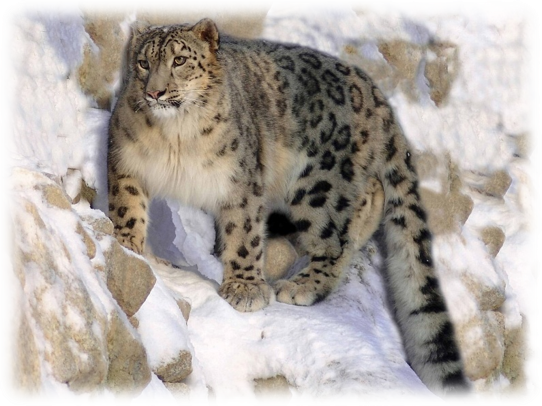
Snow Leopard (Panthera uncia)
Habitat & Distribution
- Native to the high mountains of northern & central Asia, including:
China, Bhutan, Nepal, India, Pakistan, Russia, Mongolia, Afghanistan, Uzbekistan, Kazakhstan, Kyrgyzstan. - Occupies elevations up to 18,000 ft, mainly above the tree line.
- Prefers cold mountainous terrain, rocky landscapes, alpine meadows, and montane grasslands.
Distribution in India
Found in ® Himachal Pradesh, Sikkim, Jammu & Kashmir / Ladakh, Uttarakhand, Arunachal Pradesh
Key Ecological Features
- Known as the “Ghost of the Mountains” due to its elusive nature.
- Population estimated to be as low as ~4,000, but exact numbers uncertain.
- Lives solitarily, except during breeding season.
- Crepuscular: Most active at dawn and dusk.
- Adapted for high-altitude survival:
- Thick fur and dense undercoat
- Long, thick tail for balance
- Powerful hindlimbs enabling long jumps (up to ~9m)
- Coat has unique rosette patterns (individual identification).
Threats
- Poaching | Human–wildlife conflict | Habitat fragmentation
- Climate change (reducing alpine habitat, shifting treeline upward)
Reproduction
- Gestation: ~90–100 days| Litter size: 2–4 cubs
Conservation Status
- IUCN Red List: Vulnerable (VU)
- CITES: Appendix I
- CMS: Appendix I (Concerted Action Species)
- Covered under:
- GSLEP (Global Snow Leopard and Ecosystem Programme)
- Project Snow Leopard (India, 2009)
Cheetah vs Leopard vs Jaguar
| Feature | Cheetah (Acinonyx jubatus) | Leopard (Panthera pardus) | Jaguar (Panthera onca) |
| Geographic Range | African savannah; small population in Iran | Africa & Southern Asia (including India) | Central & South America |
| Habitat | Savanna grasslands | Forests, dense bush, rocky terrain | Wet lowlands, tropical forests |
| Build | Tall, slender, speed-optimized; small head | Robust build; strong body | Stocky, heavily built; strongest bite force among big cats |
| Tail | Long, striped, white tip | Covered in rosettes | Covered in rosettes |
| Fur Pattern | Solid black spots | Small rosettes | Large rosettes with central spots |
| Tear Marks | Present (black lines on face) | Absent | Absent |
| Speed | Fastest land animal — ~120 km/h | ~60 km/h | ~80 km/h |
| Claws | Do not retract fully → better grip for speed | Fully retractile | Fully retractile |
| Climbing Ability | Poor climber | Excellent climber | Good climber |
| Behaviour | Diurnal, hunts by sprint | Solitary, nocturnal/crepuscular | Solitary, strong swimmer |
| IUCN Status | Vulnerable | Vulnerable | Near Threatened |
| CITES | Appendix I | Appendix I | Appendix I |
| CMS | Appendix I | Appendix II | Appendix I |
Quick Identification Tricks
- Cheetah → Tear marks + solid spots + fastest + non-retractile claws
- Leopard → Small rosettes + Asian & African forests + common in India
- Jaguar → Largest rosettes with central spots + found only in Americas + very muscular build
Why Conserve High-Altitude Ecosystems?
High-altitude zones of India (> 3,000 m) include the Himalaya and Trans-Himalaya.
They host some of the world’s most endangered fauna:
Flagship Species
- Snow Leopard (VU)
- Red Panda (EN)
- Wild Yak (VU)
- Chiru / Tibetan Antelope (NT)
- Tibetan Gazelle (NT)
- Tibetan Argali / Mountain Sheep (NT)
- Ladakh Urial (VU)
- Hangul / Kashmir Stag (CR)
- Musk Deer (EN – two species)
- Himalayan Goral (NT)
- Serow (VU)
- Takin (VU)
Birdlife
High-altitude lakes & wetlands provide breeding grounds for:
- Black-Necked Crane (NT)
- Bar-Headed Goose (LC)
and many other migratory bird species.
These ecosystems are fragile, climate-sensitive, and irreplaceable.
World Wildlife Fund for Nature (WWF)
This is one of the most recognised names in global conservation.
What is WWF?
- Established in 1961
- Headquarters: Gland, Switzerland
- Initially called World Wildlife Fund (still used in some countries)
- Today officially known as World Wide Fund for Nature
WWF is an international NGO working on wilderness preservation, reduction of human environmental impact, sustainable development, AND biodiversity conservation.
Mission: To stop the degradation of the planet’s natural environment and build a future where humans live in harmony with nature. This guiding philosophy drives all of WWF’s global programmes.
Important Initiatives by WWF
1. TRAFFIC (Wildlife Trade Monitoring Network)
- Joint programme of WWF + IUCN
- Works against illegal wildlife trade, tracks wildlife trafficking routes, markets, and trends.
2. Living Planet Report
- Published every two years since 1998
- One of the world’s most authoritative reports on the state of global biodiversity, human ecological footprint, and environmental decline.
3. Global Campaigns
Two well-known initiatives led by WWF are Earth Hour and Debt-for-Nature Swap.
Earth Hour
Earth Hour is a global environmental movement started by WWF in 2007.
What happens during Earth Hour?
People across the world switch off non-essential lights for one hour 8:30 pm to 9:30 pm on the last Saturday of March (local time). This is a symbolic gesture, not an energy-saving exercise — the idea is to inspire people and governments to think about sustainable choices.
Impact
Earth Hour has influenced several environmental policy actions, such as establishing a 3.5 million ha marine protected area in Argentina AND banning all plastics in the Galápagos (2014). Thus, Earth Hour uses collective participation to trigger policy-level outcomes.
Debt-for-Nature Swap
This is an important conservation finance mechanism.
How does it work?
A country’s external debt is bought, renegotiated, or forgiven on the condition that the money saved will be invested in environmental conservation.
In simple words: A country gets relief from foreign debt, and in exchange, it commits to spend that saved money on protecting forests, biodiversity, or climate action.
Countries like Costa Rica, Bolivia, Madagascar, and the Philippines have successfully used such swaps.
International Whaling Commission (IWC)
Whales were historically overhunted to near extinction. To protect them, countries came together to regulate whaling.
What is IWC?
- Established under the International Convention for the Regulation of Whaling (ICRW)
- A non-UN body
- Headquarters: United Kingdom
Purpose
- Ensure conservation of whale stocks
- Ensure sustainable, regulated whaling
- Create whale sanctuaries (example: Indian Ocean Whale Sanctuary)
Membership
Participation is not limited to whaling nations.
Even countries opposed to whaling — like India — are members.
Key Decisions and Conventions under IWC
1. Moratorium on Commercial Whaling (1982)
IWC adopted a global ban on commercial whaling. However, the following are still allowed under controlled provisions:
- Scientific research whaling
- Aboriginal subsistence whaling (native communities dependent on whale meat)
2. Florianópolis Declaration (2018)
In 2018, IWC met in Florianópolis, Brazil. Japan proposed resuming commercial whaling. The proposal was rejected.
Outcome
Japan withdrew from the IWC and resumed commercial whaling outside IWC regulations (in its exclusive economic zone).
This declaration emphasised that whales have greater value alive than dead, due to their ecological role and potential for ecotourism.
For chapter-wise Environment preparation for UPSC Prelims and Mains, refer to the complete Environment UPSC notes page.