
Historical evolution of Sustainable Development Goals (SDGs)
🌱 Brundtland Commission: The Conceptual Foundation (1983–1987)
In 1983, the United Nations constituted the World Commission on Environment and Development, popularly known as the Brundtland Commission.
Why was it formed?
By the early 1980s, the world realised:
- Economic growth was creating environmental degradation
- Environmental protection was being portrayed as anti-development
The Commission resolved this conflict by giving a simple yet powerful definition:
Sustainable development is development that meets the needs of the present without compromising the ability of future generations to meet their own needs.
📌 This definition became the moral and philosophical backbone of all future environmental and development policies.
🌍 UNCED / Earth Summit (1992): From Idea to Action
The United Nations Conference on Environment and Development held at Rio de Janeiro, Brazil, translated the Brundtland idea into practical frameworks.
Key Sustainable Development Outcomes of Rio 1992
1️⃣ Rio Declaration
- A set of 27 principles
- Guided countries on rights, responsibilities, and equity
- Embedded ideas like precautionary principle and polluter pays principle
2️⃣ Agenda 21
- A non-binding action plan
- Focused on sustainable development in the 21st century
- Covered poverty, urbanisation, resource use, women, youth, and local governance
📌 Agenda 21 operationalised sustainable development at grassroots level.
3️⃣ Forest Principles
- Non-legally binding document
- Focused on conservation and sustainable management of all forests
- Reflected tensions between developed and developing countries on forest governance
Rio+5 (1997): Mid-Course Review
In 1997, the UN General Assembly conducted Rio+5, a special session to:
- Review the progress of Agenda 21
- Identify gaps between commitment and implementation
📌 This revealed that political intent was strong, but execution was weak.
🔄 Post-UNCED Developments
Rio+10 / World Summit on Sustainable Development (2002)
Held in Johannesburg, South Africa, the World Summit on Sustainable Development aimed to:
- Reaffirm commitment to Agenda 21
- Integrate sustainable development with human development priorities
It produced the Johannesburg Declaration, linking:
- Environment
- Development
- Poverty eradication
📌 Importantly, Rio+10 aligned Agenda 21 with the MDGs.
🎯 Millennium Development Goals (MDGs) – 2000 to 2015
The MDGs emerged from the UN Millennium Summit (2000).
Core Focus of MDGs
They were people-centric, targeting:
- Poverty and hunger
- Education
- Gender equality
- Child mortality
- Maternal health
- Communicable diseases
- Environmental sustainability
- Global partnerships
📌 Limitation of MDGs:
- Environment was treated as one goal, not a cross-cutting theme
- Applied mainly to developing countries
🌏 Rio+20 / Earth Summit 2012: Birth of SDGs
The United Nations Conference on Sustainable Development, held again in Rio de Janeiro, marked a turning point.
Why Rio+20 was crucial
- 20 years after Rio 1992
- 10 years after Johannesburg
- Recognition that MDGs were insufficient
Major Outcome:
👉 Sustainable Development Goals (SDGs) were conceptualised here
The outcome document “The Future We Want” laid the groundwork for:
- Universal goals
- Integration of economic, social, and environmental dimensions
📌 Since 2015, SDGs have been embedded in Agenda 2030.
🌐 Agenda 2030 & SDGs (From 2015)
- 17 Sustainable Development Goals
- 169 targets
- Applicable to all countries—developed and developing
👉 This universality is the biggest departure from MDGs.
🌿 Partnership for Action on Green Economy (PAGE)
Launched in 2013, PAGE is a direct response to Rio+20.
Objective of PAGE
- Help countries implement Agenda 2030
- Special focus on SDG 8:
Promote sustained, inclusive and sustainable economic growth, full and productive employment
📌 PAGE integrates:
- Economic growth
- Employment
- Environmental sustainability
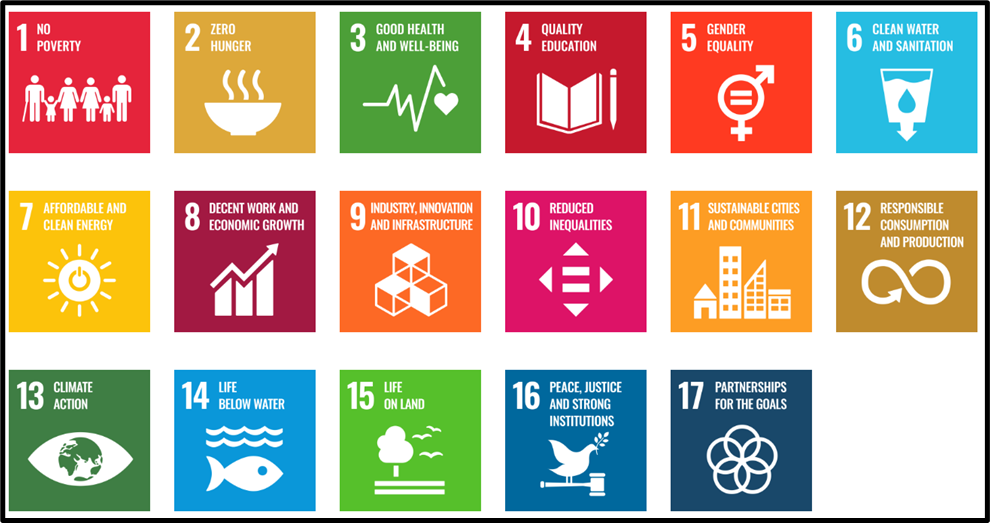
🌐 UN Agenda 2030 – Sustainable Development Goals (2015–2030)
In 2015, the United Nations General Assembly adopted the “2030 Agenda for Sustainable Development”.
What are SDGs?
- 17 global goals
- 169 targets
- Time horizon: up to 2030
- Universal in nature—applicable to all countries
Core Vision
SDGs aim to:
- Eradicate poverty in all its forms
- Realise human rights for all
- Achieve gender equality
- Balance economic growth, social justice, and environmental protection
📌 Key shift from MDGs:
SDGs are integrated, indivisible, and universal.
🎯 Understanding the 17 SDGs
The 17 Sustainable Development Goals are quite comprehensive. To make them easier to recall, let’s group them into four broad categories.
A. Human Development & Social Justice (Goals 1–5)
Goal 1: No Poverty
Focus: Dignity and survival
- Equal access to resources, services, and technology
- Resilience against economic, environmental, and social shocks
👉 Poverty is seen as multidimensional, not just income-based.
Goal 2: Zero Hunger
Focus: Food security + sustainability
- Doubling productivity of small-scale farmers
- Preserving genetic diversity of seeds
- Reducing food wastage and trade distortions
📌 Links agriculture with biodiversity and equity.
Goal 3: Good Health and Well-Being
Focus: Health as a development foundation
- Maternal & child health
- Communicable and non-communicable diseases
- Mental health, substance abuse, road safety
- Universal health coverage
Aligned with the World Health Organization frameworks.
Goal 4: Quality Education
Focus: Human capital
- Universal access to quality education
- Technical, vocational, and higher education
- Scholarships and teacher capacity in developing countries
📌 Education is treated as a lifelong process.
Goal 5: Gender Equality
Focus: Structural empowerment
- Ending discrimination and violence
- Eliminating child marriage and harmful practices
- Economic rights, leadership, and digital empowerment
👉 Gender equality is central, not peripheral, to development.
II. Resources, Infrastructure & Economy (Goals 6–9)
Goal 6: Clean Water and Sanitation
Focus: Water security
- Safe drinking water and sanitation
- Wastewater treatment and reuse
- Integrated Water Resources Management (IWRM)
📌 IWRM links water–land–ecosystems in a single framework.
Goal 7: Affordable and Clean Energy
Focus: Energy transition
- Universal access to modern energy
- Increasing share of renewable energy
👉 Direct link with climate action and energy justice.
Goal 8: Decent Work and Economic Growth
Focus: Quality growth
- Resource efficiency
- Full and productive employment
- Ending child labour, trafficking, and modern slavery
- Sustainable tourism and financial inclusion
📌 Growth is meaningful only if it is inclusive and ethical.
Goal 9: Industry, Innovation & Infrastructure
Focus: Structural transformation
- Resilient infrastructure
- Domestic technology and innovation
- Universal access to ICT
👉 This goal bridges technology and sustainability.
III. Inequality, Urbanisation & Consumption (Goals 10–12)
Goal 10: Reduced Inequality
Focus: Fairness within and among nations
- Social, economic, political inclusion
- Migration policies and remittance costs
- Better representation of developing countries globally
📌 Addresses global asymmetries of power.
Goal 11: Sustainable Cities and Communities
Focus: Urban sustainability
- Affordable housing and transport
- Disaster resilience
- Green and public spaces
- Cultural and natural heritage protection
👉 Cities are seen as solutions, not just problems.
Goal 12: Responsible Consumption & Production
Focus: Changing lifestyles
- Efficient use of natural resources
- Reducing food waste
- Lifecycle management of chemicals and waste
- Removing fossil fuel subsidies
📌 This goal targets overconsumption, mainly in rich economies.
IV. Environment, Peace & Partnerships (Goals 13–17)
Goal 13: Climate Action
Focus: Urgency
- Climate resilience and adaptation
- Integrating climate into planning
- Capacity building
- Implementing UN Framework Convention on Climate Change (UNFCCC)
📌 Climate change is treated as a development threat, not just an environmental issue.
Goal 14: Life Below Water
Focus: Oceans as global commons
- Reducing marine pollution and acidification
- Sustainable fishing
- Ending harmful fishing subsidies
👉 Oceans are linked to livelihoods and food security.
Goal 15: Life on Land
Focus: Terrestrial ecosystems
- Forests, biodiversity, deserts, mountains
- Combating land degradation
- Preventing invasive species and wildlife trafficking
- Fair sharing of genetic resources
📌 Strong overlap with CBD and UNCCD.
Goal 16: Peace, Justice & Strong Institutions
Focus: Governance
- Rule of law and access to justice
- Reducing corruption and crime
- Transparent, accountable institutions
- Legal identity and access to information
👉 No sustainable development without peace and trust.
Goal 17: Partnerships for the Goals
Focus: Means of implementation
- Finance, technology, capacity building
- Debt sustainability
- Trade facilitation under World Trade Organization
- Global cooperation
📌 This is the enabler goal—without it, SDGs remain aspirational.
🧠 How UPSC Expects You to Use SDGs
- Quote relevant goals in GS answers
- Link environmental issues with SDGs
- Use SDGs as analytical frameworks, not as lists
Example:
Climate change → Goals 13, 7, 12, 15, 11
Detailed Reading about SDG
You may refer to the official website of the United Nations Sustainable Development Goals (SDGs), where you can explore each goal along with its specific targets and detailed descriptions.