
Sculpture of the Medieval Period
(c. 6th century CE – Mughal period)
The medieval period stretches from the decline of the Guptas to the end of Mughal rule. This long phase is marked by two major developments:
- Temple-centred sculpture reached unprecedented scale and complexity.
- Regional dynasties evolved distinct sculptural idioms based on local beliefs, materials, and political ideals.
Later, with the advent of Islamic rule, sculptural expression adapted to new aesthetic and religious frameworks.
Broad Features of Medieval Sculpture
- Proliferation of large stone temples richly covered with sculpture
- Sculptures integrated with temple architecture, not isolated objects
- Increasing ornamentation and narrative density
- Themes expanded to include → mythology, devotion (bhakti), daily life, cosmic symbolism
Chandela Sculpture of Bundelkhand
(9th – 13th century CE)
The Chandelas were among the greatest patrons of temple sculpture in India.
Key Characteristics
- Extraordinary intricacy and craftsmanship
- Sensuous yet controlled human figures
- Dynamic postures (tribhanga, atibhanga)
- Rich ornamentation and rhythmic composition
Philosophical Core
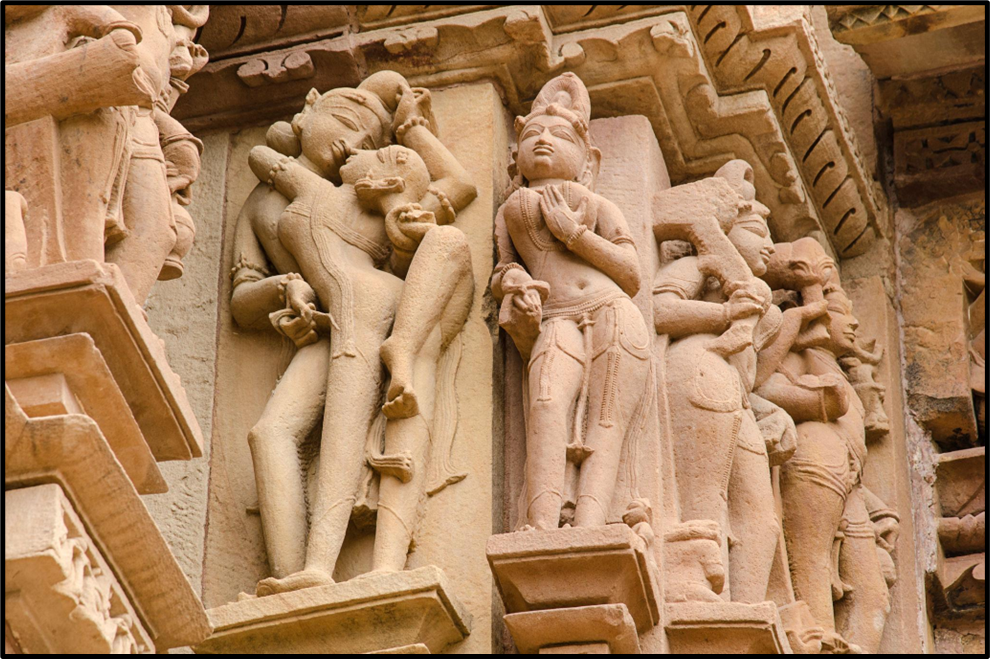
The famous erotic sculptures are not merely sensual:
- They symbolise the integration of the physical and the spiritual
- Reflect the Tantric idea that moksha is attained through harmonious living, not denial
Khajuraho Temples
Built between the 10th and 12th centuries, the Khajuraho Temples are a UNESCO World Heritage Site.
Sculptural Themes → Gods and goddesses, Mythological episodes, Courtly life and musicians, Erotic mithuna figures
Major Temples → Kandariya Mahadeva Temple, Lakshmana Temple, Vishvanatha Temple
Khajuraho represents the aesthetic climax of Nagara-style temple sculpture.
Rajput Sculpture
(8th – 18th century CE)
Rajput sculpture reflects the ethos of valor, devotion, and kingship.
Core Features
- Glorification of gods and warrior-kings
- Blend of martial pride and religious faith
- Emphasis on symmetry, balanced proportions, refined ornamentation
Important Rajput Sites
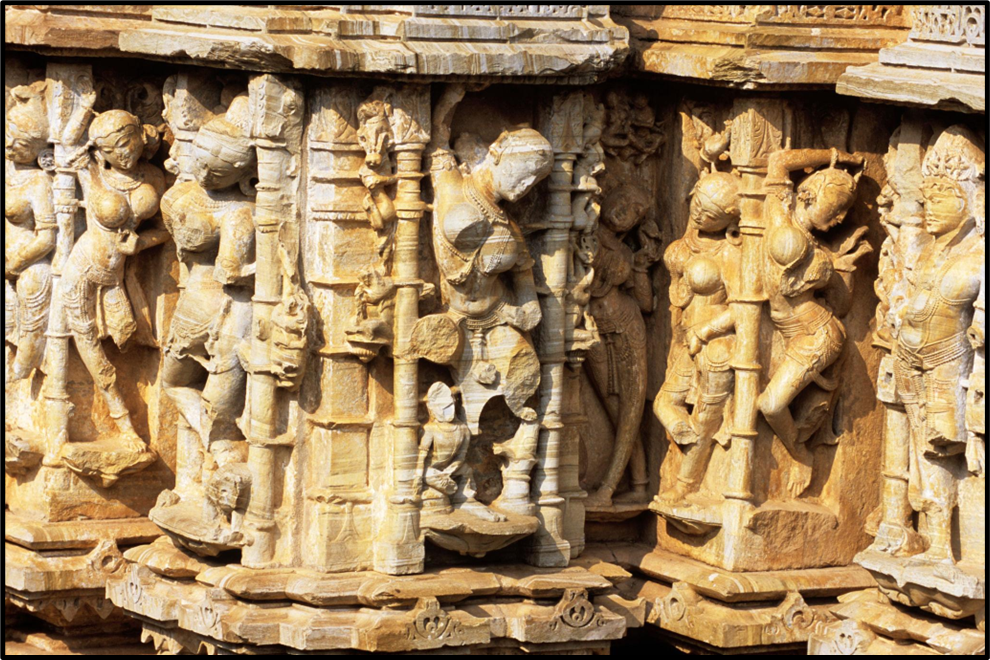
Dilwara Temples, Mount Abu
The Dilwara Temples are Jain temples carved entirely in marble.
- Unmatched delicacy of carving
- Intricate ceilings, pillars, and brackets
- Exemplify spiritual purity through artistic perfection
Sun Temple, Modhera
At Sun Temple, Modhera:
- Sculptures celebrate Surya (Sun God)
- Scenes of daily life and celestial rhythm
- Strong emphasis on iconographic precision and symmetry
Chittorgarh Fort
The Chittorgarh Fort houses → Sculptures of Hindu deities; Warrior figures symbolising heroism and sacrifice
Rashtrakuta Sculpture
(8th – 10th century CE)
The Rashtrakutas are best remembered for transforming entire mountains into temples.
Key Features
- Monumentality on an unprecedented scale
- Fusion of realism, narrative detail, spiritual symbolism
Ellora Caves
The Ellora Caves are a masterpiece of rock-cut architecture.
Kailasa Temple (Cave 16)
- A monolithic temple carved top-down
- Dedicated to Lord Shiva
- Sculpted scenes from → Ramayana, Mahabharata, Puranas
It reflects absolute command over stone, space, and form.
Elephanta Caves
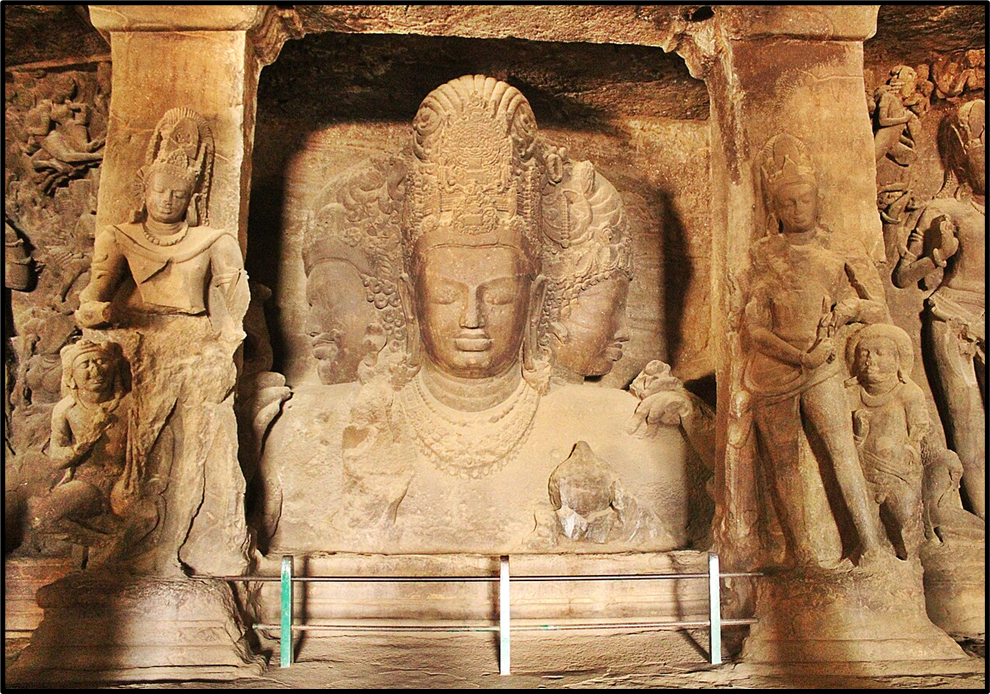
At the Elephanta Caves:
- The colossal Trimurti sculpture of Shiva dominates
- Represents → creation, preservation, destruction
Other forms include → Nataraja, Ardhanarishvara
These sculptures combine spiritual abstraction with monumental presence.
Comparative Snapshot: Major Medieval Sculptural Traditions
| Dynasty | Major Sites | Dominant Themes | Stylistic Traits |
|---|---|---|---|
| Chandelas | Khajuraho | Eroticism & spirituality | Graceful, dynamic, intricate |
| Rajputs | Chittorgarh, Dilwara, Modhera | Valor & devotion | Ornamental, symmetrical, balanced |
| Rashtrakutas | Ellora, Elephanta | Mythology & monotheism | Monumental, intricate, spiritual |
Sculpture under the Pala Dynasty
(8th – 12th century CE)
The Pala period is rightly called the “Golden Age of Bengal Art”, especially for Buddhist sculpture.
While North India was moving towards temple monumentalism, Eastern India became the intellectual and artistic heart of Mahayana and Tantric Buddhism.
Core Features of Pala Sculpture
- Sculpture served strictly religious purposes
- Images adorned → monasteries, stupas, temples
- Strong presence of → Bodhisattvas, Buddhist deities, Tantric themes
Material and Technique
- Black basalt and chlorite stone for stone images
- Bronze images cast using the lost-wax technique
- Use of ashta-dhatu (octo-alloy of eight metals)
- High polish gives stone sculptures a metal-like appearance
Scale and Function
- Generally small-sized
- Intended for private worship and meditation
Iconography
- Buddhist: Avalokiteshvara, Tara, Buddha in various postures
- Hindu: Vishnu, Shiva, Durga
This reflects a syncretic religious culture, not rigid separation.
Major Centres of Pala Sculpture
- Nalanda, Vikramshila, Odantapuri
These monasteries housed exquisite seated and standing Buddhas and Bodhisattvas.
The crowning achievement is Somapura Mahavihara (UNESCO World Heritage Site), richly decorated with → terracotta plaques, stone sculptures, Buddhist narrative themes.
Sculpture under the Sena Dynasty
(11th – 13th century CE)
The Senas inherited the Pala artistic tradition but reoriented it towards Hinduism.
Characteristics
- Continued use of black basalt
- Refined carving techniques
- Decline of Buddhist dominance
- Strong emphasis on Vaishnavism and Shaivism
Iconography
- Vishnu in Anantasayana (reclining posture)
- Durga slaying Mahishasura
- Lakshmi and Shiva images
Thus, Sena sculpture represents continuity in technique but change in religious focus.
Sultanganj Buddha
(Gupta–Pala Transitional Masterpiece)
This sculpture stands as a bridge between classical Gupta serenity and Pala devotion.
Key Facts
- Material: Copper; Date: c. 500–700 CE; Height: 2.3 metres; Weight: Over 500 kg
- Discovered in 1861 during East Indian Railway construction
Artistic Features
- Fleshy torso, Rounded, stiff legs, Right hand in Abhaya mudra
It shows stylistic influence of Sarnath and Mathura, and is recognised as the largest complete metal sculpture of ancient India.
Sculpture during the Delhi Sultanate
(13th – 16th century CE)
With the establishment of Islamic rule, the role of sculpture underwent a fundamental transformation.
Why the Change?
Islam discourages the depiction of animate beings.
As a result → Figurative sculpture declined, Decorative and architectural sculpture flourished
Characteristics of Sultanate Sculpture
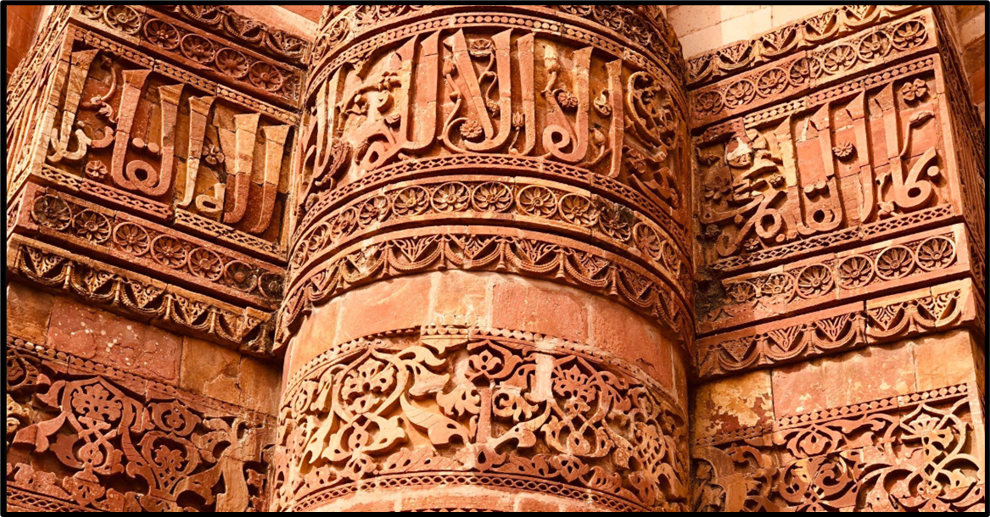
- No human or animal figures
- Emphasis on → calligraphy, arabesque patterns, geometric designs
- Fusion of Persian, Central Asian, Indian craftsmanship
- Focus on symmetry and precision
Important Examples
- Qutb Minar → Bands of Quranic inscriptions; Monumental calligraphic sculpture
- Alai Darwaza → Arabesque motifs, Intricate jali work
- Tughlaqabad Fort → Emphasis on strength, austerity, and minimalism
Here, sculpture becomes architectural ornamentation, not independent imagery.
Sculpture under the Mughals
(16th – 19th century CE)
The Mughals brought refinement and elegance to architectural sculpture.
Core Features
- Material → White marble, Red sandstone
- Techniques → Pietra dura (stone inlay), Delicate carving, Elegant proportions
- Blend of Persian aesthetics, Indian motifs, Central Asian traditions
Mughal Openness to Indian Motifs (Akbar’s Period)
Under Akbar animate motifs reappear → elephants, birds, parrots, peacocks
Examples:
- Elephant-head brackets at Agra Fort
- Sculpted birds and animals at Jahangiri Mahal
- Hindu symbols (chakra, swastika, lotus, parrot) at Mayura Mandapa
High Mughal Art: Shah Jahan
- Taj Mahal
- Floral pietra dura using semi-precious stones
- Sculptural beauty through inlay, not figures
- Red Fort
- Marble panels
- Delicate carvings in Diwan-i-Khas
Decline under Aurangzeb
With Aurangzeb’s accession
→ Figurative and decorative sculptural activity declined sharply
→ Architecture became austere and restrained
Calligraphy and Arabesque
(The Soul of Islamic Visual Art)
In Islamic art, beauty is inseparable from discipline. Since Islam discourages the depiction of living beings (aniconism), artistic expression found powerful alternatives in calligraphy and arabesque.
These are not substitutes for sculpture; they are its transformation.
Calligraphy
(Art through the Sacred Word)
Calligraphy is the art of beautiful writing, but in Islamic culture, it is much more than handwriting—it is a visual form of devotion.
Core Idea
- The Qur’an is the literal word of God.
- Writing it beautifully becomes a religious act.
Key Features
- Focus on → letterforms, proportion, rhythm, balance.
- Executed using → pens, brushes, chisels (in architecture).
Where It Appears
- Manuscripts; Mosque inscriptions; Monumental architecture; Panels, tombs, and gateways
Calligraphy thus becomes both functional (textual) and decorative (aesthetic).
Arabesque
(Art through Infinite Pattern)
Arabesque refers to intricate, flowing patterns composed of → foliage, floral motifs, geometric shapes.
Core Principle
- No depiction of living beings
- Emphasis on repetition, symmetry, and continuity
Symbolic Meaning
- Endless repetition symbolises → infinity, divine unity, cosmic order.
Where It Is Found
- Architectural surfaces, Textiles, Ceramics, Woodwork, Metalwork
Arabesque is purely decorative, yet deeply symbolic.
Calligraphy vs Arabesque (Conceptual Comparison)
| Aspect | Calligraphy | Arabesque |
| Nature | Art of writing | Art of abstract pattern |
| Focus | Text, script, typography | Geometric and floral repetition |
| Purpose | Functional + decorative | Purely decorative |
| Symbolism | Religious meaning through words | Infinity and divine harmony |
| Medium | Manuscripts, inscriptions, panels | Architecture, textiles, ceramics |
| Design Basis | Linguistic forms | Non-figurative motifs |
Pietra Dura
(Luxury, Precision, and Colour in Stone)
Pietra dura literally means “hard stone” (Italian). It is an inlay technique, not carving.
Technique
- Finely cut pieces of → jasper, agate, lapis lazuli, other semi-precious stones
- Inlaid into → marble, stone surfaces
- Polished to create a flat, seamless image
Historical Origin
- Originated in ancient Rome
- Perfected during the Italian Renaissance
- Adopted and refined in Mughal India
Mughal Excellence
The finest example is the Taj Mahal, where pietra dura decorates → walls, cenotaphs, interior panels.
Motifs → Floral designs, Geometric patterns, Stylised landscapes
Pietra dura expresses visual richness through colour and precision, not depth or volume.
Pietra Dura vs Arabesque
| Aspect | Pietra Dura | Arabesque |
|---|---|---|
| Nature | Stone inlay technique | Decorative pattern system |
| Medium | Coloured stones set into marble | Carving, painting, tiling |
| Themes | Floral, geometric, pictorial | Abstract, geometric, floral |
| Origin | Ancient Rome → Renaissance Italy | Islamic artistic tradition |
| Purpose | Decorative luxury inlay | Symbolic ornamental design |
| Visual Effect | Rich colour and precision | Line, rhythm, and infinity |