
Introduction to Coral Reefs
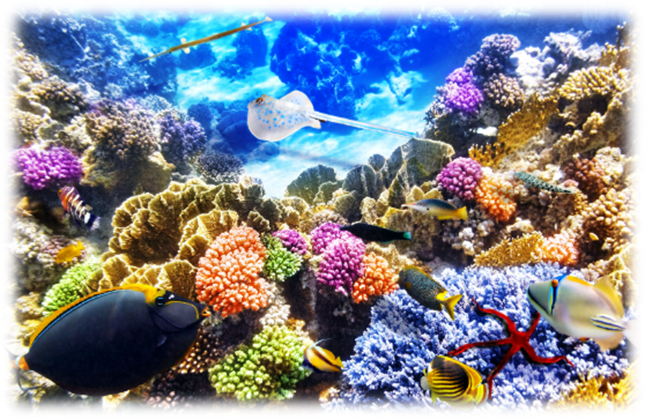
Have you ever visited the Andaman Islands? If you have, you might have witnessed an enchanting underwater world—vibrant colors, thriving marine life, and stunning limestone formations stretching endlessly beneath the waves. This breathtaking spectacle belongs to coral reefs, often called the “rainforests of the sea.” But what exactly are these reefs, and how do they come into existence? Let’s dive in and explore!
Coral reefs are large underwater structures composed of the skeletons of coral, which are marine invertebrate animals.
Coral Polyps
At the heart of a coral reef is a tiny yet extraordinary creature—the coral polyp. These marine invertebrates may look like delicate plants, but they are actually animals, related to jellyfish and sea anemones. Each coral polyp secretes calcium carbonate (limestone) from seawater, creating a hard exoskeleton for protection. Over centuries, as generations of polyps build upon the skeletons of their ancestors, massive coral reef structures take shape.
Corals that contribute to reef-building are known as hermatypic corals or hard corals, as opposed to soft corals, which lack a rigid skeleton. These corals are the master builders of the ocean, tirelessly working to create the vast reef systems that support marine biodiversity.
The Coral-Algae Partnership: A Tale of Mutual Benefit
Coral reefs are not just the work of coral polyps alone. They thrive because of a remarkable mutualistic relationship with tiny photosynthetic algae called zooxanthellae, which live inside their tissues. Think of it as a partnership where both partners contribute:
- The coral offers the algae a safe home and access to nutrients.
- The algae, in return, perform photosynthesis, producing oxygen and food (glucose, glycerol, amino acids), which the coral uses for survival and growth.
- Additionally, the algae help corals remove waste and enhance their ability to deposit calcium carbonate, allowing the reef to expand.
This partnership is so crucial that when corals experience stress (like rising sea temperatures or pollution), they expel the algae, leading to a phenomenon called coral bleaching, where corals lose their vibrant colours and risk dying.
Where Can We Find Coral Reefs in India?
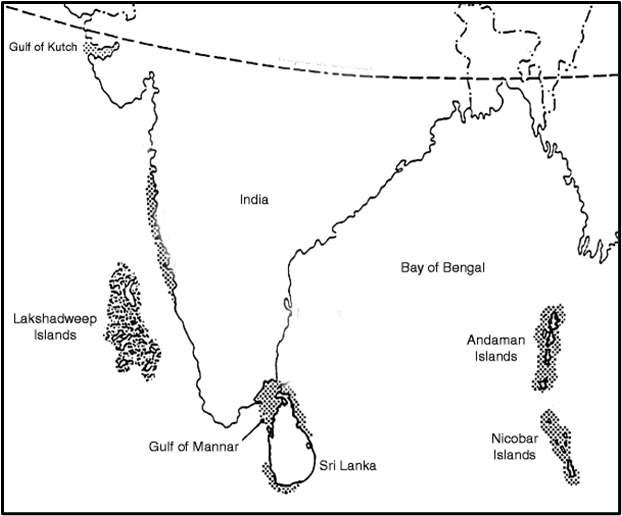
India is home to some stunning coral reef formations, but they are not evenly distributed across the coastline. The major reef sites are:
- Gulf of Mannar & Palk Bay (Tamil Nadu) – Fringing reefs with rich biodiversity.
- Gulf of Kutch (Gujarat) – Home to some of India’s northernmost reefs, but under stress due to industrial activity.
- Andaman & Nicobar Islands – Featuring fringing reefs and a 320 km-long barrier reef on the western coast.
- Lakshadweep Islands – Unique atoll formations, which are ring-shaped coral islands surrounding a lagoon.
Interestingly, the Bay of Bengal lacks extensive coral reefs due to the large inflow of freshwater and sediments from rivers like the Ganges and Brahmaputra, which create conditions unsuitable for coral growth.
What Do Corals Need to Survive?
Corals are delicate organisms that require very specific conditions to thrive. Here’s what they need:
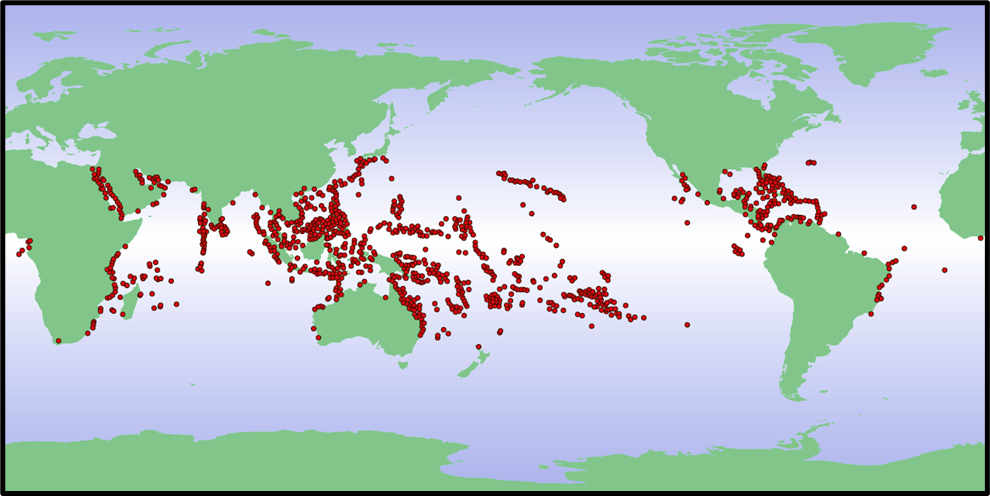
✅ Stable Climate: Corals thrive only in long-term stable equatorial oceanic conditions.
✅ Temperature: Warm tropical waters with an average of 20-21°C.
✅ Depth: Not beyond 200-250 fathoms (~360-450 meters), as corals depend on sunlight for their algae to photosynthesize.
✅ Water Clarity: Clear, sediment-free waters; excessive sediment can smother corals.
✅ Salinity: Neither too fresh nor too salty—optimal levels range between 32-37 parts per thousand.
✅ Ocean Currents & Waves: Moderate movement brings fresh food and oxygen while preventing sediment buildup.
✅ Submarine Platform: A solid underwater base, ideally not deeper than 50 fathoms (~90 meters).
✅ Abundant Plankton: Oxygen + microscopic food supply; more on seaward side → coral growth.
✅ Pollution-Free: Even slight pollution/climate stress can damage fragile corals.
Final Thoughts
Coral reefs are among the most biodiverse ecosystems on Earth, supporting millions of marine species while also acting as natural barriers that protect coastlines from erosion and storms. However, they are under severe threat due to climate change, pollution, and destructive human activities.
Understanding coral reefs is not just about marine biology—it’s about recognizing the delicate balance of nature and the urgent need to protect these underwater marvels. If these reefs disappear, the ripple effects will be felt far beyond the ocean, affecting marine life, fisheries, and even coastal human populations.