
Harris’ Stationary Wave Theory of Ocean Tides
While earlier theories like Equilibrium Theory and Progressive Wave Theory attempted to explain tides as large-scale, global phenomena, RA Harris (US Coast Survey) introduced the Stationary Wave Theory, emphasizing that tides are more localized rather than moving in uniform, global waves.
The Stationary Wave Experiment
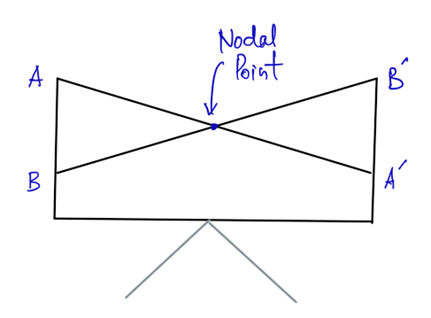
To understand stationary waves, imagine a rectangular tank filled with water. If you:
- Tilt the tank from side to side, water rises on one end while it falls on the other.
- This creates oscillations, where water moves back and forth.
- In the middle of the tank, there is a point where the water level does not change—this is called the nodal point.
- The speed and intensity of these oscillations depend on the depth of the tank and the force applied.
Now, think of Earth’s oceans as giant water containers where the Moon and Sun’s gravitational pull act like an external force, causing oscillations similar to the ones in the tank.
Application to the Real Oceans – The Formation of Amphidromic Points
- Unlike a simple tank, oceanic oscillations do not happen in straight lines due to Earth’s rotation and landmasses.
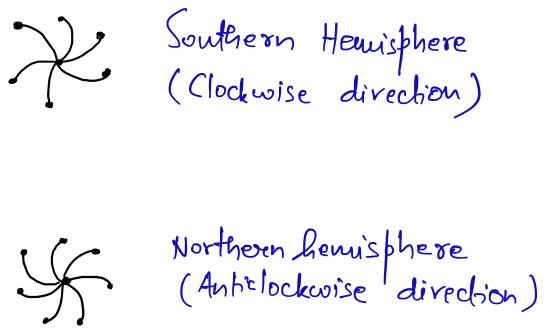
- Instead, ocean waters oscillate around central points called Amphidromic Points (APs).
- At these points, water remains nearly stationary, and tides rotate anticlockwise around them (in the Northern Hemisphere).
- The highest tidal rise and fall occur at the outer edges of these rotations.
- This is why tides do not move as single waves across the globe but rather form regional oscillations around these stationary centers.
Movement of Stationary Waves and Interaction with Landforms
- Once formed, these stationary waves travel toward coastal areas.
- Obstructions like islands, peninsulas, and bays disrupt their flow, influencing local tidal patterns.
- When these waves reach land:
- Crests create high tides (flood tides).
- Troughs create low tides (ebb tides).
Thus, coastal tides are not just a result of Moon’s pull but also depend on oceanic oscillations, amphidromic points, and coastal geography.
Why Stationary Wave Theory Matters
✅ Strengths:
- Explains why tides vary regionally instead of occurring uniformly across longitudes.
- Justifies the existence of amphidromic systems, where tides rotate around central points rather than moving in a single direction.
- Helps in predicting coastal tides based on oceanic oscillations rather than just astronomical forces.
❌ Limitations:
- Does not fully explain open-ocean tides, which are influenced by progressive waves.
- Ignores the effect of deep-sea bottom topography on tidal movement.
- Cannot fully account for extreme tidal variations seen in places like the Bay of Fundy (which has the world’s highest tides).
Conclusion
The Stationary Wave Theory refined our understanding of tides by shifting the focus from global tidal waves to regional oscillations. By identifying amphidromic points, it provided a more accurate representation of how tides actually behave in different parts of the world. However, for a complete picture, modern oceanography combines elements of Equilibrium, Progressive, and Stationary Wave Theories along with Dynamic Theory of Tides to explain the true complexity of tidal systems.