
Big Cat Conservation in India
Tiger Conservation
Why Tiger Conservation Became Critical
If we go back to the early 1900s, there were nearly 1 lakh tigers across the world.
But due to hunting, habitat loss, and global neglect, this number shrank dramatically to less than 4,000 by the early 21st century.
India faced an even more alarming situation:
- In 2006, India had just 1,411 tigers left.
- The Sariska Tiger Reserve in Rajasthan lost all of its tigers—this was a wake-up call.
Only after 2006 did India adopt serious, science-based conservation measures, which gradually revived tiger numbers.
Tiger Subspecies: What Exists and What Is Lost
There were eight subspecies of tiger.
Today, only five survive in the wild:
Existing Subspecies
- Bengal Tiger – India’s main subspecies
- Indochinese Tiger
- South China Tiger – practically extinct in the wild
- Sumatran Tiger
- Siberian Tiger (Amur Tiger)
Extinct Subspecies → Caspian Tiger, Bali Tiger, Javan Tiger
Challenges Faced in Tiger Conservation
Tiger conservation is not just about saving one animal. A tiger is an Umbrella Species—when you save it, you automatically protect the entire ecosystem beneath it.
Let’s understand the challenges:
A. Habitat-related challenges
Habitat Loss & Fragmentation: Large projects—dams, highways, mining, industries—cut through forests, breaking habitat into small isolated patches. This affects tiger movement, breeding, and prey availability.
B. Invasive Species
Non-native plants (like Lantana) choke native vegetation. When producers suffer, herbivores decline. When prey decline, tigers — at the top of the food chain — suffer the most.
C. Poaching & Wildlife Crime
Poachers kill tigers for: Bones (Traditional Chinese Medicine), Skin and other body parts used illegally in international markets. Despite protections, poaching remains the single largest immediate threat.
D. Demand Elimination
As long as global demand for tiger products exists, illegal trafficking continues. Demand reduction is as important as field protection.
E. Rebuilding Tiger Populations is Hard
Most tiger-range countries—except India, Nepal, and Russia—have failed to rebuild their populations. Why? Because tigers require large territories, stable prey, and strong law enforcement—all difficult to maintain.
Canine Distemper Virus (CDV)
Tigers can catch diseases from domestic dogs living around protected areas.
Canine Distemper Virus (CDV) infects Respiratory system, Gastrointestinal system OR Nervous system. Example: In 2018, more than 20 Gir lions died due to CDV—showing how dangerous such diseases can be.
Prevention Strategy: Wild animals cannot be vaccinated directly. So, the solution is → Vaccinate free-ranging and domestic dogs around National Parks.
What Measures Has the Government of India Taken?
Government efforts fall under three categories: Legal, Administrative, and Financial.
A. Legal Measures
1. Amendment to Wildlife (Protection) Act, 1972 → WLP Amendment Act, 2006
This amendment created:
- NTCA (National Tiger Conservation Authority)
- Tiger and Other Endangered Species Crime Control Bureau → Wildlife Crime Control Bureau (WCCB)
2. Enhanced Punishments
Offences inside tiger reserves or their core areas attract stricter penalties.
B. Administrative Measures
- Strong anti-poaching measures (including monsoon patrolling, when poaching risk increases).
- State-level Steering Committees headed by Chief Ministers to monitor tiger conservation.
- Creation of Tiger Conservation Foundations for fund management.
- Formation of Special Tiger Protection Force (STPF) — a trained, armed, field-ready unit.
C. Financial Measures
The Centre provides financial + technical support through → Project Tiger AND Integrated Development of Wildlife Habitats (IDWH)
India’s 3-Pronged Strategy to Reduce Man–Tiger Conflict
- Material and Logistical Support → Funding under Project Tiger for compensation, vehicles, equipment, etc.
- Restricting Habitat Interventions → Every tiger reserve has a carrying capacity. Habitat management is kept minimal to avoid pushing tigers toward human habitation.
- SOPs (Standard Operating Procedures) →NTCA issues SOPs to guide field staff in handling conflict situations, straying tigers, injured tigers, attack cases
International Cooperation
India does not work alone. Tiger conservation requires collaboration.
- MoU with Nepal for controlling illegal cross-border wildlife trade
- Protocols with Bangladesh and China
- India–Russia Sub-group on Tiger/Leopard Conservation
- Participation in Global Tiger Forum (GTF)
- As a member of CITES, India upholds the rule: No breeding of tigers for trade in their parts or derivatives
Global Tiger Forum (GTF)
- Established: 1994
- HQ: New Delhi
- Aim: A global campaign for tiger, its prey, and habitat conservation
- General Assembly meets every 3 years
This is the only intergovernmental forum dedicated to tigers.
Project Tiger (PT)
Before its launch, the situation was grim:
- Historical estimate (early 20th century): 20,000–40,000 tigers
- First official census in 1972: barely 1,800 tigers
This triggered action.
Launch of Project Tiger
- Year: 1973
- Launched from: Jim Corbett National Park, Uttarakhand
- Approach: Core–buffer strategy
Governance
- Administered by NTCA, under the Ministry of Environment, Forest and Climate Change (MoEFCC)
- Funds relocation of forest villages to reduce conflict
- Created the Tiger Protection Force to combat poachers
Project Tiger remains the world’s largest species conservation programme.
Tiger Task Force
- After many years of Project Tiger, it became clear that tiger conservation needed stronger legal authority.
- Who recommended it? National Board for Wildlife (NBWL)
- What was created? Tiger Task Force → recommended granting statutory powers to Project Tiger
- This led to the creation of NTCA through the Wildlife (Protection) Amendment Act, 2006.
Thus, the sequence is: NBWL → Tiger Task Force → NTCA
National Tiger Conservation Authority (NTCA)
The Wild Life (Protection) Amendment Act, 2006 brought a major reform in India’s tiger protection system.
It created two important statutory bodies under the Ministry of Environment, Forest and Climate Change (MoEFCC):
- National Tiger Conservation Authority (NTCA)
- Wildlife Crime Control Bureau (WCCB) — earlier named Tiger and Other Endangered Species Crime Control Bureau
NTCA is the apex authority that administers Project Tiger and ensures uniform standards of protection across all tiger reserves.
Key Powers of NTCA
To ensure that tiger reserves are not disturbed for political or commercial reasons, NTCA has been given strong regulatory powers:
1. Boundary changes need NTCA approval
No state can alter the boundaries of a tiger reserve unless NTCA recommends it, and the National Board for Wildlife (NBWL) approves it.
2. De-notification of tiger reserves
A state cannot de-notify (cancel) a tiger reserve unless it proves “public interest”, and gets approval of NTCA and NBWL. This prevents casual or arbitrary removal of tiger habitats.
Composition of NTCA
NTCA is designed to be a multi-stakeholder body combining expertise, bureaucracy, and political representation.
Chairperson: Union Minister for Environment & Forests
Members include:
a) Eight experts in wildlife conservation, ecology, tribal welfare
b) Three Members of Parliament
c) Inspector-General of Forests (Project Tiger) as ex-officio Member Secretary
d) Other official nominees and specialists
This balanced structure ensures both technical depth and policy-level authority.
Functions of NTCA
NTCA acts as a guide, regulator, auditor, and coordinator.
- Sets standards & guidelines: For Tiger Reserves, National Parks, and Wildlife Sanctuaries related to → Protection, Monitoring and Management practices
- Prepares Annual Report: NTCA must submit an annual report to the Government, which is then laid before Parliament, making its functioning transparent and accountable.
Mandates for State Governments
1. State-level Steering Committees
Every “Tiger State” must set up a committee headed by its Chief Minister to → Coordinate conservation efforts; Monitor tiger populations and Review protection measures. This ensures seriousness at the highest political level.
2. Tiger Conservation Plan
Each state must prepare a Tiger Conservation Plan, covering → Habitat management, Protection strategies, Community involvement, Eco-development
3. Tiger Conservation Foundation
States must form a foundation to professionally manage funds for conservation activities.
Challenges Faced by NTCA and Tiger Conservation
1. Conflict with Forest Rights Act (FRA), 2006
FRA recognises rights of forest-dwelling communities. This creates tension because:
- Project Tiger often requires relocation from core areas
- FRA grants rights inside forests
Balancing tribal rights and tiger protection is a continuous challenge.
2. Habitat Saturation
India’s forests are limited. Even with successful conservation, many reserves are reaching tiger saturation levels — meaning: The habitat has more tigers than it can support AND Young tigers disperse outward, leading to increased man–tiger conflict. This makes corridor protection crucial.
Tiger Corridors in India
NTCA + Wildlife Institute of India published “Connecting Tiger Populations for Long-term Conservation” which mapped 32 major tiger corridors across India. Corridors ensure genetic flow and allow tigers to move safely between reserves.
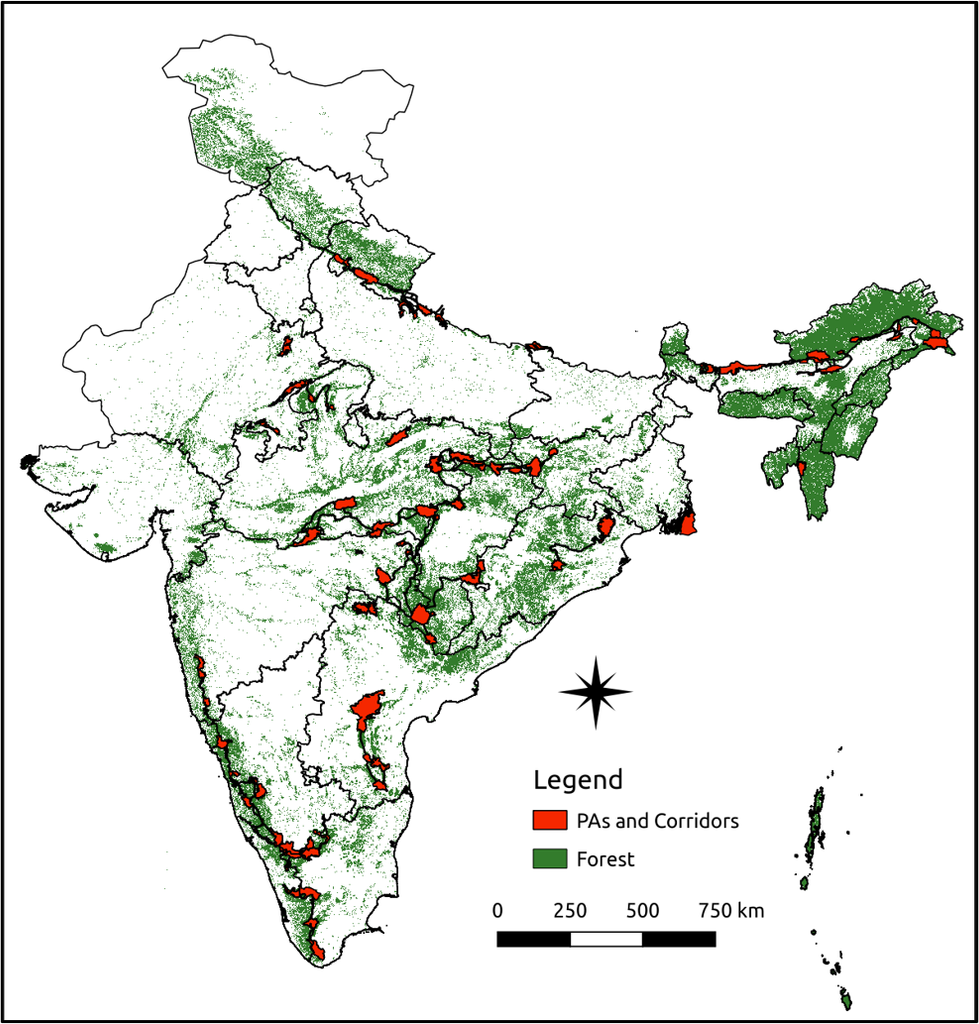
India has four major tiger landscapes:
1. Shivalik Hills & Gangetic Plains Landscape
Includes corridors like:
- Rajaji–Corbett (Uttarakhand)
- Corbett–Dudhwa (Uttarakhand, UP, Nepal)
- Dudhwa–Kishanpur–Katerniaghat (UP, Nepal)
2. Central India & Eastern Ghats Landscape
The largest network, includes major corridors:
- Ranthambhore–Kuno–Madhav (MP–Rajasthan)
- Kanha–Pench, Pench–Satpura–Melghat (MP–Maharashtra)
- Bandhavgarh–Sanjay Dubri–Guru Ghasidas (MP)
- Indravati–Udanti–Sunabeda (Chhattisgarh–Odisha)
- Similipal–Satkosia (Odisha)
These are some of India’s most ecologically significant tiger dispersal routes.
3. Western Ghats Landscape
Highly biodiverse; major corridors include:
- Sahyadri–Radhanagari–Goa (MH–Goa)
- Dandeli Anshi–Sharavathi Valley, Kudremukh–Bhadra (Karnataka)
- Nagarhole–Bandipur–Mudumalai–Wayanad (KA–KL–TN)
- Parambikulam–Indira Gandhi, Kalakad–Periyar (TN–KL)
Tigers here are part of a continuous meta-population.
4. North East Hills & Brahmaputra Landscape
Key corridors:
- Kaziranga–Karbi Anglong
- Kaziranga–Nameri, Kaziranga–Itanagar WLS
- Manas–Buxa (Assam–West Bengal–Bhutan)
- Pakke–Nameri–Sonai Rupai–Manas
- Kamlang–Kane–Tale Valley
These corridors link Indian populations with Bhutan and Arunachal Pradesh.
You can find exhaustive list of all the Tiger Corridors here.
Core and Buffer Zones in Tiger Reserves
Tiger reserves follow the core-buffer strategy.
Core Area (Critical Tiger Habitat)
Notified by the State Government with help of an Expert Committee.
Characteristics:
- No human activities allowed (in principle)
- Treated as National Park/Wildlife Sanctuary
- No grazing, resource collection, or habitation permitted
- However, some tribes illegally remain due to historical dependence
Exception: The Soligas Case
The Soliga tribe of Karnataka became the first community to get forest rights inside a core area of a tiger reserve.
Why was this allowed?
- They lived for centuries in harmony with nature
- Their lifestyle did not harm the tiger population
- Courts recognised their traditional rights
Location: BRT Tiger Reserve (Biligiri Ranga Hills). This is an exception, not a rule.
Buffer Zone
Buffer zone surrounds the core area and serves multiple purposes:
- Provides extra habitat for dispersing tigers
- Allows regulated human activities like grazing and collection of minor forest produce
- Recognises rights of forest-dwelling communities under Forest Rights Act (FRA)
- Encourages coexistence and eco-development
Boundaries of buffer zones are decided with Gram Sabha and Expert Committee
Why the Core–Buffer System Works
- Core = Conservation priority (breeding, habitat security)
- Buffer = Coexistence + conflict reduction
- Corridors = Connectivity
Together, they create a landscape-level conservation model, which is globally recognised.
Tiger Census
Tiger census = the systematic process of estimating tiger numbers in different areas. It is periodic (four-yearly) and gives the authoritative estimate of India’s tiger population. The census is carried out jointly by the Wildlife Institute of India (WII) and the National Tiger Conservation Authority (NTCA).
Why it matters:
- Provides evidence to judge success/failure of conservation measures (Project Tiger, NTCA actions).
- Guides policy, funding, relocation, and anti-poaching strategies.
- Reveals spatial trends (which landscapes are gaining/losing tigers), and exposes threats (local extinction, corridor breakdown).
How tiger numbers were estimated — evolution of methods
Understanding methods is crucial for UPSC because each method has strengths and limitations.
1. Pugmark Census (traditional)
- Based on tiger pugmark (paw print) impressions.
- Tried to identify individuals and sex from pugmarks.
- Limitations: low reliability and prone to observer bias.
- Today: largely relegated to an index of occurrence (presence/absence), not a population estimator.
2. Camera Trapping
- Cameras placed in the field automatically photograph passing tigers.
- Individuals are identified by unique stripe patterns — like fingerprints.
- Allows capture–recapture style estimation (photographic capture histories).
3. DNA Fingerprinting
- Tigers identified from scats (faeces) using genetic analysis.
- Powerful for detecting individuals where cameras are not feasible.
2018 Census methodology — “double sampling” approach
Since 2006 the census moved to a double sampling approach to improve accuracy:
- Phase 1 & 2 (Ground surveys): Forest department teams gather field signs — scat, pugmarks, pugging, scrapes.
- Camera trapping: Intensive photographic sampling to individually identify tigers (used where feasible).
- In 2018, ~83% of big cats were individually photographed.
- Spatial plotting & extrapolation: Field data and camera results were plotted on GIS/remote-sensing maps (using MSTrIPES), and statistical extrapolation estimated numbers where cameras couldn’t be deployed.
Result: a more robust, spatially explicit estimate than pugmarks alone.
MSTrIPES — technology aiding protection
MSTrIPES = Monitoring System for Tigers — Intensive Protection & Ecological Status (launched 2010 by NTCA & WII).
Two components:
- Field protocols: standardized patrolling, law-enforcement records, ecological monitoring sheets.
- Custom GIS software: central database for storage, retrieval, analysis, reporting.
On ground:
- Forest guards record patrol tracks via GPS, upload geo-tagged photos and observations.
- Advantages: real-time assessment of patrolling effort, accountability (proof of presence), and identification of patrolling gaps.
Key results: 2014 → 2018 → 2022 — trends and takeaways
India’s tiger numbers (all-India estimates)
- 2006: 1,411
- 2010: 1,706
- 2014: 2,226
- 2018: 2,967 (≈ +33% over 2014) — India achieved the global TX2 doubling goal ahead of 2022.
- 2022: 3,682 — growth slowed to +6.7% over 2018.
Notable landscape/state patterns (2018 highlights)
- Madhya Pradesh (526) — highest single-state tiger count (largest increase 2014–2018: +218).
- Karnataka (524) — second highest.
- Uttarakhand (442) — third.
- Corbett TR recorded the highest tigers for a reserve (266).
- Sathyamangalam (TN) showed the maximum improvement since 2014.
- Some reserves (Buxa, Dampa, Palamau) had no tiger traces in 2018 — local extirpation risk.
2022 nuances
- Total 3,167 tigers (minimum estimate); India hosts the majority of world tigers.
- Growth slowed (2018 → 2022), raising questions: saturation, habitat limits, and increased infrastructure pressures.
- Declines in parts of Western Ghats, and reduced occupancy in Jharkhand, Odisha, Chhattisgarh, Telangana.
- Several core areas recorded local extirpations (e.g., Kawal TR — Telangana; Satkosia — Odisha; Sahyadri TR — Maharashtra).
- Census limitation: current figures largely reflect protected areas — numbers outside PAs (increasingly important for conflict & conservation) are not fully quantified.
Five tiger landscapes (as used in census reporting)
- Shivalik Hills & Gangetic Plains
- Central Indian Landscape & Eastern Ghats
- Western Ghats
- North-East Hills & Brahmaputra Plains
- Sundarbans
These landscapes are the operational units for planning, corridors, and management priorities.
Why the numbers increased (measures that worked)
Practical field interventions and policy actions that drove the rise (2006–2018):
- Improved patrolling: wireless comms, outstation camps, GPS-aided patrols (MSTrIPES).
- Special tiger forces in many states tackling organized poaching.
- Relocation of villages from critical habitats (compensation incentive ₹10 lakh per family in earlier schemes).
- Expansion of protected area network: tiger reserves rose from 9 (1973) to 53 (by 2023).
- Project Tiger funding & technical support for habitat management, anti-poaching, research.
Emerging concerns & strategic points
- Habitat saturation: Many reserves approach carrying capacity; excess dispersal leads to conflict.
- Connectivity: Corridors (32 major macro corridors mapped by NTCA & WII) are vital to maintain genetic flow and reduce density pressure.
- Threats persist: habitat encroachment, infrastructure (mining, roads), livestock grazing, illegal hunting of prey, forest fires, and unregulated extraction of NTFP.
- Census coverage gap: failure to include robust estimates of tigers living outside protected areas is a major blind spot for policy (these animals often cause conflict and are conservation priorities).
- Translocations & diplomacy: India exploring translocation to revive extinct populations elsewhere (e.g., Cambodia) — requires careful genetic and ecological planning.
- Genetically unique populations (e.g., Valmiki, Similipal) need targeted protection to preserve genetic diversity.
International Big Cat Alliance (IBCA)
- Approved by Union Cabinet; one-time allocation ₹150 crore for 2023–24 to 2027–28.
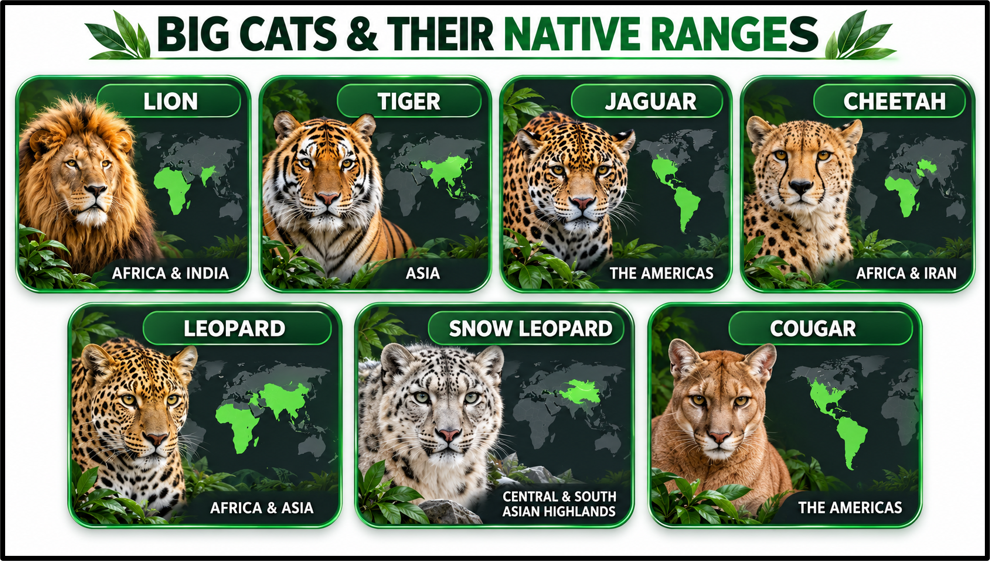
- A global network aiming to conserve seven big cats: Tiger, Lion, Leopard, Snow Leopard, Cheetah, Jaguar, Puma.
- IBCA complements bilateral/regional initiatives and knowledge sharing among range & non-range countries.
Clouded Leopard Conservation in India
The mainland clouded leopard (Neofelis nebulosa) is a largely arboreal forest cat found from the Himalayan foothills and Northeast India to mainland Southeast Asia and southern China. It is distinct from the Sunda clouded leopard (Neofelis diardi) of Borneo and Sumatra.
Conservation Status
IUCN: Vulnerable | Wild Life (Protection) Act: Schedule I | CITES: Appendix I
Clouded Leopard Conservation Action Plan, 2026
India launched a dedicated Clouded Leopard Conservation Action Plan (CAP) under the Government of India–GEF–UNDP initiative. It adopts a landscape-based conservation approach and identifies 14 priority conservation landscapes across Northeast India.
Its major pillars are:
- Habitat protection and restoration
- Forest-corridor connectivity
- Scientific monitoring through camera traps, occupancy surveys, genetics and eDNA
- Anti-poaching and wildlife-crime control
- Community participation and sustainable livelihoods
- Transboundary cooperation with neighbouring range countries
- Climate-resilient and adaptive conservation planning.
The clouded leopard has also been included under the Species Recovery Programme of the Integrated Development of Wildlife Habitats (IDWH) scheme.
Mission Clouded Leopard – Meghalaya
In 2026, Meghalaya, whose State Animal is the clouded leopard, launched Mission Clouded Leopard for habitat restoration, scientific monitoring, connectivity, anti-poaching and community-based conservation.
Cheetahs in India
After more than 70 years of extinction in India, cheetahs have returned.
In September 2022, eight cheetahs from Namibia (5 females + 3 males) were brought to Kuno Palpur National Park, Madhya Pradesh. This event is historically unique for three reasons:
1. First Intercontinental Carnivore Translocation
No country has ever moved a top predator from one continent to another for rewilding.
India is the first.
2. Cheetahs returned after being declared extinct in 1952
They disappeared mainly due to hunting, habitat loss, and declining prey base.
3. Reintroduction in an unfenced Protected Area (PA)
This is globally unprecedented.
- In South Africa: Big predators are kept inside fully fenced reserves to prevent conflict with humans — a model known as “fortress conservation.” Social scientists criticize this fence-based model because local communities lose access to natural resources.
- In India: Protected Areas follow a co-existence model, with buffer zones around core areas. Communities can use natural resources, making conservation more socially acceptable.
Thus, the Indian model emphasizes people–wildlife coexistence over fencing.
Why bring back cheetahs?
1. Restore open forest & grassland ecosystems
Cheetahs are specialist predators of grasslands.
India’s grasslands are neglected and wrongly classified as “wastelands.”
Cheetah reintroduction gives ecological and political visibility to grassland conservation.
2. India becomes home to all four big felines
Tiger | Lion | Leopard | Cheetah
3. Scientific interest
This is a long-term ecological experiment. The survival and breeding success of this first batch will determine the programme’s continuation.
Cheetah Task Force
To monitor and guide the project, the Government constituted a Task Force for 2 years, responsible for:
- Monitoring cheetah health
- Management of quarantine and acclimatisation enclosures
- Advising on eco-tourism development
- Guiding habitat improvement in Kuno & other PAs
African vs Asiatic Cheetah
| Feature | African Cheetah | Asiatic Cheetah |
| IUCN Status | Vulnerable | Critically Endangered |
| CITES | Appendix I | Appendix I |
| Numbers | ~6,500–7,000 (Africa) | 40–50 (Iran only) |
| Status in India | Introduced from Africa | Declared extinct in 1952 |
| Build | Larger, more robust | Smaller, paler, red eyes, more cat-like face |
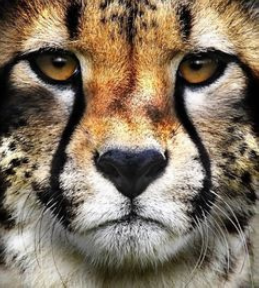

India reintroduced African cheetahs, not Asiatic ones, because almost no viable Persian population exists for translocation.
Why was Kuno National Park chosen?
Although much of India is potential cheetah habitat, Kuno NP was preferred due to four scientific reasons:
- No human settlements inside the park: Nearly 24 villages were relocated earlier (for lion reintroduction). Thus ® No livestock, No human disturbance, Greater prey growth potential
- Natural savannah–grassland habitat: Past village sites have turned into grasslands, ideal for cheetahs which hunt by sprinting in open landscapes.
- Within historical cheetah range: Kuno lies close to Sal forests of Chhattisgarh, part of the former habitat of Asiatic cheetahs.
- Possibility of hosting all four Indian big cats: Originally, Kuno was chosen as the second home for Asiatic lions (a project stuck due to political resistance from Gujarat).
Cheetah introduction adds ecological value to an already suitable carnivore landscape.
Concerns and Criticisms
1. High leopard density
Leopards are ® Stronger, more adaptable, comfortable in forests and grasslands. They may kill cheetahs or outcompete them for prey. This is the biggest biological challenge.
2. Cheetahs require open landscapes
Dense forests reduce visibility and hunting efficiency. Thus habitat management will be a long-term necessity.
3. Long-term viability uncertain
Survival, breeding success, dispersal, conflict, and disease will determine whether a self-sustaining population emerges.
Conservation of Asiatic Lions
Where are they found?
Asiatic Lions (Persian Lions) were once spread across West Asia, Middle East and Northern India. Now, they are restricted only to the Gir landscape of Gujarat — the last wild home of this species.
Protection Status
- IUCN: Endangered
- CITES: Appendix I
- WPA, 1972: Schedule I
Project Lion
The goal is to ensure landscape-level conservation of Gir lions by integrating Habitat protection; Corridor development; Eco-development; Community-based conservation AND Better monitoring and disease prevention
Lion population trends
- 2015: 523 lions
- 2020: 674 lions (increase of 28.87% since 2015)
- 2025: 891 lions (increase of 32.19% since 2020)
This is one of the highest growth rates recorded for any big cat population globally.
Key Conservation Challenges
Despite strong population recovery, the Asiatic lion remains vulnerable because the entire wild population is concentrated within a single broad landscape in Gujarat. This creates risks from:
- Disease outbreaks, especially Canine Distemper Virus (CDV)
- Habitat fragmentation and infrastructure
- Human–lion conflict
- Limited geographic spread of the population
Project Lion and Landscape Expansion
Project Lion, announced in 2020, provides a long-term framework for habitat restoration, corridor conservation, disease management, scientific monitoring and community participation. A 10-year project with an approved outlay of about ₹2,927.71 crore supports these conservation measures.
Its strategic framework, Lion@47: Vision for Amrut Kaal, focuses on securing and restoring lion habitats, community livelihoods and advanced wildlife-health systems.
Second Habitat and Disease Risk Reduction
Barda Wildlife Sanctuary has been developed as a second home for Asiatic lions, while gene-pool centres at Rampara and Satvirda provide additional safeguards against catastrophic events. Real-time monitoring is supported by the Hi-Tech Monitoring Unit at Sasan-Gir, established in 2019 and using radio telemetry.
For chapter-wise Environment preparation for UPSC Prelims and Mains, refer to the complete Environment UPSC notes page.