
Development of Sagar Island
– A Sacred Land on the Continental Shelf
Imagine a sacred island where the mighty Ganga meets the Bay of Bengal, where tigers walk through mangroves, and pilgrims gather by the millions. That is Sagar Island, also known as Gangasagar—an island of spiritual importance, ecological value, and economic potential, located just 150 km south of Kolkata, West Bengal.
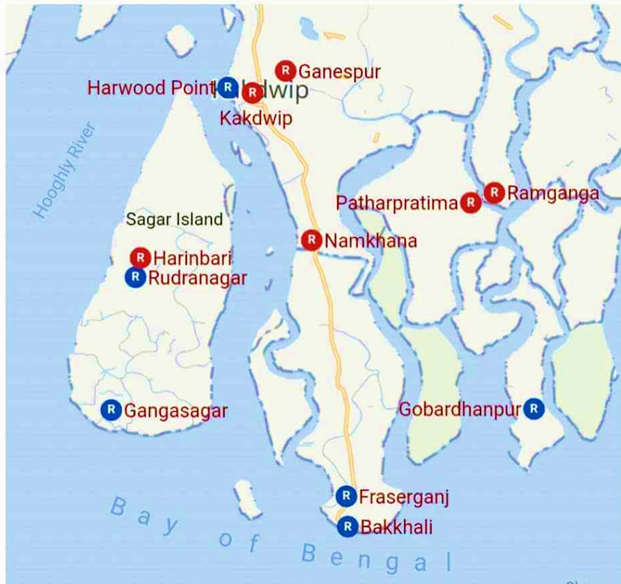
📍 Geographical Context
- Sagar Island lies on the continental shelf of the Bay of Bengal, covering about 300 sq. km.
- It’s not part of the distant island territories like Andaman or Lakshadweep—it’s closer to the mainland, yet isolated due to lack of permanent physical connectivity.
🐅 Ecological and Faunal Significance
- The island is home to the Royal Bengal Tiger, an endangered species.
- It has:
- Mangrove swamps
- Interconnected waterways
- Small rivers
This makes it part of the lower Ganga delta ecosystem, closely related to the Sundarbans region.
🕉️ Religious and Cultural Importance
- Sagar Island is a major Hindu pilgrimage site.
- Every year during Makar Sankranti, lakhs of devotees gather to take a holy dip, making it one of the largest religious congregations in eastern India after the Kumbh Mela.
This gives it both tourism potential and socio-cultural value—a perfect case for spiritual tourism in regional planning.
🌉 Connectivity and Development Initiatives
- A 3.3 km bridge is planned to link the island to the mainland, reducing dependence on ferry services and enhancing accessibility.
- However, planning efforts are not just about concrete—they account for ecological preservation.
- That means balancing development with conservation of mangroves, wetlands, and faunal habitats.
🎣 Future Planning Potential
Sagar Island offers multiple growth avenues:
- Eco-tourism: With its scenic beauty and biodiversity.
- Pilgrimage tourism: With religious-cultural footfall already established.
- Fisheries: Coastal and inland fishing have potential for livelihood generation.
But the development model has to be location-specific, considering:
- Fragile ecosystem
- Risk of coastal erosion
- Need for climate resilience
So regional planning must follow a sensitive, integrated, and low-impact model.
🧭 Conclusion: A Sacred Shoreline with Strategic Promise
Sagar Island is a classic example of how cultural heritage, natural ecosystem, and modern development intersect. Its future lies not in mass industrialization, but in mindful regional planning that enhances its value without disturbing its soul.