
Modern Agricultural Practices
What Do We Mean by Modern Agricultural Practices?
Modern agriculture today goes beyond crop cultivation. It integrates multiple allied activities to:
- Provide nutritional security
- Diversify farm income
- Reduce excessive dependence on cereals and pulses
These practices include:
- Animal husbandry
- Poultry farming
- Apiculture
- Fisheries
- Mushroom cultivation
Together, they supply milk, meat, eggs, fish, honey, and mushrooms, improving dietary diversity while spreading livelihood risks for farmers.
Precision Farming
Why Precision Farming Is Needed in India?
India’s agriculture has largely focused on production volume, but this has not always translated into productivity or profitability.
Key constraints today are:
- Shrinking landholdings (fragmentation)
- Depleting water resources
- Rising input costs
- Environmental stress
👉 Hence, the need for farmer-friendly, location-specific, high-tech systems that deliver vertical growth (more output from the same land) with judicious resource use. This is precisely the role of precision farming.
Precision Farming: Core Idea
Precision farming is an information-based farm management system that aims for:
- Optimal profitability
- Sustainability
- Efficient resource utilisation
Instead of “one-size-fits-all” practices, it applies the right input, at the right place, at the right time, in the right quantity.
Key Interventions Under Precision Farming
Precision farming uses a suite of high-tech yet farmer-oriented interventions, such as:
- Fertigation (fertilisers through irrigation water)
- Greenhouse cultivation
- Soil- and leaf-nutrient–based fertiliser management
- Mulching for moisture conservation
- Drip irrigation
- Micropropagation
- High-density planting
Each intervention targets higher yields with lower resource wastage.
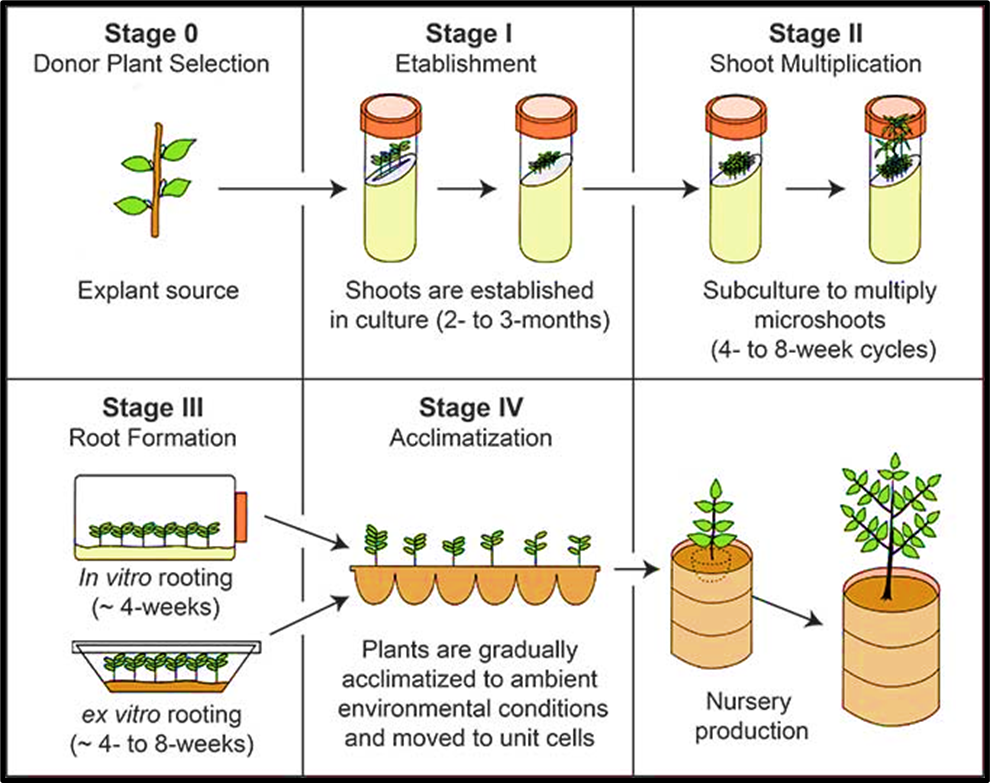
Micropropagation
Micropropagation is the rapid multiplication of selected plants using plant tissue culture techniques.
Why It Matters
- Produces a large number of uniform, disease-free plants
- Ensures quality planting material
- Particularly useful in horticulture, floriculture, and plantation crops
High-Density Planting (HDP)
High-density planting is a modern horticultural technique where:
- Dwarf or modified-canopy trees are planted closely
- Canopy architecture allows better light interception
- Field operations become mechanisation-friendly
Advantages
- Automated irrigation and fertigation
- Mechanised pruning and pest control
- Low labour requirement
- High and regular yields of uniform quality fruits
Role of Geoinformatics in Precision Farming
Geoinformatics integrates computer science and geosciences to collect, analyse, and apply spatial data.
It includes:
- Surveying and mapping
- Remote Sensing (RS)
- Geographic Information Systems (GIS)
- Global Positioning Systems (GPS)
Together, these tools form the technological backbone of precision agriculture.
Global Positioning System (GPS)
GPS-based applications in farming are used for:
- Farm planning and field mapping
- Tractor guidance
- Variable Rate Application (VRA)
(automated, precise application of fertilisers, pesticides, etc., based on sensor and map data) - Yield mapping
Key advantage: GPS allows operations even under low visibility conditions such as fog, dust, rain, or darkness.
Remote Sensing (RS)
Remote sensing involves making inferences about objects without physical contact, using sensors mounted on → Drones, Aircraft, Balloons, Satellites
Applications in Precision Farming
- Crop yield modelling
- Detection of pest and disease infestation
- Soil moisture estimation
- Irrigation monitoring
- Assessment of crop damage (drought, flood, hail)
👉 RS enables early warning and timely intervention, reducing losses.
Geographic Information System (GIS)
A GIS is a computerised system for storing, analysing, and visualising spatial data related to:
→ Crop productivity
→ Soil properties
→ Pest and weed distribution
→ Agronomic factors
Why GIS Is Powerful
- Integrates multiple data layers
- Displays outputs as maps
- Helps understand spatial relationships among yield, fertility, pests, and water
- Supports informed, site-specific decision-making
Internet of Things (IoT) in Agriculture
Modern precision farming relies heavily on:
- Computers
- Low-latency internet (5G)
IoT enables:
- Real-time data from soil moisture sensors, weather stations, and crop sensors
- Automated irrigation and fertigation
- Continuous monitoring and decision support
👉 IoT converts farms into data-driven systems.
Future Strategy: Challenges for India
While precision farming is well established in developed countries, its adoption in India faces hurdles:
- Land fragmentation
- High cost of advanced technologies
- Lack of specialised technical centres
- Absence of customised precision-agriculture software
- Poor economic capacity of small and marginal farmers
Way Forward
- Scale-appropriate technologies
- Custom Hiring Centres (CHCs)
- Farmer Producer Organisations (FPOs)
- Public–private partnerships
- Capacity building and digital literacy
Protected Cultivation of Horticulture Crops
What Is Protected Cultivation?
Protected cultivation refers to cropping techniques in which the micro-environment around plants is partially or fully controlled according to crop requirements during the growth period.
The objective is to:
- Maximise yield
- Save resources (water, nutrients, land)
- Reduce climatic risks
- Enable off-season and high-value cultivation
It is especially important in the context of:
- Climate variability
- Water scarcity
- Shrinking cultivable land
- Rising demand for fruits, vegetables, and flowers
Greenhouse Cultivation
What is a Greenhouse?
A greenhouse is a fully climate-controlled structure equipped with:
→ Heating and cooling systems
→ Controlled humidity and ventilation
→ Advanced roofing materials (e.g., double-walled polycarbonate sheets)
Uses of Greenhouses
- Growing exotic vegetables
- Off-season vegetable cultivation
- Floriculture
- Raising planting material
- Acclimatisation of plants
- Plant breeding and varietal improvement under adverse agro-climatic conditions
👉 Greenhouses represent the highest level of technological sophistication in protected cultivation.
Polyhouse Cultivation
A polyhouse is a less sophisticated version of a greenhouse.
Key Characteristics
- Naturally ventilated
- Partially climate-controlled
- Lower cost compared to greenhouses
Usage
- Similar to greenhouses: vegetables, flowers, nurseries
- More suitable for Indian farmers due to lower capital requirement
👉 In practice, polyhouses are far more widespread than greenhouses in India.
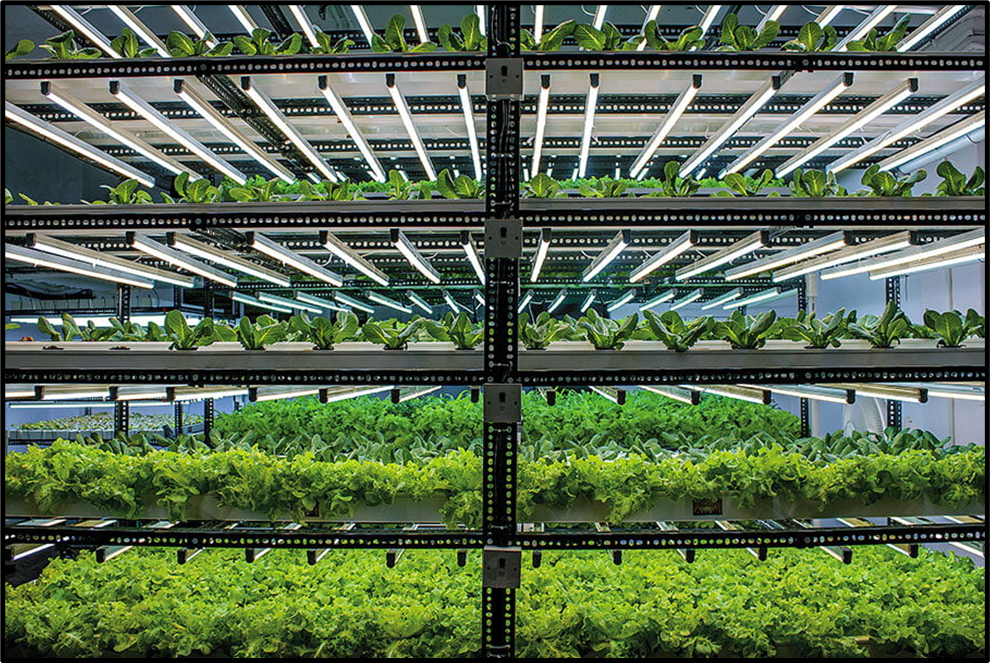
Hydroponics: Soil-Less Agriculture
What is Hydroponics?
Hydroponics is a method of growing plants without soil, using:
- Water enriched with balanced mineral nutrients
- Precisely controlled pH and nutrient concentration
Why Hydroponics Is Being Promoted?
- Increasing water scarcity
- Frequent droughts
- Declining land availability
- Need for urban and peri-urban farming
Government agencies are promoting hydroponics for → Vegetables, Fruits, Green fodder
Advantages of Hydroponics
(a) More Yield from Less Land
- Supports vertical farming
- Ideal for congested urban environments
- Faster cropping cycles
- No energy loss in root expansion for nutrient search
(b) Massive Water Saving
- Up to 90% less water use compared to conventional farming
- No nutrient leaching into soil
- Prevents groundwater contamination
(c) Better Quality Control & Cleaner Environment
- Reduced transportation → lower emissions
- Easier application of organic methods
- Minimal soil-borne diseases
- Use of:
- Sticky pads
- Solar insect traps
- Neem-based products
Result: Lower pesticide use
(d) Better Nutritional Value
- Hydroponic fodder is more nutritious
- Minimal nutrient loss due to shorter supply chains
(e) Advanced Use of Science & Technology
- Can be indoor or greenhouse-based
- Automated control of →Temperature, Humidity, Nutrients
- IoT-enabled remote management
- Use of natural or artificial lighting
- 24/7 growth cycle possible
Disadvantages of Hydroponics
(a) Capital Intensive
- High initial investment
- Economically viable mainly at medium to large scales
(b) Dependence on Electricity
- Pumps and circulation systems need uninterrupted power
- Power failure can damage crops quickly
(c) Lack of Awareness
- Perception of being complex
- In reality, conceptually similar to conventional farming but technology-heavy
Aquaponics: Fish + Plants Together
What is Aquaponics?
Aquaponics combines → Aquaculture (fish rearing) and Hydroponics (plant cultivation in water)
How It Works
- Fish excreta provide nutrients for plants
- Plants filter and purify water
- Clean water is recirculated back to fish tanks
Key Difference from Hydroponics
- Hydroponics uses synthetic nutrient solutions
- Aquaponics uses organic nutrients from fish
- Hence, fish cannot be grown in hydroponics
Cost Aspect
- High initial setup cost
- Low recurring cost
- Highly resource-efficient circular system
Aeroponics: Farming in Air
What is Aeroponics?
In aeroponics:
- Plant roots are suspended in air
- Nutrients and water are sprayed as a fine mist
- Creates an oxygen-rich root environment
It is considered an alternative to water-intensive hydroponics.
Advantages of Aeroponics over Hydroponics
✔ Reduced disease transmission (no water contact between plants)
✔ High oxygen availability keeps pathogens dormant
✔ Faster and better plant growth
✔ 100% access to CO₂ → higher photosynthesis
✔ Fine control of micro-environment
✔ Suitable for any plant species
✔ Higher dry-weight biomass (more essential minerals)
✔ Requires only 25% nutrients compared to hydroponics
✔ No transplant shock when shifted to soil
👉 Aeroponics represents the most advanced form of protected cultivation.
Genetically Modified Organisms
What is a Genetically Modified Organism (GMO)?
A GMO is an organism whose genetic material (DNA) has been artificially altered using genetic engineering techniques.
This alteration may involve:
- Insertion of a gene
- Deletion of a gene
- Mutation of a gene
The inserted gene usually comes from a different organism and introduces a new trait that does not occur naturally in that species.
Example: In Bt cotton, genes from the bacterium Bacillus thuringiensis are introduced to make the plant insect-resistant.
Where Are GM Techniques Used?
GM technology is not limited to agriculture. It is used in:
- Biological & medical research
- Agriculture (e.g., Bt cotton, Golden Rice)
- Biofuels (GM bacteria)
- Pharmaceuticals (GM bacteria producing insulin)
- Experimental medicine (gene therapy)
GM Crops: Meaning and Objectives
GM crops are agricultural plants whose DNA is modified to introduce desirable traits, such as:
→ Pest and disease resistance
→ Tolerance to drought, salinity, flooding
→ Resistance to herbicides
→ Improved nutrient profile
→ Reduced spoilage and longer shelf life
→ Potential nitrogen fixation in cereals (experimental)
Major GM Crops (India-Focused)
(a) Bt Cotton
What it is:
An insect-resistant cotton variety producing Bt toxin, which kills larvae of bollworms but is harmless to humans and most non-target organisms.
→ Introduced in India in 2002
→ Developed via a joint venture between Monsanto and Mahyco
Advantages
✔ Higher yields due to control of major bollworms
✔ Reduced insecticide use
✔ Potential reduction in cultivation cost (context-specific)
Problems
Ø High cost of GM seeds
Ø Ineffective against sucking pests (e.g., whitefly in Punjab–Haryana)
Ø High risk in rain-fed, low-yield areas
Ø Pink bollworm resistance has emerged in India
(b) Pink Bollworm (Resistance Issue)
- A major cotton pest
- Has developed resistance to Bt cotton in India
- Highlights the issue of evolutionary resistance and technology fatigue
(c) Bt Brinjal
- Developed by Mahyco
- Contains Bt gene to resist Brinjal Fruit and Shoot Borer (FSB)
- Requires much less insecticide than non-Bt brinjal
Status in India
- Cleared by Genetic Engineering Appraisal Committee (GEAC) in 2009
- Moratorium imposed by Government of India (not a permanent ban)
Status in Neighbourhood
- Commercially grown in Bangladesh, showing regulatory divergence
(d) Golden Rice
- A variety of rice (Oryza sativa) engineered to produce beta-carotene
- Beta-carotene is a precursor of Vitamin A
- Intended to address Vitamin A deficiency in rice-dependent populations
Benefits of GM Crops
Crop-Level Benefits
✔ Improved taste and quality
✔ Reduced maturation time
✔ Higher yields
✔ Enhanced stress tolerance
✔ Better resistance to pests, diseases, herbicides
Animal-Level Benefits
✔ Improved productivity and feed efficiency
✔ Higher yields of milk, meat, eggs
✔ Better disease diagnosis and animal health
Environmental Benefits
✔ Reduced pesticide use
✔ Conservation of soil, water, and energy
✔ Bioherbicides and bioinsecticides
✔ Improved waste management
✔ Value-added bioprocessing in forestry
Major Issues Surrounding GM Crops
(a) Safety Concerns
Human Health
- Allergens
- Transfer of antibiotic resistance markers
- Unknown long-term effects
Environmental Risks
- Gene flow through cross-pollination
- Impact on non-target organisms (e.g., soil microbes)
- Loss of biodiversity
Critique of Anti-GM Lobby:
Blanket bans ignore case-by-case scientific risk assessment.
(b) Access & Intellectual Property
- Corporate concentration in global seed markets
- Dependence of developing countries
- Biopiracy: Unethical exploitation of biological resources without fair compensation
(c) Ethical Issues
- Mixing genes across species
- Violation of intrinsic value of natural organisms
- “Playing God” argument
(d) Labelling Issues
- Not mandatory in some countries (e.g., USA)
- Mixing of GM and non-GM crops complicates labelling
(e) Illegal Cultivation
- Illegal planting of GM crops poses serious biosafety risks
- Farmer protests have included illegal sowing of Bt brinjal and HT cotton
- Raises conflict between farmer rights and regulatory oversight
GM Crops Already in the Indian Food Chain
- Cottonseed oil from Bt cotton consumed in Gujarat & Maharashtra
- Soybean oil from imported GM soybeans used in India
👉 This raises the question: Is India already a de facto GM consumer?
Regulation of GM Foods in India
FSSAI Draft GM Food Regulations
The Food Safety and Standards Authority of India (FSSAI) has proposed new draft regulations for GM foods.
Key Provisions
- Labelling:
Food with ≥1% GM ingredient must carry the label
“Contains Genetically Modified Organisms (GMO)” - Prior Approval:
No GM food can be manufactured, sold, imported, or marketed without FSSAI approval - Environmental Clearance:
Mandatory clearance from GEAC - Seeds:
GM seeds require approval under Rules, 1989 (Environment Protection Act)
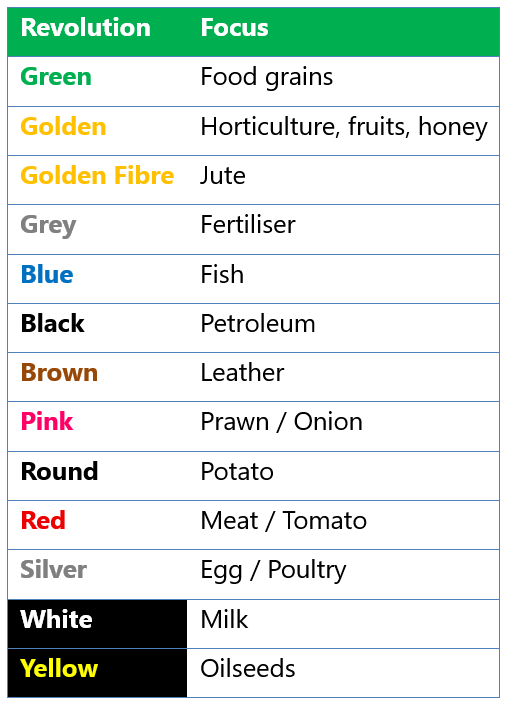
Agricultural Revolutions – One-Glance Revision
Key Agricultural Activities
| Activity | Meaning |
|---|---|
| Silviculture | Forest tree cultivation |
| Sericulture | Silkworm rearing |
| Apiculture | Beekeeping |
| Olericulture | Vegetable cultivation |
| Viticulture | Grape cultivation |
| Floriculture | Ornamental plants |
| Arboriculture | Trees & shrubs |
| Pomology | Fruit science |
| Hydroponics | Soil-less cultivation |
| Aeroponics | Mist-based cultivation |
| Geoponics | Soil-based cultivation |
| Aquaponics | Fish + plants |
| Mushroom culture | Fungus cultivation |
Mushroom Culture
- Mushrooms are fungi
- Grow on organic waste
- Rich in high-quality protein, vitamins, and minerals
- Only some species are edible