
Chromite
Let’s begin with a question many students might ask:
“What is Chromite, and why should I care about it in Economic Geography?”
Because Chromite is the only commercially viable source of Chromium — a metal that is crucial for industrial strength, national security, and modern technology.
What is Chromite?
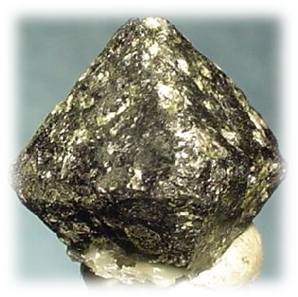
Chromite is a metallic oxide mineral, with a characteristic dark grey colour and metallic lustre. Its chemical formula is:
FeCr₂O₄ (Iron Chromium Oxide)
Due to its metallic appearance and occasional magnetic properties, it is sometimes mistaken for magnetite, especially in hand specimens.
Geological Occurrence
Chromite can be found in three major geological environments:
- Basic Igneous Rocks – These include ultramafic and mafic rocks like peridotite and dunite.
- Metamorphic Rocks – When chromite-bearing igneous rocks undergo metamorphism, chromite is retained or re-concentrated.
- Sedimentary Rocks – Resulting from the weathering of chromite-rich rocks, which leads to placer deposits in some regions.
There are two economically significant deposit types:
- Podiform deposits – Found in marginal tectonic settings (e.g., ophiolite belts), often used in refractory applications.
- Stratiform deposits – Large layered intrusions, suited for metallurgical and chemical applications due to their iron-rich nature.
Applications of Chromite and Chromium
Chromium, extracted from chromite, is a versatile industrial metal. Let’s understand its key applications:
(a) Alloying and Metallurgy
- Used in making stainless steel, nichrome, and superalloys.
- These alloys are corrosion-resistant, heat-resistant, and hard.
- Chromium is crucial in military-grade armour, aircraft engines, and cutting tools.
(b) Chrome Plating
- Used for coating metals to produce shiny, corrosion-resistant surfaces.
- Common in automobile parts, furniture, and kitchen appliances.
(c) Refractory Industry
- High-alumina chromite (mainly from podiform deposits) is used in making refractory bricks and linings for furnaces, especially in the steel industry.
(d) Energy Sector
- In geothermal power systems, chromium-coated steel pipes can withstand high pressure and temperature.
🔍 UPSC Linkage: When talking about mineral-based industries, always connect chromium to strategic sectors like defence, energy, and steel.
Chromite in India: Reserves and Production
India is well-endowed in chromite resources, but production efficiency and processing capability remain areas of concern.
Reserves (2020):
India has about 332 million tonnes of chromite reserves/resources. These are further classified into grades:
| Grade | Share of Total Resources |
| Charge Chrome Grade | 28% |
| Beneficiable Grade | 24% |
| Ferrochrome Grade | 17% |
| Refractory Grade | 16% |
✅ Charge chrome is an essential raw material for ferrochrome production, which in turn is a backbone of stainless steel industry.
Geographical Distribution in India:
| State | Districts | Share of Reserves |
| Odisha | Jajpur, Kendujhar, Dhenkanal | >96% |
| Others | Manipur, Nagaland, Karnataka | Minor deposits |
Production Stats (2022-23):
- Total production: 3.560 million tonnes
- Odisha remains the dominant producer.
🔁 Despite having large reserves, India still imports a portion of its chrome ore, mainly from South Africa, which is an important policy concern.
Chromite in the World: Global Scenario
Let’s now scale up to the global picture:
Reserves in Million tons (2024):
| Country | Reserves |
| Zimbabwe | 540 |
| Kazakhstan | 320 |
| South Africa | 200 |
| India | 79 |
| World Total | >1200 |
📌 India is among the top 4 in reserves, but not in production — a classic example of resource-rich but under-exploited.
Production (2024):
| Country | Production | Share (%) |
| South Africa | 21 | 45% |
| Kazakhstan | 6.5 | 14% |
| Turkey | 8 | 17% |
| India | 4.1 | 9% |
| Total | 47 | 100% |
Strategic Relevance of Chromite
Let’s conclude with why chromite is a strategic mineral:
- Backbone of the steel industry, especially stainless steel.
- Key input for defence, nuclear, and aerospace sectors.
- Chromium is non-substitutable for some applications, making self-sufficiency critical.
- India must move from being a resource holder to becoming a refining and alloying hub.