
Deccan and Southern Miniature Painting Traditions
(16th – 19th Century)
Mysore Painting
Origin and Historical Context
Mysore painting originated in and around Mysore (Karnataka) and is an offshoot of the Vijayanagara artistic tradition.
After the fall of the Vijayanagara Empire, many artists migrated south. These painters were rehabilitated and patronised by the Mysore rulers, giving rise to a distinct regional style.
- Wodeyar I (1578–1617) settled Vijayanagara painters at Srirangapatna
- Krishnaraja Wodeyar III (1799–1868) revitalised the tradition by commissioning wall paintings at Jagan Mohan Palace
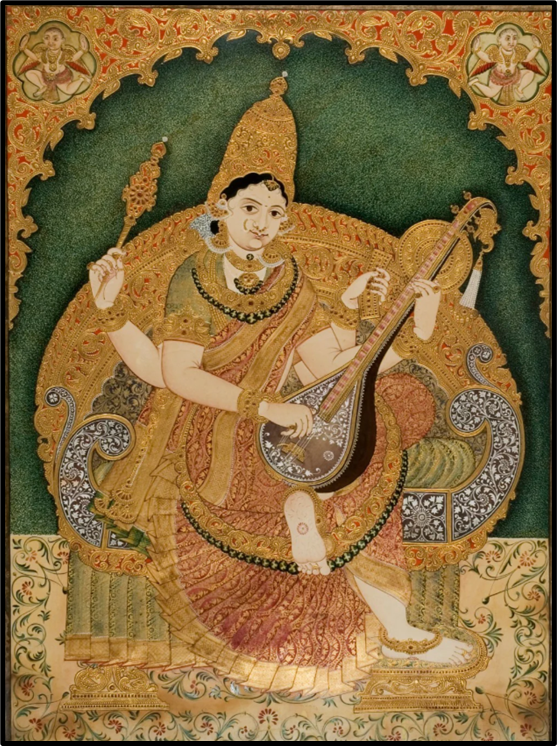
Stylistic Features
1. Elegance and Colour
- Muted, soft colours; Graceful compositions; Calm devotional mood
2. Gesso Work (Hallmark Feature)
- Gesso is a paste made of → White lead powder, Gamboge, Glue
- It is used to create raised, embossed designs.
- Applied for → Jewellery, Garments, Architectural details
3. Use of Gold Foil
- Gold foil is pasted over the gesso
- Creates a subtle relief effect
- Remaining portions are painted with watercolours
4. Themes
- Exclusively Hindu gods and goddesses
- Deeply devotional in nature
UPSC hook:
Mysore painting = muted elegance + gesso relief + gold foil
Tanjore (Thanjavur) Painting
Origin and Patronage
Tanjore painting originated in Thanjavur in the 16th century under the Nayakas, feudatories of Vijayanagara rulers.
It reached its classical form under → Serfoji II (1777–1832)
Defining Characteristics
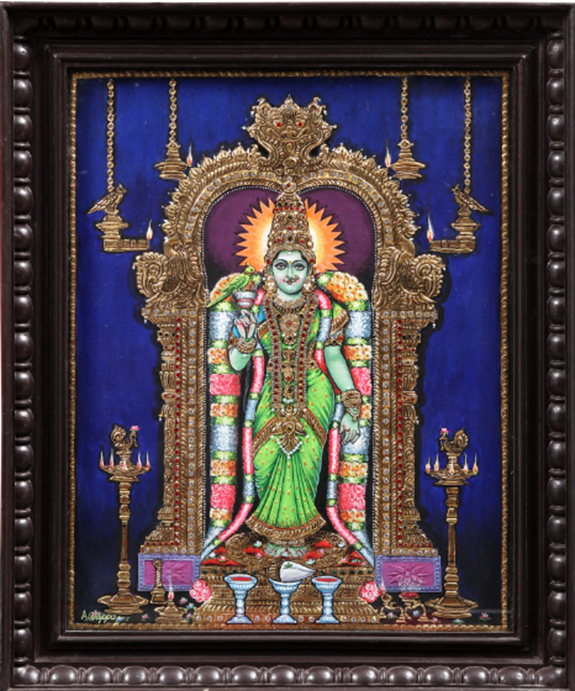
1. Lavish Gold and Inlay
- Extensive use of gold foil
- Inlay of → Glass beads, Semi-precious and precious stones
- Heavy gesso work
👉 Result: Highly embossed, radiant surface
2. Colour Scheme
- Bold, vivid colours → Red, Blue, Green
- Strong three-dimensional appearance
3. Religious Iconography
- Essentially devotional icons
- Subjects → Hindu gods, Goddesses, Saints
4. Panel Paintings
- Painted on wooden planks → Called palagai padam
- Canvas is usually pasted over wood
- Also executed on → Glass, Paper, Mica, Ivory (rare)
5. Figure Style
- Rounded, well-defined bodies
- Exaggerated features
- Deities placed under arched frames
- Ornate backgrounds
UPSC hook:
Tanjore painting = temple icon in paint + heavy gold + wooden panel
Deccan Miniature Painting
Origin and Centres
Deccan miniatures developed in the 16th century after the breakup of the Bahmani Sultanate.
They flourished in the Muslim capitals of → Bijapur, Golconda, Ahmednagar, Bidar, Berar
Important Examples
- Ragamala series
- Lady with the Myna Bird (also called Yogini)
- Lady Smoking Hookah
- Composite Horse
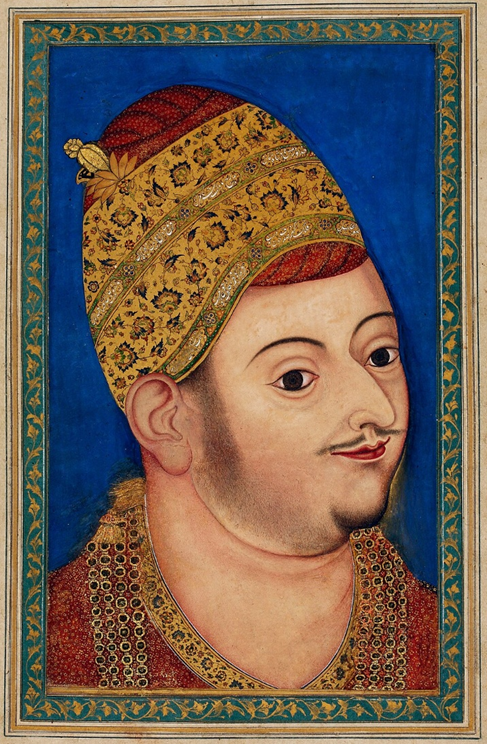
- Portraits of Ibrahim Adil Shah II
Deccan Miniature vs Mughal Miniature
| Aspect | Deccan Miniature | Mughal Miniature |
|---|---|---|
| Region | Deccan Sultanates (Bijapur, Golconda, Ahmadnagar, Bidar) | Mughal Empire (North India) |
| Colour | Brilliant, intense, decorative colours | Subtle, balanced colour tones |
| Approach | Imaginative, mystical, inward-looking | Realistic, documentary |
| Realism | Limited realism; stylised forms | High realism and naturalism |
| Themes | Mythology, Ragamala, fantasy, nature | Court life, battles, hunting |
| Portraits | Stylised, exaggerated features | Lifelike, individualised |
| Nature | Decorative and symbolic | Scientifically observed |
| Influence | Strong regional & Hindu elements | Persian with later European |
One-Line Recall Trick
“Mughal = realism & record; Deccan = colour & imagination.”