
European Trade Routes and the Search for Sea Paths
Europe’s Eastern Trade: The Old Routes
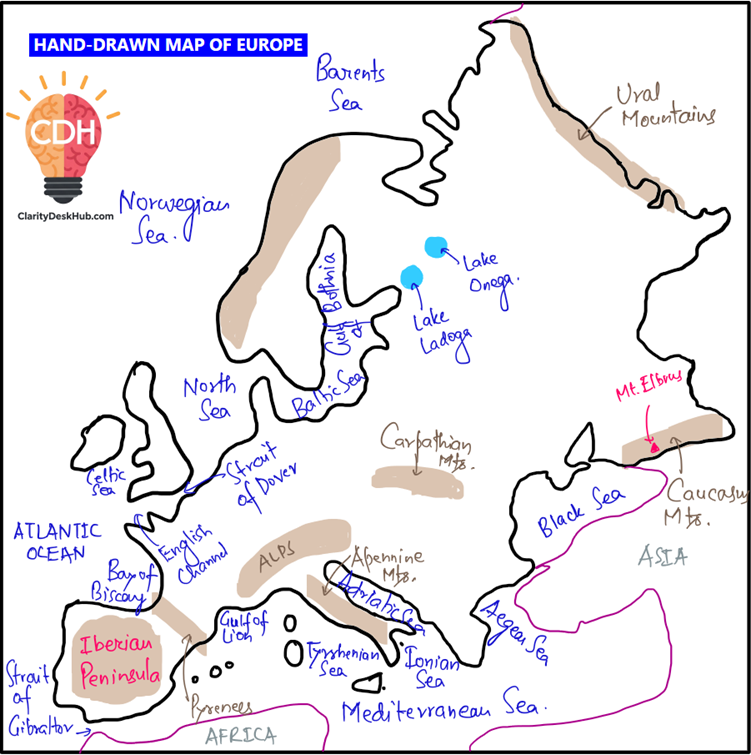
Before sea voyages became common, Europe and Asia were already trading — but through land and partially sea-based routes. During the Middle Ages, there were three main trade routes between Europe and the East (especially India and Southeast Asia):
- Persian Gulf Route
Ships would first sail into the Persian Gulf, then goods were carried overland through Iraq and Turkey, and finally transferred by sea to ports like Venice and Genoa in Italy. - Red Sea Route
Goods passed through the Red Sea, then overland into Alexandria in Egypt, and finally to Europe by sea. - Overland Central Asia Route
This route went from India’s northwest, through Central Asia, into Russia, and ended at the Baltic Sea. This was used less frequently due to its complexity and political instability.
Despite being long and expensive (with multiple taxes and tolls levied by each regional ruler), this trade remained highly profitable — particularly because spices from the East were in immense demand in Europe.
In this setup:
- Arab merchants dominated the Asian part of the trade.
- Italian city-states like Venice and Genoa controlled Mediterranean-European trade.
👉 This gave Italians a near-monopoly, and Western European powers (like Portugal and Spain) were largely excluded from direct access.
Why the Search for New Sea Routes Began
This situation made Western Europeans uneasy. The trade was highly profitable, but they were cut off from direct access.
Several events pushed them to look for alternative sea routes:
- Monopoly of Arab and Venetian traders – They acted as intermediaries and denied direct access to others.
- Fall of Constantinople in 1453 – The Ottoman Turks captured this strategic city (modern-day Istanbul).
This gave them control over existing trade routes, and they began heavily taxing the goods passing through, making the trade less profitable. - Hostility of Turks towards Christian Europe – This added a religious angle to the trade rivalry.
As a result, Western European merchants and monarchs began desperately searching for new sea routes to bypass the Ottomans and Arab intermediaries — especially to reach:
- India, known for spices, cotton, and indigo, and
- The Spice Islands (modern-day Maluku Islands in Indonesia).
Their goals were:
- ⛔ Break Arab-Venetian monopoly
- ⛔ Bypass Turkish-controlled trade routes
- ✅ Establish direct trade links with India and Southeast Asia
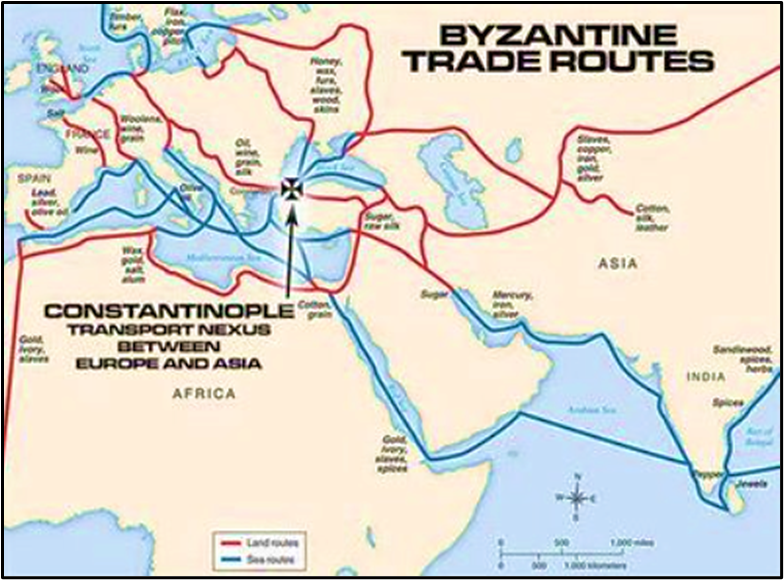
Fall of Constantinople: A Turning Point
Constantinople was more than a city — it was the gateway between East and West.
- When the Ottoman Empire captured it in 1453, the flow of goods from Asia to Europe became complicated.
- The Turks began imposing high taxes on goods passing through.
- As a result, the trade route lost profitability, triggering a need for sea-based alternatives.
This marked a turning point in global history — pushing Europe toward exploration and colonisation.
Major Navigational Discoveries and the Dawn of the Global Age
Here begins the age of exploration, powered by new ships, compasses, and daring seafarers.
Let’s look at key events:
| Explorer | Year | Achievement |
| Bartholomew Dias (Portugal) | 1487 | First to round the Cape of Good Hope (southern tip of Africa) and sail along Africa’s east coast |
| Christopher Columbus (Spain) | 1492 | Set out to reach India, but accidentally discovered America |
| Amerigo Vespucci (Italy) | 1497–1504 | Participated in voyages for Spain and Portugal; the Americas were named after him |
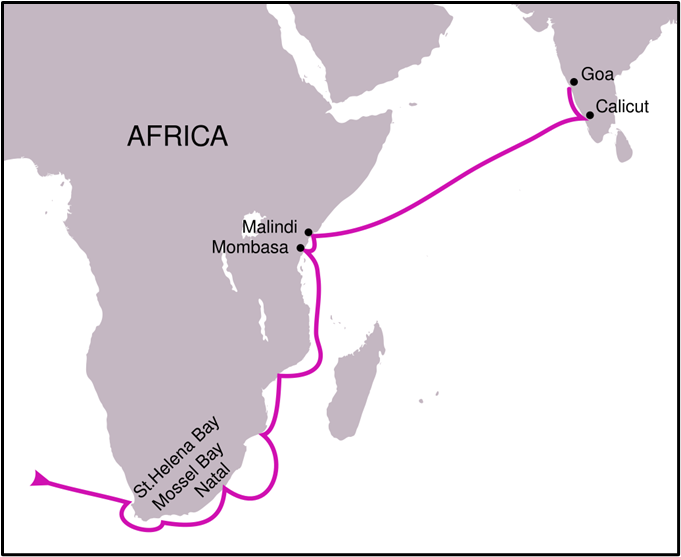
| Vasco da Gama (Portugal) | 1498 | Successfully discovered an all-sea route to India, reaching Calicut |
| Ferdinand Magellan (Spain) | 1519–1521 | Led the first circumnavigation of the globe (though he died in the Philippines, his crew completed it) |
| Strait of Magellan | – | Named after Magellan — it is the inter-oceanic passage he discovered in South America |
🟢 Impact of Navigational Discoveries
These discoveries had two major outcomes:
- The influx of precious metals (especially from America) boosted European trade by supplying capital.
- The discovery of the Cape Route to India made eastern trade easier and more profitable.
✅ According to Adam Smith, the famous economist, the two most significant events in human history were:
- The discovery of America, and
- The discovery of the sea route to India via the Cape of Good Hope
By PhiLiP, CC BY-SA 4.0, via Wikimedia Commons
Why Portugal and Spain Succeeded First
Several factors explain why Portugal and Spain led this wave of exploration:
- The Renaissance spirit encouraged curiosity, risk-taking, and discovery.
- Both countries had advanced shipbuilding techniques and knowledge of navigation.
- Their seamen were often sponsored directly by monarchs — this was a state-supported mission.
- Prince Henry of Portugal, also called Henry the Navigator, played a pivotal role.
🧑✈️ Prince Henry the Navigator: The Man Behind the Missions
- Lived: 1394–1460
- Son of King John I of Portugal
- He wasn’t a sailor himself, but he sponsored numerous voyages to discover new lands.
- In 1454, Pope Nicholas V gave him religious sanction to invade and conquer non-Christian lands.
- This gave imperialism a religious justification — Christians could now claim to be fighting Islam and spreading their faith.
📜 Treaty of Tordesillas (1494): Dividing the World
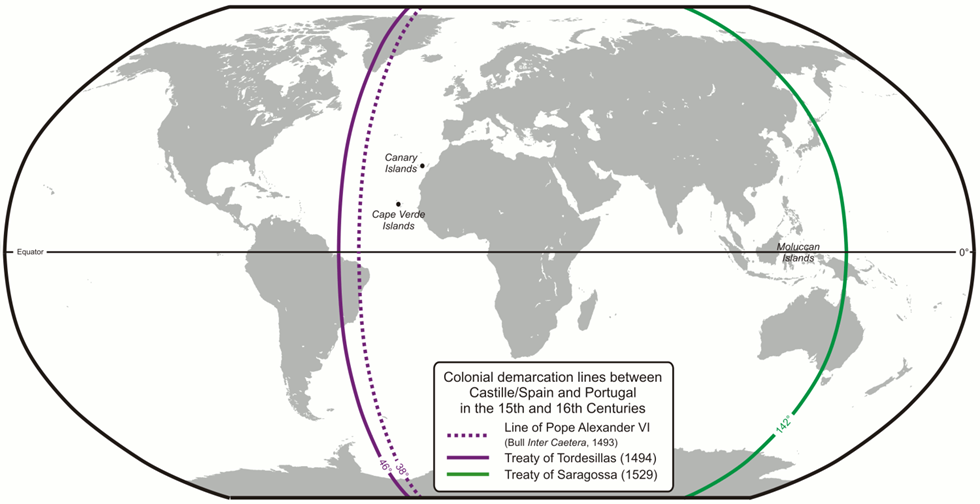
To prevent conflict between Spain and Portugal, the Treaty of Tordesillas was signed in 1494.
- It drew a north-south demarcation line in the Atlantic Ocean:
- Lands west of the line → Belonged to Spain
- Lands east of the line → Belonged to Portugal
- The line was drawn ~555 km west of the Cape Verde Islands, roughly around 46°30′ W longitude.
- Importantly:
- Neither side could take land already ruled by Christian rulers.
✅ This treaty legally justified Portuguese presence in the Indian Ocean and Spanish colonisation in America.