Hindu Temple Architecture
Hindu temple architecture shows → Regional diversity, Multiple construction methods, Adaptation to different deities, Variation across time
Yet, beneath this diversity, there are certain core ideas → Sacred geometry, Axis mundi (cosmic axis), Journey from outer to inner, Divine presence in the garbhagriha
So, we must understand both:
- Historical evolution
- Architectural philosophy
Origin of Hindu Temples
1️⃣ Early Remains (Pre-Gupta Period)
There are no surviving freestanding temples from the pre-Gupta period.
Why?
Because they were likely built using → Wood, Perishable materials
So the absence of evidence is not absence of temples — it is absence of stone.
Besnagar (Vidisha) Temple
- The earliest evidence of a Hindu shrine comes from Besnagar (Vidisha), Madhya Pradesh.
- Dated to 3rd–2nd century BCE.
- Features → Elliptical foundation, Burnt brick floor, Garbhagriha, Pradakshinapatha
- Superstructure likely made of wood.
- It is found near the Heliodorus Pillar, dedicated to Vasudeva.
- This links it to the early Bhagavata tradition, precursor of Vaishnavism.
- Important insight → Temple worship existed even before grand stone temples.
Nagari (Chittorgarh, Rajasthan)
- Another similar structure from 1st century BCE.
- Associated with → Vasudeva cult
- This shows early Vaishnava worship traditions evolving into formal temple space.
Transformation into Stone and Brick
The real turning point comes in the Gupta Period (4th–6th century CE).
This is the classical foundation of Hindu temple architecture.
Features of Early Gupta Temples:
- Small size; Flat roofs; Cell-like sanctum; Masonry without mortar
Examples:
- Kankali Temple, Tigawa
- Parvati Temple, Nachna-Kuthara
These are simple structures — but conceptually complete.
Evolution of the Shikhara
During the Gupta period, a major architectural feature emerges:
Shikhara → A tall pyramidal spire over the garbhagriha.
Best example:
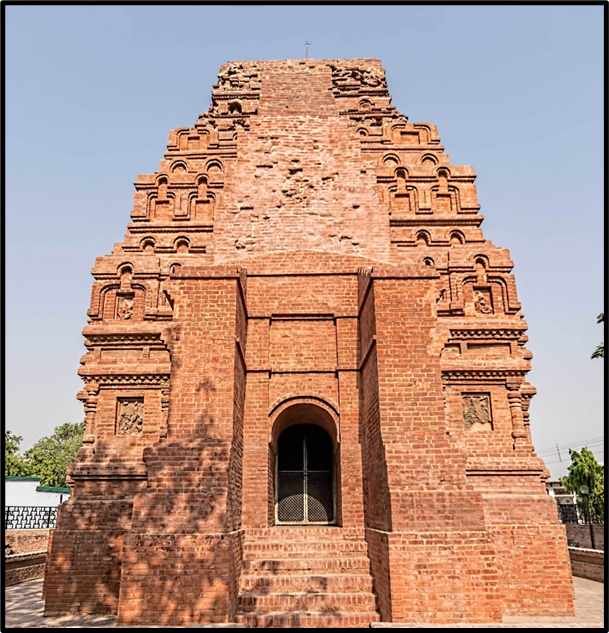
Bhitargaon Temple (5th–6th century CE)
- Oldest surviving Hindu temple with roof and high shikhara
- Made of brick
This marks vertical aspiration.
The temple now reaches upward — symbolically toward Mount Meru, the cosmic mountain.
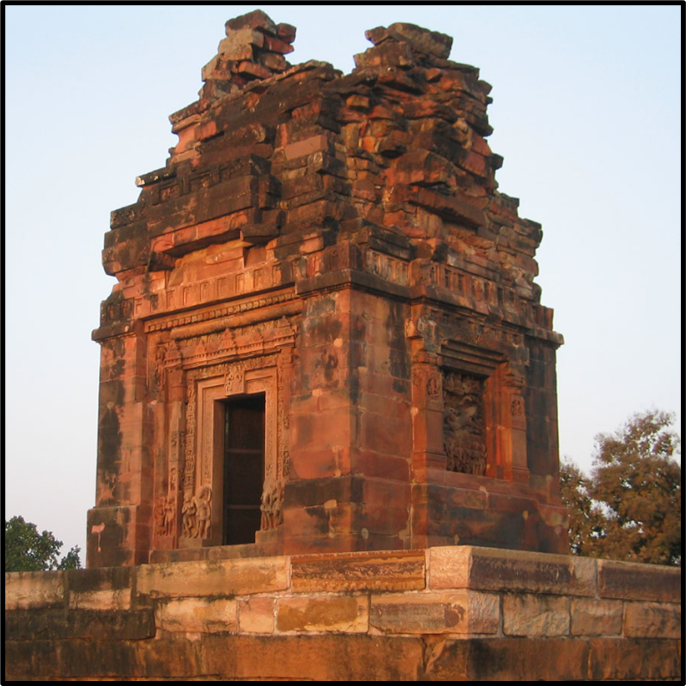
Dashavatara Temple, Deogarh (6th Century CE)
- Another milestone.
- Features → Built on high plinth (Jagati), Basement porch, Steps on all four sides, Entry from all directions
- This is architectural sophistication.
- The temple becomes spatially more dynamic.
Formulation of Architectural Principles (7th Century Onwards)
By the 7th century:
- Core features are standardized
- Theoretical texts codify design principles
This is the watershed moment.
Temple building becomes a science.
Major Architectural Elements of Hindu Temples
Now let us understand each element conceptually
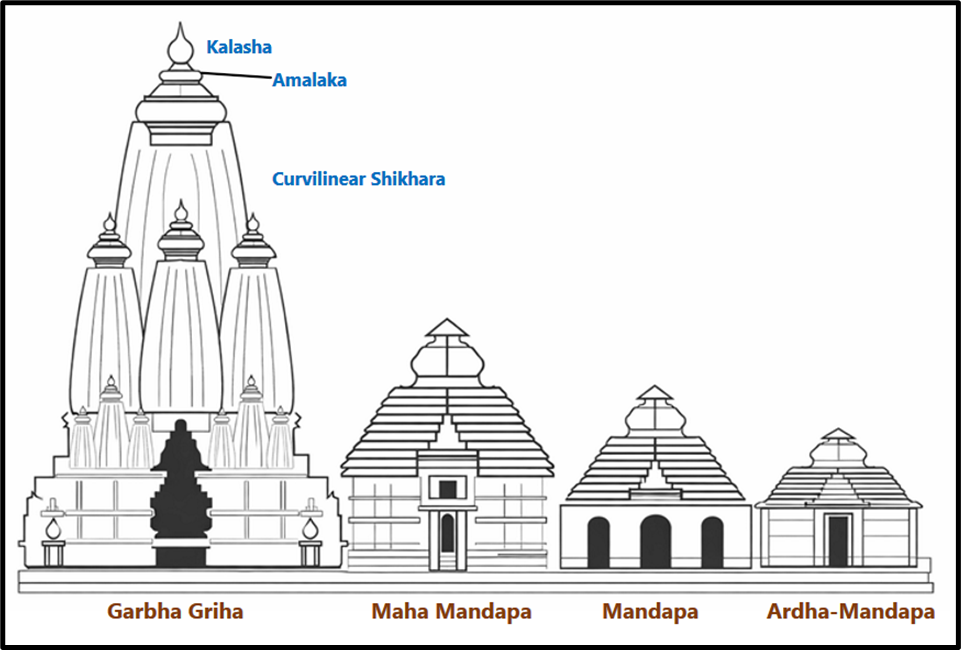
Garbhagriha
- The innermost sanctum → Dark, Small, Sacred
- It houses the primary deity.
- “Garbha” means womb.
- Symbolism: Creation begins from darkness.
Shikhara (North India) / Vimana (South India)
- Tower over the sanctum.
- Represents → Mountain peak, Axis of cosmos
- In South India, it is called Vimana.
Mandapa
- Pillared hall.
- Used for → Congregation, Rituals, Devotee gathering
Antarala
- Transitional chamber between → Garbhagriha, Mandapa
- Symbolizes movement from earthly to divine.
Parikrama (Pradakshinapatha)
- Circumambulatory path.
- Movement itself becomes worship.
Vahana
- Vehicle of deity.
- Placed before sanctum.
- Example → Nandi before Shiva temple
Types of Temple Layout
Hindu temple shrines are classified into three types:
| Type | Feature |
|---|---|
| Sandhara | With pradakshinapatha |
| Nirandhara | Without pradakshinapatha |
| Sarvatobhadra | Entry from all sides |
This classification is extremely important for UPSC.
Placement of Images
Temple iconography is not random.
It follows precise placement principles.
Entrance:
- River goddesses Ganga and Yamuna (in Nagara temples)
- Dvarapalas (guardians)
- Mithunas (symbolic fertility figures)
- Navagrahas
- Yakshas
Outer walls:
- Other forms of main deity
- Ashtadikpalas (guardians of eight directions)
Temple complex:
- Subsidiary shrines
- Incarnations of main deity
This reflects cosmological mapping.
The temple becomes a microcosm of the universe.
Panchayatana Style
A special layout → One main shrine, Four subsidiary shrines at four corners
Total five shrines → Panchayatana
This style shows theological inclusiveness.
Ornamentation Elements
Let us understand key decorative terms:
Gavaksha
Arched window-like motif on façade.
Vyala / Yali
Mythical creature (lion body, composite head). Represents spiritual triumph over matter.
Amalaka
Stone disc on top of shikhara. Represents lotus and divine seat.
Kalasha
Finial placed above amalaka. Symbol of prosperity and completion.
Each element is symbolic — not decorative alone.
Architectural Principles
The temple is not designed randomly.It follows two major knowledge systems:
Shilpa Shastra
- Covers → Sculpture, Iconography, Painting, Craftsmanship
- It is the manual of sacred art.
Vastu Shastra
- Literally “science of architecture.”
- Describes → Spatial geometry, Layout principles, Orientation, Proportions
- The temple is aligned according to cosmic directions.
- Space becomes sacred mathematics.
Conceptual Summary
| Phase | Character |
|---|---|
| Pre-Gupta | Wooden, perishable |
| Early Gupta | Simple stone cells |
| Later Gupta | Shikhara emerges |
| 7th Century onward | Codification of principles |
Now we arrive at one of the most important conceptual frameworks in Hindu Temple Architecture — the classification into three major styles.
If earlier we understood the elements of a temple (garbhagriha, shikhara, mandapa),
now we understand how these elements take different architectural expressions across India.
The three major styles are:
- Nagara (Northern India)
- Dravida (Southern India)
- Vesara (Deccan — a hybrid form)
Remember this clearly:
The core philosophy remains the same — but the architectural expression varies regionally.
Let us examine each carefully.
🟡 Nagara Style (Northern India)
The most striking feature of Nagara temples is the curvilinear Shikhara.
Main Features
Shikhara
- Curves inward as it rises.
- Garbhagriha always lies beneath the tallest tower.
- Often surrounded by smaller shikharas clustered like mountain peaks.
The symbolism is clear:
The temple imitates Mount Meru, the cosmic mountain.
Sub-types of Nagara Shikhara
(a) Latina / Rekha-Prasada
- Most common type
- Square base
- Curved walls tapering upward
As temples grew larger, multiple smaller towers clustered around the main tower.
(b) Phamsana
- Broader and shorter
- Roof made of multiple slabs rising gently
Often:
- Phamsana → Mandapa
- Latina → Garbhagriha
This combination is common in North India.
(c) Valabhi
- Rectangular plan
- Wagon-vaulted or barrel-vaulted roof
- Edge rounded
Plan and Layout
- Square sanctum
- Mandapa in front
- Raised platform called Jagati
Boundary walls and monumental gateways are usually absent.
Sculptural Decoration
Highly intricate carvings → Deities, Narrative scenes from epics, Mythological figures
Regional Variations
- Kalinga architecture (Odisha)
- Chandela architecture (Khajuraho)
- Solanki style (Gujarat)
Thus, Nagara style is not uniform — it is regionally adapted.
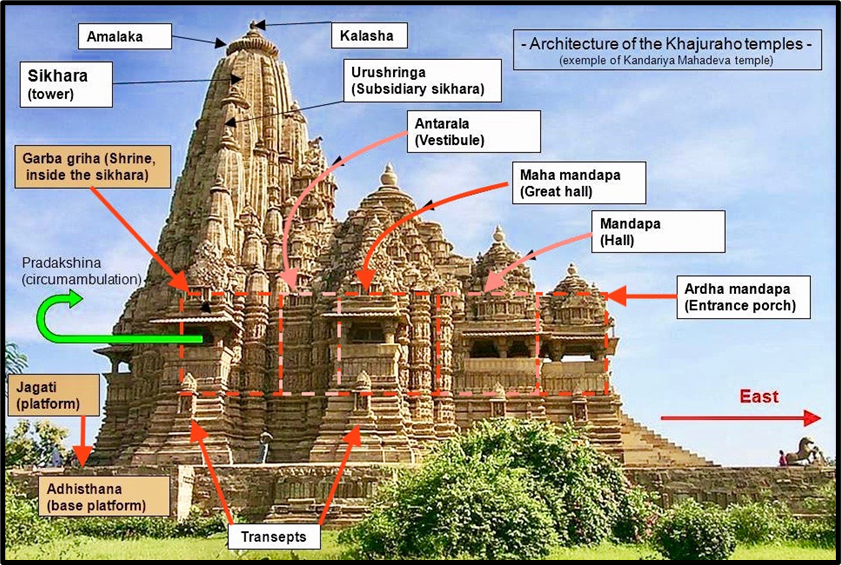
By Tangopaso – Own creation, CC BY-SA 3.0, via Wikimedia Commons
🔴 Dravida Style (Southern India)
If Nagara temples rise in smooth curves,
Dravida temples rise in pyramidal tiers.
Main Features
Vimana
- Stepped pyramidal tower above garbhagriha
- Each level clearly defined
Important distinction:
In Dravida style, the word Shikhara refers only to the crowning element, not the entire tower.
That crowning element is comparable to → Amalaka + Kalasha in Nagara style
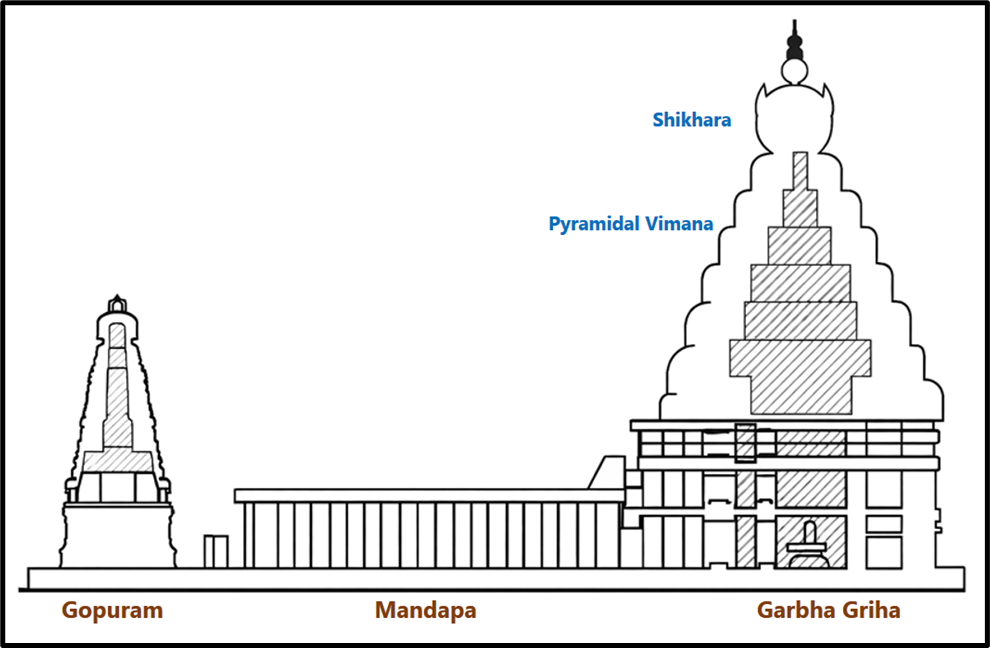
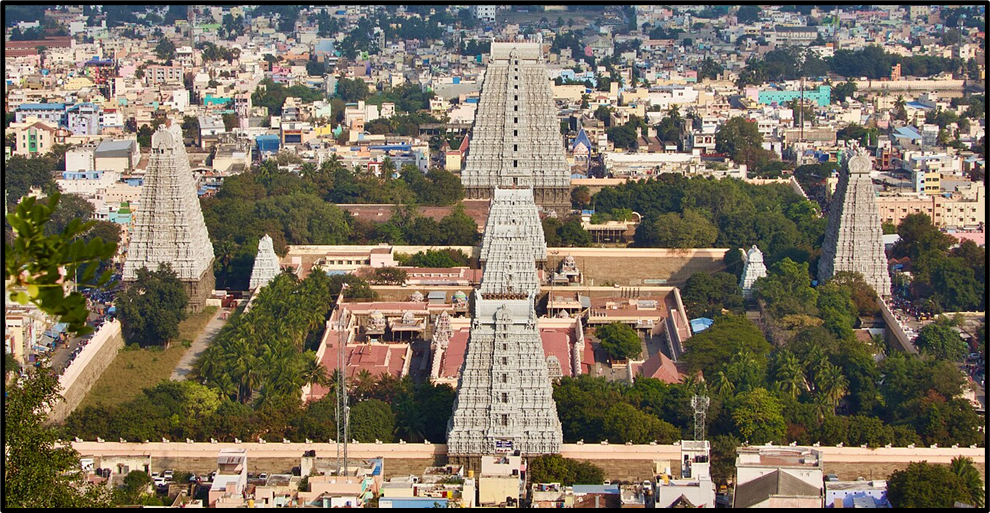
Gopuram
This is the most visually striking feature.
- Monumental gateway tower
- Often taller than the vimana
- Extremely ornate
As temple complexes expanded:
- More boundary walls were built
- More gopurams were added
Example:
Srirangam Temple in Tamil Nadu has seven concentric rectangular walls.
The temple becomes a sacred city.
Layout
- Square sanctum, Multiple prakaras (enclosures), Large pillared halls, Water tanks, Multiple shrines
Unlike Nagara temples, Dravida temples usually have compound walls.
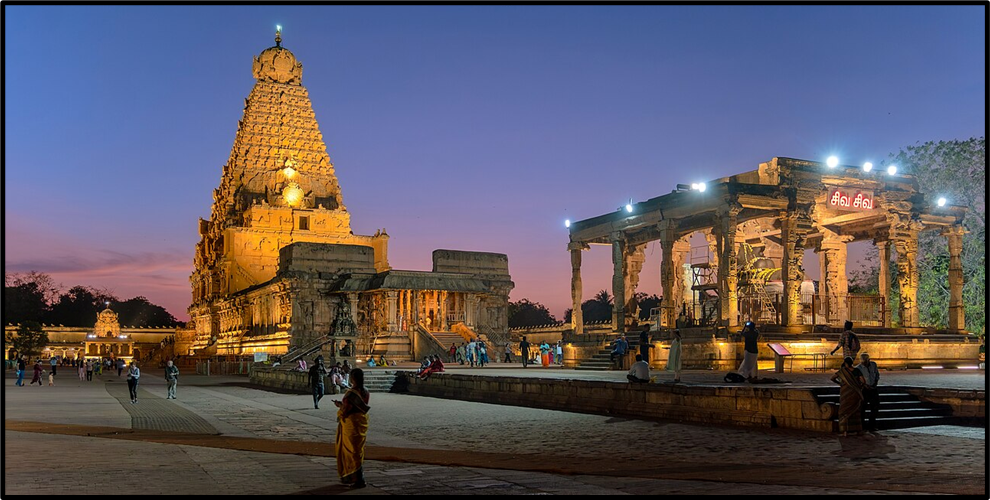
Prominent Examples (Chola Architecture)
Chola temples represent the high watermark of Dravida style.
🏛️ Brihadeeswarar Temple, Thanjavur (1010 CE)
- Built by Rajaraja Chola I
- Dedicated to Shiva
- Vimana height: 66 meters
- Massive monolithic Nandi
- Rich frescoes and inscriptions
This temple reflects imperial ambition and architectural confidence.
🏛️ Gangaikonda Cholapuram (1035 CE)
- Built by Rajendra Chola I
- Commemorates northern campaign up to the Ganges
- Vimana: 55 meters but broader
- Huge Sivalinga
More refined and elegant than Brihadeeswarar.
🏛️ Airavatesvara Temple, Darasuram (12th century)
- Built by Raja Raja Chola II
- Smaller but highly ornate
- Musical steps
- Sculptural refinement
- Influences of Chalukya and Pandya styles
This temple shows artistic maturity.
Key Understanding
Dravida temples are → Monumental, Institutional, Urban in scale
They integrate ritual, economy, and community life.
🟣 Vesara Style (Deccan Region)
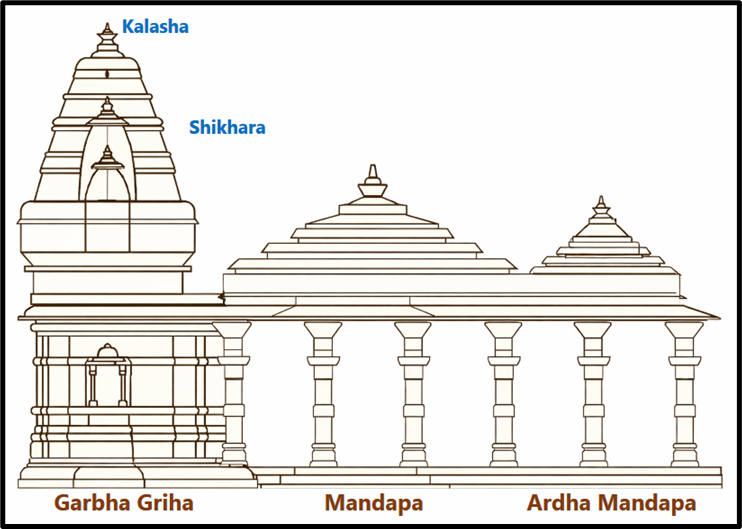
The Vesara style emerges in the Deccan under → Chalukyas, Rashtrakutas
It is a fusion of Nagara and Dravida.
Main Features
Fusion
- Curvilinear shikhara (Nagara influence)
- Tiered vimana (Dravida influence)
It is not a compromise — it is synthesis.
Plan and Layout
- Sanctum; Antarala; Mandapa; Porch; Often built on Jagati
Plans may be → Square, Star-shaped, Circular
Prominent Examples
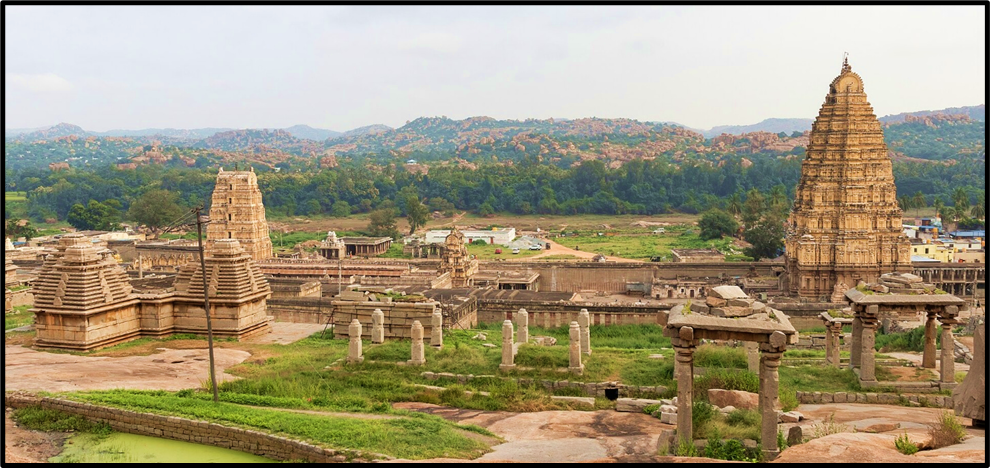
Aihole
- Known as the “Cradle of Indian Architecture.”
- Over 150 temples.
Important ones:
- Lad Khan Temple (one of the oldest)
- Durga Temple (semi-circular apse, elevated plinth)
- Hutchimali Temple
Pattadakal
Virupaksha Temple:
- Built by Queen Loka Mahadevi
- Commemorates Vikramaditya II’s victory
- Ramayana and Mahabharata carvings
Kailasa Temple at Ellora is believed to be modelled on this.
Other temples → Mallikarjuna, Kashi Vishwanath, Galaganatha, Papanatha
Comparative Understanding
| Feature | Nagara | Dravida | Vesara |
| Tower | Curvilinear Shikhara | Pyramidal Vimana | Hybrid |
| Gateway | Usually absent | Monumental Gopuram | Moderate |
| Layout | Compact | Large complex | Mixed |
| Region | North | South | Deccan |
Temple architecture is not just regional variation.
It is India negotiating space, power, devotion, and aesthetics across centuries.
And that is why it remains one of the most sophisticated sacred architectural traditions in the world.
Now we move beyond the three major styles — Nagara, Dravida and Vesara — into something even more refined:
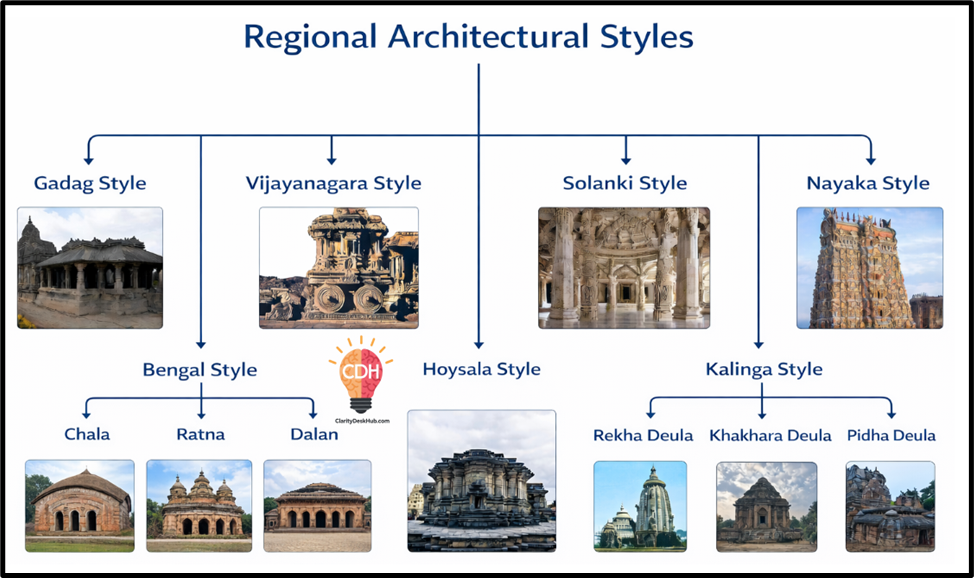
Regional Architectural Styles.
If the three major styles give us the broad grammar of temple architecture,
these regional styles show us the local dialects.
Here, geography, climate, material, dynasty, and cultural imagination combine to produce distinctive forms.
🟤 Bengal Style (Malla Architecture)
Also known as Malla dynasty architecture, after the Malla rulers of Bishnupur.
The Bengal style adapts temple architecture to local climatic and cultural conditions.
Heavy rainfall influenced roof design.
Major Types
1️⃣ Chala
- Hut-like structure, curved roof, curved cornices
It imitates the thatched huts of Bengal villages.
Jor-Bangla Design: Two hut-like structures → One forms a porch, The other forms the sanctum
This is regarded as Bengal’s most distinctive contribution to temple architecture.
2️⃣ Ratna
- Curved roof; Surmounted by towers called Ratna
Types:
- Eka-ratna (single tower)
- Pancha-ratna (five towers)
The roof remains Bengal-like, but towers introduce verticality.
3️⃣ Dalan
- Flat-roofed structure
- Heavy cornices
- Supported by S-curved brackets
This shows structural adaptation to urban settings.
🟢 Gadag Style (Western Chalukya)
Also called Western Chalukya architecture (11th–13th centuries).
Originated in the Tungabhadra–Krishna doab region (Karnataka).
It is technically a sub-classification of Vesara style.
Features
- Ornate pillars with intricate carvings
- Smaller temples compared to earlier Chalukyas
- Widely dispersed
It forms a bridge:
Badami Chalukya (8th century) → Western Chalukya → Hoysala (13th century)
Lakkundi is a key centre — known for → Temples, Step wells (Pushkarni), Water reservoirs
This shows architectural sophistication linked with civic planning.
🔵 Kalinga Style (Odisha Region)
Found in Odisha and northern Andhra Pradesh.
Distinct classification into three Deulas:
1️⃣ Rekha Deula
- Tall, curvilinear shikhara
- Covers the Garbhagriha
- Sugar-loaf shape
Examples → Lingaraja Temple, Jagannath Temple
2️⃣ Pidha Deula
- Square building
- Pyramid-shaped roof
- Similar to Dravidian tiered structure
Example → Jagamohana (assembly hall) of Konark Sun Temple
3️⃣ Khakhara Deula
- Rectangular plan
- Truncated pyramidal roof
- Associated with feminine deities
Example → Vaital Deula (dedicated to Chamundi)
Important insight:
Kalinga architecture shows how regional systems create their own internal classification.
🟠 Solanki Style (Maru-Gurjara Architecture)
Developed in Gujarat and Rajasthan under the Chalukya (Solanki) dynasty (11th–13th centuries).
Also called Maru-Gurjara architecture.
Features
- Highly ornate walls with projections and recesses
- Curvilinear shikhara
- Multiple subsidiary towers (Urushringa)
- Extremely intricate carvings
- Use of sandstone and marble
The Dilwara Jain Temples at Mount Abu represent sculptural refinement at its peak.
This style is known for almost lace-like marble carving.
🟣 Hoysala Style (11th–14th century CE)
The Hoysalas emerged in southern Deccan after Cholas and Pandyas decline.
Their temples represent extreme sculptural sophistication.
Features
Material → Soft soapstone; Allows fine carving
Plan →Star-shaped (stellate); Multiple projections
Jagati →Raised platform for circumambulation
Pillars →Lathe-turned; Highly polished
Sculptural Bands →Friezes of animals; Dancers; Mythological scenes
Often: Trikuta (three shrines); Ekakuta (single shrine)
Tower → Vesara style influence; Stepped pyramidal structure
Hoysala temples are almost like stone jewellery.
Example
Chennakesava Temple(Belur), Hoysaleswara Temple(Halebidu), Kesava Temple (Somanathpura)
🔴 Vijayanagara Style (14th–17th century CE)
Developed during the Vijayanagara Empire.
Material →Granite (massive, durable)
Features
- Large temple complexes; Tall gopurams; Open mandapas; Yali pillars
- Monolithic sculptures (Narasimha, Ganesha); Stepped tanks (Pushkarini)
Vittala Temple (Hampi)
- Iconic Stone Chariot
- 56 musical pillars (SAREGAMA pillars)
Other Examples: Virupaksha Temple (Hampi); Hazara Rama Temple (Hampi)
Architecture here integrates → Ritual, Public ceremony, Royal symbolism
Royal structures like Lotus Mahal and Elephant Stables show Indo-Islamic influence.
🟡 Nayaka Style (16th–18th century CE)
Also called Madura Style.
It is the final stage in the evolution of Dravida architecture.
Features
- Extremely tall, colourful gopurams
- Elaborate stucco sculptures
- Large pillared halls (1000-pillared halls)
- Long corridors; Musical pillars
- Highly ornamented pillars
Example:
- Meenakshi Temple, Madurai
- Ranganathaswamy Temple, Srirangam
- Thanjavur Big Temple (additions made by Nayaka)
The Nayaka style represents architectural exuberance.
Comparative Insight
| Region | Distinctive Character |
|---|---|
| Bengal | Curved hut-like roofs |
| Gadag | Transitional Vesara refinement |
| Kalinga | Three Deula system |
| Solanki | Marble intricacy |
| Hoysala | Star-shaped sculptural intensity |
| Vijayanagara | Monumental granite complexes |
| Nayaka | Ornamental gopurams & corridors |
Final Civilizational Reflection
What do these regional styles teach us?
That Indian temple architecture is → Not uniform, Not rigid, Not centralized
It adapts.
Rainfall in Bengal shapes curved roofs.
Soapstone in Karnataka shapes intricate carvings.
Granite in Hampi shapes massive complexes.
Yet across all regions:
- Garbhagriha remains sacred core
- Vertical aspiration remains
- Symbolism remains cosmic
This is India’s genius:
Unity of metaphysical vision, diversity of architectural expression.
Now we turn to two very important themes within Hindu temple architecture:
- Khajuraho Temples – the sculptural zenith of the Nagara style
- Sun Temples of India – the architectural expression of solar worship
Both are extremely important for UPSC, not merely as monuments, but as cultural statements.
Let us understand them:
🟡 Khajuraho Temples (Madhya Pradesh)
The Khajuraho temples are located in Madhya Pradesh and were built during the Chandela dynasty (10th–12th century CE).
They represent the mature Nagara style, executed in sandstone.
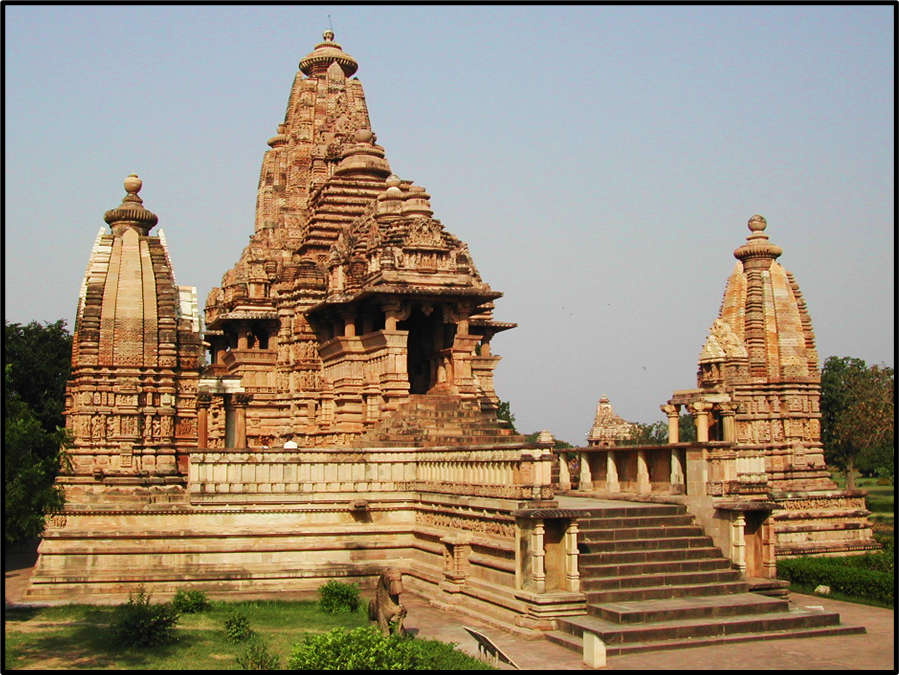
Lakshmana Temple (10th Century CE)
Built by Yashovarman, the seventh Chandela ruler.
This temple is a classic example of Chandela architecture.
Key Features
- Built in Panchayatana style
- One main shrine
- Four subsidiary shrines at corners
- Constructed on a heavy plinth
- Separate Shikhara for each shrine
- The tallest Shikhara above the garbhagriha
Layout
- Ardhamandapa (entrance porch); Mandapa (hall); Maha-mandapa (great hall); Garbhagriha
Deity
- Chaturmukha Vishnu in the sanctum
- Subsidiary shrines contain Vishnu and Surya images
Erotic Sculptures
Khajuraho is globally known for its erotic sculptures.
These sculptures:
- Appear on the outer walls and plinth
- Represent maithuna (loving couples)
- Are symbolic, not merely sensual
Interpretations include:
- Celebration of life and fertility
- Integration of kama (desire) within purusharthas
- Tantric symbolism
- Representation of worldly life outside the sanctum
The inner sanctum remains spiritually austere — the outer wall reflects worldly existence.
This contrast is philosophically meaningful.
“Mini Khajurahos” of India
Kiradu Temples (Barmer, Rajasthan)
- 11th century CE
- Known for erotic sculptures
- Called “Khajuraho of Rajasthan”
Markandeshwar Temples (Gadchiroli, Maharashtra)
- Built by Parmar king Jagat Dev Parmar
- 12th century CE
- Called “Khajuraho of Vidarbha”
These examples show how Chandela-style sculptural traditions influenced other regions.
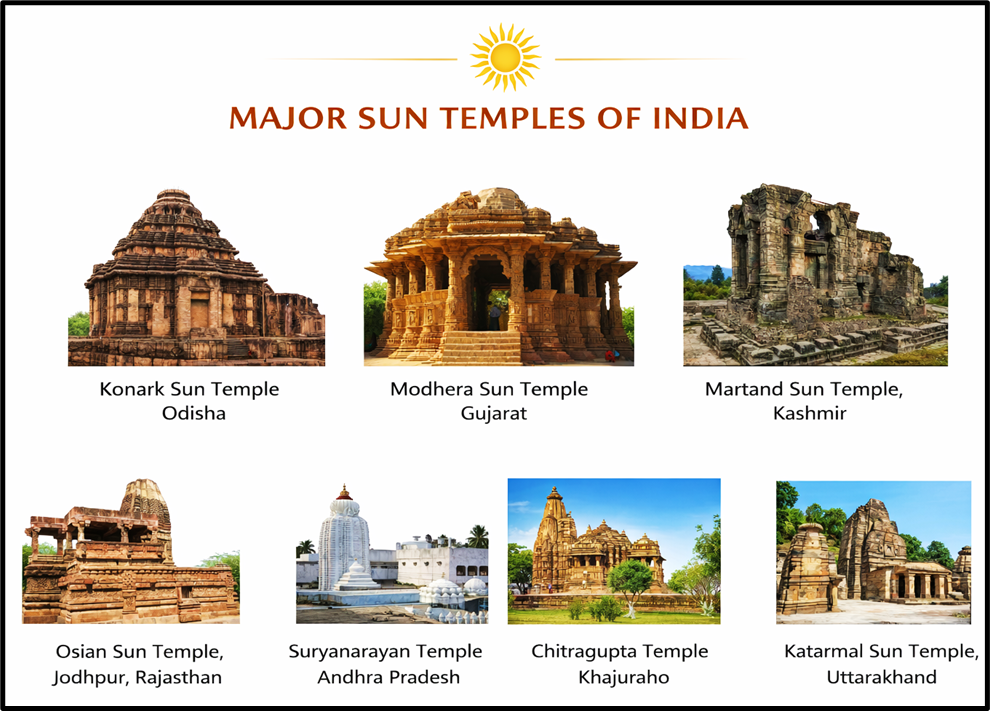
🔆 Famous Sun Temples in India
Solar worship has deep roots in Indian civilization.
Architecturally, Sun temples often show → Astronomical alignment; Chariot symbolism; Dynamic iconography
Let us examine major examples.
🌞 Konark Sun Temple (Odisha)
Built in the 13th century by King Narasimhadeva I of the Eastern Ganga dynasty.
Design
- Shaped like a colossal chariot
- Twelve pairs of carved wheels
- Seven horses pulling the chariot
Symbolism → Sun as cosmic traveller across the sky
Built using stones transported via the Chandrabhaga River.
Because of its dark appearance, it was called the Black Pagoda.
Konark represents the architectural climax of Kalinga style.
🌞 Modhera Sun Temple (Gujarat)
Built in the 11th century by King Bhima I of the Solanki dynasty.
Unique Features
- Aligned so that equinox sun rays illuminate the sanctum
- Features Surya Kund (stepped tank)
- Exquisite carvings
- Built in Maru-Gurjara style
Here, astronomy and architecture merge.
🌞 Martand Sun Temple (Jammu & Kashmir)
Built in the 8th century by Lalitaditya Muktapida (Karkota dynasty).
Unique because it blends:
- Gandhara influence
- Gupta style
- Kashmiri architectural features
It shows northern adaptation of solar worship.
🌞 Katarmal Sun Temple (Uttarakhand)
- 9th century; Built by Katyuri kings
- Surrounded by 44 subsidiary shrines
- Intricate carvings
The original Surya idol is now preserved in a museum.
🌞 Osian Sun Temple (Jodhpur, Rajasthan)
- 8th–11th centuries; Gurjara-Pratihara influence
- Known for detailed carvings, including depictions of deities and scenes from daily life.
🌞 Surya Narayana Temple (Arasavalli, Andhra Pradesh)
- Built in 7th century CE, by King Devendra Verma of the Kalinga Dynasty.
- Constructed in Dravidian style
🌞 Chitragupta Temple (Khajuraho)
- Built in the 11th century, the temple is a part of the Khajuraho Group of Monuments
- Surya depicted wearing armour and boots
- Riding seven-horse chariot
Important because Surya iconography here reflects Central Asian influence (boots and armour).
🌞 Other Sun Temples
- Surya Pahar (Assam): 18th Century by Ahom Dynasty
- Sun Temple(Gwalior, MP): 12th Century CE by Raja Suraj Sen of Tomar Dynasty.
- Suryanar Kovil (Tamil Nadu): belongs to 11th C.
- Dakshinaarka Sun Temple (Gaya, Bihar): 13th C. built by South Indian Emperor Prataparudra of Warangal.
- Sun Temple also has a tank called Surya Kund
These show the geographic spread of Surya worship across India.