
Magnesite
After discussing dolomite, which contains both calcium and magnesium, we now turn to a mineral that is almost purely magnesium carbonate — Magnesite.
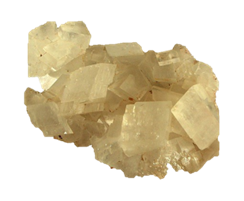
What is Magnesite?
Let’s begin with the textbook definition:
Magnesite is a magnesium carbonate mineral with the chemical formula: MgCO₃
It usually forms in magnesium-rich rocks and comes in three common forms:
- Crystalline masses
- Amorphous (non-crystalline) deposits
- Vein-like structures within other rocks
But magnesite is rarely found in a pure state. It commonly contains impurities like:
- Calcium (Ca)
- Silica (SiO₂)
- Iron oxide (Fe₂O₃)
- Aluminium oxide (Al₂O₃)
These impurities can affect the quality and usability of the mineral, especially in high-grade industrial applications.
Geological Occurrence of Magnesite
Magnesite is typically associated with:
- Ultramafic rocks – rich in magnesium and iron, like serpentinite and peridotite.
- Metamorphic and hydrothermal alterations – where magnesium-bearing fluids interact with carbonate or silicate rocks.
- It is found in veins, beds, and irregular patches, often replacing original minerals during chemical alteration.
Thus, magnesite is a secondary mineral, forming through chemical transformation rather than direct deposition like limestone.
Industrial Applications of Magnesite
Let’s now address the most crucial question — why is magnesite economically important?
A. Refractory Industry – The Core Consumer
- The refractory industry is the largest consumer of magnesite.
- It is used to manufacture refractory bricks, which withstand very high temperatures and are used in:
- Steel furnaces
- Cement kilns
- Glass furnaces
- Non-ferrous metal industries
Here, magnesite acts as a thermal shield — literally protecting the walls of the furnaces from melting.
B. Calcination Products
Commercial magnesite is often processed through a heating method called calcination, which alters its chemical structure.
The three key products of calcined magnesite are:
| Product Name | Description |
|---|---|
| Caustic Magnesite | Lightly calcined, used in agriculture and chemical industries |
| Dead-burnt Magnesite | Highly calcined, used in refractory bricks |
| Periclase (MgO) | Magnesium oxide used in refractory linings and medicine |
C. Other Uses
- Abrasives (e.g., polishing tools)
- Tile cement and flooring
- Magnesium extraction — for lightweight alloys and pharmaceuticals
So, magnesite is both a raw material and a chemical precursor — valuable in high-heat and high-tech applications.
Global Reserves and Production of Magnesite
Let’s zoom out and look at the global map of magnesite.
🌍 Global Reserves (in terms of MgO content): 2023
- Total global reserves: ~6,800 million tonnes
- Top countries by share of reserves:
- Russia – 34%
- China – 9%
- Slovakia – 5%
- Australia & Greece – 4% each
- Brazil – 3%
So, China dominates in reserves, providing a large strategic supply of the mineral.
🌐 Global Production (2022)
- Total: 32.2 million tonnes
- China: 59% of global production
- Australia: 8.39%
- Russia: 8.1%
- Brazil: 6.2%
- Turkey: 5.65%
Magnesite in India: Reserves, Production, and Trade
Now, let’s explore India’s position in magnesite geography.
🇮🇳 Reserves (as of April 1, 2020)
India’s total magnesite reserves: 459 million tonnes
State-wise distribution:
| State | Share of Reserves |
| Uttarakhand | 52% |
| Tamil Nadu | 34% |
| Rajasthan | 12% |
| Others | Andhra Pradesh, Himachal Pradesh, Jammu & Kashmir, Karnataka, Kerala |
Tamil Nadu and Uttarakhand are the backbones of India’s magnesite supply.
🟢 Note: Tamil Nadu’s Chalk Hills near Salem hosts one of the world’s largest known magnesite deposits.
🏭 Production (2020–21)
- Total production: 78,000 tonnes
- Private sector: 61%
- Public sector: 39%
Tamil Nadu leads with 61% of production, followed by Uttarakhand and Karnataka.
Conclusion: Magnesite — Backbone of the Refractory Industry
Magnesite may not be widely known in public discourse, but it plays a foundational role in industrial India and the world. From steel plants to glass furnaces, it ensures that heat-intensive industries keep running safely.
For UPSC Geography Optional, magnesite serves as a great case study that links natural resource geography, industrial economics, and global trade flows — all under the umbrella of Economic Geography.