
Sculpture of the Post–Mauryan Period
(c. 2nd century BCE – 3rd century CE)
After the decline of the Mauryas, political power fragmented, but art did not decline. In fact, sculpture diversified and expanded.
Who patronised art in this period? → Shungas, Satavahanas, Kushans
All three dynasties strongly supported Buddhism, which became the central inspiration for sculptural activity.
Key Transition from Mauryan to Post–Mauryan Art
Before we go into schools, understand this clearly:
- Mauryan art → palace art, state ideology, symbolic authority
- Post–Mauryan art → popular, religious, narrative, emotionally expressive
This is why post-Mauryan sculpture → has a broader social base, is more story-oriented, and focuses heavily on the life of the Buddha.
General Characteristics of Post–Mauryan Sculpture
- Narrative style dominates (stories rather than symbols alone).
- Scenes from → Buddha’s life, Jataka tales, Buddhist legends.
- Material used → Stone, Terracotta.
- Development of regional schools, each with its own style.
Role of Kanishka and the Kushans
This phase cannot be understood without Kanishka.
Why is Kanishka important?
- He was a Kushan ruler of Central Asian origin.
- Adopted Buddhism and made it the state religion.
- Followed Ashoka’s path in spreading Buddhism along the Silk Route.
- Convened the Fourth Buddhist Council.
- Promoted Mahayana Buddhism.
Most Crucial Contribution
👉 Introduction of the Buddha image
Before Kanishka:
- Buddha was worshipped symbolically (wheel, tree, throne).
Under Kanishka:
- Anthropomorphic images of Buddha appear.
- His gold coins show Buddha for the first time.
- Large-scale Buddha statues were commissioned.
This decision changed the course of Indian art permanently.
The Three Major Schools of Post–Mauryan Sculpture
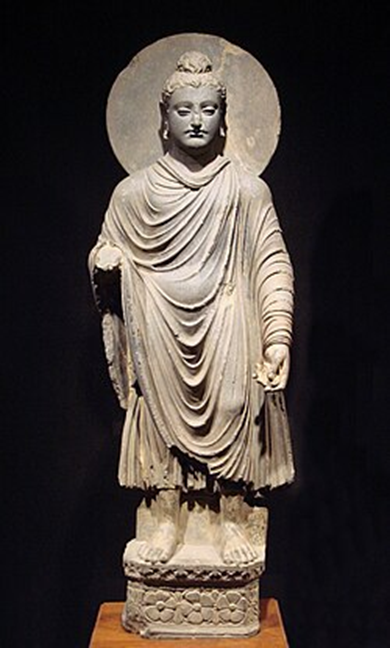
1. Gandhara School of Art
Geographical Area
- North-Western India; Present-day Pakistan and Afghanistan
Patronage
- Kushan rulers (especially Kanishka); Wealthy traders and elites
Artistic Influence
This school shows strong Greco-Roman influence due to → Indo-Greek rulers and trade contacts with the Mediterranean world.
Hence, Gandhara art is a fusion of Indian and Western traditions.
Key Features
- Highly naturalistic human figures
- Accurate anatomy and realistic detailing
- Buddha shown → standing or seated cross-legged, with curly hair, draped robes like Roman togas, halo around the head, calm, serene expression.
- Figures resemble Greek god Apollo in physique and posture.
Material
- Green phyllite; Grey-blue mica schist; Also terracotta, clay, stucco (later phase)
Spread
- Gandhara influence extended beyond India, especially to China and Central Asia.
2. Mathura School of Art
Indigenous Indian Style
Unlike Gandhara, Mathura art is deeply Indian in spirit.
- Inspired by earlier Yaksha–Yakshi traditions
- Emphasis on → fleshy bodies, smiling faces, vitality and movement.
Time Period
- Originated in 2nd century BCE
- Flourished during → Kushana period, Gupta period.
Material
- White-spotted red sandstone, locally available.
Religious Range
Mathura art depicts → Buddhism, Jainism, Brahmanism
Major Contributions
- First anthropomorphic images of → Buddha, Jain Tirthankaras.
- Buddha shown with → smooth robe clinging to the body, decorated halo, symbolic gestures (mudras).
Hindu Deities
- Vishnu (various incarnations)
- Shiva → Lingas, Mukhalingas.
Royal Statues
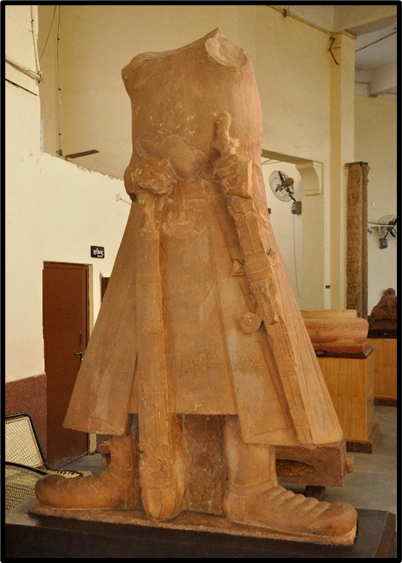
- Kushana royal figures found at Mat near Mathura.
- Famous headless statue of Kanishka → holding a sword, wearing long coat and quilted boots.
Historical Importance
👉 Mathura School laid the foundation for Gupta classical art.
3. Amaravati School of Art
Region
- Lower Krishna–Godavari valley; Andhra Pradesh
- Also called → Andhra School, Vengi School.
Time Period
- 2nd century BCE to 3rd century CE; Patronised by Satavahanas
Nature of Art
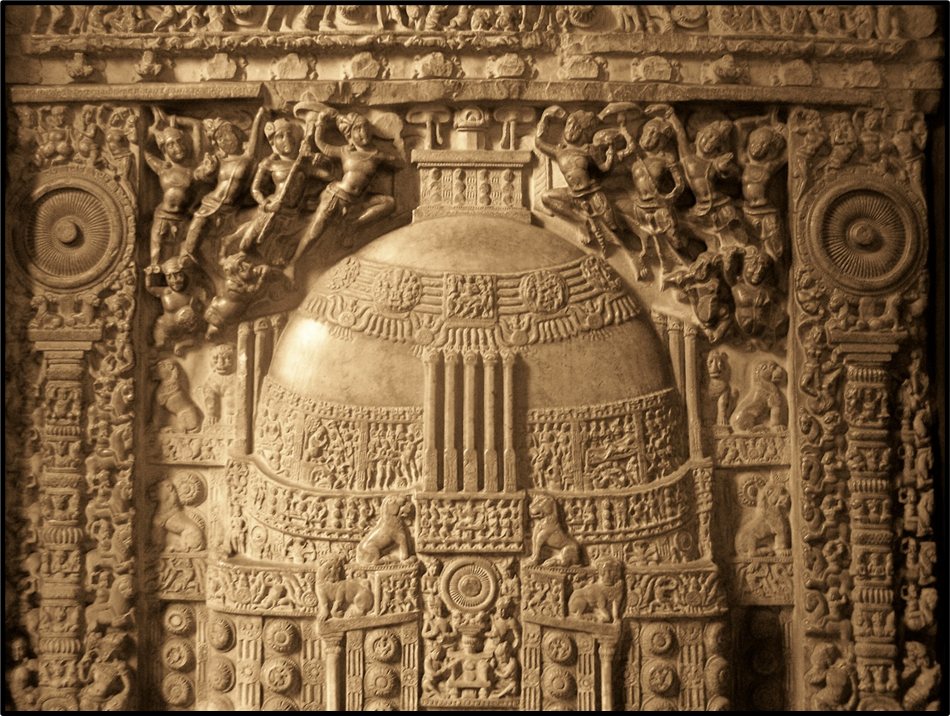
- Purely narrative relief sculpture; Dominantly Buddhist
Material
- White marble, Limestone
Themes
- Life of the Buddha; Jataka stories; Joyful scenes of dance, music, celebration.
Famous reliefs include:
- Demigods carrying Buddha’s begging bowl to heaven
- Taming of the elephant by Buddha
Artistic Style
- Slender, long-legged figures, Graceful movement, Emotional expression, Intricate detailing
Influence
- Influenced later South Indian sculpture
- Sculptural panels carried to → Sri Lanka, South-East Asia.
Sculptural Gateways and Railings
(Bharhut, Gaya, Sanchi)
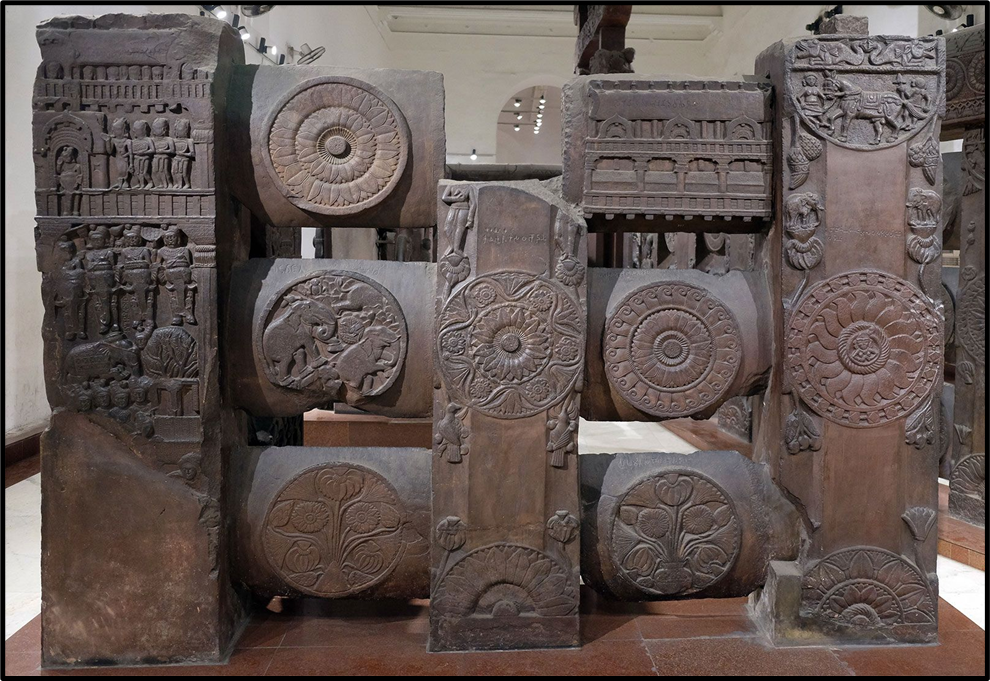
Another major achievement of this period lies in stupa architecture, especially railings and gateways (toranas).
Common Feature
In none of these sites is Buddha shown in human form.
He is represented symbolically by → wheel, pipal tree, empty throne, footprints.
Bharhut
- Earliest among the three | Less refined | Railings carved with → Yakshas, Yakshis, Jataka scenes.
Gaya
- Figures deeper and more rounded.
- Shown in three-quarter poses.
Sanchi
- Most refined and mature.
- Gateways richly decorated with → Yakshis, elephant riders, horse processions, animals and mythical creatures, floral designs.
- Figures appear free, lively, and realistic.