
India and Europe
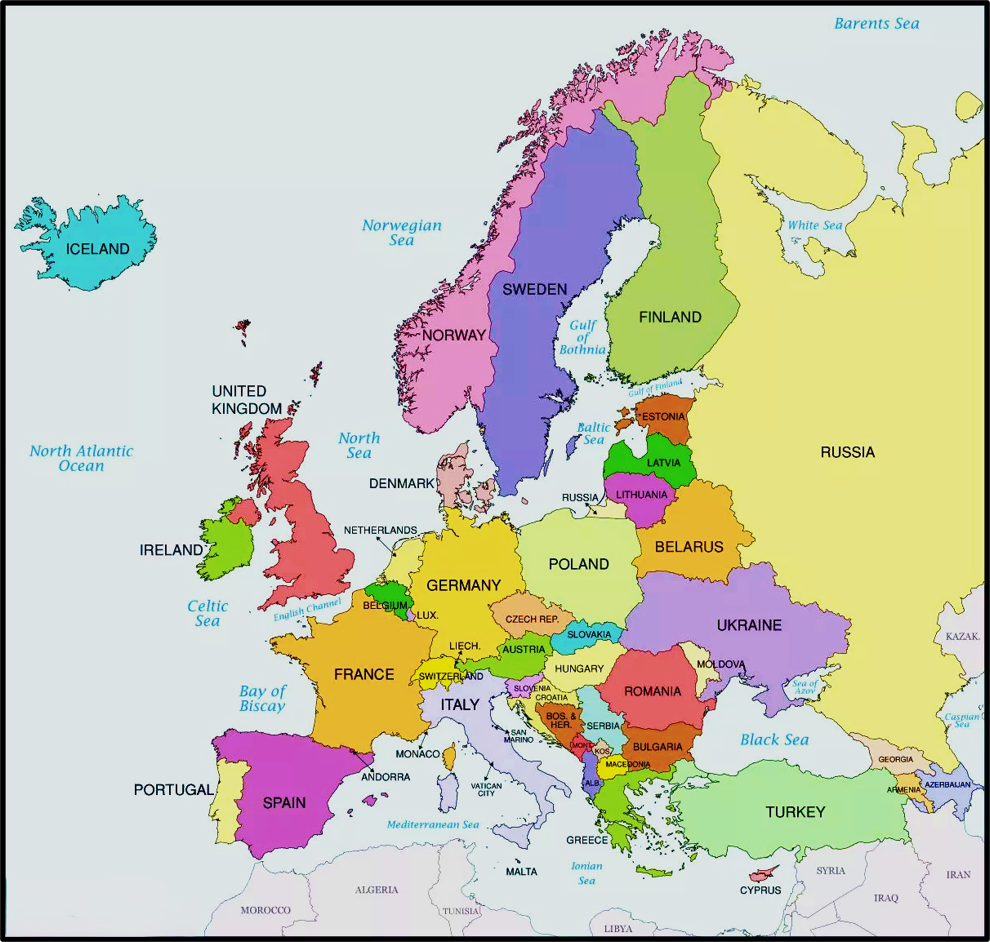
Setting the Stage: Why Europe Matters to India
The relationship between India and Europe is one of the oldest, most layered, and most quietly consequential partnerships in India’s foreign policy. It operates simultaneously on two tracks — a collective track with the European Union (EU) as a bloc, and a bilateral track with individual powers such as France, Germany and the United Kingdom.
These bilateral strategic partnerships add depth and ballast to the wider engagement, so that even when the collective relationship stalls, the individual channels keep the momentum alive.
What binds the two sides is a rare set of complementarities: both are pluralistic societies, both run market economies, and both are committed to political democracy.
In an era of authoritarian assertion and great-power coercion, this shared democratic DNA is not a sentimental footnote — it is the strategic glue that makes India and the EU natural partners in shaping a stable, multipolar and rule-governed world order.
Historical Evolution: From Trade Ties to Strategic Partnership
Diplomatic relations date back to 1962, making India one of the first countries to establish formal ties with the erstwhile European Economic Community.
For much of the Cold War the relationship stayed transactional and trade-centred; it acquired genuine strategic weight only after the Cold War ended, when a liberalising India and an integrating Europe found new reasons to draw closer. The journey can be read as a clean, upward ladder of institutionalisation.
| 1962 — Diplomatic relations established with the European Economic Community |
▼
| 1996 — Enhanced Partnership Agreement signed |
▼
| 2000 — First India–EU Summit held at Lisbon |
▼
| 2004 — Hague Summit elevates ties to a STRATEGIC PARTNERSHIP |
▼
| 2005 — Joint Action Plan (JAP) adopted — the operational roadmap |
▼
| 2022 — India–EU Trade and Technology Council (TTC) launched |
▼
| 2026 — Landmark India–EU Free Trade Agreement concluded (16th Summit) |
India is one of only a handful of countries with which the EU holds regular summit-level meetings — a marker of the partnership’s political seriousness. The 2004 Hague Summit was the turning point, elevating ties to a Strategic Partnership, and the 2005 Joint Action Plan translated that ambition into a working agenda that still underpins the relationship.
The latest institutional anchor is the “Towards 2030: Comprehensive Strategic Agenda”, under which the 2026 Free Trade Agreement is framed.
Significance of the Relationship
The partnership is genuinely mutually beneficial — each side gains across economic, strategic and normative dimensions. The table below captures the two-way logic.
| WHAT INDIA GAINS | WHAT THE EUROPEAN UNION GAINS |
| Capital: the EU is a leading source of FDI (over USD 117 billion cumulative), fuelling infrastructure and industry. | Market: access to one of the world’s largest and fastest-growing consumer economies. |
| Export markets for IT, pharmaceuticals, textiles and agriculture; services trade has surged sharply. | Skilled talent and education ties — India’s young workforce enriches Europe’s labour and campuses. |
| Defence and technology: European firms support ‘Make in India’ (e.g. the Airbus C-295 transport aircraft). | Geopolitical reach: India’s Indo-Pacific role deepens the EU’s engagement with the Global South. |
| Innovation: joint work on AI, digital public infrastructure and cybersecurity strengthens India’s tech ecosystem. | Maritime security: India safeguards Indian Ocean sea-lanes that carry a large share of the EU’s Asia-bound trade. |
The strategic value has sharpened recently because both sides increasingly see each other as a stabilising “third pole” — a rules-based counterweight to both American transactionalism and Chinese coercion in an unsettled global order.
Areas of Cooperation
The engagement is genuinely multidimensional. It is useful to read it across six interlocking pillars — political-strategic, economic, science & technology, development, security, and people-to-people — each reinforcing the others.
Political & Strategic Convergence
- Countering an assertive China: Both are competitors of China and are aligning their connectivity and Indo-Pacific strategies. The EU’s Global Gateway connectivity initiative is a deliberate alternative to China’s Belt and Road Initiative (BRI).
- India at the centre of Europe’s Indo-Pacific policy: The EU’s Indo-Pacific strategy explicitly places India as a pivotal partner, reflecting a shared stake in a free, open and rules-based maritime order.
- A multipolar but rules-based world: Both accept multipolarity. The nuance — and a source of friction — is approach: India stresses national sovereignty and non-interference, whereas the EU champions rules-based multilateralism and is willing to back rules-based intervention where it sees fit.
Economic & Trade Cooperation — the Core Pillar
Economics has always been the anchor of the relationship. India traditionally exports textiles, garments, chemicals, gems and agricultural goods and imports machinery and high-technology products. Liberalisation deepened these ties, and the numbers today are substantial.
- Largest goods trading partner: Bilateral trade in goods reached roughly USD 137 billion in 2023–24, making the EU India’s largest trading partner for goods.
- Major investment source: Cumulative FDI from the EU stood at around USD 117 billion (April 2000–September 2024), close to one-sixth of India’s total FDI equity inflow.
- Institutional platform: The India–EU Trade and Technology Council (TTC), launched in 2022, is only the EU’s second such council globally — a strategic mechanism to coordinate on trade, trusted technology and security.
Science, Technology & Innovation
Technology cooperation has deep roots — it goes back to 1958, when German assistance helped establish IIT Madras. Today the collaboration spans frontier science and applied research.
- Big-science participation: India is a partner in the International Thermonuclear Experimental Reactor (ITER) fusion project hosted in France.
- Joint research: Under the Horizon 2020 framework, the two sides run joint projects on themes such as climate change and polar research.
- Innovation financing: The India–UK Global Innovation Partnership (GIP) commits co-financing of up to USD 100 million over 14 years.
- Academic bridges: A Centre for European Studies operates in India, and institutions for contemporary Indian studies function in Europe; Germany remains India’s most robust science partner and offers vocational training.
Development Partnership
- Sustainable Development Goals: Joint work on smart cities, clean water and climate action — e.g. the Kochi Smart City project, the EU–India Water Partnership and the International Solar Alliance.
- Health: Partnerships on vaccines, therapeutics and diagnostics aimed at equitable global supply.
- Climate change: The Clean Energy and Climate Change Partnership (2017) is the umbrella framework; at COP26 the EU backed the Green Grids Initiative and committed to help India realise its ‘One Sun, One World, One Grid’ (OSOWOG) vision.
Defence & Security Cooperation
Security convergence has grown markedly. Both view terrorism as a threat best tackled within the United Nations framework, and Europe’s own experience of terror attacks has sharpened the shared stake.
- Counter-terrorism: The 14th Counter-Terrorism Dialogue (2024) focused on countering radicalisation, terror financing and misuse of technology; a working arrangement between Europol and the CBI was signed to boost law-enforcement cooperation.
- Maritime security: India’s Information Fusion Centre – Indian Ocean Region (IFC-IOR) coordinates with the EU’s NAVFOR Atalanta maritime centre; the first Indian Navy–EUNAVFOR exercise was held in the Gulf of Aden in June 2021.
- Defence-industrial links: An Open General Export Licence facilitates smoother technology engagement, while European majors partner Indian defence production.
People-to-People & Migration
- Mobility and migration: A Common Agenda on Migration and Mobility (CAMM) governs orderly, safe movement of people.
- Diaspora as a bridge: The Indian diaspora across Europe is a decisive soft-power asset, shaping the politics, economy and cultural life of host nations and deepening the human texture of the relationship.
The Trade Story: From the BTIA Deadlock to the 2026 FTA
No thread runs longer through the relationship than the effort to conclude a comprehensive trade deal. Negotiations for a Bilateral Trade and Investment Agreement (BTIA) — also called the Broad-based Trade and Investment Agreement — began in 2007 and then stalled for the better part of two decades.
Understanding why it stalled explains why the eventual breakthrough matters so much.
The Old Deadlock — Who Wanted What
| THE EU’S DEMANDS | INDIA’S DEMANDS |
| Deep tariff cuts on automobiles, wines and spirits. | Greater market access for fruits, vegetables and fish. |
| Wider market access in banking, retail, telecom and accounting services. | Freedom of movement for skilled Indian professionals into European services. |
| Stronger intellectual-property protections in pharmaceuticals. | Recognition as a ‘data-secure’ nation to ease services trade. |
India was wary of opening its automobile and financial-services sectors and firmly opposed to pharma IPR changes that could hurt its generic-drug industry (the lifeline of affordable medicine); the EU resisted freer movement of Indian professionals and wider farm access.
These mirror-image sensitivities — each side’s offensive interest being the other’s defensive red line — kept the deal frozen.
An Interim Bridge — TEPA with EFTA (2024)
A significant stepping stone came through the Trade and Economic Partnership Agreement (TEPA) signed in 2024 with the European Free Trade Association (EFTA) — Iceland, Liechtenstein, Norway and Switzerland (a bloc distinct from the EU). TEPA promised to boost Indian exports of pharma, garments, chemicals and machinery, attract investment into automobiles, food processing and railways, and diversify imports away from over-dependence on China — while EFTA extended support for India’s UNSC bid. It also flagged the recurring frictions — data exclusivity, IPR protection and trade-deficit concerns — that would resurface in the larger EU deal.
The Breakthrough — the 2026 India–EU FTA
The long deadlock finally broke with the conclusion of the India–EU Free Trade Agreement at the 16th Summit in January 2026, crowned by the EU Commission President attending as Republic Day Chief Guest.
Anchored in the “Towards 2030” agenda, the pact stitches together a unified market of some two billion people, positioning the two as a rules-based “third pole” in the global economy.
Goods, Tariffs & Market Access
- Near-total duty removal: Tariffs eliminated on more than 90% of bilateral trade.
- A surge for Indian exporters: The EU removes duties on 99.5% of Indian exports — a roughly USD 33 billion boost to labour-intensive sectors such as textiles, leather and gems at zero duty.
- Relief for EU exporters: India cuts prohibitive duties on EU machinery (up to 44%) and pharma, saving European exporters around €4 billion annually.
- Autos and spirits: Tariffs on premium EU cars fall from 110% to 10% over five years, capped by a Tariff-Rate Quota; wine tariffs drop from 150% to 20–30% and spirits to around 40%.
Services, Mobility & Soft Power
- Two-way services access: India secures binding access to 144 EU sub-sectors (IT, R&D); the EU gains access to 102 Indian sub-sectors.
- Talent mobility (Mode 4): Uncapped student mobility and a guaranteed nine-month post-study work window across all 27 EU nations.
- AYUSH integration: Traditional Indian-medicine practitioners gain legal certainty to practise in previously unregulated EU states — a soft-power win.
Safeguards & Sustainability
- Protected ‘negative lists’: India fully shielded dairy, wheat, rice and poultry; the EU shielded beef, sugar and rice — protecting each side’s most politically sensitive farmers.
- Geographical Indications: A parallel pact protects iconic brands — Darjeeling Tea on one side, Champagne on the other.
- Green Transition Fund: The EU pledged a €500 million package to help Indian industry decarbonise.
Why Now? — The Geopolitical Drivers
- The ‘US factor’: The pact acts as a hedge against aggressive American ‘America First’ protectionism and reciprocal tariff threats.
- Export diversification: It pivots India away from over-reliance on the US market toward the vast EU market.
- ‘China-Plus-One’ anchor: It positions India as a trusted, rules-based manufacturing hub for European semiconductor and green-technology supply chains.
Issues & Challenges
For all the momentum, real frictions remain. The most consequential cluster today is what may be called “green protectionism” — a set of EU environmental regulations that could quietly erase the trade gains just negotiated.
Environmental Non-Tariff Barriers
- CBAM (Carbon Border Adjustment Mechanism): A carbon-linked levy equivalent to 20–35% on Indian steel, aluminium and chemicals, which risks wiping out the FTA’s tariff gains.
- EUDR (Deforestation Regulation): Mandates end-to-end traceability for coffee, rubber and wood; the geo-tagging compliance is financially unviable for millions of Indian smallholders.
- CSDDD (Sustainability Due Diligence): Forces Indian manufacturers to share sensitive supplier-audit data, raising corporate-confidentiality risks.
- Local-content pressures: Proposed EU ‘local content’ norms threaten demand for Indian-made components.
Structural Asymmetries & Persistent Frictions
- Disproportionate concessions: A large share of Indian exports already entered the EU at very low tariffs, so India is making deeper cuts than the EU — a perceived imbalance.
- Third-country rivalry: India competes with Vietnam and Bangladesh, which already enjoy zero-duty EU access.
- Quality-control disputes: The EU objects to India’s mandatory Quality Control Orders (QCOs) as opaque trade blockades.
- The ‘parity deficit’: India protests ‘double standards’ — environmental carve-outs for some partners while developing nations are strictly penalised.
- Strategic-consensus gap: Within the EU itself, consensus is easy on economics but hard on strategy, because power differences among member states make a common security line difficult — which is why the collective relationship sometimes lags the bilateral ones.
- Values-driven divergence: The EU’s readiness to attach human-rights and democracy conditionalities can rub against India’s insistence on sovereignty and non-interference.
Way Forward
The task now is to convert a landmark agreement into durable, friction-free partnership. A practical agenda runs along three lines.
Institutionalise Dispute Resolution
- Rapid Response Forum: A standing technical filter to resolve QCO and food-safety disputes before they escalate into legal freezes.
- Mutual Recognition Agreements: So that Indian testing labs are certified by European authorities — ‘tested once, accepted everywhere’.
Turn ‘Green Protectionism’ into Advantage
- Align carbon frameworks: Legally link India’s Carbon Credit Trading Scheme (CCTS) with the EU’s CBAM to prevent double taxation.
- Use Digital Public Infrastructure: Deploy blockchain and satellite tech to give farmers low-cost, verifiable geo-tagging and bypass EUDR barriers.
- A European legal gateway: A single-window office to help Indian MSMEs navigate complex EU compliance.
Deepen Technology & Data Sovereignty
- A ‘Silicon Corridor’: Use the Trade and Technology Council to drive joint R&D in AI and semiconductors.
- Reconcile data regimes: Bridge India’s DPDP Act with the EU’s GDPR to win ‘data-secure’ status and cut compliance costs for Indian IT firms.
Conclusion
India and Europe have travelled from a modest, trade-bound acquaintance in 1962 to a genuine strategic partnership crowned by a landmark trade agreement. The relationship’s enduring strength lies in its shared democratic values and deep economic complementarity; its recurring test lies in reconciling Europe’s rules-and-standards instinct with India’s sovereignty-first developmental priorities.
If both sides can convert Europe’s ‘green protectionism’ into a shared competitive advantage and keep the strategic and economic tracks moving together, the partnership can indeed become the stabilising ‘third pole’ the world needs — and a powerful accelerator for India’s journey toward a developed nation by 2047.