
Sculpture of the Indus Valley Civilisation
(c. 2500 – 1500 BCE)
Indian sculpture begins not in temples, but in planned urban settlements. The Indus Valley Civilisation gives us the earliest sculptural expressions of the subcontinent, and what is striking is not their size, but their artistic maturity.
These sculptures are generally small in scale, yet they reflect → advanced technical skill, keen observation of the human body, and a refined aesthetic sense.
This tells us one important thing: art had already become a specialised craft in Harappan society.
General Characteristics of Indus Sculpture
1. Naturalism and Realism
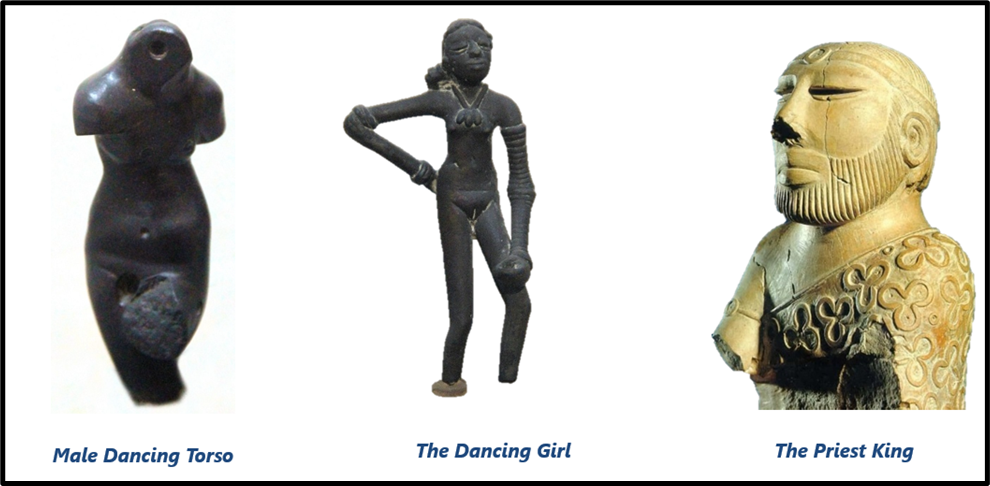
The hallmark of Indus sculpture is naturalism. Human figures are shown with → correct body proportions, realistic posture, and a sense of movement.
There is no exaggeration, no divine symbolism at this stage. The artist is observing life as it is.
2. Emphasis on Physical Beauty and Movement
Bodies are slim, balanced, and poised. Even static figures suggest motion, indicating a deep understanding of anatomy and rhythm.
3. Materials Used
Indus sculptors worked with → stone (especially steatite and sandstone), terracotta, copper and bronze.
The diversity of materials shows technological confidence, especially in metallurgy.
Notable Sculptural Works of the Indus Valley
Now let us examine the key examples one by one—not as isolated objects, but as evidence of a mature artistic culture.
The Dancing Girl (Bronze)
This small bronze figure from Mohenjo-daro is one of the most celebrated sculptures of ancient India.
Key Observations
- The figure is nude, except for bangles on the left arm.
- Hair is carefully styled and tied in a bun.
- She stands confidently with → right hand on the waist, left hand resting on the thigh.
This posture resembles the tribhanga stance, suggesting an understanding of dance and body balance.
Artistic Significance
- Cast using the lost-wax technique, showing metallurgical mastery.
- The attitude of the figure conveys confidence, individuality, and vitality.
- It reflects a society comfortable with human form and expression, free from rigid moral symbolism.
Daimabad Man (Bronze Group)
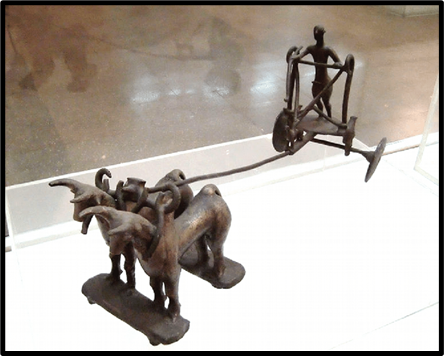
The Daimabad bronzes represent the collective excellence of Harappan craftsmen.
Description
- A male figure riding a chariot drawn by bulls.
- The chariot has solid wheels.
- A dog stands on the central pole in front of the rider.
This sculpture was part of a hoard of four bronze figures—man, elephant, rhinoceros, and buffalo.
Significance
- Demonstrates advanced bronze casting at a larger scale.
- Suggests familiarity with → animals, wheeled vehicles, and narrative composition.
- Indicates that sculpture was not only symbolic but also representational and narrative.
Bearded Priest (Priest-King)
This is the most famous stone sculpture of the Indus Valley Civilisation.
Description
- Made of steatite, found at Mohenjo-daro.
- Height: about 17.5 cm.
- Depicts a bearded man wearing → an armband, a cloak decorated with a drilled trefoil pattern.
Artistic Features
- Beard is neatly trimmed.
- Hair is carefully combed.
- Eyes are elongated and half-closed, giving a meditative appearance.
Interpretation
The figure shows → awareness of fashion and grooming, refined facial modelling, and exceptional surface finishing.
It reflects technical precision and aesthetic sensitivity, not religious symbolism as later periods would show.
Male Torso (Red Sandstone)
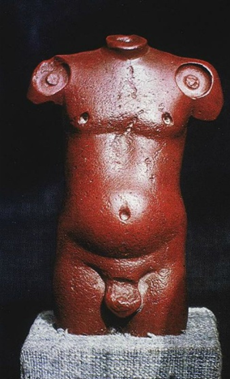
This sculpture from Harappa is crucial for understanding early stone modelling.
Key Features
- Made of red sandstone.
- Highly polished and sculpted in the round.
- Naturalistic pose with clear three-dimensional volume.
The torso has sockets for attaching the head and arms, indicating that sculptures were sometimes made in separate parts and assembled later.
Importance
- Shows understanding of three-dimensional anatomy.
- Marks a shift from flat representation to full volumetric sculpture.
Terracotta Sculptures
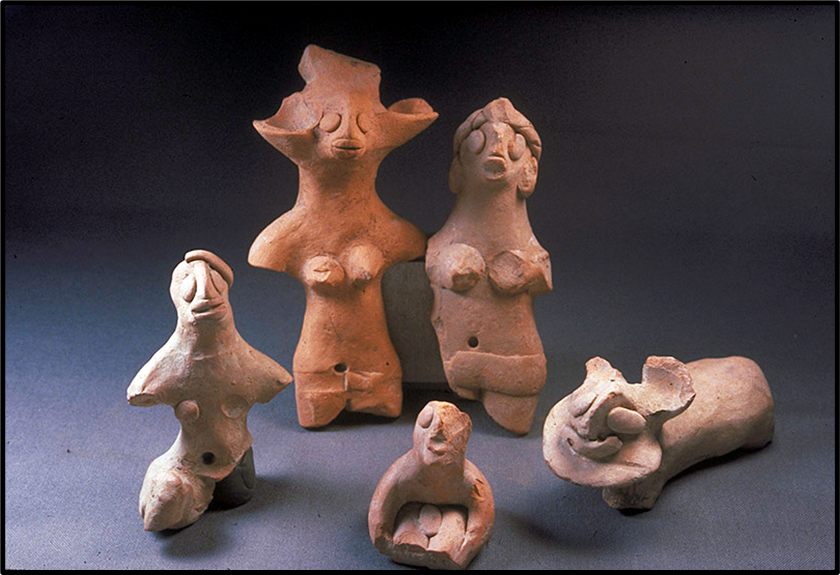
Alongside stone and bronze, terracotta was widely used.
Mother Goddess Figurines
- Most prominent terracotta images.
- Characterised by → elaborate hairstyles, fan-shaped headdresses.
These figures are often linked to fertility cults, though interpretation remains cautious.
Other Terracotta Objects
Bearded male figures,toy carts,whistles,rattles,birds and animals.
Artistic Quality
Compared to stone and bronze → terracotta figures appear cruder, less refined in finish.
This suggests terracotta was likely used for popular or domestic purposes, not elite art.
Seals of the Indus Valley
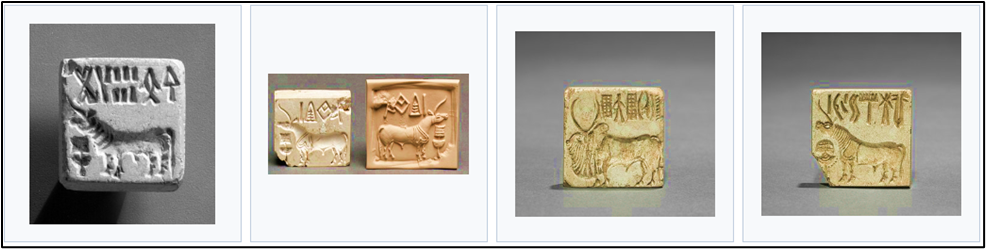
By Abrsinha – Own work, CC BY-SA 4.0, via Wikimedia Commons
Seals are among the finest artistic products of the Harappans.
Material and Technique
- Mostly made of steatite, then fired.
- Also found in agate, chert, copper, gold, ivory, faience, and terracotta.
- Carved using the intaglio technique.
Common Features
- Square shape.
- Symbols at the top.
- Animal figure in the centre.
- Projection with a hole at the back—probably for wearing or carrying.
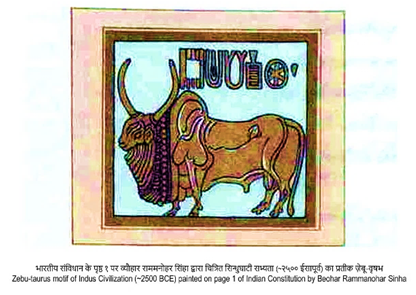
Animals depicted include → bulls, rhinoceros, elephants, unicorns.
Each seal also bears pictographic script, combining art with communication.
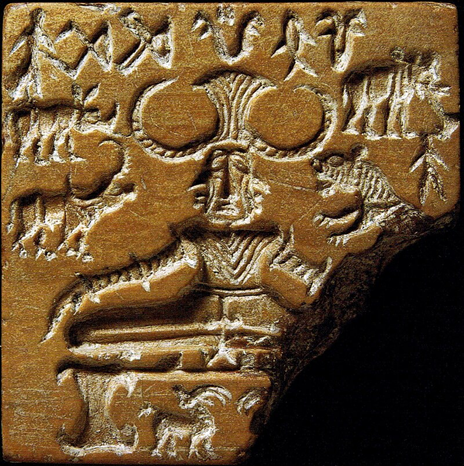
The Pashupati Seal
This seal deserves special attention.
Description
- Found at Mohenjo-daro.
- Depicts a seated figure, possibly tricephalic, wearing a horned headdress.
- Surrounded by animals → elephant and tiger on one side, rhinoceros and buffalo on the other, two antelopes below.
Significance
Often interpreted as a Proto-Siva or Mahayogi figure, though this remains debated. Regardless of interpretation, it shows → complex symbolic thinking, careful composition, and high artistic refinement.
The Artistic Gap After the Indus Valley
From the decline of the Indus Valley to the rise of the Mauryan Empire, nearly a thousand years pass.
No major artworks survive from this phase, suggesting that:
- art may have been produced in perishable materials like wood or cloth,
- or archaeological evidence is yet to be discovered.
This gap makes the Indus sculptures even more valuable—they are the first visible chapter of Indian sculptural history.
For chapter-wise Art and Culture Notes for UPSC Prelims and Mains, refer to the complete Art and Culture notes page.