
Sculpture of the Mauryan Period
(c. 322 – 185 BCE)
The Mauryan period represents the first great flowering of Indian sculpture at a subcontinental scale. For the first time, art is no longer local or limited—it becomes state-sponsored and ideologically driven.
Three forces worked together to make this possible:
- Royal patronage, especially under Emperor Ashoka
- Material prosperity of a vast empire
- Cultural interaction with Persian and Hellenistic traditions
As a result, Mauryan sculpture shows a fusion of indigenous Indian elements with foreign influences, without losing its essential Indian character.
General Characteristics of Mauryan Sculpture
1. Court Art Tradition
Mauryan sculpture is often described as court art.
This means:
- It was patronised by the royal elite,
- Executed by highly skilled craftsmen,
- Meant to project authority, dignity, and moral power of the empire.
2. Mauryan Polish
The most striking feature is the mirror-like surface finish, known as Mauryan polish.
- Stone surfaces appear smooth, glossy, and reflective.
- This polish gives sculptures a sense of permanence and grandeur.
3. Symbolism and Message
Mauryan art is not merely decorative.
- It communicates Ashoka’s idea of Dhamma—peace, moral conduct, compassion.
- Animal figures like lions and bulls symbolise power, vigilance, and authority.
4. Material Used1
- Sandstone, especially the pinkish buff sandstone from Chunar (Uttar Pradesh).
Ashokan Pillars: The Icon of Mauryan Sculpture
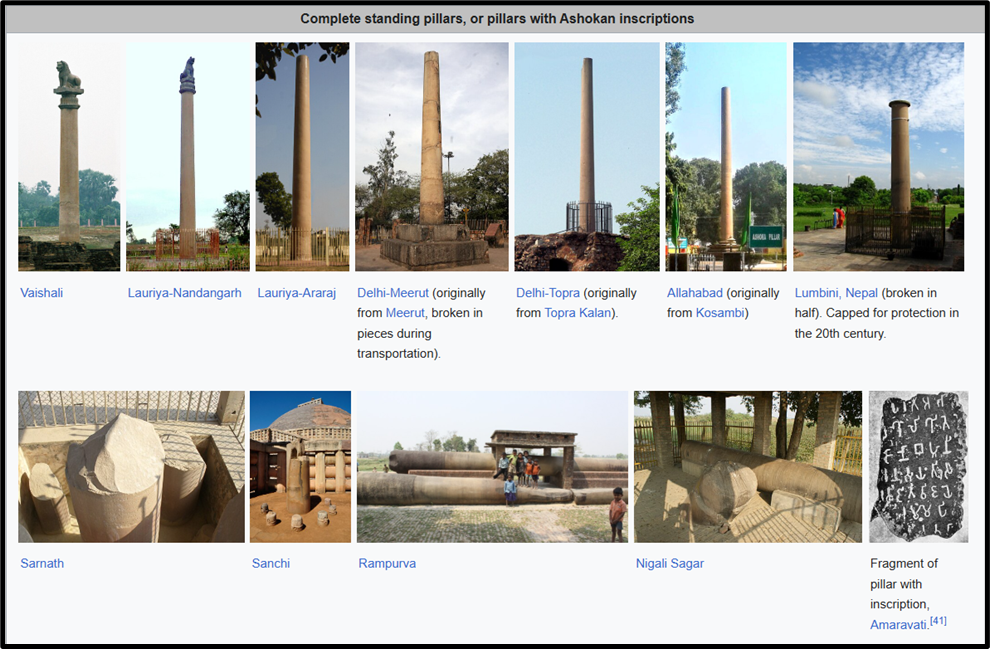
The most famous sculptural achievement of the Mauryan age is the Ashokan pillar.
Key Features2
- These are monolithic pillars, carved from a single piece of stone.
- Highly polished, often compared to a mirror surface.
- Erected across the empire and inscribed with Ashoka’s edicts on Dhamma.
- The shaft of pillars is tapering in shape
Note: Ashokan pillars were standalone monuments meant to propagate Dhamma, not parts of buildings.
Uniformity of Style
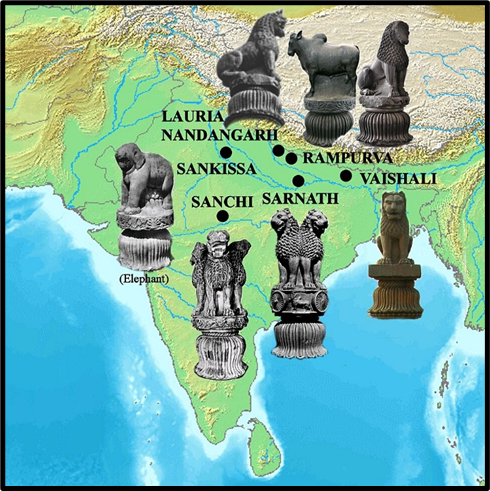
The remarkable similarity in → pillar shape, polish, animal capitals suggests that these pillars were carved by craftsmen from the same region, possibly working under state supervision.
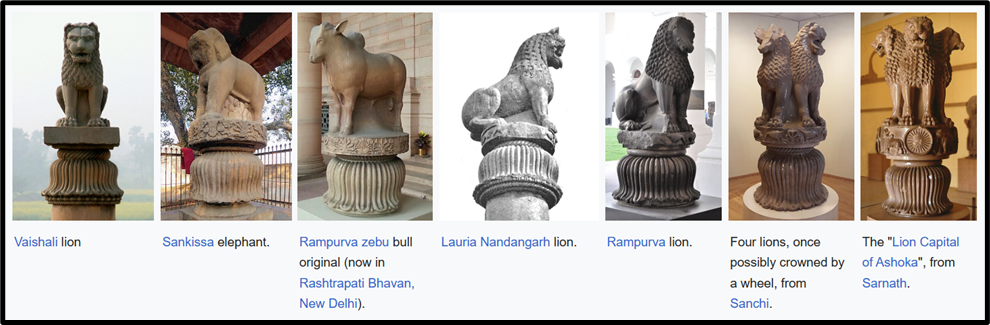
Animal Capitals
- Bulls, lions, elephants, and deer are commonly used.
- Animals are shown with realism, strength, and controlled energy.
Foreign Testimony
The Chinese traveller Hiuen Tsang, visiting Sarnath in the 7th century CE, described the pillar as:
“A stone pillar about seventy feet high, as bright as jade and glistening and sparkles like light.”
This confirms the lasting visual impact of Mauryan craftsmanship.
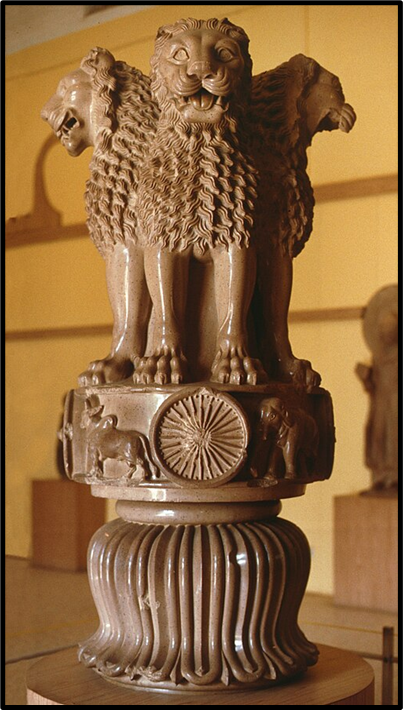
Lion Capital of Sarnath
This is not just a sculpture—it is India’s most powerful visual symbol.
Historical Context
- Erected by Ashoka at Sarnath, where Buddha delivered his first sermon (Dhammachakrapravartana).
Structural Components
- Lotus bell base (inverted lotus)
- Abacus (drum) with:
- four animals (lion, bull, horse, elephant),
- four chakras with 24 spokes, placed between the animals
- Four lions, seated back-to-back, facing the four directions
- Dharmachakra on top (now lost, survives only in fragments)
Artistic Excellence
- Exceptionally fine Mauryan polish
- Naturalistic depiction of lions → clearly defined facial muscles, powerful legs, alert posture
- Sense of movement in the animals on the abacus
- Graceful curves of the inverted lotus
National Symbol
- The lion capital without the lotus base and wheel forms the National Emblem of India.
- The original sculpture is preserved in the Archaeological Museum, Sarnath.
Didarganj Yakshini
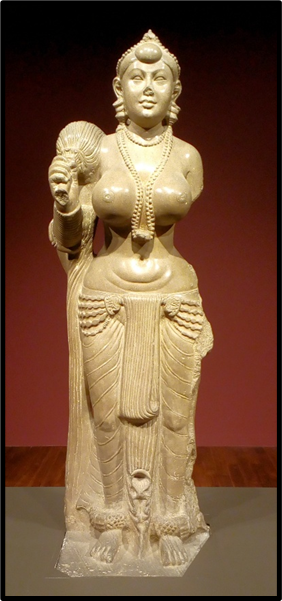
This sculpture represents the human dimension of Mauryan art.
Description
- Found near Didarganj, Patna (Bihar).
- Life-size figure (about 1.57 metres tall).
- A Yakshini holding a chauri (flywhisk), hence known as the chauri bearer.
Artistic Features
- Brilliant Mauryan polish
- Rounded, muscular body with great sophistication
- Fleshy cheeks, carefully modelled limbs
- Necklace beads hanging up to the belly
- Transparent garment effect
- Hair tied at the back
- Flywhisk continues onto the back, showing full three-dimensional planning
Significance
This sculpture demonstrates → mastery over human anatomy, sensual yet dignified representation, technical perfection in stone carving.
Rampurva Bull Capital
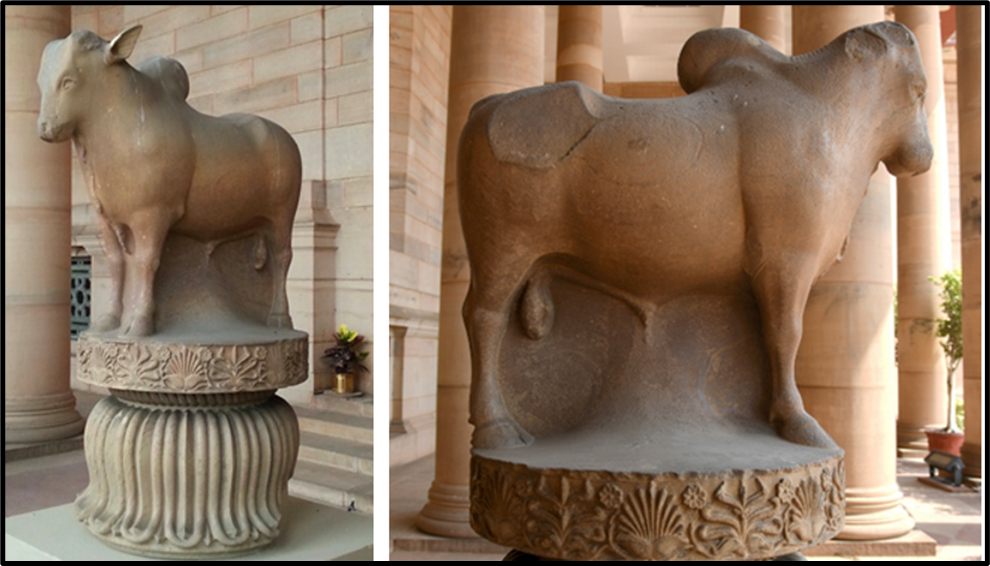
Description
- Found at Rampurva, Bihar.
- Composed of → inverted lotus base, abacus with finely carved plant motifs, a majestic bull on top.
Key Highlights
- Extremely high degree of polish
- Bull depicted with → strength, realism, controlled power
The bull exemplifies the sculptor’s complete command over animal anatomy.
Present Location
- The Bull Capital is now displayed at the Rashtrapati Bhavan, New Delhi.
Popular Sculpture of the Mauryan Period
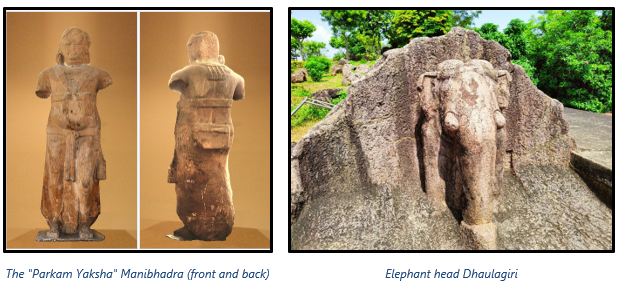
Alongside imperial court art, there existed a popular or folk sculptural tradition.
Features
- Patronised by local governors and nobility
- Less polished than court art
- More earthy, robust, and energetic
Examples
- Female figure from Besnagar
- Male figure from Parkham
- Stone elephant at Dhauli, carved emerging from rock
These works show physical vitality and regional expression, even if they lack imperial refinement.
Ring Stones
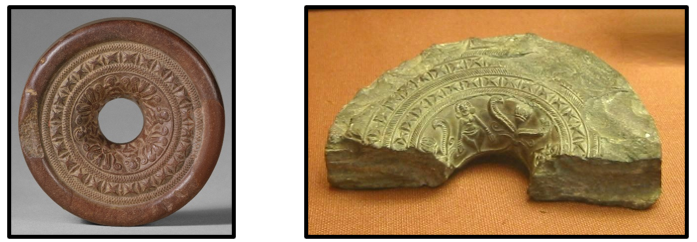
These are among the most intriguing miniature sculptures of the Mauryan period.
Characteristics
- Doughnut-shaped stone objects
- Diameter: 2.5 to 4 inches
- Fine relief carvings of →lotus, palm trees, birds, animals
- Central hole surrounded by decorative motifs
Purpose
Though their exact function is debated, they are often linked to → ritualistic or fertility-related practices.
For chapter-wise Art and Culture Notes for UPSC Prelims and Mains, refer to the complete Art and Culture notes page.