
Jain Architecture
Jain architecture is closely related to Hindu temple architecture in structure, but it reflects a distinctly Jain philosophical temperament → Austerity, Symmetry, Spiritual restraint, Precision
A Jain temple is called:
- Derasar (Western India)
- Basadi (South India)
Basic Layout
The core structure includes:
- Garbhagriha (sanctum)
- Idol of the Mula Nayak (main Tirthankara)
- Superstructure above it
Two major structural models:
- Shikhar-bandhi → Temple with Shikhara
- Ghar type → Without Shikhara
Thus, Jain temples may or may not follow vertical tower tradition.
Standard Features
1️⃣ Manastambha
- Pillar of honour
- Located before the temple
Symbolizes humility —
the devotee must leave pride before entering.
2️⃣ Devakoshta
- Small shrine niches
- Dedicated to the 24 Tirthankaras
3️⃣ Vedi
- Altar before sanctum
- Used for offerings
4️⃣ Torana
- Ornamental entrance gateway
- Richly carved
Important Centres
- Ellora, Aihole, Deogarh, Khajuraho, Chanderi, Gwalior
But one monument stands apart.
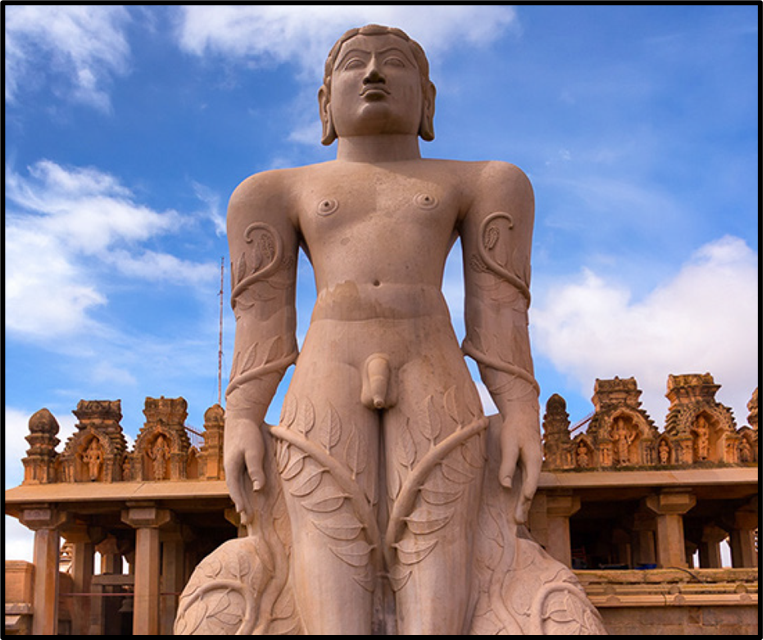
Shravanabelagola (Karnataka)
The granite statue of Gomateshwara (Bahubali):1
- 10th century CE
- Built by Chamundaraya
- 981 CE inscription (Prakrit)
- World’s tallest monolithic statue
Every 12 years:
- Mahamastakabhisheka ceremony
- Ritual anointing with water, turmeric, sandalwood, saffron
This monument reflects Jain ideals of renunciation and spiritual victory over ego.
This article forms part of the broader Art and Culture syllabus for UPSC preparation.
- UPSC Prelims 2002 ↩︎