
Rock Architecture
Let us begin with a simple but profound idea:
Rock Architecture means creating a structure by removing rock, not by assembling materials.
This is architecture by subtraction, not addition.
It can be divided into two types:
- Rock-cut Caves
- Monolithic Rock-cut Temples
And remember —
Indian rock architecture is predominantly religious in nature.
There are more than 1,500 known rock-cut structures in India — an extraordinary number.
This itself tells us how important this tradition was.
Rock–Cut Caves
Beginning of Cave Architecture
Cave architecture in India begins in the 3rd century BCE, during the Mauryan period.
These caves were excavated into mountains and rock faces for → Religious meditation, Monastic residence, Spiritual retreat
They were not decorative projects.
They were spaces of discipline and silence.
The Barabar Caves – The Oldest Rock-cut Caves in India
Located in Bihar, in the twin hills of Barabar and Nagarjuni, these are the oldest surviving rock-cut caves in India.
They were dedicated by → Ashoka and his grandson Dasaratha
But interestingly, they were not dedicated to Buddhists.
They were dedicated to the Ajivikas — a sect founded by Makkhali Gosala, a contemporary of Gautama Buddha and Mahavira.
This tells us something very important:
Mauryan patronage was not limited to one religious sect. It was broad and inclusive.
Inscriptions
- “King Piyadasi” → Ashoka
- “Devanampiya Dasaratha” → Dasaratha
These inscriptions give us solid historical evidence.
General Features of Rock-cut Caves
Let us now understand how these caves evolved.
1️⃣ Structural Evolution
Initially → Simple chambers, Plain interiors
Later → Multi-storied complexes, Pillared halls, Courtyards, Elaborate façades
This shows technological advancement and aesthetic refinement.
2️⃣ Sculptural Work
As cave architecture matured, it began to include → Gods and goddesses, Mythological narratives, Religious symbols
The cave walls became storytelling surfaces.
3️⃣ Frescos and Paintings
Particularly in Buddhist caves like Ajanta:
- Entire interiors covered with murals
- Scenes from Jataka tales
- Courtly life and social settings
Here architecture becomes a canvas of civilization.
4️⃣ Iconography
Religious symbolism becomes central → Buddha images, Jain Tirthankaras, Hindu deities
Architecture is no longer just space — it becomes theology in stone.
Caves of Eastern India
Let us examine the important eastern cave sites in detail:
1️⃣ Barabar Hill Caves
These consist of four caves → Sudama, Lomas Rishi, Karan Chaupar, Visvakarma
The earliest among them are Sudama and Lomas Rishi.
Important Features:
- Highly polished interiors (Mauryan polish)
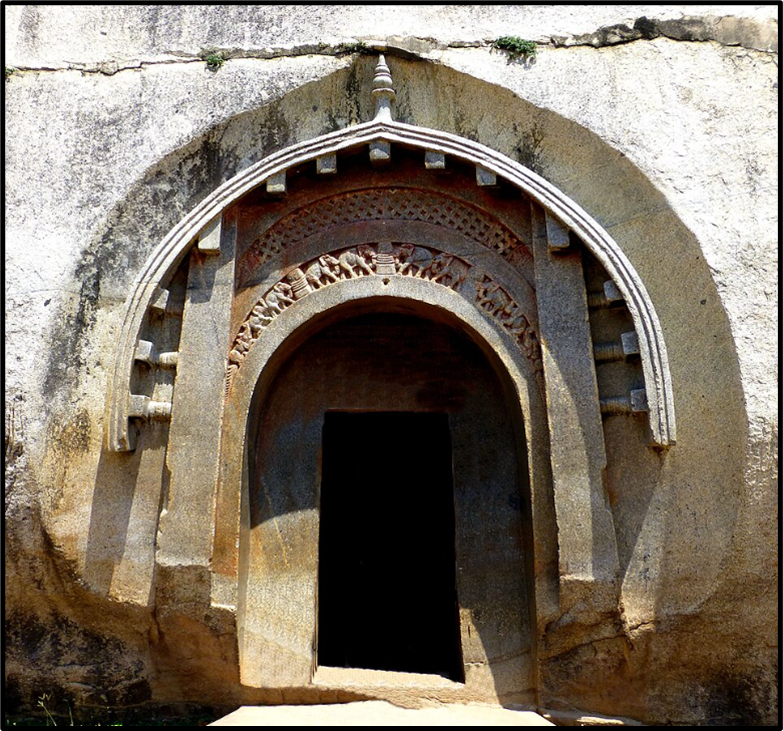
- Lomas Rishi cave has an arch-shaped façade imitating timber architecture
- Sudama cave has bow-shaped arches
Notice something fascinating → Stone is being carved to imitate wooden architecture.
This shows transitional experimentation.
2️⃣ Nagarjuni Hill Caves
These consist of → Gopika (Gopi-ka-Kubha), Vadithi-ka-Kubha, Vapiya-ka-Kubha
These were built by Dasaratha, Ashoka’s successor. This indicates continuity of patronage.
➡️ Kubha literally means “cave” or “rock-cut chamber.”
3️⃣ Sitarmarhi Cave
- Located near Rajgir, Bihar; Similar to Barabar caves
- Polished interiors; No inscriptions
- Smaller in size
They belong to the Mauryan period. Again, we see uniform architectural language.
4️⃣ Son Bhandar Caves
- Located in Rajgir
- Jain affiliation; Dated to 2nd–4th century CE
They resemble Barabar caves in structure but belong to a later period.
This shows how architectural traditions get inherited and adapted.
5️⃣ Udayagiri and Khandagiri Caves
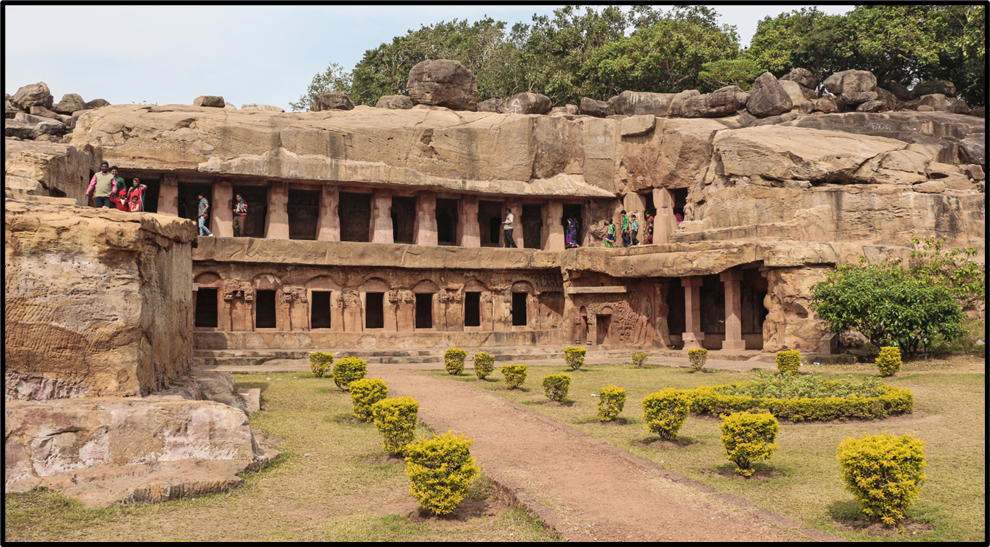
Located near Bhubaneswar, Odisha. These are partly natural and partly artificial caves.
They belong to the 2nd century BCE.
They were carved during the reign of King Kharavela for Jain monks.
Key features → Residential blocks, Ornate carvings, Early narrative panels
These caves mark a stage where architecture becomes more expressive and decorative.
What Is the Deeper Pattern?
If you observe carefully:
- Mauryan caves → Simplicity, polish, structural precision
- Later caves → Ornamentation, narrative art, religious imagery
This is evolution.
From plain meditation chambers to richly symbolic sacred complexes.
Caves of Western India
These caves are predominantly Buddhist, especially in the early phase.
Important early cave temples include → Bhaja, Karla, Bedse, Kanheri, Nashik, Pitalkhora, Ajanta, Ellora
Now we examine them one by one.
1️⃣ Bhaja Caves (2nd Century BCE)
Located near Pune, on an ancient trade route.
Why important?
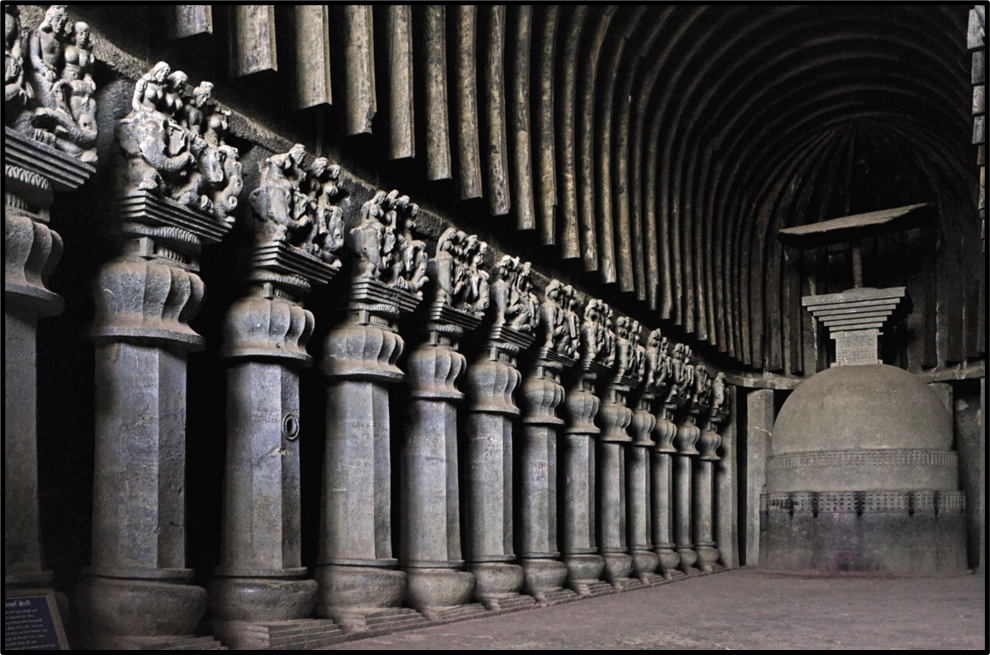
- One of the earliest surviving Chaitya halls
- Vaulted horseshoe-shaped ceiling
- Pillared veranda in the vihara
Unique artistic feature:
- Relief of a woman playing the Tabla
- Dancing female figure
This shows something remarkable:
Even early Buddhist caves were not austere boxes — they were artistically expressive.
2️⃣ Karla Caves (2nd Century BCE – 5th Century CE)
Karla represents architectural grandeur. Most famous for:
The Grand Chaitya (Cave 8)
- Largest rock-cut chaitya in India
- 45 meters long
- 14 meters high
- Magnificent sculptural decoration
There is even a painting on the upper backside.
Patronage
- Satavahanas, Western Satraps (Saka rulers), Traders
Notice the pattern → Religious monuments often receive commercial patronage.
Architecture becomes a reflection of economic prosperity.
3️⃣ Bedsa Caves (1st Century BCE)
Located in Maharashtra, Satavahana period.
Features:
- Chaitya with large stupa
- Vihara richly decorated
- Profusion of decorative motifs
We now see increasing ornamental sophistication.
4️⃣ Kanheri Caves (1st Century CE onwards)
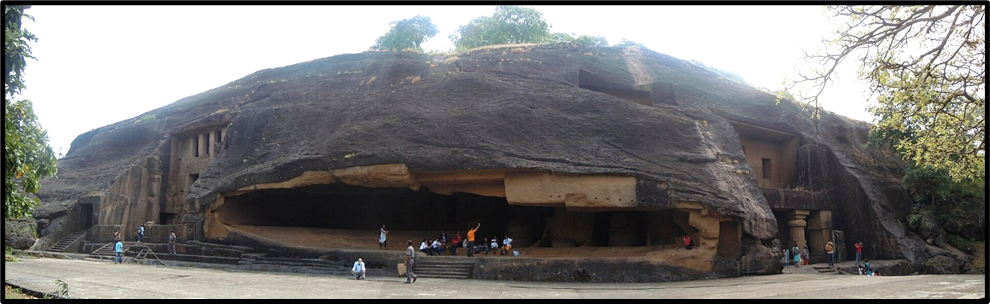
- Located inside Sanjay Gandhi National Park, near Mumbai, Total caves: 109
- Features → Buddhist sculptures, Relief carvings, Paintings, Inscriptions (Brahmi and Devanagari)
- One inscription mentions → Marriage of Satavahana ruler Vashishtiputra Satakarni with the daughter of Rudradaman (Western Kshatrapa).
- This shows political alliances recorded inside religious caves
- Architecture becomes a historical document.
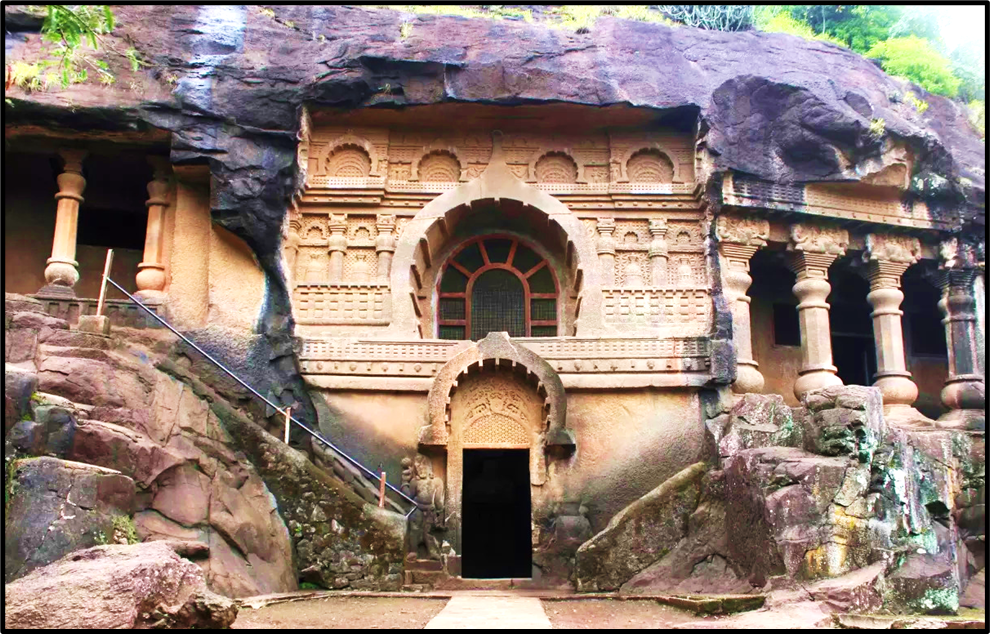
5️⃣ Nashik Caves (Trirashmi / Pandavleni)
- Located in Maharashtra.
- Total caves: 24 (1 chaitya + multiple viharas)
- Originally called Pundru (referring to monks’ yellow robes).
- Features → Intricate carvings of Buddha and Bodhisattvas, Elaborate pillars, Water tanks with excellent water management
- Inscriptions record donations from → Kshatrapas, Satavahanas, Merchants, Landlords
- These caves were used by both → Hinayana and Mahayana sects
- This is important: It shows doctrinal evolution within the same architectural space.
6️⃣ Pitalkhora Caves (3rd Century BCE)
Located in present-day Maharashtra. Total: 14 Buddhist caves.
Special Features:
- Originally Hinayana phase
- No human Buddha sculptures
- Presence of Yaksha figures, elephants, Gaja Lakshmi
- Later Mahayana paintings
- Rainwater harvesting system
Again we see technological intelligence — water management integrated into architecture.
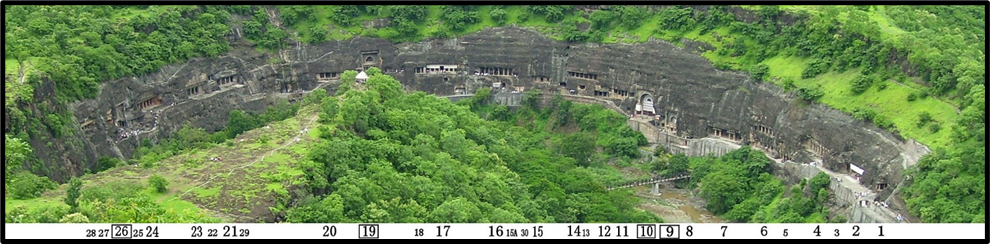
7️⃣ Ajanta Caves
Located in the Sahyadri ranges along the Waghora River. Total: 29 caves. Two major phases:
Phase 1 (100 BCE – 100 CE)
- Likely under Satavahanas
- Caves 10, 9, 12
- Simple carvings
Phase 2 (5th Century CE – Vakataka period)
- Mahayana phase
- Elaborate frescoes
- Ornamented facades
- Rich sculptural work
Ajanta represents the golden age of Buddhist mural painting.
Here, architecture and painting merge into one experience.
8️⃣ Ellora Caves
Located about 100 km from Ajanta.
Total → 17 Hindu caves, 12 Buddhist caves, 5 Jain caves
Ellora represents religious coexistence in stone.
Buddhist Caves
- Transition from Theravada to Mahayana
- Vishvakarma Cave (“Carpenter’s Cave”) — wooden beam-like finish
Hindu Caves
Important ones → Dashavatara Cave (Cave 15), Ravan ki Khai
Dashavatara Cave:
- Shaivite shrine
- Rashtrakuta inscription
- Ordered by King Dantidurga
- Contains Nrtya Mandapa
Ellora also contains a natural waterfall — integration of nature and architecture.
Jain Caves
- Chhota Kailash, Indra Sabha, Jagannath Sabha
Characterised by → Simplicity, Tirthankara images, Jain cosmological symbols
Saptaparni Cave
Located near Rajgir, Bihar.
Important because → Buddha spent time here, First Buddhist Council held here after Buddha’s death
This is not elaborate architecture — it is historically sacred space.
Classification Based on Religion
Now let us synthesize.
🟡 Buddhist Cave Architecture
Most prominent.
Two major components:
- Vihara → Monastic residence
- Chaitya → Prayer hall with stupa at end
Evolution:
- Hinayana (no Buddha image)
- Mahayana (Buddha images introduced)
🔵 Hindu Cave Architecture
Developed later (4th–9th century CE).
Early Phase → Udayagiri (Gupta period), Simplicity, Important sculptures (e.g., Vishnu Varaha)
Later Phase → Elephanta caves, More grandeur, Complex iconography
🟢 Jain Cave Architecture
Less widespread.
Major example → Jain caves at Ellora (9th–10th century CE)
Features → Simplicity, Tirthankara imagery, Cosmological symbolism
Monolithic Rock–cut Temples
A monolithic rock-cut temple is carved from a single, massive rock and shaped to resemble a structural temple made of wood or masonry.
Remember the distinction:
- Rock-cut caves → carved into a hill
- Monolithic temples → carved out of a freestanding rock
This technique demands extreme precision.
One mistake — and the entire structure is damaged.
The pioneers of this style were the Pallavas.
They experimented by carving monolithic replicas of structural temples, almost like architects rehearsing in stone before building in masonry.
Mandapas of Mahabalipuram
Mahabalipuram (Mamallapuram) in Tamil Nadu is a laboratory of Pallava architecture.
There are 14 mandapas here.
Before we proceed, understand the word: Mandapa
- In Sanskrit, Mandapa refers to → A pillared hall; a pavilion or, a vestibule
- In rock architecture, it refers to temples carved following this pillared-hall concept.
These are not caves in the earlier sense.
They are sculptural halls filled with narrative panels.
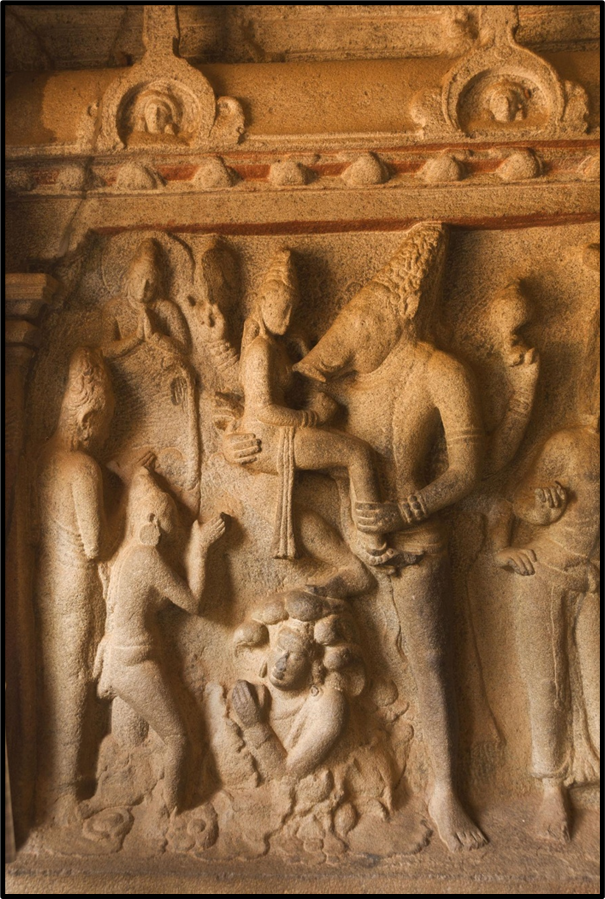
Varaha Mandapa (Adivaraha Cave)
Dated to the late 7th century.
Why important?
- Sculpture of Vishnu as Varaha
- He is lifting Bhudevi (Mother Earth) from the cosmic ocean
- Mythological reliefs cover interior walls
Observe the symbolism:
The deity rescues Earth from chaos. Architecture becomes visual theology.
Other Important Mandapas
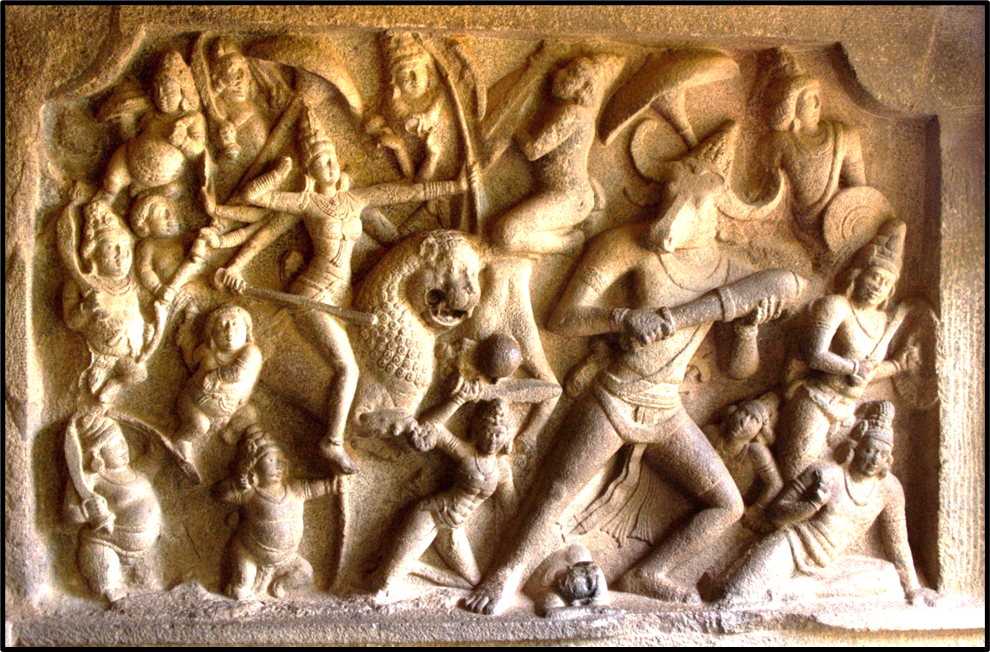
Mahishasura Mardini Mandapam
- Relief of Goddess Durga slaying Mahishasura
- Powerful dynamic composition
Krishna Mandapam
- Krishna lifting Govardhana Hill
- Celebration of pastoral life and divine protection
Ramanuja Mandapam
- Associated with philosopher-saint Ramanuja (later Vaishnava tradition)
Athiranachanda Mandapam
- Contains inscriptions in Pallava Grantha and Devanagari
- Important epigraphic evidence
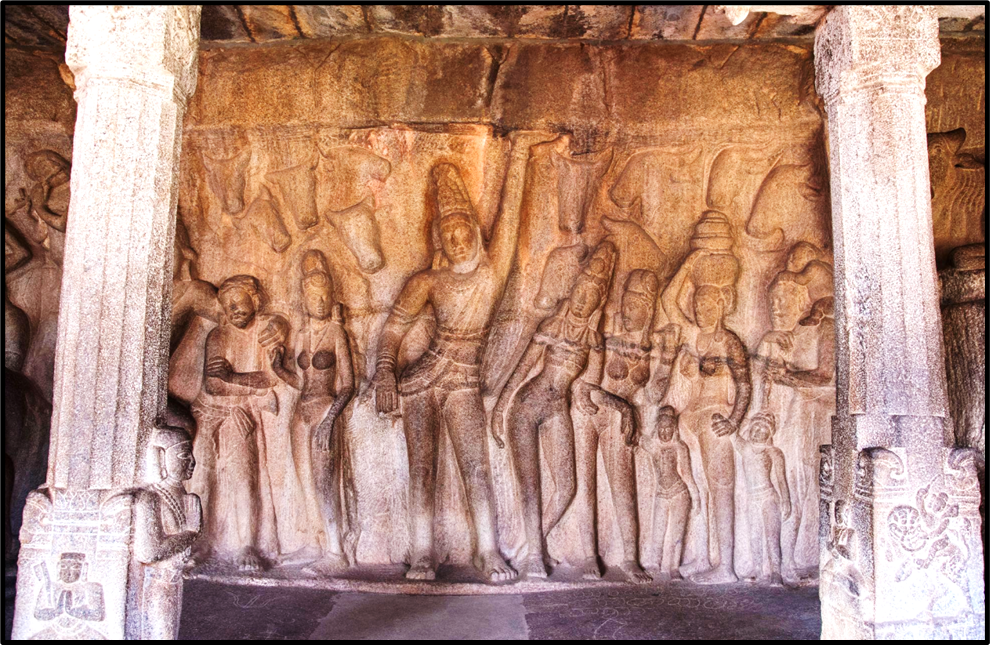
What do these mandapas show?
Narrative relief becomes central.
Walls are no longer plain — they are epic canvases.
Ratha Temples of Mahabalipuram
Now comes an even more fascinating experiment.
The Five Rathas, also called Pandava Rathas, are monolithic structures carved from single rock outcrops.
They are → Dharmaraja Ratha, Bhima Ratha, Arjuna Ratha, Nakula-Sahadeva Ratha, Draupadi Ratha
Important points:
- Each is carved from a single rock.
- Late 7th century.
- Also known as Ainthinai Kovil.
- Each has a different architectural plan → Square, Rectangular, Apsidal
Their elevation shows → Ekathala (single storey), Trithala (three storey)
Why are these important?
- Because they are prototypes.
- They experiment with → Dravida-style towers, Pillared halls, Superstructure forms
- They are almost architectural models carved at full scale.
Ellora Rock Temples
If Mahabalipuram represents experimentation, Ellora represents perfection.
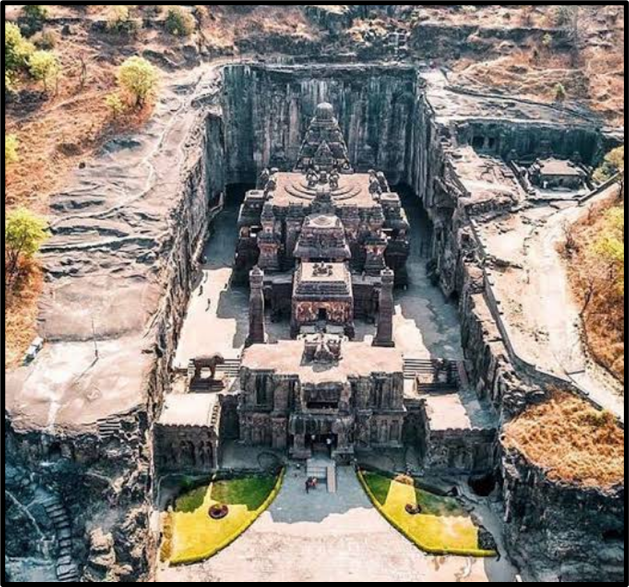
The most extraordinary monument here is Kailasa Temple (Cave 16)
Dedicated to Lord Shiva.
It is:
- Entirely monolithic
- The largest single rock excavation in the world
- Considered the climax of rock-cut architecture
Now understand its technical brilliance.
Unique Features
1️⃣ Top-down excavation
Unlike caves carved horizontally into hillsides,
the Kailasa Temple was carved from the top downward.
This required extraordinary planning.
Imagine visualizing the entire structure before carving begins.
2️⃣ Patronage
- Built in the 8th century
- Commissioned by Rashtrakuta King Krishna I
3️⃣ Architectural Features
- Free-standing multi-level complex
- Surrounded by smaller shrines
- Nandi shrine in front; Gopuram-like gateway; Cloisters
- Massive Vimana (about 30 metres high)
Two victory pillars stand in the courtyard.
Life-sized elephant statues support the visual drama.
4️⃣ Iconographic Diversity
Although dedicated to Shiva, it contains:
- Shaiva panels
- Vaishnava elements (12 episodes from Krishna’s childhood)
- Shakti imagery
This is significant.
The temple embodies theological inclusiveness.
Conceptual Understanding
Let us compare:
| Aspect | Mandapas & Rathas | Kailasa Temple |
| Dynasty | Pallava | Rashtrakuta |
| Nature | Experimental | Monumental climax |
| Technique | Monolithic carving | Top-down excavation |
| Scale | Moderate | Gigantic |
| Style | Early Dravida prototypes | Mature Dravida |