
Respiration and Nutrition in Plants
Respiration in Plants
When we think of respiration, we often imagine lungs. But plants challenge this idea completely.
How do plants breathe?
Plants require O₂ for respiration and release CO₂, just like animals. However, the mechanism is fundamentally different.
- Gas exchange occurs by diffusion
- There are no specialised organs like lungs
👉 The direction of diffusion depends on Environmental conditions and plant’s metabolic needs
🌗 Day vs Night Scenario
- During the day:
- Photosynthesis dominates
- CO₂ produced in respiration is reused
- Net result → O₂ is released
- During the night:
- No photosynthesis
- Only respiration occurs
- Net result → CO₂ is released
🌿 Structures for Gas Exchange
Plants use:
- Stomata → Present in leaves
- Lenticels → Present in woody stems
These are simple openings, not complex organs.
🤔 Why no complex respiratory system in plants?
This is a very important conceptual question.
1. Decentralised system
Every part (leaf, stem, root) performs its own gas exchange.
2. Lower metabolic demand
Plants are less active than animals. Generate O₂ during photosynthesis. So, their respiration needs are relatively lower.
3. Short diffusion distance
- Cells are close to the surface
- Presence of intercellular air spaces
→ Diffusion is sufficient
🔄 Source of Glucose for Respiration
Plants don’t “eat”—they produce.
- End product of photosynthesis → Sucrose
- Enzyme invertase converts: Sucrose → Glucose + Fructose
- These are used in cellular respiration
Nutrition in Plants
Plants require nutrients just like humans—but their system is more elegant and self-regulated.
Types of Nutrients
🟢 Macronutrients (Needed in large amounts)
(>10 millimoles per kg dry weight)
Key elements: C, H, O, N, P, K, Ca, Mg, S
👉 Among these: NPK (Nitrogen, Phosphorus, Potassium) are most critical for agriculture
📌 Source:
- C, H, O → Air & Water
- Others → Soil minerals
🔵 Micronutrients (Trace elements)
(<10 millimoles per kg dry weight)
Fe, Mn, Cu, Zn, B, Mo, Cl, Ni
👉 Required in small quantities, but absence = severe deficiency
🧩 Beneficial Elements
Not essential for all plants, but useful → Sodium (Na), Silicon (Si), Cobalt (Co), Selenium (Se)
🌍 Soil: The Nutrient Reservoir
Soil is not just dirt—it is a dynamic nutrient bank.
Functions:
- Provides minerals from weathered rocks
- Contains nitrogen-fixing bacteria
- Retains water and air
- Anchors plants
🌊 Hydroponics
A very important modern concept:
👉 Hydroponics = Growing plants in nutrient solution without soil
This shows → Soil is not essential, Nutrients are
⚙️ Role of Nutrients in Plants
🟢 Macronutrients (Functions)
| Nutrient | Key Functions |
| Carbon (C), Hydrogen (H), Oxygen (O) | Fundamental components of biomolecules (proteins, carbohydrates like starch & cellulose); involved in photosynthesis (CO₂ → carbohydrates); oxygen required for cellular respiration |
| Nitrogen (N) | Essential for proteins, nucleic acids, vitamins, hormones, and chlorophyll; required most in growing tissues |
| Phosphorus (P) | Absorbed as phosphate ions; important for nucleic acids, proteins, cell membranes, and energy transfer (ATP, phosphorylation) |
| Potassium (K) | Maintains ionic balance; involved in protein synthesis, stomatal movement, enzyme activation, and cell turgidity |
| Calcium (Ca) | Provides cell wall stability (calcium pectate); important for cell division, membrane function, and enzyme activation; accumulates in older leaves |
| Magnesium (Mg) | Component of chlorophyll; activates enzymes in photosynthesis, respiration, and nucleic acid synthesis; part of ribosome structure |
| Sulphur (S) | Component of amino acids (cysteine, methionine), vitamins (thiamine, biotin), coenzymes (CoA), and proteins |
🔵 Micronutrients (Functions)
| Nutrient | Key Functions |
| Iron (Fe) | Important for electron transport proteins, chlorophyll synthesis, and enzyme activation |
| Manganese (Mn) | Activates enzymes in photosynthesis, respiration, nitrogen metabolism; involved in photolysis of water |
| Zinc (Zn) | Enzyme activation and synthesis of growth hormone (auxin) |
| Copper (Cu) | Involved in redox reactions and overall metabolic processes |
| Boron (B) | Aids calcium utilisation, cell function, pollen germination, and carbohydrate transport |
| Molybdenum (Mo) | Component of enzymes involved in nitrogen metabolism |
| Chlorine (Cl) | Maintains ionic balance; essential for oxygen evolution in photosynthesis |
| Nickel (Ni) | Required for nitrogen metabolism; prevents toxic accumulation of urea in plant tissues |
🔻 Deficiency of Essential Elements
When a plant does not receive enough of a required nutrient, its growth doesn’t stop immediately—it slows down first.
👉 The minimum required level is called critical concentration.
Below this → deficiency symptoms appear
📍 Where do symptoms appear?
This depends on a very important concept: mobility of nutrients.
🔄 Mobile Elements
- Examples: Nitrogen (N), Potassium (K), Magnesium (Mg)
- These move from old leaves → young leaves
👉 So deficiency appears first in older leaves
🔒 Immobile Elements
- Examples: Calcium (Ca), Sulphur (S)
- Cannot move once fixed
👉 So deficiency appears in younger leaves
⚠️ Common Deficiency Symptoms
| Symptom | Description | Deficient Nutrients |
| Chlorosis | Yellowing of leaves due to loss or reduced synthesis of chlorophyll | Nitrogen (N), Potassium (K), Magnesium (Mg), Sulphur (S), Iron (Fe), Manganese (Mn), Zinc (Zn), Molybdenum (Mo) |
| Necrosis | Death of plant tissue, especially at leaf tips and margins | Calcium (Ca), Magnesium (Mg), Copper (Cu), Potassium (K) |
| Stunted Growth & Inhibited Cell Division | Reduced plant growth due to impaired cell division and elongation | Nitrogen (N), Potassium (K), Sulphur (S), Molybdenum (Mo) |
| Delayed Flowering | Delay in reproductive phase and flowering | Nitrogen (N), Sulphur (S), Molybdenum (Mo) |
☠️ Toxicity of Micronutrients
Here comes a paradox:
👉 Macronutrients → needed in large amounts
👉 Micronutrients → needed in tiny amounts
But…
⚠️ Even a slight excess of micronutrients can become toxic
- Their optimal range is very narrow
- If plant dry weight reduces by ~10% → toxicity condition
⚠️ Toxicity Symptoms
| Aspect | Description | Example / Key Point |
| Reduced Growth | Excess micronutrients stunt plant growth or may even cause plant death | Overall decline in plant vigour |
| Discolouration | Leaves develop yellowing, spots, or blotches | Excess Manganese (Mn) → brown spots with chlorotic (yellow) veins |
| Abnormal Development | Distorted growth patterns and deformities in plant structure | Irregular leaf shape, abnormal tissue development |
⚖️ Nutrient Interactions
This is where plant nutrition becomes dynamic, not static.
| Type of Interaction | Description | Example |
| Synergism | One nutrient enhances the uptake or effectiveness of another, improving plant growth | Nitrogen (N) + Sulphur (S): Sulphur helps in amino acid and protein synthesis, enhancing nitrogen use |
| Zero Interaction | One nutrient has no effect on the uptake or activity of another | Nutrients function independently without influencing each other |
| Antagonism | Excess of one nutrient inhibits the uptake or function of another, causing deficiency-like symptoms | Excess Manganese (Mn) reduces uptake of Iron (Fe), Magnesium (Mg), and Calcium (Ca) |
⚙️ Mechanism of Absorption of Elements
Absorption is not random—it is a two-phase process.
⚡ Phase 1: Passive Uptake
- Rapid | No energy required | Occurs in apoplast (outer region) | Via ion channels
🔋 Phase 2: Active Uptake
- Slower | Requires metabolic energy (ATP) | Occurs in symplast (inner region)
🔄 Ion Movement Terms
- Influx → Entry into cell
- Efflux → Exit from cell
🌍 Nitrogen Metabolism in Plants
Now we come to one of the most important biogeochemical cycles.
🔄 Nitrogen Cycle
Nitrogen is essential—but paradoxically, it is abundant in air yet unavailable to plants.
👉 Reason: Atmospheric nitrogen (N₂) has a strong triple bond
🔁 Steps of Nitrogen Cycle
| Step | Process | Key Transformation | Agents Involved | Important Points |
| 1 | Nitrogen Fixation | Nitrogen gas (N₂) → Ammonia (NH₃) | Lightning, UV radiation, industrial combustion, forest fires, automobile exhausts, power plants | Breaks strong triple bond of N₂; makes nitrogen biologically usable |
| 2 | Ammonification | Organic nitrogen → Ammonia (NH₃) | Decomposers (bacteria & fungi) | Occurs during decomposition of dead plants & animals; ammonia partly released to atmosphere, mostly remains in soil |
| 3 | Nitrification | NH₃ → NO₂⁻ → NO₃⁻ | Nitrosomonas, Nitrococcus (NH₃ → NO₂⁻); Nitrobacter (NO₂⁻ → NO₃⁻) | These bacteria are chemoautotrophs; stepwise oxidation process |
| 4 | Absorption & Denitrification | NO₃⁻ → NH₃ (in plants) and NO₃⁻ → N₂ (denitrification) | Plants (absorption); Pseudomonas, Thiobacillus (denitrification) | Plants use nitrate for amino acid synthesis; denitrification returns nitrogen to atmosphere, completing cycle |
You can read about Nitrogen Cycle here in detail.
🧫 Biological Nitrogen Fixation
👉 Only certain prokaryotes can fix nitrogen
👉 They possess enzyme nitrogenase
Types of Nitrogen-Fixing Microbes
🌍 Free-Living
- Aerobic: Azotobacter, Beijerinckia
- Anaerobic: Rhodospirillum
- Cyanobacteria: Anabaena, Nostoc
🌱 Symbiotic
Mutual relationship with plants:
Example 1: Rhizobium + Leguminous plants
Example 2: Frankia + non-leguminous plants
🌿 Nodule Formation (Rhizobium Case)
This is a stepwise biological process:
Bacteria attach to root hairs ➡️Root hairs curl ➡️ Infection thread forms ➡️ Bacteria enter cortex ➡️Nodules develop
⚡ Inside Nodules
- Enzyme: Nitrogenase
- Reaction: N₂ → NH₃
- Energy: ~8 ATP per NH₃
👉 Ammonia → NH₄⁺ → Amino acids
🩸 Special Component: Leg-Haemoglobin
- Gives pink colour to nodules
- Protects nitrogenase from oxygen
👉 Why?
Because nitrogenase works in anaerobic conditions
🚚 Transport of Nitrogen
Plants don’t just produce nitrogen compounds—they transport them smartly.
📦 Forms of Transport
Plants produce Amides like Asparagine and Glutamine → by adding extra NH2 to Amino Acids.
👉 These Nitrogen-rich compounds transported via xylem
🌱 Special Case
- Some plants (e.g., soybean) transport nitrogen as Ureides
(High nitrogen-to-carbon ratio)
Photosynthesis in Higher Plants
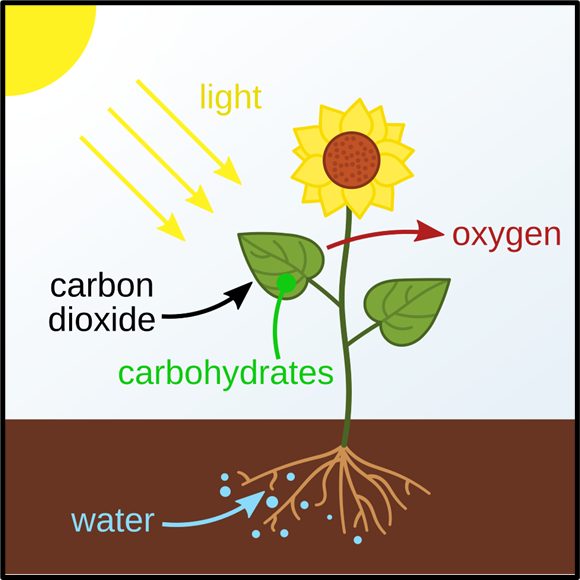
Green plants are called autotrophs because they synthesise their own food.
👉 Photosynthesis is the process by which → Sunlight (light energy), CO₂ (from air), Water (from soil) are converted into → Glucose (chemical energy) and Oxygen (by-product)
🧠 Conceptual Insight
Think of photosynthesis as → Conversion of solar energy into chemical energy stored in glucose. This glucose becomes → Energy source for plants and base of all food chains
CC BY-SA 4.0, via Wikimedia Commons
⚙️ How Photosynthesis Works
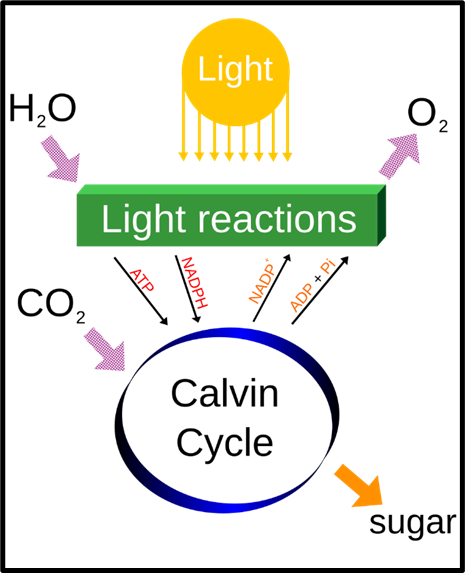
Photosynthesis is not a single step—it is a two-stage process inside chloroplasts.
Stage 1: Light Absorption
- Occurs in chloroplasts
- Pigment involved → chlorophyll
- Located mainly in leaves
👉 When sunlight strikes chlorophyll → process begins
Stage 2: Light Reactions
📍 Location: Thylakoid membranes
What happens?
- Water (H₂O) is split → Oxygen (O₂), Protons (H⁺), Electrons
👉 This is called photolysis of water
⚡ Energy Conversion
Light energy → stored as ATP (energy currency); NADPH (reducing power)
(ATP → adenosine triphosphate and NADPH → nicotinamide adenine dinucleotide phosphate)👉 Oxygen is released as a by-product
Stage 3: Dark Reactions (Calvin Cycle)
📍 Location: Stroma of chloroplast
This stage:
- Does not require direct sunlight
- Uses ATP & NADPH from light reactions
What happens?
- CO₂ is fixed and converted into Glucose (C₆H₁₂O₆)
👉 This glucose:
- Fuels plant metabolism
- Supports entire food chain
🌬️ Entry of CO₂ → through stomata in leaves
CC BY-SA 4.0, via Wikimedia Commons
🎨 Chlorophyll and Accessory Pigments
Plants are not just green—they are multi-pigment systems.
Types of Pigments
- Chlorophyll a → Blue-green (primary pigment)
- Chlorophyll b → Yellow-green
- Xanthophylls → Yellow
- Carotenoids → Yellow-orange
🌿 Functional Understanding
⭐ Chlorophyll a
- Most important pigment
- Absorbs → Blue light, red light
👉 Maximum photosynthesis occurs here
🔁 Accessory Pigments
(Chlorophyll b, xanthophylls, carotenoids)
- Absorb other wavelengths
- Transfer energy to chlorophyll a
- Protect against photo-oxidation
👉 Insight:
Plants maximise sunlight usage by covering a broader spectrum.
🌱 Does Photosynthesis Occur Only in Green Leaves?
This is a classic conceptual trap—answer is NO.
| Case | Category | Key Explanation | Important Insight |
| 1 | Non-Green Leaves | Leaves may appear red, purple, etc. due to pigments like anthocyanins masking chlorophyll | Chlorophyll is still present → photosynthesis continues |
| 2 | Stems & Other Green Parts | Green stems and parts like unripe fruits contain chlorophyll | These parts can capture light energy and perform photosynthesis |
| 3 | Cacti & Succulents | Leaves are reduced to spines; green stems take over function | Photosynthesis mainly occurs in stems as an adaptation to arid conditions |
| 4 | Algae & Other Organisms | Includes algae, some bacteria, and other photosynthetic organisms | Photosynthesis is not limited to plants; different pigments may be used |
⚖️ Factors Affecting Photosynthesis
Photosynthesis depends on a balance of multiple factors.
| Category | Factors Included | Key Explanation | Important Insight |
| Internal Factors | Number, size, age & orientation of leaves; mesophyll cells; chloroplasts; internal CO₂ levels; chlorophyll content | These factors determine the plant’s inherent capacity to perform photosynthesis | Controlled by genetics and growth stage of the plant |
| External Factors | Sunlight, temperature, CO₂ concentration, water | These environmental conditions influence the rate of photosynthesis | Act as limiting factors; variation directly affects photosynthetic efficiency |
📉 Law of Limiting Factors
A very important principle: The factor in shortest supply limits the rate of photosynthesis
🧠 Example: Plenty of light + waterbut low CO₂. Photosynthesis will still be slow
🔑 Key Factors Explained
| Factor | Key Explanation | Critical Threshold / Behavior | Important Insight |
| Light | Rate of photosynthesis increases with light intensity | Saturation occurs at ~10% of full sunlight; excess light can damage chlorophyll | Shows light saturation and photoinhibition at very high intensity |
| CO₂ Concentration | CO₂ is a major limiting factor due to its low atmospheric concentration (0.03–0.04%) | Increase to ~0.05% enhances photosynthesis; higher levels may become harmful | Directly influences rate of carbon fixation |
| Temperature | Affects enzyme-driven dark reactions more than light reactions | Optimal range required; too high or too low reduces enzyme activity | Indicates enzyme sensitivity of Calvin cycle |
| Water | Acts as a reactant in light reactions; major effect is indirect | Water stress leads to stomatal closure and reduced CO₂ intake | Also causes wilting, reducing leaf surface area and efficiency |