
India – Japan Relations
India and Japan share one of Asia’s most consequential partnerships — a relationship anchored in civilisational cultural ties, shared democratic values, and a growing convergence of strategic interests in a rapidly changing Indo-Pacific.
Japan was among the earliest investors in independent India and remains its single largest source of concessional development finance, while India offers Japan a vast market, a young workforce, and a like-minded partner in shaping a stable, rules-based regional order.
From distant Cold War acquaintances, the two have grown into a Special Strategic and Global Partnership, making this one of the fastest-maturing bilateral equations of contemporary times.
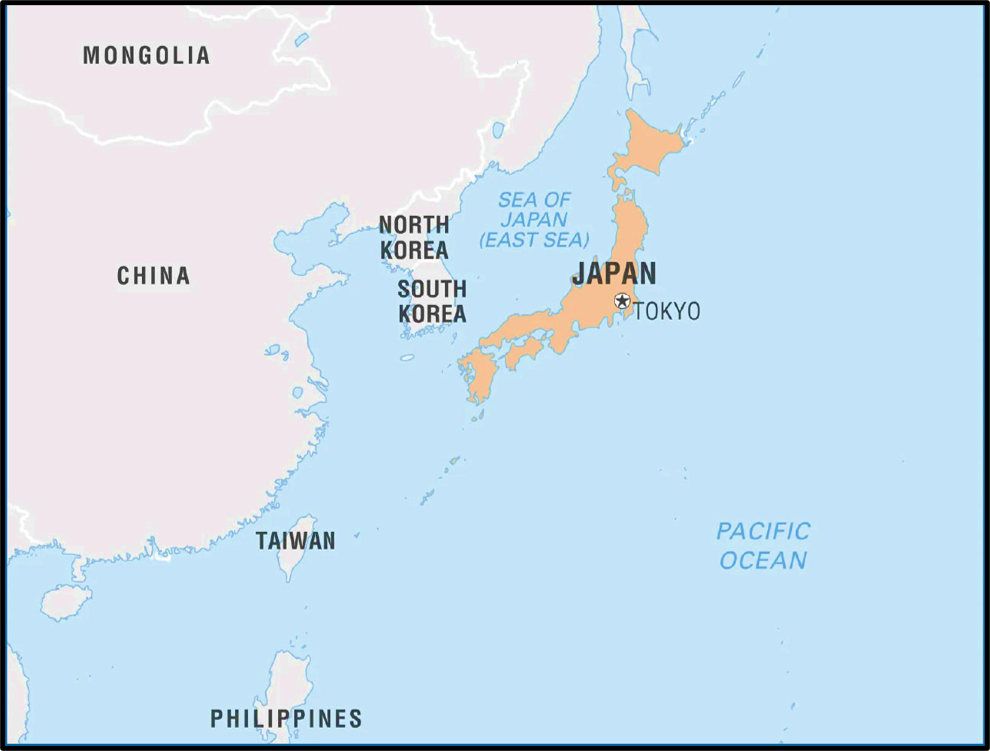
Historical Evolution: From Ancient Ties to Strategic Partnership
The roots of the relationship are ancient, with Buddhism acting as the earliest civilisational bridge — travelling from India through China and Korea into Japan along the Silk Route. This shared spiritual heritage created a reservoir of goodwill that survived long periods of limited political contact.
In the modern era, the freedom struggle forged the first political links. During the Second World War, Subhas Chandra Bose built close ties with Japan, and the Indian National Army (INA) was raised with Japanese support to fight British forces on India’s eastern frontiers at Imphal and Kohima. This episode remains a powerful emotional marker in the bilateral memory.
Formal diplomatic relations were established through the Treaty of Peace and Friendship of 1952, concluded shortly after the Second World War. Notably, India chose not to attend the San Francisco Peace Conference and signed a separate treaty with Japan, waiving reparation claims — a gesture of goodwill that Japan has long remembered.
The Cold War Chill and its Reasons
Despite this warm beginning, the Cold War kept the two apart, driven by an ideological divergence. India championed Non-Alignment, while Japan, rebuilding under the security umbrella of the United States, tilted firmly towards the Western capitalist bloc.
Japan stayed neutral during India’s conflicts of 1962, 1965 and 1971, and grew uneasy with India’s post-1971 proximity to the USSR. Economically, India was then viewed as a poor and chaotic state with limited partnership potential — even as Japan, by 1986, had become India’s largest aid donor.
The 1998 Setback and the 2000 Revival
Ties briefly improved after the Cold War but suffered a sharp setback after India’s Pokhran-II nuclear tests of 1998. As the only nation to have suffered atomic bombings, Japan reacted strongly — condemning the tests, sponsoring a critical UN resolution, and suspending economic aid.
The turnaround came in 2000, when Japanese Prime Minister Yoshiro Mori’s visit launched a “Global Partnership,” setting the relationship on a steadily rising trajectory that continues to this day.
Milestone Timeline
| Year | Milestone |
| 1952 | Treaty of Peace and Friendship — diplomatic relations established. |
| 2000 | “Global Partnership” launched during PM Mori’s visit. |
| 2011 | Comprehensive Economic Partnership Agreement (CEPA) signed. |
| 2014 | Special Strategic and Global Partnership established; Tokyo Declaration. |
| 2016 | Civil Nuclear Cooperation Agreement concluded (in force 2017). |
| 2019 | Inaugural Foreign & Defence 2+2 Ministerial Dialogue. |
| 2025 | Joint Vision for the Next Decade; a new ¥10 trillion investment target set. |
| 2026 | 16th Annual Summit; Joint Declaration on Economic Security |
Strategic Significance: Why the Partnership Matters
The relationship is often described as one of complementary strengths: India brings demography, markets, natural resources and a strategic location astride the Indian Ocean; Japan brings capital, cutting-edge technology, and quality infrastructure expertise. Together they anchor stability in the Indo-Pacific.
| Significance for India | Significance for Japan |
| Infrastructure & connectivity — funding for metros, freight corridors and the bullet train. Capital & FDI into manufacturing, auto and electronics. Technology & skilling through industrial and training partnerships. Balancing China and securing the Indo-Pacific. | Demographic dividend — India’s youth offset Japan’s ageing workforce. Market access for autos, electronics and food processing. Resource security including raw materials such as iron ore. A democratic partner to preserve regional balance of power. |
The Strategic Logic: The China Factor and the Indo-Pacific
The deeper driver of convergence is the rise of an assertive China. A powerful Chinese economy has translated into military muscle and regional dominance, unsettling both New Delhi and Tokyo. China’s growing footprint in the Indian Ocean — through projects such as CPEC, the base at Djibouti, and Hambantota in Sri Lanka — has sharpened India’s need for a capable partner, and Japan has stepped in.
Historically, the United States’ Pivot to Asia (strategic rebalancing) acted as a catalyst, encouraging its friends and partners — India, Japan, Australia, South Korea — to draw closer and collectively balance China. Both India and Japan, however, are careful not to frame their cooperation as an anti-China alliance, positioning it instead as support for a free, open and rules-based order.
Guiding Strategic Concepts
- Confluence of the Two Seas — Shinzo Abe’s 2007 vision linking the Indian and Pacific Oceans, the intellectual seed of the Indo-Pacific idea.
- Free and Open Indo-Pacific (FOIP) — Japan’s vision, closely aligned with India’s own regional strategy.
- Democratic Security Diamond — Abe’s proposal for India, Japan, the US and Australia to safeguard maritime security from the Indian Ocean to the western Pacific (a precursor to the QUAD).
- Avoiding the Thucydides Trap — cooperative balancing to manage, rather than trigger, conflict amid shifting power.
How the Convergence Works
| Rise of an assertive China (economic + military) |
▼
| Shared threat perception + shared democratic values |
▼
| Deepening India–Japan strategic, economic & defence ties |
▼
| QUAD • Free & Open Indo-Pacific • Rules-based regional order |
Areas of Cooperation
(a) Political & Strategic
The relationship is famously a Prime Minister-driven partnership, energised by personal chemistry between leaders. Institutionally it rests on Annual Summits, the Foreign & Defence 2+2 Ministerial Dialogue (first held in 2019), and close coordination within the QUAD alongside the US and Australia.
Both cooperate in the G4 for UN Security Council reform and coordinate within the G7/G20 on global governance.
(b) Economic & Commercial
- CEPA (2011) — a Comprehensive Economic Partnership Agreement covering goods, services, investment and intellectual property; described as an alliance of Japanese technology and India’s labour force.
- Bilateral trade stood at roughly US$ 22.85 billion in FY24 — modest relative to potential and skewed by a trade deficit in Japan’s favour.
- Investment — Japan is among India’s top sources of FDI (auto, electronics, pharma, finance). The ¥5 trillion investment target set in 2022 was achieved within three years, and a fresh ¥10 trillion private-investment target for the coming decade has now been set.
- Financial stability — a US$ 75 billion Bilateral Swap Arrangement cushions against currency volatility.
(c) Development & Infrastructure
Japan is India’s largest bilateral development partner, channelling Official Development Assistance (ODA) into landmark projects — the Delhi Metro, the Delhi–Mumbai Industrial Corridor (DMIC), the Dedicated Freight Corridor, and water and rural projects.
The flagship is the Mumbai–Ahmedabad High Speed Rail (MAHSR) bullet train, built on Shinkansen technology and financed by an exceptionally soft loan at 0.1% interest. Both also promote quality infrastructure abroad through the Asia-Africa Growth Corridor (AAGC) and the Blue Dot Network.
(d) Defence & Security
Defence ties have moved from symbolic to substantive, underpinned by a Security Cooperation Declaration (2008), agreements on the Transfer of Defence Equipment and Technology and on protecting classified military information, and a logistics-sharing arrangement (Acquisition and Cross-Servicing Agreement) enabling reciprocal access to bases. The two now hold a full suite of joint exercises across all services:
| Service | Exercise | Nature |
| Army | Dharma Guardian | Bilateral |
| Air Force | Shinyuu Maitri | Bilateral |
| Navy | JIMEX / Malabar | Bilateral / Multilateral (with US & Australia) |
| Coast Guard | Sahyog-Kaijin | Bilateral |
A long-discussed proposal for India to acquire the US-2 amphibious aircraft from Japan reflects both the promise and the sticking points of defence-industrial cooperation.
Recent Developments in Defence & Maritime Cooperation (2026)
- Maritime Security Cooperation MoA (2026): India and Japan signed a Memorandum of Arrangement establishing a broader framework for naval cooperation, including Maritime Domain Awareness, Search and Rescue, HADR, protection of Sea Lines of Communication, joint exercises, port access and logistical cooperation.
- Defence shipbuilding: Both sides agreed to explore joint development of naval ships and ship design, combining Japanese technological capabilities with Indian manufacturing under Make in India.
- UNICORN: Cooperation is being accelerated on the Unified Complex Radio Antenna, an integrated communications antenna intended to improve the stealth characteristics of Indian naval platforms. The project originated through a 2024 Memorandum of Implementation and is expected to become the first major India–Japan defence equipment transfer/co-development project.
- Institutional mechanism: A new Director-General/Joint Secretary-level Working Group will coordinate cooperation across operational, intelligence, equipment, technology and industrial domains.
(e) Civil Nuclear Cooperation
The Civil Nuclear Cooperation Agreement of 2016 (operational from 2017) was a diplomatic breakthrough — Japan, despite its atomic history and its earlier insistence that India sign the NPT, concluded the deal with a non-signatory of the NPT on the strength of India’s non-proliferation record and voluntary testing moratorium.
A special “Note” allows Japan to terminate cooperation, after due process, should India resume testing. Because major global reactor makers rely on Japanese components, the deal also unlocked wider nuclear commerce with the US, France and Russia.
(f) Science, Technology & Space
- Lunar Polar Exploration (LUPEX / Chandrayaan-5) — a flagship joint ISRO–JAXA mission to study water at the Moon’s south pole, approved in 2025 and targeted for launch later this decade.
- Semiconductors & supply chains — cooperation to build resilient chip supply chains and reduce dependence on China, supporting India’s semiconductor mission.
- Digital & AI — a Digital Partnership and an AI cooperation initiative advancing joint work in emerging technologies.
(g) Cultural & People-to-People
The civilisational bond is actively nurtured — Varanasi and Kyoto are partner (“sister”) cities, and Buddhism remains a living link. Human-capital mobility is deepening through the Technical Intern Training Programme (TITP) and the Specified Skilled Worker (SSW) scheme, which channel Indian talent into Japan’s labour-short economy and strengthen the emerging diaspora bridge between the two societies.
16th India-Japan Annual Summit (2026)
- Economic security: A Joint Declaration supports project-based cooperation in semiconductors, critical minerals, AI/ICT, clean energy and pharmaceuticals.
- AI: A strategic R&D partnership and joint roadmap connect national programmes and institutional collaborations across the AI technology stack.
- Defence: Joint development of the UNICORN naval radio antenna became the first India-Japan defence co-development project.
- Investment: Japan reaffirmed a 10 trillion-yen investment goal for the next decade and both sides seek to double Japanese-company presence in India.
- Mobility: The Next Generation Mobility Partnership covers rail, automobiles, roads, aviation, shipbuilding, ports, logistics and urban development.
- Energy and minerals: Cooperation expanded across strategic reserves, maritime energy transport, critical-mineral exploration and battery supply chains.
- Innovation and people: Partnerships in biotechnology, biogas, internet governance and financial technology were expanded; 2027 will be the India-Japan Year of Shared Horizons.
Issues and Challenges
Despite the momentum, several irritants keep the relationship below its true potential:
- Trade imbalance & modest volumes — bilateral trade remains small; Indian exports face Japan’s stringent quality norms and non-tariff barriers.
- Low FDI share — Japanese investment in India is small relative to Japan’s global outflows, held back by project delays, land-acquisition hurdles and bureaucratic red tape.
- Strategic divergences — India is assertive on China at the land border but cautious on Taiwan and the South China Sea, whereas Japan aligns more closely with US positions.
- Divergence on Russia — Japan backs Western sanctions; India maintains strategic neutrality and its energy ties with Moscow.
- Digital-trade friction — India has resisted Japan-led “Osaka Track” rules on cross-border data flows, guarding data sovereignty.
- Implementation gaps — flagship projects such as the bullet train and the AAGC have seen slow progress and cost escalation.
- Defence-cooperation hurdles — deals like the US-2 have stalled, and there is potential competition in global defence exports.
Way Forward
- Rebalance and deepen trade — review CEPA implementation and rules of origin, and tackle non-tariff barriers to correct the trade skew.
- Convert commitments into outcomes — translate the ¥10 trillion investment vision into on-ground manufacturing, jobs and supply-chain resilience.
- Elevate defence-industrial ties — move from exercises to co-development and co-production, resolving technology-transfer and IP concerns.
- Anchor the Indo-Pacific — coordinate through the QUAD to uphold freedom of navigation and a rules-based maritime order.
- Lead in emerging technologies — expand joint work in semiconductors, AI, space, biotech, robotics and clean energy.
- Strengthen human bridges — scale up skilling mobility (TITP/SSW), tourism, education and the diaspora to give the partnership deep societal roots.
Conclusion
India and Japan have travelled from Cold War distance to a Special Strategic and Global Partnership that is increasingly central to Asia’s stability. Their strengths are complementary, their values shared, and their strategic anxieties aligned.
The historic characterisation of Japan as an “economic giant but political pygmy” and India as “a big tree that gave no shade” no longer holds — both are now confident, outward-looking powers. If the two can convert political goodwill into delivered outcomes on trade, investment, defence and technology, they are well placed to become a genuine stabilising axis — sometimes called a prospective “Asian G-2” — shaping a balanced, rules-based and prosperous Indo-Pacific.
One Comment