
India’s Relations with West and North Africa
Setting the Context
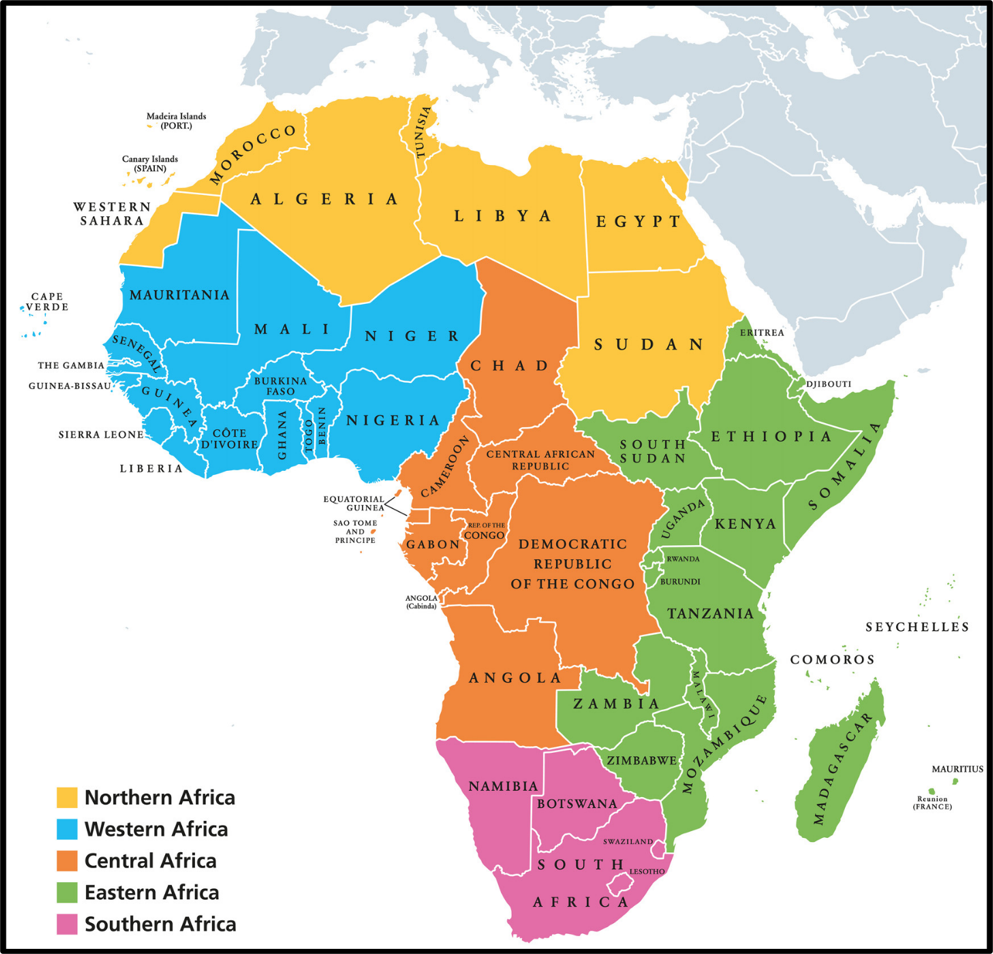
This section groups several of India’s partners across West and North Africa — Ghana and Côte d’Ivoire as the principal focus, with Morocco and Tunisia as a North African window. Though diverse, these relationships share a common logic: they are resource- and development-driven partnerships advanced through India’s ‘Outreach to Africa’ toolkit — lines of credit, capacity building (ITEC), digital public goods, and increasingly defence and critical-minerals cooperation.
West Africa offers India gold, cocoa and cashew and a foothold in the ECOWAS market; North Africa offers phosphates vital to India’s fertiliser and food security, plus emerging defence-manufacturing ties.
A wave of high-level visits (2016 and, most recently, 2025) has elevated these once-modest ties into structured partnerships.
| Central Argument for Mains These partnerships exemplify India’s ‘Outreach to Africa’ model: converting historical goodwill into structured cooperation via LoCs, ITEC, DPI (UPI) and honours diplomacy. Ghana (gold, DPI, Comprehensive Partnership), Côte d’Ivoire (cashew, francophone gateway), Morocco (phosphate + defence manufacturing) and Tunisia (phosphate, counter-terrorism) each show a different facet of resource-plus-development diplomacy. |
India and Ghana
Historical Background
India-Ghana ties date to the era of Jawaharlal Nehru and Kwame Nkrumah — two towering leaders of the anti-colonial and Non-Aligned movements — who forged a strong bond of solidarity. India has supported Ghana’s development consistently since, making Ghana one of India’s oldest and warmest partners in West Africa.
Significance & Areas of Cooperation
- Trade profile: Ghana exports gold and cocoa to India; India exports pharmaceuticals, electronics and telecom products. India is among Ghana’s largest trading partners, and the two agreed to establish a joint committee and an officials’ visa-waiver arrangement.
- Development cooperation: India has extended lines of credit and concessional assistance for Ghana’s socio-economic projects — flagships include the Komenda Sugar Factory, fish-processing (Elmina), rural electrification, and the Tema-Mpakadan railway, among others.
- Energy & vaccines: Ghana has sought cooperation in clean energy and civil nuclear technology, and India is partnering on vaccine manufacturing / health security.
- Digital & minerals: New cooperation spans Digital Public Infrastructure (UPI), critical minerals, agriculture and defence.
| Landmark 2025 Visit — India-Ghana ‘Comprehensive Partnership’ The 2025 Prime Ministerial visit — the first by an Indian PM in about 30 years — elevated ties to a Comprehensive Partnership. India was conferred Ghana’s highest state honour, ‘The Companion of the Order of the Star of Ghana’. Four MoUs were signed (including cultural exchange and traditional music), with cooperation broadened to trade, energy, healthcare/vaccines, digital technology, critical minerals, agriculture and defence. |
India and Côte d’Ivoire (Ivory Coast)
Historical Background
India and Côte d’Ivoire established diplomatic relations in 1979. For Côte d’Ivoire — a leading economy of francophone West Africa — India is a core development partner across agriculture, ICT, mining and infrastructure, giving India an important foothold in the French-speaking bloc.
Significance & Areas of Cooperation
- Trade profile: Côte d’Ivoire exports cashew (for which India is a leading buyer and processor) and cocoa; it imports pharmaceuticals and cereals from India.
- Development & capacity building: India supports Côte d’Ivoire through the Pan-Africa e-Network, ITEC scholarships, and lines of credit — including for an electricity-interconnection project (with Mali), upgradation of military hospitals, and agro-processing/rice and technology-park initiatives.
- Diplomatic warmth: During the 2016 Presidential visit, India’s President was conferred Côte d’Ivoire’s National Order, its highest civilian honour, by President Alassane Ouattara — a mark of the relationship’s depth.
The North African Window — Morocco & Tunisia
India’s engagement with the Maghreb is driven largely by phosphates (critical for India’s fertiliser and food security) and, increasingly, by defence and technology cooperation.
A. Morocco
- Phosphate & fertiliser partnership: Morocco (through OCP – Office Chérifien des Phosphates) is a vital source of rock phosphate and fertilisers for India — a direct link to India’s food security.
- Defence manufacturing (2024): In a landmark deal, Tata Advanced Systems partnered Morocco to locally manufacture the DRDO-designed WhAP 8×8 wheeled armoured platform (an initial order of 150 vehicles at a Casablanca facility) — India’s largest export deal of indigenous armoured vehicles to date and a milestone in defence-industrial cooperation.
- Capacity building & tech: Cooperation on training of Moroccan diplomats in India, an IT Centre of Excellence with curriculum and skilling support, and Morocco’s interest in India’s Aadhaar-style digital-ID model. Tourism and business ties are growing.
- A diplomatic sensitivity: Morocco is sensitive to the Western Sahara question; India’s past recognition of the SADR (later withdrawn) makes careful, balanced diplomacy important.
B. Tunisia
- Trade & phosphate: Tunisia is a leading exporter of phosphate to India; bilateral trade has been of the order of US$1 billion.
- Cooperation: Pacts on counter-terrorism, ICT and UN Security Council reform, alongside handicraft promotion and student-exchange programmes, anchor a modest but positive relationship.
Common Threads & Strategic Significance
| Country | Key Resource / Draw | India’s Flagship Cooperation |
| Ghana | Gold, cocoa | LoCs (Komenda sugar, Tema-Mpakadan rail); vaccines; DPI; Comprehensive Partnership (2025) |
| Côte d’Ivoire | Cashew, cocoa | Pan-Africa e-Network, ITEC, LoCs (power, military hospitals); francophone gateway |
| Morocco | Phosphate (OCP) | Fertiliser supply (food security); Tata WhAP defence manufacturing (2024); IT/diplomat training |
| Tunisia | Phosphate | Counter-terrorism, ICT, UNSC reform; ~US$1 bn trade |
The unifying instruments are India’s development-partnership tools — lines of credit, ITEC training, the Pan-Africa e-Network, Digital Public Infrastructure, and honours/soft-power diplomacy — deployed to convert goodwill into durable, interest-based partnerships across the African continent.
Issues & Challenges
- Chinese competition: China’s dominant trade, mining and infrastructure presence across West and North Africa constrains India’s space.
- Narrow trade baskets: Relationships often hinge on a single commodity (gold, cashew, phosphate), leaving them exposed to price swings and in need of diversification.
- Connectivity & scale: Limited direct links and modest trade volumes slow deeper engagement.
- Political instability: Coups and instability in the Sahel/West Africa (and post-Arab-Spring volatility in North Africa) raise risk.
- Diplomatic sensitivities: Issues like Western Sahara require careful balancing to avoid friction.
- Delivery gap: Timely execution and visibility of LoC-funded projects remain essential to credibility.
Way Forward
- Diversify beyond single commodities — build value chains (e.g., cashew processing with Côte d’Ivoire, gold and critical minerals with Ghana) and broaden trade.
- Scale defence-industrial cooperation — replicate the Morocco WhAP model of co-manufacturing across willing partners.
- Deepen food-security ties — secure long-term phosphate/fertiliser supply from Morocco and Tunisia.
- Export Digital Public Infrastructure — extend UPI, DPI and Aadhaar-style ID cooperation to build lasting institutional links.
- Deliver and publicise LoC projects — complete flagship works and use honours and high-level visits to sustain momentum.
Conclusion
Taken together, India’s ties with Ghana, Côte d’Ivoire, Morocco and Tunisia show the breadth and adaptability of its Africa outreach — from Nehru-Nkrumah solidarity to a 2025 Comprehensive Partnership, from cashew value chains to co-manufacturing armoured vehicles, from phosphate for food security to UPI for financial inclusion.
Each relationship is modest in isolation but collectively they advance India’s goal of a diversified, mutually beneficial and strategically resilient presence across West and North Africa. The task ahead is to diversify, deliver and institutionalise — turning commodity-led ties into comprehensive partnerships.