
Digestion in Human Beings
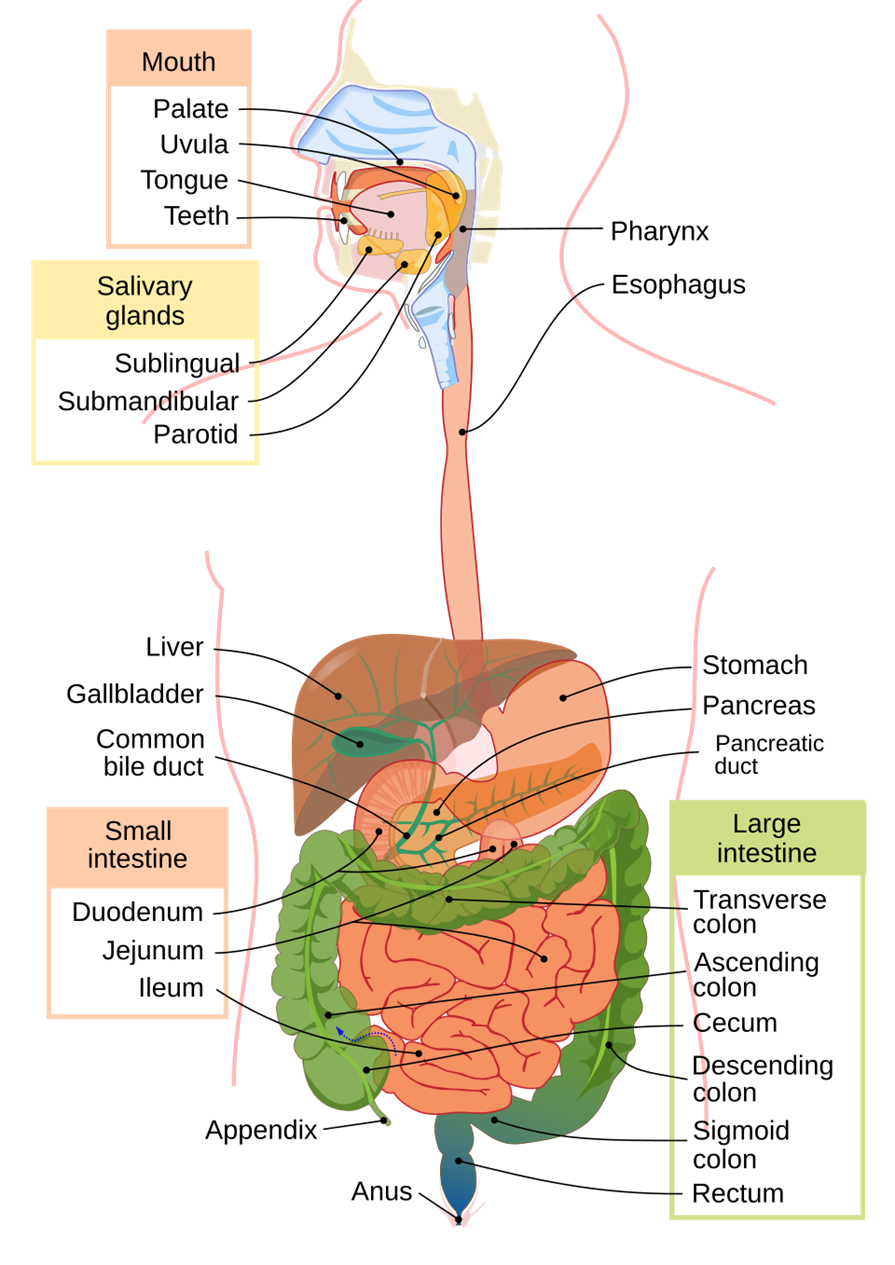
Every living organism, including human beings, requires food not just to survive, but to function efficiently.
Food provides:
- Energy (mainly from carbohydrates and fats)
- Building material (proteins for growth and repair)
- Regulators (vitamins and minerals for proper body functioning)
- Medium for reactions (water)
However, there is a crucial point to understand:
👉 The food we eat contains biomacromolecules (like proteins, complex carbohydrates, fats), which are too large to be directly absorbed by the body.
So, the body must first break them down.
What is Digestion?
Digestion is the process of converting complex food into simple, soluble, and absorbable molecules.
This process involves two types of mechanisms:
- Mechanical digestion → Physical breakdown (chewing, churning)
- Biochemical digestion → Chemical breakdown using enzymes
Both processes work together in a coordinated manner inside the digestive system.
Components of the Digestive System
The human digestive system has two main parts:
(A) Alimentary Canal: A continuous tube running from mouth to anus.
(B) Associated Glands: These secrete enzymes and juices (you’ll study them in the next part).
Alimentary Canal
Let’s trace the path of food
(1) Mouth and Oral (Buccal) Cavity
This is where digestion begins.
Teeth: Mechanical Processing
- Teeth are embedded in sockets → thecodont dentition
- Humans have two sets:
- Deciduous (milk teeth)
- Permanent teeth → hence called diphyodont
- Four types → heterodont dentition:
- Incisors (cutting)
- Canines (tearing)
- Premolars (crushing)
- Molars (grinding)
👉 Dental formula (adult): 2-1-2-3 / 2-1-2-3 = 32 teeth
The outer layer of teeth is enamel, the hardest substance in the human body.
Tongue: Control and Taste
- Attached by frenulum
- Contains papillae, some with taste buds
- Functions → Mixing food, Helping in swallowing, Taste perception
(2) Pharynx and Oesophagus
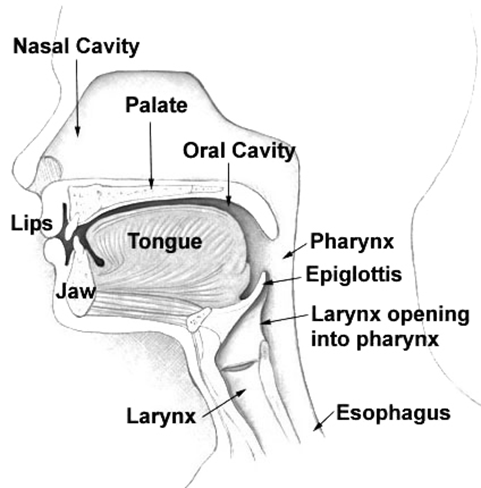
The oral cavity opens into the pharynx, which is a common passage for food and air.
- The epiglottis acts like a safety valve:
👉 Prevents food from entering the trachea (windpipe) during swallowing
Oesophagus
- A long muscular tube
- Passes through → Neck, Thorax, Diaphragm
- Carries food to the stomach via peristalsis (wave-like muscular movements)
(3) Stomach: The Chemical Processing Chamber
A J-shaped organ located in the upper left abdomen.
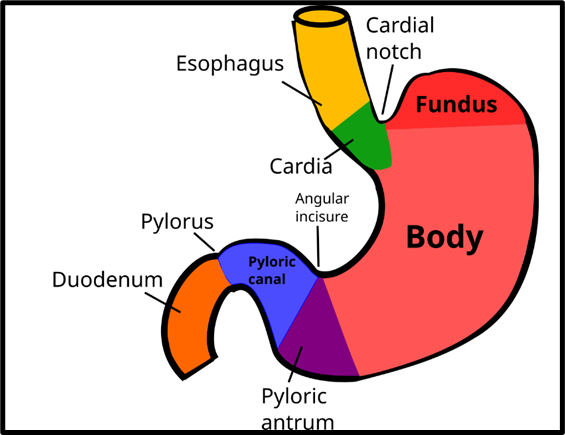
Parts of the Stomach
- Cardiac region → entry point
- Fundus
- Body → main region
- Pyloric region → exit to small intestine
Control Mechanisms
- Gastro-oesophageal sphincter → prevents backflow into oesophagus
- Pyloric sphincter → controls release into small intestine
👉 The stomach performs → Temporary storage, Mechanical churning, Initial protein digestion (chemical)
(4) Small Intestine: The Real Site of Digestion and Absorption
This is the most important functional part of the digestive system.
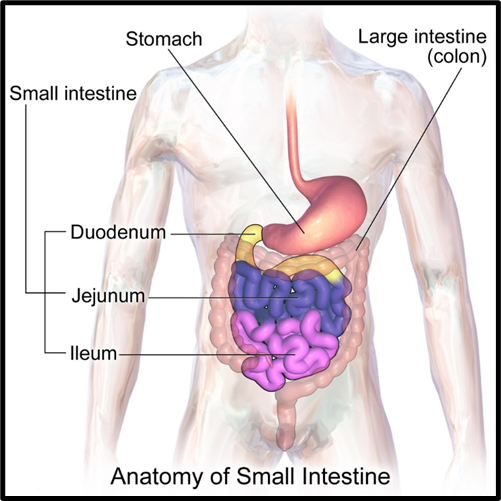
Three Sections
- Duodenum (C-shaped)
- Jejunum (coiled)
- Ileum (highly coiled)
👉 Key function: Maximum digestion and absorption occur here
(5) Large Intestine: Water Recovery and Waste Formation
Composed of:
- Caecum → pouch-like structure
- Contains symbiotic microorganisms
- Has a vestigial vermiform appendix
- Colon → longest part consists of: Ascending, Transverse, Descending, Sigmoid
- Rectum → Anus
👉 Main roles:
- Absorption of water and electrolytes
- Formation and elimination of feces
Structure of the Alimentary Canal (Wall Layers)
The wall of the alimentary canal is not simple—it is highly specialized and consists of four layers:
- Serosa → outer protective layer
- Muscularis → smooth muscles for movement (peristalsis)
- Submucosa → contains blood vessels, lymph vessels, and nerves
- Mucosa → innermost, directly involved in digestion and absorption
Special Role of Mucosa
The mucosa is structurally modified in different regions:
In the Stomach
- Forms folds called rugae
👉 Allow expansion when food enters
In the Small Intestine
- Forms finger-like projections called villi
- Each villus has:
- Capillaries → absorb nutrients into blood
- Lacteal (lymph vessel) → absorbs fats
👉 Further enhancement: Villi have microvilli → massively increase surface area
This ensures ➡️ Maximum absorption efficiency
Goblet Cells → Present in mucosa: Secrete mucus
👉 Helps lubrication and protection
Gastric Glands → Present in stomach mucosa; Secrete digestive juices
Digestive Glands
When we think of digestion, we often imagine the alimentary canal (mouth to anus). But digestion is not possible without certain accessory glands, which act like chemical factories supplying essential substances.
These are → Salivary glands, Liver, Pancreas
All of them contribute either digestive juices or hormones, making digestion both efficient and regulated.
Salivary Glands: The Beginning of Digestion
There are three pairs of salivary glands:
- Parotid glands (near cheeks)
- Submandibular glands (lower jaw)
- Sublingual glands (under tongue)
They secrete saliva, which is much more than just a moistening fluid.
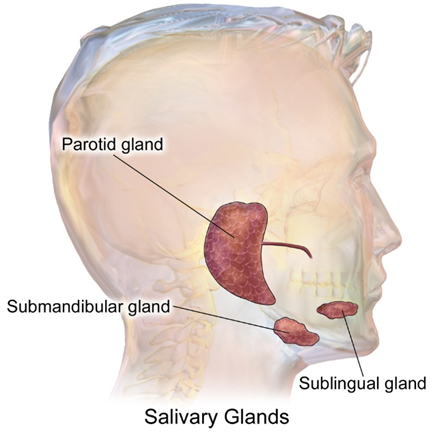
Key functions:
- Contains salivary amylase → begins carbohydrate digestion (starch → maltose)
- Contains lysozyme → antibacterial protection
- Helps form a soft food mass called bolus
So, digestion does not start in the stomach—it starts in the mouth itself.
Liver: The Largest Chemical Processing Unit
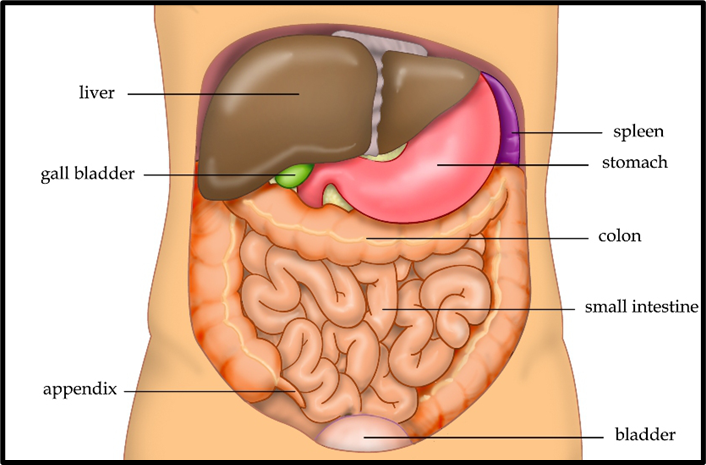
The liver (1.2–1.5 kg) is the largest gland in the human body.
Structural insight:
- Made up of hepatic lobules
- Covered by Glisson’s capsule
- Produces bile
Important pathway:
Bile → stored in gall bladder → travels via common bile duct → enters duodenum (controlled by sphincter of Oddi)
Function:
- Bile has no enzymes, yet it is crucial
- It emulsifies fats (breaks large fat globules into micelles)
- This increases surface area for enzyme action
Think of bile as a preparator, not a digester.
Pancreas: A Dual-Role Organ
The pancreas is unique because it performs both:
(A) Exocrine Function
- Secretes pancreatic juice containing enzymes
(B) Endocrine Function
- Releases hormones → Insulin, Glucagon
This dual nature makes the pancreas a bridge between digestion and metabolism.
Endocrine vs Exocrine Glands
| Feature | Endocrine Glands | Exocrine Glands |
| Secretion | Hormones | Enzymes/fluids |
| Pathway | Directly into bloodstream | Through ducts |
| Examples | Pituitary, thyroid, pancreas | Salivary glands, sweat glands |
This distinction is extremely important for conceptual clarity in physiology.
Digestion of Food
Digestion is both:
- Mechanical (breaking food physically)
- Chemical (enzymatic breakdown)
Let us move step by step through the alimentary canal.
1. Digestion in Buccal Cavity (Mouth)
Processes:
- Chewing (mastication) by teeth
- Mixing by tongue → formation of bolus
- Swallowing (deglutition)
Chemical digestion:
- Salivary amylase → starch → maltose
- Lysozyme → antibacterial
Movement:
- Food moves through oesophagus via peristalsis
2. Digestion in Stomach: The Acidic Chamber
The stomach acts as both → Storage unit (4–5 hours) and Mixing chamber
Gastric glands contain:
- Mucus neck cells
- Secrete mucus → protects lining
- Chief (peptic) cells
- Secrete pepsinogen
- Converts into pepsin (protein digestion)
- Parietal (oxyntic) cells
- Secrete HCl (pH ~1.8)
- Secrete intrinsic factor (Vitamin B12 absorption)
Additional enzymes:
- Renin (in infants, for milk digestion)
- Lipase (minor fat digestion)
Final product: Food becomes chyme (semi-liquid acidic mixture)
3. Digestion in Small Intestine: The Main Site
This is where maximum digestion and absorption happen.
Three major secretions:
(1) Bile (from liver)
- No enzymes; Emulsifies fats; Activates lipase
(2) Pancreatic Juice
Contains inactive enzymes:
- Trypsinogen → Trypsin (activated by enterokinase)
- Activates → Chymotrypsinogen, Amylases, Lipases, Nucleases
(3) Intestinal Juice (Succus Entericus)
- Enzymes like → Maltase, Dipeptidases, Nucleosidases
Environment: Alkaline pH (~7.8) due to bicarbonates
Regional roles:
- Duodenum → digestion
- Jejunum & Ileum → absorption
4. Large Intestine: Absorption, Not Digestion
The large intestine plays a minimal role in digestion but is essential for → Water absorption, Mineral absorption and Formation of faeces
Important structure: Ileocecal valve → prevents backflow
Final step:
- Storage in rectum
- Removal via defecation
Control of Digestion
Digestion is not random—it is tightly regulated.
Neural control:
- Seeing/smelling food → saliva secretion
- Nerves regulate → Gastric secretion, Peristalsis
Hormonal control:
- Hormones from stomach and intestine regulate digestive juices
This coordination ensures digestion is timely and efficient.
Calorific Value of Food: Energy Perspective
Food is ultimately about energy supply.
Key concept:
- 1 calorie = heat required to raise 1g water by 1°C
- Practically, we use: Kilocalories (kcal)
Values:
| Nutrient | Gross Value (kcal/g) | Physiologic Value (kcal/g) |
| Carbohydrates | 4.1 | 4 |
| Proteins | 5.65 | 4 |
| Fats | 9.45 | 9 |
Important insight:
- Gross value = total energy released on burning
- Physiologic value = actual usable energy by the body
Fats provide more than double energy compared to carbohydrates and proteins, which is why they are energy-dense.
Absorption
Absorption is the process by which digested nutrients pass through the intestinal mucosa (the inner lining of the intestine) into the blood or lymph. This process is highly selective and occurs through different mechanisms depending on the nature of the substance.
Mechanisms of Absorption
The body uses multiple transport systems, each suited to specific nutrients:
1. Simple Diffusion
This is the most basic mechanism, driven by concentration gradient (from high to low concentration). Small and soluble molecules such as monosaccharides, amino acids, and electrolytes like chloride ions move into the blood through this process.
2. Facilitated Transport
Some molecules cannot diffuse freely and require carrier proteins embedded in the membrane. Substances like glucose and amino acids use this mechanism, making the process faster and more efficient without energy expenditure.
3. Active Transport
Here, the body invests energy (ATP) to move substances against the concentration gradient. This is essential when nutrient concentration inside the intestine is lower than in the blood. Nutrients like glucose, amino acids, and certain electrolytes rely on this mechanism.
4. Osmosis (Water Absorption)
Water absorption depends on the osmotic gradient, meaning it follows the movement of solutes. Wherever solute concentration is higher, water moves accordingly.
Special Case: Absorption of Fats
Fats behave differently because they are insoluble in water. The body solves this challenge through an elegant mechanism:
- Fatty acids and glycerol combine with bile salts to form micelles (tiny droplets).
- These micelles enter the intestinal cells.
- Inside, they are reassembled into larger fat particles called chylomicrons (protein-coated fat globules).
- These chylomicrons do not directly enter blood; instead, they first enter the lymphatic system, and later reach the bloodstream.
This distinction is important because it shows that not all nutrients follow the same pathway.
Where Does Absorption Occur?
Although absorption can occur throughout the digestive system, its efficiency varies:
- Mouth: Limited absorption, mainly certain drugs.
- Stomach: Small amounts of water, alcohol, and simple sugars.
- Small Intestine: The primary site of absorption. Its structure (villi and microvilli) greatly increases surface area, making it highly efficient for absorbing glucose, amino acids, fatty acids, and glycerol.
- Large Intestine: Absorbs water, some minerals, and certain drugs.
Thus, the small intestine is functionally the most important organ for nutrient uptake.
What Happens After Absorption?
Once nutrients enter the blood or lymph, they are transported to different tissues. Their utilization by cells is called assimilation. This is where nutrients are converted into energy, structural components, or stored reserves.
Meanwhile, undigested waste moves into the large intestine, where water is absorbed, and the residue solidifies into faeces. The accumulation of faeces triggers a neural reflex, leading to defecation, which is a voluntary process controlled by the brain.
Disorders of the Digestive System
Understanding disorders helps us connect physiology with real-life health issues.
Common Digestive Disorders
- Inflammation of intestines: Often caused by infections or parasites like tapeworms and roundworms.
- Jaundice: A liver disorder where bile pigments accumulate, causing yellowing of skin and eyes.
- Vomiting: Controlled by the medulla (vomiting centre) in the brain; usually preceded by nausea.
- Diarrhea: Frequent watery stools that reduce absorption efficiency.
- Constipation: Reduced bowel movement causing prolonged retention of faeces.
- Indigestion: Improper digestion leading to discomfort; often linked to enzyme deficiency, stress, or overeating.
Protein-Energy Malnutrition (PEM)
This is a critical topic, especially in the context of developing countries.
PEM occurs due to inadequate intake of proteins and/or calories, particularly affecting infants and children.
Marasmus
- Caused by deficiency of both proteins and calories.
- Common in infants under one year.
- Often linked to early replacement of mother’s milk with nutrient-poor food.
- Symptoms include:
- Severe weight loss
- Thin limbs
- Dry, wrinkled skin
- Stunted growth
- Impaired brain development
This condition reflects complete starvation at the cellular level.
Kwashiorkor
- Caused by protein deficiency with adequate calorie intake.
- Common in children above one year.
- Occurs when a carbohydrate-rich but protein-poor diet replaces breast milk.
- Symptoms include:
- Muscle wasting and stunted growth
- Retention of some body fat
- Oedema (swelling)—a key distinguishing feature
Unlike marasmus, the body appears swollen due to fluid retention, masking the severity of malnutrition.