
Basics of Biotechnology
Why Biotechnology? Imagine you could re-write the instruction manual of life — change a crop’s genes so it never gets a disease, instruct a bacterium to manufacture insulin, or even revive an extinct wolf. That is precisely what Biotechnology does. It is the marriage of Biology and Technology, and for UPSC, it is one of the most dynamic, high-yield topics in Science & Technology.
Biotechnology is the use of biological organisms, systems, or processes to develop useful products and technologies in fields such as agriculture, healthcare, environment, and industry. Think of it as using Nature’s own tools — microbes, genes, enzymes — as your laboratory assistants.
The word itself gives away the meaning: Bio (life) + Technology (application). It draws on genetics, molecular biology, biochemistry, and microbiology to solve real-world problems.
Real-World Examples (The ‘Oh, I know this!’ Moments)
- GM Crops: Bt cotton — resistant to bollworm attack, saving millions of rupees for Indian farmers.
- Insulin Production: Diabetics worldwide depend on insulin manufactured by genetically engineered E. coli bacteria — not extracted from pig pancreas anymore.
- Bioremediation: Specially engineered microbes deployed to clean up oil spills in oceans.
- DNA Fingerprinting: The backbone of forensic science — used to solve crimes and confirm paternity.
Principles of Biotechnology
Core Idea: Modern biotechnology rests on two foundational pillars. Think of them as (1) the ability to write new instructions into DNA, and (2) the ability to mass-produce the results at an industrial scale.
| Principle | Simple Analogy | Technical Name |
| Changing the DNA blueprint of an organism | Re-writing the software code of life | Genetic Engineering |
| Producing the desired product at large scale using living systems | Running a bio-factory using microbes | Bioprocess Engineering |
Genetic Engineering
Genetic engineering is the art of modifying an organism’s DNA or RNA to introduce new traits.
Will you agree if I say this: ‘If genes are the recipe in a cookbook, genetic engineering is the chef who edits those recipes.’ You can add a page, remove a page, or even paste in a recipe from a completely different cookbook!
The 4 Key Tools — A Toolkit Analogy
| Tool | What It Does | Technical Name |
| Molecular Scissors | Cuts DNA at specific, precise locations | Restriction Enzymes (Restriction Endonucleases) |
| Molecular Glue | Joins / seals cut DNA fragments together | DNA Ligase |
| DNA Carrier / Taxi | Carries the new gene into the host cell | Vectors (Plasmids / Viruses) |
| DNA Photocopier | Makes millions of identical copies of a DNA segment | PCR (Polymerase Chain Reaction) |
Step-by-Step Process of Genetic Engineering
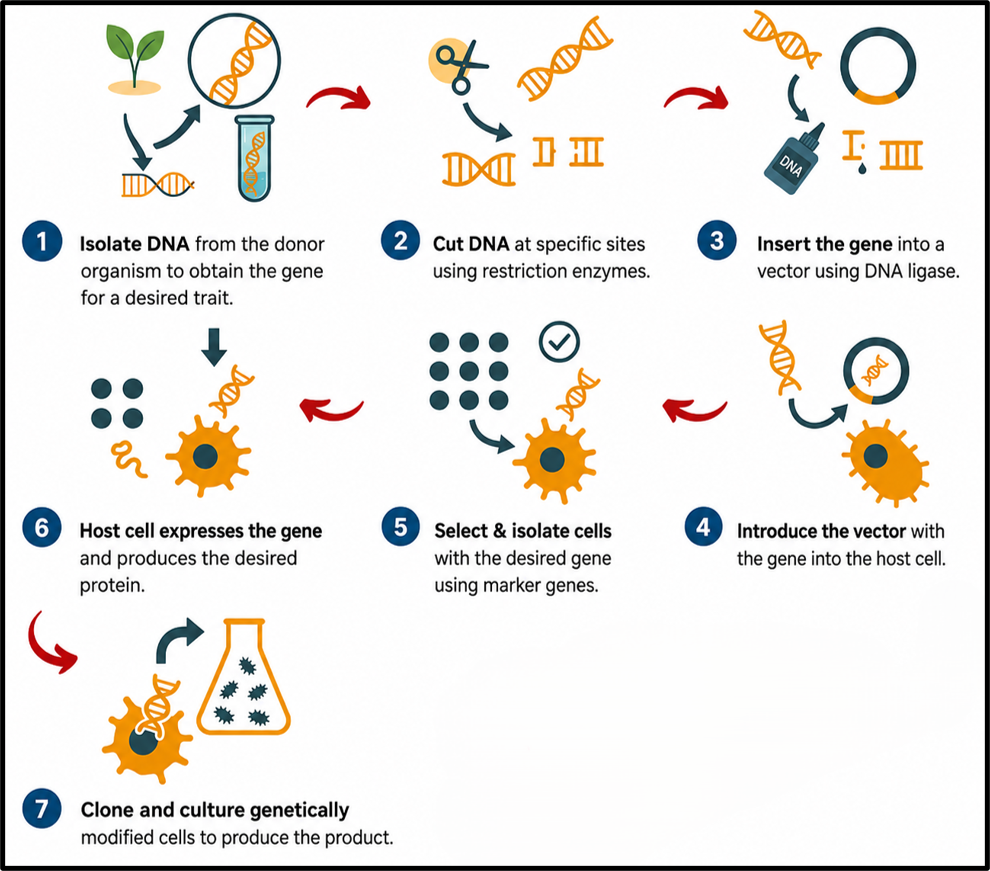
Think of it as a 7-step recipe to transplant a gene from one organism into another:
STEP 1: ISOLATE DNA — Extract DNA from the donor organism containing the desired gene (e.g., the gene for insulin in human cells).
↓
STEP 2: CUT DNA — Use Restriction Enzymes (molecular scissors) to cut both the donor DNA and vector DNA at specific sequences, creating ‘sticky ends’.
↓
STEP 3: INSERT GENE INTO VECTOR — Use DNA Ligase (molecular glue) to paste the desired gene fragment into a vector such as a plasmid or virus.
↓
STEP 4: INTRODUCE VECTOR INTO HOST — The vector (now carrying the foreign gene) is introduced into a host cell: bacteria, yeast, plant, or animal.
↓
STEP 5: SELECT TRANSFORMED CELLS — Using marker genes, identify cells that have successfully taken up the recombinant DNA.
↓
STEP 6: EXPRESSION — The host cell reads the new gene and produces the desired protein (e.g., insulin).
↓
STEP 7: CLONE & CULTURE — The genetically modified cells are cloned and grown in large quantities to produce the product at scale.
Bioprocess Engineering
If Genetic Engineering is about writing the instructions, Bioprocess Engineering is about running the factory that follows those instructions — at an industrial scale. It uses living cells or biological systems to produce medicines, vaccines, enzymes, or biofuels.
Key Components of Bioprocess Engineering
- Sterile Conditions: Contamination kills efficiency. Everything must be sterilised like a surgical theatre.
- Optimal Growth Conditions: Nutrients, temperature, pH, and oxygen levels are precisely managed — microbes are demanding workers!
- Bioreactors: Specialised large vessels (imagine giant, high-tech pressure cookers) that support large-scale biological processes.
- Downstream Processing: Extracting and purifying the desired product using filtration, centrifugation, precipitation — the ‘quality check’ phase.
- Quality Control: Ensuring the final product is safe, pure, and effective — crucial especially for pharmaceuticals.
Branches of Biotechnology
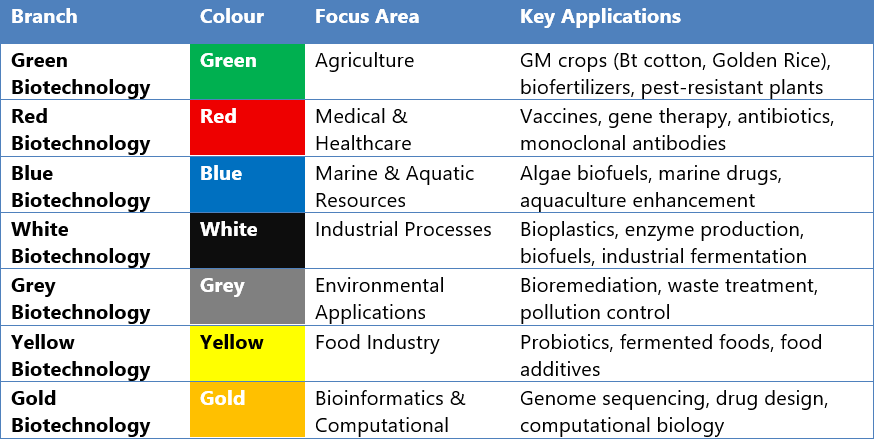
The Colour Code: Biotechnology is helpfully classified by colour, each colour representing a domain.
Key Techniques in Biotechnology
Recombinant DNA Technology (rDNA Technology)
rDNA technology is the precision tool that enables scientists to combine DNA from different sources to create Genetically Modified Organisms (GMOs).
Think of it as ‘cut-paste programming’ but for living organisms. Compared to traditional plant breeding (which takes 10–15 years), rDNA technology is precise, faster, and fully controlled.
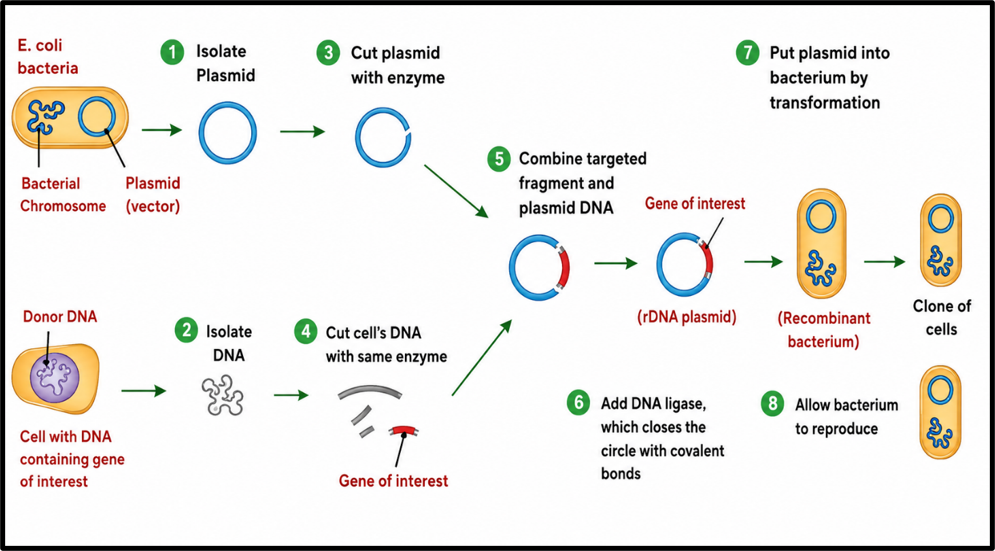
Steps in rDNA Technology
- Isolate DNA: Extract DNA from the donor organism (source of the desired gene) and from the vector (usually a plasmid).
- Cut with Restriction Enzymes: Restriction endonucleases cut DNA at specific sequences, creating ‘sticky ends’ or ‘blunt ends’ to facilitate joining.
- Insert into Vector: The gene of interest is inserted into a plasmid. Vectors carry the gene into host cells and replicate along with them.
- Ligation: DNA ligase joins the gene and plasmid, forming Recombinant DNA (rDNA).
- Transformation: The recombinant DNA is introduced into a host cell (often E. coli bacteria) — the host is now a GMO.
- Selection & Screening: Only cells that successfully incorporated the rDNA are selected, using antibiotic resistance markers or reporter genes.
- Gene Expression & Product: The host cell produces the desired protein (e.g., insulin). The protein is then extracted and purified.
Applications of rDNA Technology
| Sector | Applications |
| Medicine | Therapeutic proteins (insulin, growth hormones, blood-clotting factors); Gene therapy (cystic fibrosis, muscular dystrophy); Monoclonal antibodies; Hepatitis B vaccine |
| Agriculture | GM crops — Bt cotton (pest resistance), Roundup Ready soybeans (herbicide resistance), Golden Rice (Vitamin A); Transgenic animals (Enviropig — reduced phosphorus waste) |
| Research | Gene function studies; Disease modelling (transgenic mice); Large-scale protein production |
| Industrial | Biopharmaceutical production; Industrial enzymes; Biofuels from engineered microorganisms; Biodegradable plastics |
| Conservation & Environment | Bioremediation (GMOs break down oil spills); Conservation of endangered species; De-extinction (editing DNA of related species) |
Concerns with rDNA Technology
- Ethical Concerns: Manipulating genetic material raises moral questions, especially in humans.
- Ecological Risks: GMOs released into the environment may disrupt ecosystems in unpredictable ways.
- Allergic Reactions: Some GM foods may trigger unintended allergies in humans.
- Patenting & Bio-piracy: Multinational corporations may patent genes or seeds, threatening farmer rights and biodiversity.
- Uncertain Long-Term Impact: Long-term effects of GMOs on human health and the environment are still not fully known.
- High Cost & Expertise: Requires sophisticated laboratories, skilled personnel, and expensive infrastructure.
Polymerase Chain Reaction (PCR)
Imagine you found a single grain of evidence at a crime scene — just a tiny fragment of DNA. PCR is like a molecular photocopier that can take that single strand and make billions of identical copies in just a few hours.
PCR is revolutionary because it amplifies specific DNA segments for detection or analysis without needing large original samples.
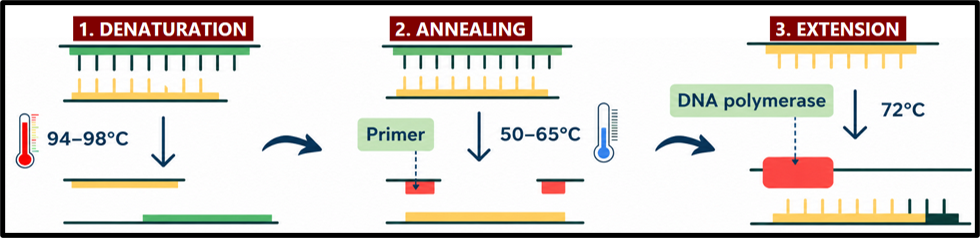
The 3-Step Cycle of PCR
| Step | Temperature | What Happens | Analogy |
| Denaturation | 94–98°C | Heat separates the double-stranded DNA into two single strands | Unzipping a zipper by heating |
| Annealing | 50–65°C | Short DNA sequences (primers) bind to the target DNA strands | Locating the right page in a book |
| Extension | 72°C | Taq polymerase (heat-resistant enzyme) builds new complementary DNA strands | Photocopying that page |
Why Taq Polymerase? Normal DNA polymerase would break down at the high temperatures (94°C) of denaturation. Taq polymerase is isolated from Thermus aquaticus, a bacterium that lives in hot springs — it is naturally heat-resistant. This was the key discovery that made automated PCR possible!
Types of PCR
| PCR Type | Key Feature | Real-World Example |
| Conventional PCR | Basic amplification of DNA | Gene cloning, forensics |
| Quantitative PCR (qPCR) | Measures DNA in REAL TIME using fluorescent dyes | COVID-19 testing |
| RT-PCR (Reverse Transcription) | Converts RNA → DNA first, then amplifies; detects RNA viruses | HIV detection, SARS-CoV-2 testing |
| Multiplex PCR | Amplifies MULTIPLE DNA targets simultaneously using different primers | Detecting several pathogens in one test |
| Nested PCR | Two successive PCRs for higher specificity; reduces false positives | Rare mutation detection in contaminated samples |
| Digital PCR (dPCR) | Divides sample into thousands of tiny reactions for precise DNA counting | Cancer mutation detection |
Applications of PCR
- Medical: Detecting COVID-19, HIV, TB; diagnosing sickle cell anaemia, thalassemia; detecting cancer mutations.
- Forensics: DNA fingerprinting to solve crimes; paternity testing; identifying missing persons.
- Agriculture: Detecting GM traits in crops; identifying plant pathogens; selecting disease-resistant varieties.
- Evolutionary Biology: Analysing ancient DNA from fossils; tracing evolutionary relationships.
- Food Safety: Detecting Salmonella and E. coli in food; verifying food authenticity (e.g., horse meat in beef scandal).
| Advantages of PCR | Disadvantages of PCR |
| Highly Sensitive: Detects even trace amounts of DNA/RNA. Fast & Efficient: Produces millions of copies in a few hours. Specific: Targets only the desired sequence using specific primers. | Contamination Risk: Even tiny amounts of foreign DNA can give false results. Primer Design Critical: Poorly designed primers lead to wrong amplification. Error Amplification: Mistakes in early cycles get exponentially amplified. |
CRISPR-Cas9 Gene Editing
If rDNA is like pasting in a new chapter from another book, CRISPR-Cas9 is like having a precision ‘find-and-replace’ tool — cuts it, and either deletes it or replaces it with something else.
This technology, which won the Nobel Prize in Chemistry 2020, has revolutionised genetic medicine.
Key Components: The GPS + Scissors System
- CRISPR (Clustered Regularly Interspaced Short Palindromic Repeats): A natural DNA sequence found in bacteria that acts as a ‘genetic memory’ of past viral infections — it is Nature’s own immune database.
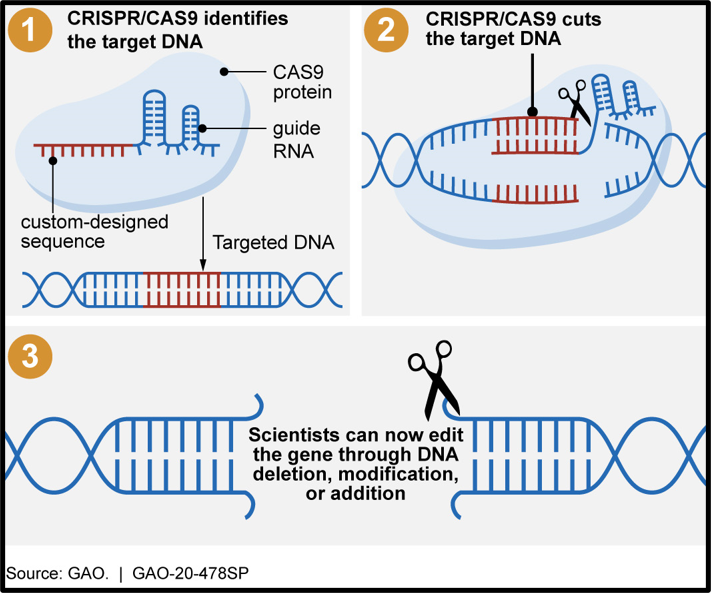
- Cas9 Enzyme: The ‘molecular scissors’ — a nuclease that makes precise double-strand cuts in DNA. It is guided to the right location by the gRNA.
- Guide RNA (gRNA): A custom-designed RNA molecule that acts as the GPS — it leads Cas9 to the exact target sequence in the genome.
How CRISPR-Cas9 Works — Step by Step
STEP 1: DESIGN gRNA: A guide RNA is custom-created to match the specific DNA sequence to be edited.
↓
STEP 2: DELIVERY: The gRNA + Cas9 complex is delivered into the target cell via microinjection, electroporation, or viral vectors.
↓
STEP 3: TARGET RECOGNITION: gRNA binds to the complementary DNA sequence; Cas9 follows the gRNA to that precise location.
↓
STEP 4: DNA CLEAVAGE: Cas9 cuts BOTH strands of DNA at the target location — a ‘double-strand break’.
↓
STEP 5: DNA REPAIR by the cell: Cell repairs the break — either by disabling the gene (NHEJ pathway) or inserting a new, corrected sequence (HDR pathway).
Applications of CRISPR-Cas9
| Domain | Application | Example |
| Medicine | Gene therapy for inherited disorders | Sickle cell anaemia, cystic fibrosis treatment |
| Medicine | Cancer treatment via immune-cell editing | Modified T-cells to target tumours |
| Medicine | Targeting viral DNA | HIV, HPV, COVID-19 (experimental) |
| Agriculture | Crop improvement | Drought-resistant & pest-resistant rice, bacterial blight resistance |
| Animal Biotech | Gene drive in mosquitoes | Controlling malaria/dengue by altering mosquito populations |
| Conservation | De-extinction | Dire wolf (2025) — world’s first claimed de-extinction |
| Industrial | Engineered microbes | Biofuel production, custom enzymes for food processing |
Advantages vs. Disadvantages of CRISPR-Cas9
| Advantages | Disadvantages |
| High Precision: Targets specific DNA with minimal off-target effects. Fast & Cheap: Edits done in days; far cheaper than older technologies. Multiplexing: Can edit multiple genes simultaneously. Versatile: Applicable across healthcare, agriculture, conservation. | Off-Target Effects: May cut unintended DNA sites, causing mutations. Ethical Concerns: ‘Designer babies’ and human germline editing debates. Immune Rejection: Cas9 (bacterial protein) may trigger immune reactions. Regulatory Uncertainty: Many countries including India still developing legal frameworks. |
Gel Electrophoresis
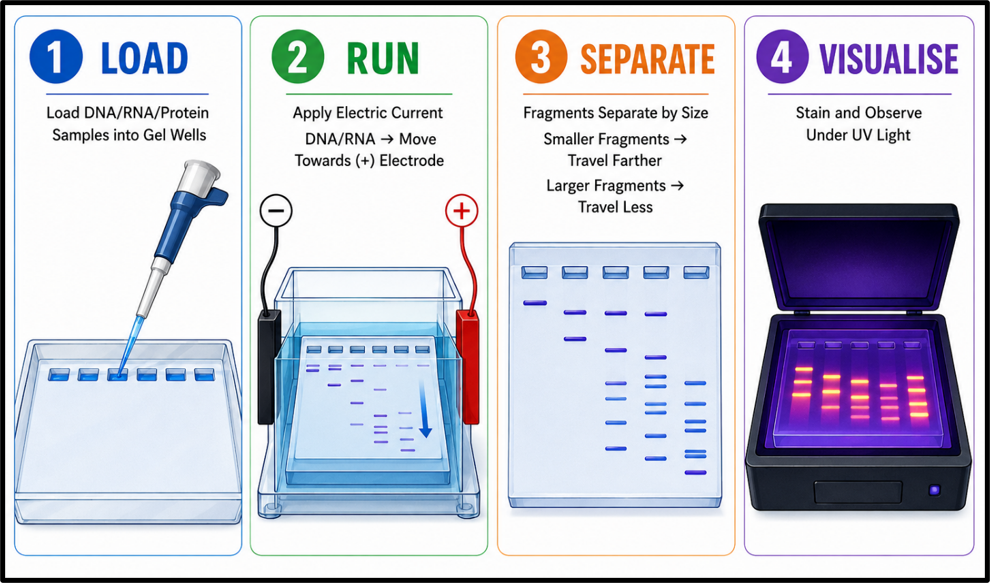
Think of a gel slab like a molecular racecourse. When you apply an electric current, DNA fragments — being negatively charged — race toward the positive electrode. The smaller fragments run faster and travel farther, while larger fragments lag behind. The final pattern of bands on the gel is your molecular fingerprint.
Steps in Gel Electrophoresis
- Load: DNA, RNA, or protein samples loaded into wells in an agarose gel (for DNA/RNA) or polyacrylamide gel (for proteins).
- Run: Apply electric current. DNA/RNA (negatively charged) move toward the positive electrode.
- Separate: Smaller fragments travel farther; larger ones move less.
- Visualise: Stain with ethidium bromide (or safer alternatives) and observe glowing bands under UV light.
Applications
- DNA Fingerprinting: Identifies individuals based on unique banding patterns — forensics, paternity tests, missing person identification.
- Medical Diagnostics: Detects genetic disorders like sickle cell anaemia; used in prenatal screening.
- GMO Identification: Confirms successful gene transfer in transgenic plants/animals.
- Protein Analysis: Separates proteins to study enzymes, hormones, or antibodies for vaccine research.
DNA Sequencing and Genome Sequencing
If DNA is a book, DNA Sequencing is reading that book letter by letter (A, T, G, C). Genome Sequencing goes further — it reads the entire book of an organism, including every gene and every non-coding region. The Human Genome Project (completed 2003) was the greatest such reading project in history.
Types of Genome Sequencing
| Type | What It Sequences | Uses |
| Whole Genome Sequencing (WGS) | ENTIRE DNA — both coding (exons) and non-coding regions | Comprehensive genetic studies, personalised medicine, disease research |
| Whole Exome Sequencing (WES) | Only EXONS (protein-coding regions, ~1–2% of genome) | Cost-effective alternative; detects mutations causing genetic diseases |
| Targeted Gene Sequencing | Specific set of genes or regions of interest | Focused disease diagnosis (e.g., cancer gene panels); faster and cheaper |
| Mitochondrial Genome Sequencing | Mitochondrial DNA (mtDNA) — maternally inherited | Maternal lineage studies, ancestry, mitochondrial disorders |
| Comparative Genomic Sequencing | Compares genomes of different species or individuals | Evolutionary biology, species divergence, identifying disease genes |
Generations of DNA Sequencing Techniques
| Generation | Technique | Key Feature | Advantage | Limitation |
| 1st Generation | Sanger Sequencing (1977) | Uses ddNTPs to terminate chain; reads one fragment at a time | High accuracy; gold standard for short sequences | Slow, expensive, unsuitable for large-scale work |
| 2nd Generation (NGS) | Next-Generation Sequencing (Illumina, Roche 454) | High-throughput; sequences millions of fragments simultaneously | Fast, scalable, cost-effective for large genomes | Shorter read lengths; complex data analysis |
| 3rd Generation | Oxford Nanopore, PacBio SMRT | Sequences single DNA molecules in real time; no amplification needed | Ultra-long reads; detects base modifications | Higher error rate; expensive hardware |
Applications of DNA/Genome Sequencing
- Medical: Diagnosing sickle cell anaemia, thalassemia, cystic fibrosis; cancer genomics (BRCA1/2 mutations); personalised medicine; pathogen identification (SARS-CoV-2); antibiotic resistance studies.
- Genomic Research: Human Genome Project; gene function studies; foundation for CRISPR-Cas9 gene editing.
- Forensics: DNA fingerprinting in criminal investigations; kinship testing; disaster victim identification.
- Agriculture: Crop improvement (disease resistance, high yield); livestock breeding; GMO detection in foods.
- Evolutionary Biology: Phylogenetic analysis; biodiversity assessment and conservation.
Issues with DNA/Genome Sequencing
- Data Overload: Generates massive data volumes requiring advanced bioinformatics.
- Ethical & Privacy: Risk of genetic discrimination, privacy violations, misuse of genomic databases.
- Genomic Divide: Benefits concentrated in developed nations — inequitable access risk.
- Psychological Impact: Learning about predisposition to incurable diseases can cause anxiety, depression, social stigmatisation.
Fermentation Technology
Fermentation is one of humanity’s oldest biotechnologies — your grandmother’s curd and your local idli batter both rely on it! At its core, fermentation is microorganisms converting organic substrates into valuable products under controlled conditions in a bioreactor.
Technically, it is the application of bacteria, yeast, or fungi to produce alcohol, antibiotics, enzymes, and vitamins.
Steps in Fermentation Technology
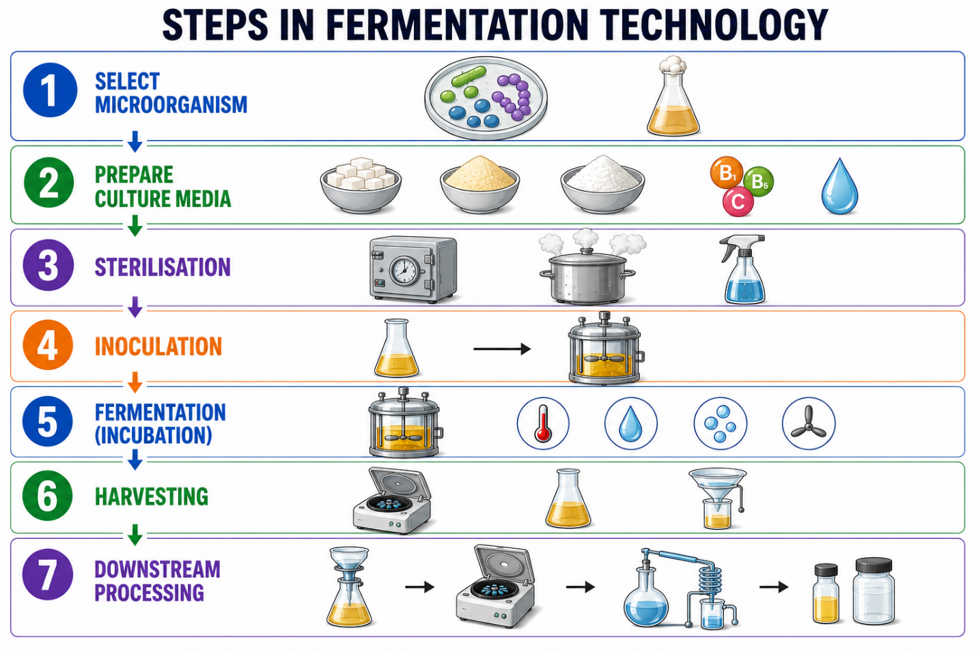
STEP 1: SELECT MICROORGANISM: Choose the right microbial strain (e.g., Saccharomyces cerevisiae for alcohol; Lactobacillus for curd). Strain must be fast-growing, stable, and high-yielding.
↓
STEP 2: PREPARE CULTURE MEDIA: Provide nutrients — carbon (sugar), nitrogen, salts, vitamins, water.
↓
STEP 3: STERILISATION: Sterilise equipment and media (heat/steam/chemicals) to prevent contamination. Aseptic conditions are non-negotiable.
↓
STEP 4: INOCULATION: Introduce the microbial culture into the sterile medium inside the fermenter.
↓
STEP 5: FERMENTATION (INCUBATION): Microbes grow and convert substrates into products. Parameters like temperature, pH, aeration, and agitation are precisely controlled.
↓
STEP 6: HARVESTING: Collect the biomass or product (alcohol, acids, antibiotics) from the medium.
↓
STEP 7: DOWNSTREAM PROCESSING: Extract, purify, and formulate the product via filtration, centrifugation, distillation, etc.
Types of Fermentation — Quick Reference
| Based On | Type | Microbe/Process | Product | Use |
| End Product | Alcoholic | Saccharomyces cerevisiae | Ethanol + CO₂ | Beer, wine, biofuel |
| End Product | Lactic Acid | Lactobacillus spp. | Lactic acid | Yogurt, curd, cheese |
| End Product | Acetic Acid | Acetobacter aceti | Acetic acid | Vinegar |
| Oxygen | Aerobic | Acetobacter aceti | Acetic acid | Vinegar |
| Oxygen | Anaerobic | Yeast, Lactobacillus | Alcohol, lactic acid, biogas | Beer, curd, energy |
| Oxygen | Facultative | E. coli, Saccharomyces | Variable | Versatile industrial use |
| Operation | Batch | Closed system | Penicillin, insulin | Pharmaceuticals |
| Operation | Continuous | Continuous feed | Ethanol, citric acid | Industrial chemicals |
Applications of Fermentation
- Pharmaceutical: Penicillin, streptomycin, erythromycin; insulin, HGH, Hepatitis B vaccine; Vitamin B12, riboflavin; probiotics.
- Food & Beverage: Curd, yogurt, cheese; beer, wine, whiskey; idlis, dosas; bread leavening; pickles, sauerkraut.
- Agriculture: Biofertilisers (Rhizobium, Azospirillum); biopesticides (Bt toxin); silage for livestock.
- Industrial: Amylase, cellulase, protease enzymes; citric acid, lactic acid, acetic acid; solvents (acetone, butanol).
- Bioenergy: Bioethanol from sugarcane/molasses (blended with petrol); biogas (methane) from organic waste.
- Environment: Breaking down food waste, agricultural residues, and sewage sludge.
Monoclonal Antibody Production (Hybridoma Technology)
Your immune system produces thousands of different antibodies when it encounters a pathogen. But for medical use, we need one specific antibody, produced in unlimited quantities, targeting exactly one antigen. That is a Monoclonal Antibody (mAb).
Think of a heat-seeking missile vs. a shotgun — mAbs are the heat-seeking missiles of medicine.
Historical Fact: Monoclonal antibodies were first developed by Köhler and Milstein in 1975, for which they won the Nobel Prize in Physiology or Medicine in 1984.
The Hybridoma Technology Principle
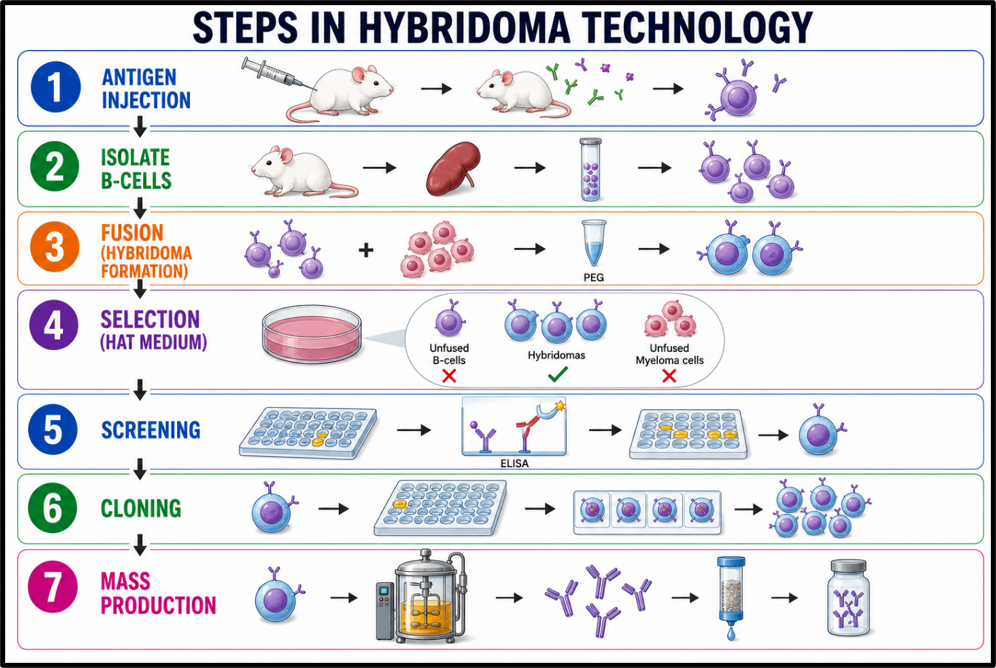
The core idea is elegant: B-cells (antibody producers) + Myeloma cells (immortal cancer cells) = Hybridoma cells that can produce specific antibodies indefinitely!
Steps in Hybridoma Technology
STEP 1: ANTIGEN INJECTION: Inject a specific antigen into a mouse → triggers immune response → mouse B-lymphocytes produce antibodies against that antigen.
↓
STEP 2: ISOLATE B-CELLS: After several immunisations, B-cells are extracted from the mouse’s spleen. Problem: they can produce antibodies but cannot divide indefinitely.
↓
STEP 3: FUSION (HYBRIDOMA FORMATION): B-cells are fused with immortal myeloma (cancer) cells using polyethylene glycol (PEG). Result: Hybridomas — cells that BOTH produce antibodies AND divide indefinitely!
↓
STEP 4: SELECTION (HAT MEDIUM): Fused cells grown in HAT medium. Only hybridomas survive; unfused B-cells die naturally; unfused myeloma cells die in HAT.
↓
STEP 5: SCREENING: Hybridomas are screened (using ELISA) to identify clones producing the desired antibody.
↓
STEP 6: CLONING: Selected hybridoma cells are cloned to ensure all cells are identical (monoclonal).
↓
STEP 7: MASS PRODUCTION: Clones cultured in bioreactors → large quantities of purified monoclonal antibodies.
Applications of Monoclonal Antibodies
| Sector | Application | Specific Examples |
| Medical Diagnostics | Detecting infectious diseases, pregnancy, cancer markers, blood typing | Rapid COVID-19 antigen kits (ELISA); Pregnancy test (detects hCG); PSA test for prostate cancer |
| Therapeutics | Cancer treatment, autoimmune disorders, viral infections, allergies, organ transplants | Breast cancer & leukaemia; Crohn’s disease & rheumatoid arthritis; COVID-19 (Casirivimab, Imdevimab); Omalizumab for asthma |
| Agriculture | Pathogen detection, food safety, GM crop quality control | Detecting pesticide/hormone residues; Bt cotton quality check |
| Industrial | Quality control, bioprocess monitoring, protein purification | Affinity chromatography; Western blot; ELISA in research labs |
| Environmental | Pollutant detection, toxin monitoring, bioremediation | Detecting heavy metals, dioxins, mycotoxins in water/soil/air |
Cloning
Cloning means creating genetically identical copies of an organism, cell, or DNA. Nature does it all the time — identical twins, bacterial reproduction, asexual reproduction in plants. In labs, scientists have taken this concept and created something far more powerful.
Types of Cloning — Comparison Table
| Type | Definition | Method | Famous Example | Applications |
| Gene Cloning (DNA Cloning) | Making multiple identical copies of a specific gene or DNA fragment | Gene inserted into plasmid → introduced into E. coli → replicates | Insulin production gene in E. coli | Medicine (insulin, vaccines); Agriculture (GM crops); Gene therapy |
| Cellular Cloning | Producing genetically identical cells from a single parent cell | In vitro culturing of a single cell under controlled conditions | Hybridoma cells for mAb production | Drug testing; Disease research; Monoclonal antibody production; Regenerative medicine |
| Reproductive Cloning | Producing a genetically identical organism using SCNT | Somatic Cell Nuclear Transfer (SCNT) into enucleated egg | Dolly the Sheep (1996); Dire wolf (2025) | Animal breeding; Conservation biology; Disease modelling |
| Therapeutic Cloning | Creating embryonic stem cells identical to donor — embryo NOT implanted | SCNT used but stem cells are harvested; embryo not implanted | Under research for organ generation | Regenerative medicine; Treating Parkinson’s, Alzheimer’s; Organ development; Drug testing |
Dolly the Sheep — Why Is It Famous? Dolly (1996) was the first mammal to be cloned from an adult somatic cell using SCNT. She was cloned from the mammary gland cell of a Finn-Dorset sheep, demonstrating that even adult cells can be reprogrammed to create a complete organism. She lived for 6 years, half the normal lifespan, suggesting cloning comes with health costs.
Somatic Cell Nuclear Transfer (SCNT)
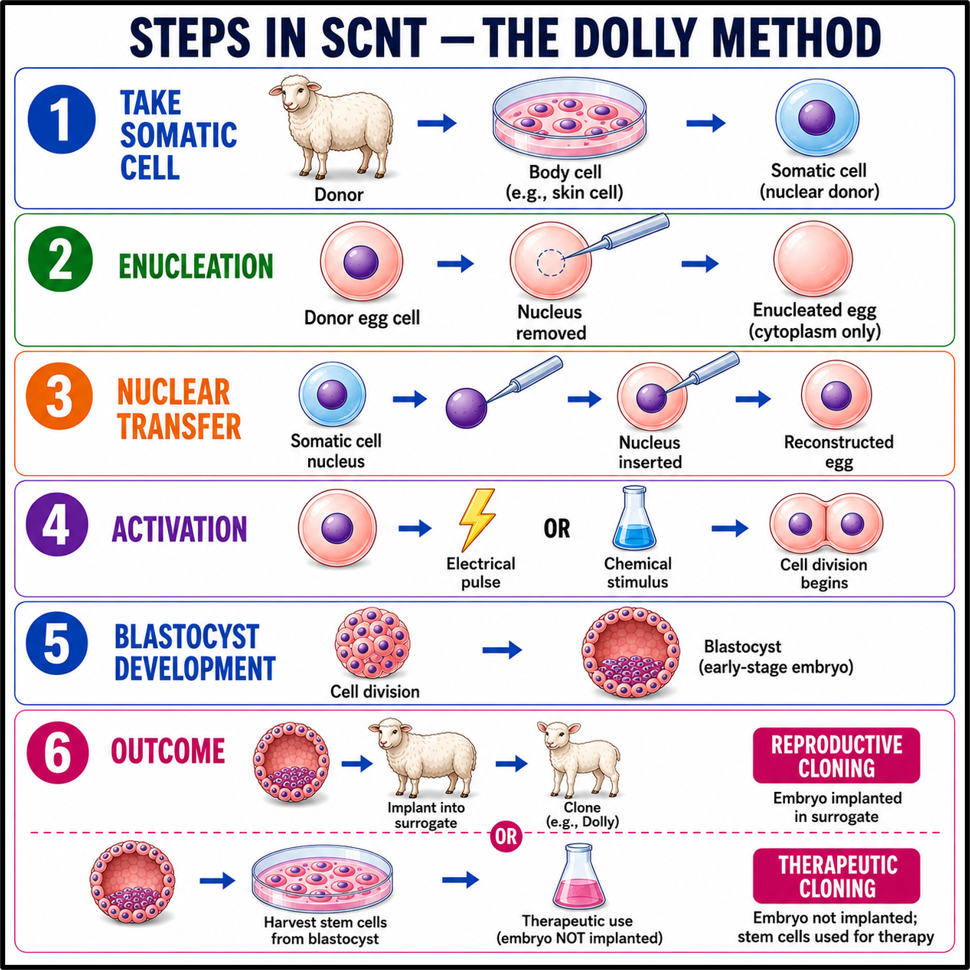
SCNT is the specific technique used for both reproductive and therapeutic cloning. The key insight: every somatic (body) cell contains the complete genetic blueprint of the organism — SCNT ‘reactivates’ that blueprint inside an egg cell.
Steps in SCNT — The Dolly Method
STEP 1: TAKE SOMATIC CELL: Extract a body cell (e.g., skin/mammary cell) from the donor (the ‘nuclear donor’ — this provides the DNA).
↓
STEP 2: ENUCLEATION: Remove the nucleus from a donor egg cell — leaving behind only the cytoplasm (the ‘egg donor’ provides the cell machinery).
↓
STEP 3: NUCLEAR TRANSFER: Insert the somatic cell’s nucleus into the enucleated egg.
↓
STEP 4: ACTIVATION: Stimulate the reconstructed egg chemically or electrically to trigger cell division, as if it were a fertilised egg.
↓
STEP 5: BLASTOCYST DEVELOPMENT: The cell mass grows into a blastocyst (early-stage embryo).
↓
STEP 6: OUTCOME: Reproductive cloning → embryo implanted into surrogate (Dolly’s case). Therapeutic cloning → stem cells harvested; embryo NOT implanted.
Tissue Culture
Tissue culture is growing cells, tissues, or organs in a nutrient-rich medium under sterile, controlled conditions — essentially growing life in a test tube. It follows the principle of totipotency — the ability of a single plant cell to regenerate into a complete organism.
| Type | Definition | Key Applications |
| Plant Tissue Culture | In vitro cultivation of plant cells, tissues, or organs under sterile conditions | Cloning disease-free, high-yield plants (banana, sugarcane, orchid); Conservation of rare/endangered species; Mass propagation via micropropagation; Genetic modification |
| Animal Tissue Culture | Growing animal cells in controlled lab conditions | Study of cell physiology, growth, differentiation; Drug testing & vaccine development; Monoclonal antibody production; Cancer, genetics & stem cell research |
Gene Editing: CRISPR-Cas9, Base Editing, Prime Editing
Gene editing allows precise changes to an organism’s DNA — inserting, deleting, or altering specific genes at targeted locations.
Think of it as three generations of the same tool: CRISPR-Cas9 is the original (powerful but sometimes imprecise), Base Editing is the refined version, and Prime Editing is the precision instrument.
| Feature | CRISPR-Cas9 | Base Editing | Prime Editing |
| Mechanism | Creates double-strand break (DSB) using Cas9 | Converts one base to another (C→T or A→G) WITHOUT breaking DNA | Uses Cas9 nickase + reverse transcriptase to rewrite DNA |
| Type of Edits | Insertions, deletions, gene knockouts | Single base substitutions ONLY | Insertions, deletions, ALL types of base substitutions |
| Precision | Moderate | High | Very High |
| Off-target Effects | Possible and significant | Lower than CRISPR | Lowest among the three |
| Efficiency | High in most organisms | High for base-specific changes | Lower efficiency (still developing) |
| Complexity | Relatively simple | Slightly more complex | More complex |
| Limitations | Unpredictable outcomes due to DSB repair | Limited to specific base changes; no insertions/deletions | Technically complex; slower; still experimental |
| Best For | Gene therapy, functional genomics, GM crops | Correcting point mutations in genetic diseases | Precision medicine, versatile gene correction |
Applications of Gene Editing Across Sectors
- Medicine: Correcting inherited diseases (cystic fibrosis, sickle cell anaemia, thalassemia); CAR-T cell therapy for cancer; targeting viral DNA (HIV, HPV).
- Agriculture: Drought-resistant, pest-resistant, high-yield crops; Golden Rice (Vitamin A fortification); reducing allergenicity in peanuts/wheat.
- Animal Biotech: Livestock improvement; disease-model animals; de-extinction research.
- Industrial & Environment: Engineered microbes for biofuel; bioremediation; controlling invasive species via gene drives.
Synthetic Biology
If genetic engineering is editing the book of life, synthetic biology is writing entirely new books. It is a cutting-edge field that combines biology, engineering, genetics, and computer science to design and build new biological parts, devices, or systems — or to completely redesign existing ones. The ultimate goal: build custom life-forms for human benefit.
Think of It This Way: Traditional engineering builds with metals, plastics, and circuits. Synthetic biology builds with genes, proteins, and living cells. A genetic circuit can function like an electronic circuit — responding to signals and producing outputs — except it runs inside a living cell.
Core Techniques in Synthetic Biology
- Gene Synthesis: Creating artificial genes entirely from scratch, without any template organism.
- Genome Editing: Using CRISPR and similar tools to make targeted modifications to existing DNA.
- DNA Assembly: Joining multiple genetic parts together to create functional genetic ‘circuits’.
- Metabolic Engineering: Re-programming cellular metabolism to produce new or enhanced substances (e.g., engineering yeast to produce artemisinin, an anti-malarial drug).
- Synthetic Genomics: Constructing entire synthetic genomes — e.g., the creation of synthetic Mycoplasma mycoides, the first fully synthetic cell (Craig Venter, 2010).
Applications of Synthetic Biology
| Domain | Application |
| Medicine | mRNA vaccines (Pfizer-BioNTech COVID-19 vaccine); gene therapy delivery; CAR-T cell cancer therapy; synthetic probiotics for obesity/diabetes; 3D bioprinting for organ/tissue generation |
| Agriculture | Pest-resistant crops with genetic circuits; nitrogen-fixing crop plants (reducing fertiliser dependency); drought-resistant varieties; synthetic bio-pesticides and fertilisers |
| Industrial Biotech | Engineered microbes producing biofuels (ethanol, butanol, biodiesel); green manufacturing of chemicals and plastics; synthetic production of vanilla and rose fragrances |
| Environment | Bioremediation (degrading oil spills, plastic waste, heavy metals); biosensors for detecting arsenic, lead, E. coli; carbon capture by engineered microbes/plants |
| Basic Research | Minimal cells (Mycoplasma mycoides); genetic circuits for understanding biological decision-making; synthetic genomes for creating new organisms |
Concerns with Synthetic Biology
| Category | Specific Concern |
| Biosecurity Risks | Engineered organisms could create harmful pathogens (bioweapons/bioterrorism). Dual-use dilemma: same tech for benefit can be weaponised. |
| Biosafety Issues | Accidental release into environment; unintended ecological consequences; horizontal gene transfer to wild species. |
| Ethical Issues | ‘Playing God’ — creating life raises philosophical and religious concerns. ‘Designer babies’ concern. Moral status of synthetic organisms. |
| Regulatory Gaps | No unified global framework. India lacks specific laws for synthetic organisms (only general biosafety rules under Environment Protection Act). |
| IP & Equity | Corporate monopoly of synthetic genes; global inequality in access to benefits; job displacement from automated bio-processes. |
| Social Acceptance | Public distrust of GMOs; cultural/religious objections to synthetic products. |
India’s Biotechnology Regulatory Bodies
India has a multi-tier regulatory framework to oversee biotechnology research, biosafety, and the environmental release of GMOs. This framework ensures that biotech activities are safe, ethical, and environmentally responsible.
Understanding this hierarchy is crucial for UPSC — remember it as a pyramid: from Institution (lab level) → National (India level) → Environment release (apex).
| Body | Level | Under | Key Role |
| DBT (Department of Biotechnology) | National Policy | Ministry of Science & Technology | Policy formulation, promoting biotech research, biosafety guidelines |
| IBSC (Institutional Biosafety Committee) | Institutional (Lab Level) | DBT — mandatory in every institution handling GMOs | First-level review of GMO/rDNA research proposals; compliance monitoring |
| RCGM (Review Committee on Genetic Manipulation) | National (Research Level) | DBT, Ministry of Science & Technology | Approves small-scale research, confined trials; reviews post-IBSC proposals |
| GEAC (Genetic Engineering Appraisal Committee) | APEX — Final Authority | MoEF&CC (Chairman = Special Secy, MoEF&CC) | Approves large-scale trials & commercial release of GMOs/GM crops |
| SBCC (State Biotechnology Coordination Committee) | State Level | Works with GEAC | Monitors GMOs within state; enforcement and punitive action; periodic safety review |
| DLC (District-Level Committee) | District Level | Under SBCC; chaired by District Collector | Field-level monitoring of GMO handling and release; local enforcement |
The Approval Hierarchy for GM Crops in India
Flow of Approval
Research Proposal → IBSC Review (Institution) → RCGM Approval (Small-scale trials) → GEAC Approval (Large-scale trials + Commercial release) → SBCC/DLC Monitor (Post-release, State/District level)
GEAC — Detailed Profile
GEAC (Genetic Engineering Appraisal Committee) is the apex body — the final gatekeeper for GMO release in India. Any controversies you read about Bt brinjal, GM mustard, or GM crops involve GEAC.
GEAC Composition
- Chairman: Special Secretary/Additional Secretary, Ministry of Environment, Forest & Climate Change (MoEF&CC)
- Co-Chairman: Representative of the Department of Biotechnology
- Expert Members: DG of ICAR, ICMR, CSIR; Director General of Health Services; Plant Protection Adviser (DPPQS); Chairman of CPCB; three outside experts
- Member Secretary: An official of MoEF&CC
Key Functions of GEAC
- Appraisal of GM Organisms: Evaluates environmental safety, health impacts, and agronomic performance.
- Field Trial Approval: Grants permission for large-scale field trials after RCGM clears small-scale tests.
- Environmental Risk Assessment: Assesses risks to human health, soil, water, biodiversity, and non-target organisms.
- Public Consultation: Can hold public hearings for controversial GM crops (e.g., Bt brinjal, GM mustard).
- Commercial Release: Recommends final approval for cultivation and sale of GM crops.
- Post-release Monitoring: Ensures ongoing monitoring of approved GMOs for unintended effects.
Quick Revision: All Key Techniques at a Glance
| Technique | Core Purpose | Key Tool/Method | Star Application |
| Genetic Engineering | Modify organism’s DNA to introduce new traits | Restriction enzymes + DNA ligase + vectors | Insulin production in E. coli |
| rDNA Technology | Combine DNA from different sources to create GMOs | Plasmid vectors, restriction enzymes | GM crops, therapeutic proteins |
| PCR | Amplify specific DNA segments rapidly | Taq polymerase, primers, thermal cycler | COVID-19 testing (RT-PCR) |
| CRISPR-Cas9 | Precise gene editing at specific locations | gRNA + Cas9 enzyme | Sickle cell anaemia treatment, de-extinction |
| Gel Electrophoresis | Separate DNA/RNA/proteins by size and charge | Agarose gel + electric current | DNA fingerprinting |
| DNA/Genome Sequencing | Determine order of nucleotides in DNA | Sanger, NGS, 3rd-Gen sequencing | Human Genome Project, personalised medicine |
| Fermentation | Convert organic substrates into useful products using microbes | Bioreactors, controlled conditions | Penicillin, insulin, bioethanol |
| Hybridoma Technology | Produce identical antibodies targeting one antigen | B-cell + Myeloma cell fusion, HAT medium | COVID-19 rapid tests, cancer therapy (mAbs) |
| Cloning (SCNT) | Create genetically identical cells or organisms | Somatic Cell Nuclear Transfer | Dolly the sheep, conservation biology |
| Tissue Culture | Grow cells/tissues in sterile nutrient media | Nutrient agar, sterile conditions, totipotency | Disease-free banana/sugarcane propagation |
| Synthetic Biology | Design and build new biological parts/systems | Gene synthesis, CRISPR, metabolic engineering | mRNA vaccines, carbon capture organisms |