
UPSC CURRENT AFFAIRS — 24 OCTOBER 2026
1. Kerala Takes Vigilance Wings Out of RTI
(ETHICS) (OM) (PRINT) Kerala has notified the T1 and T2 sections of its Vigilance and Anti-Corruption Bureau (VACB) as exempt from the RTI Act, 2005, using Section 24(4). The sections had been brought back under RTI in 2022.
What these sections handle
| Section | Work |
| T1 | Confidential reports, secure personal files, top-secret documents, sensitive verifications |
| T2 | Intelligence inputs, source reports, hotline complaints, surprise inspections |
The legal frame
- Section 24(1): Exempts central intelligence and security bodies listed in the Second Schedule.
- Section 24(4): Lets a state notify its own intelligence and security bodies as exempt.
- Proviso: Information on corruption and human-rights violations must still be disclosed — the key safeguard (see RTI vs secrecy laws).
Citizen asks for record ➜ Exempt body? ➜ Corruption / rights-violation proviso ➜ Disclosure or denial
The debate
| Argument for | Argument against |
| Protects sources and live investigations | An anti-corruption body is exactly what citizens need to scrutinise |
| Section 8 exemptions alone may not suffice | Blanket exemption risks shielding powerful people |
The opposition alleged the move protects politicians; the government said confidentiality is essential for vigilance work (report).
Ethical lens
- Transparency vs confidentiality: Both serve the public interest; the test is proportionality.
- Way forward: Narrow, record-specific exemptions; strict use of the corruption proviso; fill Information Commission vacancies (see RTI challenges).
📖 Read More: Right to Information (RTI) • Citizen’s Charter • E-Governance
2. MLC Polls and Legislative Councils
(POLITY AND GOVERNANCE) (IE) Elections to 28 seats in the Legislative Councils of Uttar Pradesh, Bihar, Maharashtra and Karnataka were held on 23 October. Only six states have a Legislative Council (Vidhan Parishad); the other two are Telangana and Andhra Pradesh.
Constitutional provisions
| Article | Provision |
| 169 | Parliament creates or abolishes a Council by law, after an Assembly resolution by special majority |
| 171(1) | Size: not more than one-third of the Assembly, and not less than 40 |
| 172(2) | Permanent body; one-third of members retire every two years; six-year term |
| 173 | Minimum age 30 |
Composition (Article 171)
| Share | Elected / chosen by |
| 1/3 | Local bodies (municipalities, district boards, etc.) |
| 1/3 | MLAs, from among non-members |
| 1/12 | Graduates of at least three years’ standing |
| 1/12 | Teachers with three years’ service (secondary level and above) |
| 1/6 | Nominated by the Governor (literature, science, art, cooperatives, social service) |
- Voting: Proportional representation by single transferable vote; graduates and teachers must register separately.
- Weaker than Assembly: Cannot reject a Money Bill; can only delay ordinary Bills.
Assembly resolution (special majority) ➜ Parliament passes law ➜ Council created / abolished ➜ Not a constitutional amendment (Art. 368)
Debate continues: supporters see a revising chamber for expertise; critics see cost and delay.
3. India Now Europe’s No. 3 Arms Supplier
(INTERNAL SECURITY) (DD) Defence Secretary Rajesh Kumar Singh said India has become the third-largest arms exporter to Europe, driven by ammunition demand under ReArm Europe. India’s defence exports hit a record ₹38,424 crore (about €3.6 billion).
Key numbers
| Indicator | Figure |
| Defence exports (record) | ₹38,424 crore |
| Defence production (FY 2025–26) | ₹1.78 lakh crore |
| Export destinations | 80+ countries |
| Industrial base | 16 public-sector firms, ~840 large & medium private firms, ~17,000 small firms |
| Domestic procurement | About 75% of capital budget spent in India |
- What sells: Artillery shells, small- and large-calibre ammunition, and other defence goods.
- IDDM priority: Indian-Designed, Developed and Manufactured equipment gets first preference.
Domestic orders (75% capex) ➜ Scale & capability ➜ Export competitiveness ➜ Strategic partnerships
Why it matters
- Atmanirbharta: Less dependence on imports (see Make in India).
- Strategic ties: Deeper India–EU security cooperation (see India and Europe).
- Caution: Exports need end-use checks and must not undercut domestic stock needs.
📖 Read More: Make in India Initiative • Miscellaneous Schemes under Ministry of Defence
4. Army’s New Land Warfare Doctrine
(INTERNAL SECURITY) (DD) Defence Minister Rajnath Singh released the Indian Army’s updated Land Warfare Doctrine at the Army Commanders’ Conference in New Delhi. He urged a strategic vision for the next 20–30 years and readiness for emerging threats.
Focus areas
- Multi-domain operations: Land forces stay central but must work seamlessly with air, maritime, space and cyber.
- Technology: AI, autonomous systems, drones, data analytics, cybersecurity and secure communications.
- Lessons learned: Draws on Operation Sindoor — innovation, synergy and precision.
- People: Better manpower management and greater participation of women.
Changing character of war ➜ Doctrine sets principles ➜ Training & force structure ➜ Combat readiness
Context
| Indicator | Figure |
| Defence production (FY 2025–26) | Record ₹1.78 lakh crore |
| Previous doctrine | Land Warfare Doctrine 2018 |
| Reform push | ‘Year of Reforms – 2025’ |
A doctrine shapes how the Army plans, trains and equips (see Doctrine and strategy).
📖 Read More: Armed Forces and Internal Security • Air Defence
5. International Snow Leopard Day
(ENVIRONMENT) (GK) On International Snow Leopard Day (23 October), India’s first Snow Leopard Population Assessment in India (SPAI) was highlighted. It estimated 718 snow leopards, with 477 in Ladakh.
SPAI at a glance
| Region | Estimate |
| Ladakh | 477 |
| Uttarakhand | 124 |
| Himachal Pradesh | 51 |
| Arunachal Pradesh | 36 |
| Sikkim | 21 |
| Jammu & Kashmir | 9 |
- Survey: 2019–2023, coordinated by the Wildlife Institute of India; results released January 2024.
- Coverage: About 1.2 lakh sq km — over 70% of India’s potential range.
About the species
| Feature | Details |
| Name | Panthera uncia — ‘ghost of the mountains’ |
| IUCN status | Vulnerable |
| Range | 12 countries in Central and South Asia; China has the largest share |
| Prey | Bharal (blue sheep), ibex, argali |
Healthy prey base ➜ Snow leopard (apex predator) ➜ Balanced alpine ecosystem ➜ Secure river catchments
- Conservation: Project Snow Leopard (2009) and the Global Snow Leopard and Ecosystem Protection (GSLEP) programme (see Mammals of concern).
📖 Read More: Species of Conservation Concern – Mammals • National Parks in India
6. Loss and Damage Fund Aids Nepal
(ENVIRONMENT) (TH) The UN climate convention’s Fund for Responding to Loss and Damage (FRLD) has approved $21.6 million (about ₹205 crore) for Nepal to rebuild after the devastating August 2026 floods.
About the fund
| Feature | Details |
| Purpose | Help vulnerable developing countries with economic and non-economic losses from extreme and slow-onset climate events |
| Agreed | COP27, Sharm el-Sheikh (2022) |
| Operationalised | Governing Instrument adopted at COP28, Dubai (2023) |
| Status | Part of the UNFCCC financial mechanism; World Bank as interim trustee |
Loss and damage — the idea
Mitigation (cut emissions) ➜ Adaptation (prepare) ➜ Loss & damage (beyond adaptation) ➜ Finance for recovery
- Origins: First raised by small island states in 1991; Warsaw International Mechanism (2013) and Santiago Network followed.
- Funding gap: Pledges are voluntary and far below estimated needs.
- Relevance for India: Himalayan states face glacial floods and landslides (see Loss and Damage Fund).
📖 Read More: COP27 Sharm el-Sheikh • COP28 Dubai • UNFCCC Summits Post-Kyoto
7. Green Diwali Campaign 2026
(ENVIRONMENT) (PIB) WWF-India’s EIACP centre, backed by the Environment Ministry, is running a nationwide Green Diwali Campaign from 20 October to 8 November 2026, urging cracker-free celebrations under Mission LiFE.
- Focus: Schools, colleges, resident welfare associations and the 130 cities under the National Clean Air Programme (NCAP).
- Pledge: Avoid firecrackers, use diyas and efficient lights, avoid single-use plastic, segregate waste, buy local.
- Mission LiFE: Lifestyle for Environment — mindful consumption rather than wasteful use.
Awareness & pledges ➜ Fewer crackers ➜ Lower PM2.5 & noise ➜ Cleaner post-Diwali air
Festival-time emissions add to winter smog in north India (see Air pollution control).
📖 Read More: Air Pollution • Prevention and Control of Air Pollution
8. NVS-03 to Revive NavIC
(SCIENCE AND TECHNOLOGY) (IE) ISRO plans to launch NVS-03, its third second-generation navigation satellite, on 30 October 2026. It should restore NavIC, which currently has only three working satellites — below the four needed for standalone positioning.
NavIC basics
| Feature | Details |
| Full name | Navigation with Indian Constellation (IRNSS) |
| Design | 7 satellites; covers India and about 1,500 km around |
| Origin | Work began in 1999 after the Kargil war |
| Services | Open positioning (≈10 m) and an encrypted restricted service |
| Use case | Train tracking — about 8,700 of 12,000 trains fitted |
What went wrong
- Clocks: Imported atomic clocks failed on early satellites.
- Launches: IRNSS-1H’s heat shield did not separate; NVS-02’s engine failed to fire due to a valve signal fault.
- Ageing: Most first-generation satellites have passed their 10-year life.
What NVS satellites add
- Indigenous atomic clocks and a 12-year life.
- L1 band alongside L5 and S — better compatibility with GPS and smartwatches.
3 working satellites ➜ NVS-03 joins ➜ 4 satellites ➜ Standalone positioning restored
Compare: GPS (~32), GLONASS (24), Galileo (27), BeiDou (30) are global; NavIC and Japan’s QZSS are regional (see Satellite navigation).
📖 Read More: Satellite Systems and Applications • ISRO’s Launch Vehicles
9. Auto Emergency Braking to Be Mandatory
(SCIENCE AND TECHNOLOGY) (BS) The Road Transport Ministry has proposed making Advanced Emergency Braking Systems (AEBS) mandatory for new car models from 1 October 2030, and for models already in production from 1 October 2032. Electronic stability control for trucks is due from October 2027.
How AEBS works
Radar / camera / LiDAR sense obstacle ➜ Warning to driver ➜ Pre-braking pulse ➜ Full automatic braking
- Part of ADAS: Advanced Driver Assistance Systems — a set of electronic safety features.
- Protects: Other vehicles, pedestrians and cyclists.
- Limits: Heavy rain, fog, dirty sensors and sharp curves can reduce reliability.
Global practice
| Region | Mandate |
| European Union | Trucks from 2015; all new car models from May 2022 |
| Japan | New passenger cars from fiscal 2021 |
India records among the world’s highest road deaths, so active safety tech complements better roads and enforcement (see Road transport).
📖 Read More: Road Transport in India
10. Japan’s MMX Heads for Phobos
(SCIENCE AND TECHNOLOGY) (ESA) JAXA’s Martian Moons eXploration (MMX) lifted off on an H3 rocket from Tanegashima on 20 October 2026 (JST). It aims to be the first to orbit Phobos, collect samples from it and return them to Earth.
- Targets: Phobos and Deimos, Mars’s two moons.
- Partners: France (CNES) and Germany (DLR) contribute, including a small rover; ESA provides deep-space communication support.
- Heritage: Builds on JAXA’s Hayabusa and Hayabusa2 asteroid sample returns.
- Science question: Are Phobos and Deimos captured asteroids or debris from an impact on Mars?
Launch (Oct 2026) ➜ Arrive at Mars (2027) ➜ Orbit & sample Phobos ➜ Return samples to Earth
India’s Mangalyaan (2013) made it the first nation to reach Mars orbit on its first attempt (see Mars missions).
📖 Read More: Solar, Lunar and Planetary Exploration
11. Drone Strikes Hit St. Petersburg Oil Sites
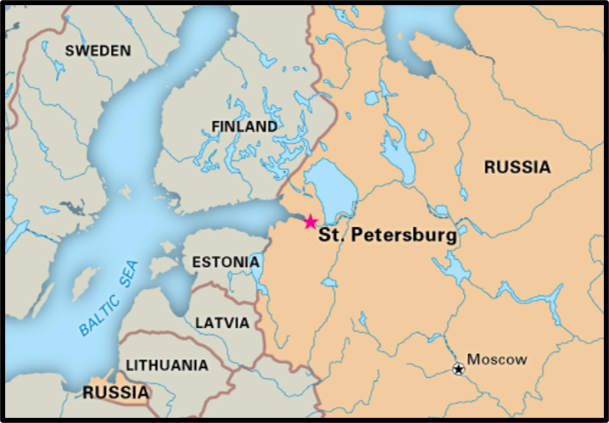
(INTERNATIONAL RELATIONS) (AP) Ukraine launched more than 1,000 drones at Russia in one of its largest air attacks, setting an oil-export terminal and depot ablaze in St. Petersburg on 18 October 2026.
| Feature | Details |
| Location | North-west Russia, on the Neva River at the head of the Gulf of Finland (Baltic Sea) |
| History | Founded by Peter the Great (1703); imperial capital 1712–1918; earlier Petrograd and Leningrad |
| Rank | Russia’s second-largest city and a major Baltic port |
| Link to India | Northern end of the International North–South Transport Corridor (INSTC) |
Strikes on energy sites ➜ Lower Russian export capacity ➜ Oil-market jitters ➜ Cost for importers like India
India balances ties with Russia and the West while relying on discounted crude (see Ukraine war and India).
📖 Read More: India–Russia Relations
12. Jordan in the Map
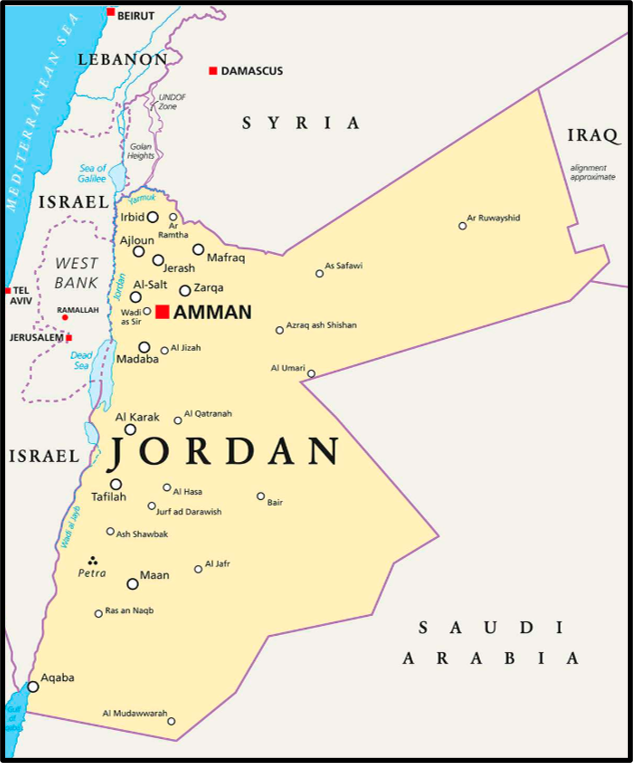
(GEOGRAPHY) (FP) At least seven people were killed when a gunman opened fire at a funeral in a church in Karak governorate, Jordan — a rare attack on the country’s Christian minority, called a terrorist act by authorities.
| Feature | Details |
| Official name | Hashemite Kingdom of Jordan; capital Amman |
| Neighbours | Syria, Iraq, Saudi Arabia, Israel and the West Bank |
| Sea access | Gulf of Aqaba (Red Sea) at Aqaba |
| Lowest point | Dead Sea shore, about 430 m below sea level |
| Rivers | Jordan and its tributary Yarmouk, draining to the Dead Sea |
| Heritage | Petra — Nabataean rock-cut city, a UNESCO site |
- Water stress: One of the world’s most water-scarce countries.
- Role: A moderate voice in West Asia with a peace treaty with Israel (1994) and custodianship of holy sites in Jerusalem.
Stability in Jordan matters for India’s West Asia ties and its diaspora (see West Asia policy).
📖 Read More: Political Map of Asia • India and West Asia Policy