
Sculpture of South India
South Indian sculpture is inseparable from temple culture and ritual worship. Two dynasties stand out:
- The Pallavas – pioneers of rock-cut and early structural temples
- The Cholas – masters of bronze sculpture and devotional iconography
The dominant materials were stone (for architecture and reliefs) and bronze (for portable icons used in worship and procession).
Sculpture under the Pallavas
The Pallavas laid the foundations of South Indian sculptural tradition, especially through rock-cut architecture.
Centres and Style
- Major centre: Mamallapuram
- Sculpture is → narrative, dynamic, integrated with natural rock surfaces.
Sculptures of Mamallapuram
Most Pallava sculptures are found in the rock-temple complex at Mamallapuram.
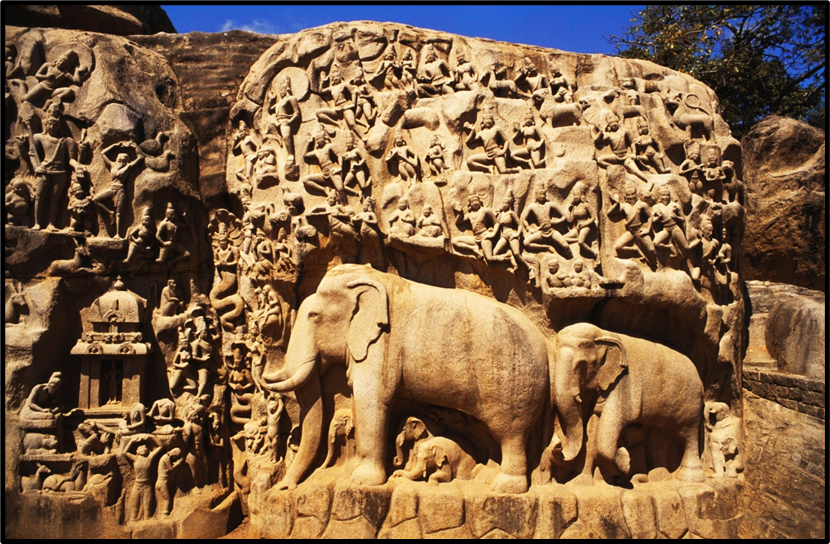
Descent of the Ganga (Arjuna’s Penance)
- A monumental relief: ~80 ft long and ~30 ft high
- Depicts the descent of the Ganga from heaven to earth.
- Filled with → gods, sages, animals, celestial beings.
This relief demonstrates → narrative density, mastery over scale, harmony between nature and sculpture.
Royal Portraiture
- Relief portraits of Pallava king Mahendra Vikrama Varman and his queens show early attempts at individualised representation.
Free-Standing Animal Figures
- Lions, elephants, and other animals carved with vitality and realism.
Pallava Bronze Sculpture
- Over thirty-five Pallava bronzes have been discovered.
- Themes are predominantly Shaivite.
- Shiva is depicted in multiple moods → ascetic, benevolent, cosmic.
These bronzes mark the transition from stone narrative to metal dynamism, paving the way for Chola brilliance.
Sculpture of the Cholas
(9th – 13th century CE)
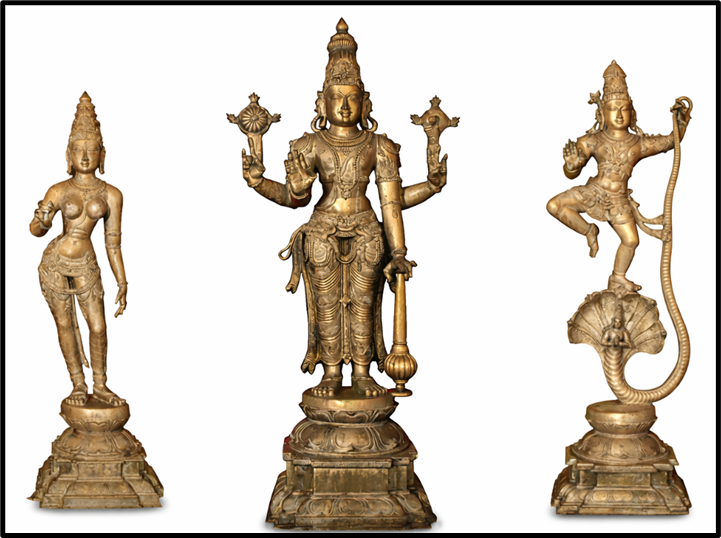
The Cholas elevated Indian metal sculpture to its highest artistic and spiritual level.
Hallmarks of Chola Sculpture
- Supreme mastery of bronze casting
- Use of the lost-wax (cire perdue) technique
- Figures characterised by → fluidity, rhythmic balance, controlled movement.
Range of Subjects
Chola metal art was not limited to deities. It included → Saiva and Vaishnava saints, kings and queens, lamp bearers, animal figures.
Notable examples → Sundaramurti (Saiva saint) Aiyanar on elephant
This reflects the deep integration of art with lived religion.
The Nataraja Statue
(Culmination of Indian Sculptural Thought)
The Nataraja, created in bronze during the Chola period, is not just a sculpture—it is a philosophical statement in metal.
Conceptual Meaning
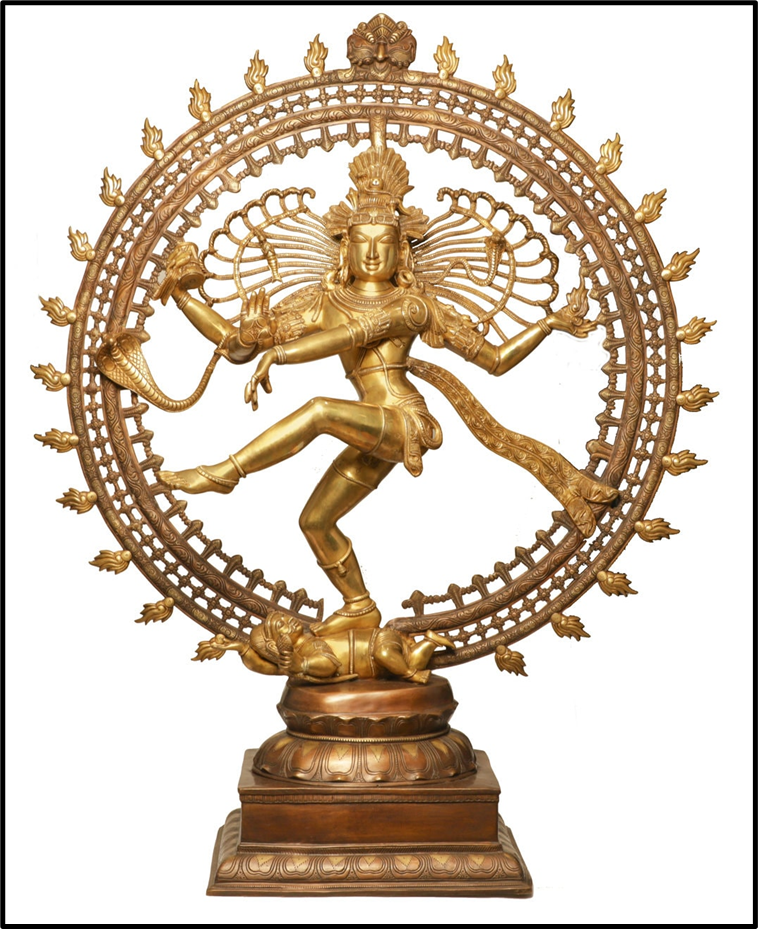
- Nataraja depicts Lord Shiva as the cosmic dancer.
- He performs the Tandava—the dance of → creation, preservation, destruction.
- The dance awakens humanity from the illusion of the ego and material world.
In Tamil texts, this form of Shiva is also known as → Kooththan, Sabesan, Ambalavanan
Iconographic Features of Nataraja
1. Dancing Pose (Ananda Tandava)
- Shiva balances on the right leg.
- The left leg is raised, signifying liberation (moksha).
2. Four Arms1
- Upper right hand: Damaru → creation
- Upper left hand: Agni → destruction
- Lower right hand: Abhaya mudra → protection and fearlessness
- Lower left hand: Gajahasta posture → points to raised foot: path to liberation
3. Prabhavali (Ring of Fire)
- Circular halo of flames around Shiva.
- Symbolises → cosmic energy, eternal cycle of birth and dissolution.
4. Apasmara (Dwarf Figure)
- Shiva stands on Apasmara, the dwarf of ignorance and ego.
- Signifies the triumph of knowledge over ignorance.
5. Serene Expression
- Despite intense motion, Shiva’s face is calm.
- Represents perfect balance between chaos and tranquillity.
Artistic Excellence
- Perfect proportions
- Flowing ornaments and hair
- Rhythmic harmony of limbs
- Exceptional control over bronze casting
The Chola artisan achieves the illusion of movement in solid metal—a feat unmatched globally.
Religious and Philosophical Significance
The Nataraja encapsulates → Shaivite theology, cosmic philosophy, spiritual liberation.
It serves as → an object of worship, a meditative focus, and a visual summary of Indian metaphysical thought.
- UPSC Prelims 1995 ↩︎
For chapter-wise Art and Culture Notes for UPSC Prelims and Mains, refer to the complete Art and Culture notes page.