
Reproduction
Before We Begin: Why Do We Even Reproduce?
See, before we open the textbook and start memorising definitions, let us pause for a moment and ask ourselves a very simple question — a question that almost every child has asked at some point:
“Why do living things reproduce at all?”
After all, an individual organism is fully capable of living, eating, growing, and surviving without ever producing offspring. So why does Nature insist on this process?
Here is the beautiful answer.
Reproduction is not for the individual; it is for the species.
Your survival is not in question — Nature’s concern is whether your kind will continue tomorrow. This is the reason scientists do not count reproduction among the ‘fundamental life processes’ like respiration or digestion. You can be perfectly alive without reproducing, but your species cannot continue without it.
| A Concept-Clarity Note: Respiration, nutrition, excretion — these are essential for the individual. Reproduction is essential for the species, not the individual. |
Introduction — What Exactly is Reproduction?
In the simplest possible words, reproduction is the biological process by which an organism produces young ones (called offspring) that resemble itself.
A mango tree gives rise to mango trees, an elephant gives rise to elephants, and a bacterium gives rise to bacteria.
The form of the parent is preserved — sometimes exactly, sometimes with small variations — but the essential blueprint of the species is passed forward.
Now, why has Nature designed such an elaborate mechanism? There are two big reasons:
Continuity of species: If no organism produced offspring, the species would simply vanish in one generation. Reproduction is, therefore, the bridge across generations.
Genetic diversity: Particularly in sexual reproduction, the mixing of genes creates variation. This variation is the raw material on which evolution works — it allows species to adapt to new diseases, new climates, new predators.
On the basis of how many organisms are involved, reproduction is broadly classified into two great branches:
- Asexual reproduction — a single parent is enough.
- Sexual reproduction — two parents (or at least two gametes) are required.
Let us now walk through each of these branches with the patience they deserve.
Asexual Reproduction — The Solo Performance
Imagine an organism that does not need a partner, does not need to wait for a season, and does not need to invest energy in courtship — it simply makes copies of itself. That is asexual reproduction.
A single parent gives rise to genetically identical offspring, which we call clones. This style is very common in simpler life forms — bacteria, fungi, and many plants.
Advantages and Limitations — A Quick Look
| Advantages | Limitations |
| Rapid reproduction — large numbers of offspring in very little time. | No genetic variation — offspring are clones of the parent. |
| No mate is required — useful where partners are hard to find. | If the environment changes suddenly, the entire clonal population is equally vulnerable. |
| Works very well in stable environments where successful traits are worth preserving. | Limited adaptability — the species cannot evolve quickly. |
Methods of Asexual Reproduction
Now, here is where things become genuinely interesting. Nature has not chosen one single way of doing asexual reproduction — different organisms have invented different techniques. Let us walk through them, one by one.
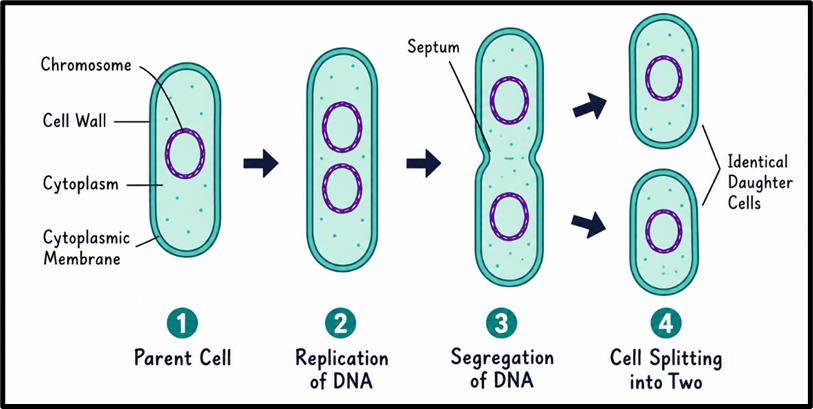
1. Fission
Fission is found in unicellular organisms. The parent cell simply divides into daughter cells. There are two flavours:
- Binary Fission: One cell splits into two identical cells, which quickly grow into adults. Examples: Amoeba, Paramecium, and Leishmania (the parasite that causes kala-azar).
- Multiple Fission: One cell divides into many daughter cells at once. The classic example is Plasmodium, the malarial parasite.
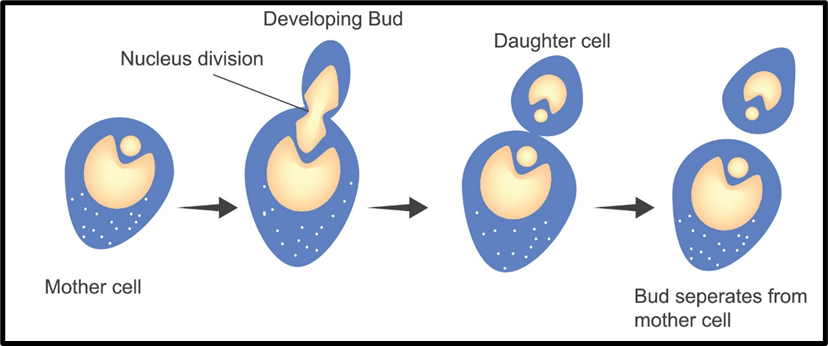
2. Budding
Visualise a small bulb-like outgrowth appearing on the body of the parent. This little ‘bud’ grows, matures, and finally separates as a new individual.
Yeast and Hydra are the textbook examples. (If you have ever watched dough rise, you have, in a sense, watched yeast reproducing.)
3. Sporulation (Spore Formation)
When conditions become unfavourable — too cold, too dry, too hostile — some organisms produce spores. A spore is a tiny, tough cell with a hard protective coat. It is essentially Nature’s survival capsule. The moment conditions improve, the spore germinates and grows into a new individual.
- Bread mould (Rhizopus): a fungus that produces “blob-on-a-stick” structures called sporangia, which release spores onto moist surfaces.
- Amoeba: under stress, it withdraws its pseudopodia and forms a protective wall around itself — a process called encystation. Inside this cyst, the Amoeba undergoes multiple fission and releases many tiny amoebae (pseudopodiospores) when the cyst breaks open.
- Fern: also reproduces through spores.
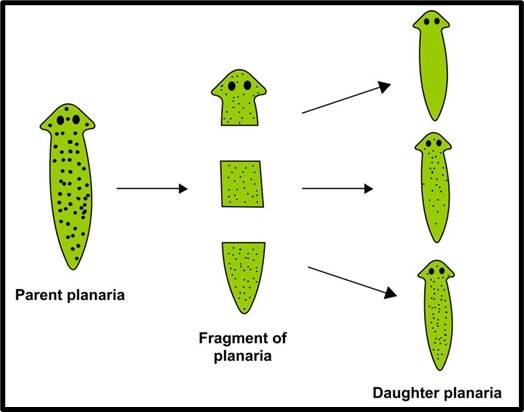
4. Fragmentation
In some simple multicellular organisms, the body simply breaks into fragments — and every fragment is capable of becoming a whole new individual.
Spirogyra (an alga), Planaria (a flatworm), and Hydra are good examples. This is, in a very real sense, the biological inspiration behind regeneration.
5. Special Asexual Reproductive Structures
Fungi and simple plants like algae also use special structures for asexual reproduction. The most common are zoospores — tiny, motile spores that can swim. Other structures to remember are:
- Conidia — found in Penicillium (the source of penicillin).
- Buds — in Hydra.
- Gemmules — in sponges.
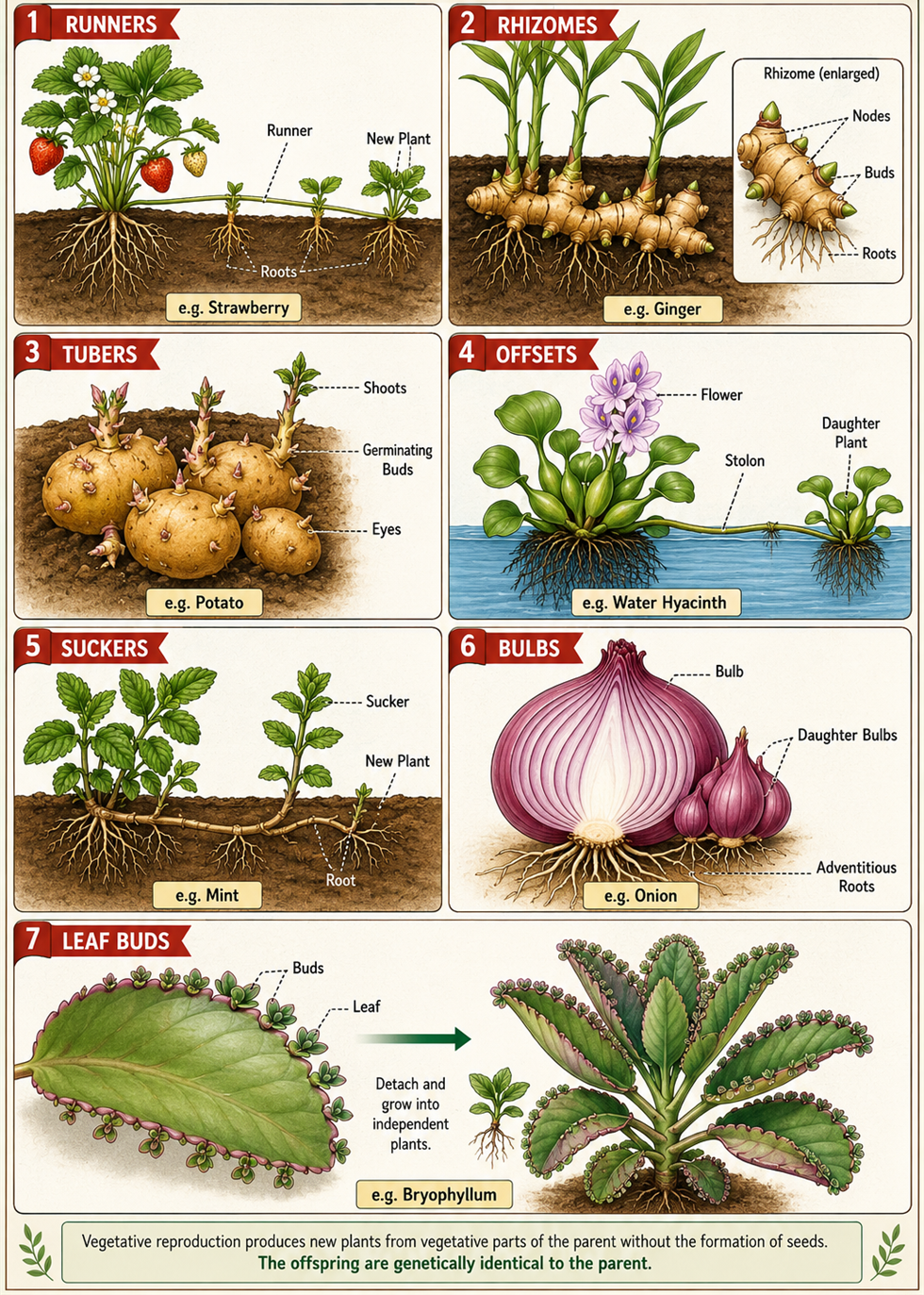
6. Vegetative Reproduction — Plants Without Seeds
In vegetative propagation, new plants grow not from seeds but from the vegetative parts — roots, stems, leaves, or buds. The structural units involved are called vegetative propagules.
| Vegetative Propagule | What it is | Example |
| Runners | Horizontal stems growing along the soil surface | Strawberry |
| Rhizomes | Underground stems producing shoots and roots | Ginger, Turmeric |
| Suckers | Shoots arising from the base of a plant or its roots | Mint |
| Tubers | Swollen underground stems with buds called ‘eyes’ | Potato |
| Offsets | Sub-aerial stems of aquatic plants with rosette of leaves and adventitious roots | Water hyacinth |
| Leaf buds | Buds produced from leaf margins that grow into new plants | Bryophyllum |
| Bulbs | Short, modified stems wrapped in fleshy nutrient-storing leaves | Tulip, Onion |
Vegetative Reproduction in Agriculture
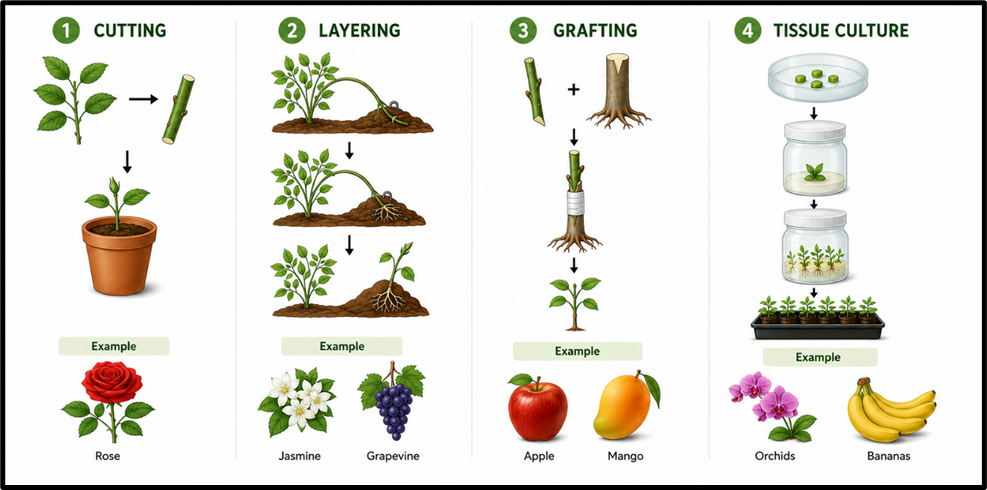
Farmers and horticulturists have, for centuries, harnessed vegetative propagation. The advantage is simple — plants raised this way flower and fruit earlier than seed-grown plants, and they are genetically uniform (a desirable trait for commercial fruit). The main techniques are:
Cutting: parts of stems, roots or leaves are cut and planted (e.g., rose).
Layering: a stem is bent to the ground, covered with soil till roots form, and then separated (e.g., jasmine, grapevine).
Grafting: the stem of one plant (the scion) is joined to the rooted stem of another (the rootstock) — common in apple and mango.
Tissue Culture: growing entire plants from a few cells in a sterile nutrient medium — the technology behind mass production of orchids and bananas.
| The ‘Terror of Bengal’ The water hyacinth was originally brought to India for its beautiful flowers and leaves. It spreads so rapidly through vegetative propagation that it choked water bodies in Bengal, depleted oxygen, and killed fish — earning the rather dramatic title of “Terror of Bengal”. |
7. Parthenogenesis — The ‘Virgin Birth’
The word itself comes from the Greek ‘parthenos’ (meaning virgin) and ‘genesis’ (meaning origin). In parthenogenesis, a new organism develops directly from an unfertilised egg — there is no fusion with a sperm. It can be:
- Obligate — the only way the species reproduces, or
- Facultative — occurring only under certain conditions.
Examples include rotifers, honeybees, aphids, and even certain lizards, fishes, and birds.
8. Apomixis — Seeds Without Fertilisation
Apomixis is a special form of asexual reproduction in which seeds are produced without fertilisation. Plant breeders find this concept extremely useful, because it allows the preservation of desirable hybrid traits over generations.
Sexual Reproduction — Two Partners, Endless Variation
Now we arrive at the more elaborate and, frankly, more dramatic mode of reproduction. In sexual reproduction, two specialised cells called gametes — one male and one female — fuse together to form a single cell called the zygote, which then develops into a new organism.
Why has Nature gone through all this trouble? One word: variation. The mixing of genes from two parents ensures that every offspring is slightly different from every other. This variation is the very fuel of evolution.
Advantages vs Disadvantages
| Advantages of Sexual Reproduction | Disadvantages of Sexual Reproduction |
| Creates genetic diversity — the foundation of adaptability and evolution. | Slower process — finding a mate and producing offspring takes time. |
| Better defence against diseases, predators, and climate change. | Energy- and resource-intensive — mate-finding and offspring care demand effort. |
Life Cycles and Reproductive Phases
Every sexually-reproducing organism passes through three distinct phases of life. Let us see them as three acts of a play.
Act One — The Juvenile Phase
This is the period of growth and development before the organism is reproductively mature. In plants, this is called the vegetative phase. Its duration varies enormously — a fly matures in weeks, an elephant in years.
Act Two — The Reproductive Phase
This is the period of sexual maturity. Now let us see how it shows up in plants and animals:
- In plants: this phase begins with flowering. Most plants flower seasonally; some flower year-round. Some are remarkably unusual —
- Bamboo, for instance, flowers only once in its lifetime (after 50–100 years!) and the
- Neelakurinji of the Western Ghats blooms once every 12 years.
- In animals: the reproductive phase brings morphological and physiological changes that prepare the body for reproduction.
- In female placental mammals, the ovaries and reproductive organs go through cyclical changes regulated by hormones.
| Type of Cycle | Found in | Examples |
| Oestrus cycle | Non-primate mammals | Cows, dogs, deer |
| Menstrual cycle | Primates | Monkeys, apes, humans |
And further, based on when animals breed:
- Seasonal breeders: birds, frogs, lizards, deer, bears.
- Continuous breeders: humans and other primates. Domesticated animals (cows, pigs, chickens) can be made to breed year-round through controlled conditions.
Primate vs Non-Primate Mammals
- Primate mammals (like monkeys, apes, and humans) are distinguished by grasping hands, forward-facing eyes, and highly developed brains, while non-primate mammals lack these specialized traits and show more varied adaptations.
Act Three — Senescence (Old Age)
Finally comes the inevitable phase — ageing. Physiological functions decline, reproductive capacity diminishes, and eventually the organism dies. Hormones and environmental cues regulate this entire journey, in both plants and animals.
Stages of Sexual Reproduction — The Three Big Events
Sexual reproduction, no matter the species, can be broken down into three stages. Please remember this triad.
Pre-Fertilisation events
Fertilisation
Post-Fertilisation events
Pre-Fertilisation Events
Everything that happens before the two gametes actually fuse falls under this heading. The two key sub-stages are gametogenesis (the formation of gametes) and gamete transfer (their journey to meet each other).
Gametogenesis — The Making of Gametes
Gametogenesis is the process by which an organism produces male and female haploid gametes. Based on the appearance of the two gametes, we classify them as:
| Type of Gamete | Description | Examples |
| Isogametes | Both male and female gametes look alike. | Some algae |
| Heterogametes | The two are morphologically distinct — the male gamete is called sperm or antherozoid, and the female gamete is called egg or ovum. | Most animals and plants |
Now, where do these gametes come from? Different organisms are organised in different ways:
| Term | What it means | Examples |
| Bisexual / Homothallic / Monoecious plants | Both male and female structures on the same plant. | Cucurbits, coconut |
| Unisexual / Heterothallic / Dioecious plants | Male and female structures on different plants. | Papaya, date palm |
| Staminate flower | A unisexual male flower (bearing stamens). | |
| Pistillate flower | A unisexual female flower (bearing pistils). | |
| Unisexual animals | Distinct male and female individuals. | Cockroaches |
| Bisexual / Hermaphrodite animals | Both male and female organs in the same individual. | Earthworms, sponges |
| Cell Division in Gamete Formation — A Subtle But Important Distinction In haploid organisms (e.g., monera, fungi, algae): gametes are formed by mitosis. In diploid organisms (e.g., most animals and plants): gametes are formed by meiosis from special diploid cells called meiocytes. |
Gamete Transfer — The Long Journey to Meet
Once formed, the gametes must somehow meet. In most cases the male gamete is motile and the female is stationary — although in some fungi and algae, both gametes can swim. Nature has invented three principal media for transfer:
| Medium of Transfer | Where it operates | Examples |
| Water | In simple plants — male gametes literally swim to the female. | Algae, bryophytes, pteridophytes |
| Pollen Grains | In seed plants, pollen grains carry male gametes to the ovule through pollination. | Angiosperms, gymnosperms |
| Special Mechanisms (internal transfer) | In dioecious animals, sperm is delivered directly to the female reproductive tract. | Most terrestrial animals, mammals |
Fertilisation — The Moment of Fusion
Fertilisation, also called syngamy, is the fusion of the male and female gametes to form a diploid zygote. It is, in many ways, the most defining moment of sexual reproduction.
| Type | Where it occurs | Strategy | Examples |
| External Fertilisation | Outside the female body, usually in water | Massive numbers of gametes released; offspring vulnerable to predators | Algae, fish, amphibians |
| Internal Fertilisation | Inside the female body | Fewer gametes, much higher survival; greater parental investment | Reptiles, birds, mammals, most plants |
Post-Fertilisation Events
Once the zygote is formed, the journey is not over — it is, in fact, just beginning. The zygote now develops further. This stage is the silent, beautiful architecture of life being constructed.
- The Zygote: the first cell of a new life. It is the genetic link between parents and the next generation. It may develop externally (in species with external fertilisation) or internally.
- Embryogenesis: the development of the embryo from the zygote, through cell division and cell differentiation — the process that transforms a single cell into tissues and organs.
On the basis of where the zygote develops, animals are classified into two groups:
| Type | How they develop | Examples |
| Oviparous | Lay fertilised eggs (with hard shells) in the environment; young hatch later. | Birds, reptiles |
| Viviparous | Zygote develops inside the female; live young are born with much higher survival. | Most mammals |
Sexual Reproduction in Flowering Plants
Let us turn to the world of flowers — a world of colour, scent, and surprisingly sophisticated engineering. A flower may look decorative, but in biological terms, it is essentially a highly specialised reproductive organ.
Flower Parts Involved in Sexual Reproduction
| Part of the Flower | Role |
| Sepals and Petals | Protect the inner parts; petals may attract pollinators with colour and scent. |
| Stamen (male part) | Produces pollen grains (the male gametophyte). |
| Pistil (female part) | Made of three regions: Ovary (swollen base, contains ovules with egg cells), Style (the middle stalk), and Stigma (the sticky top that receives pollen). |
Pollination — The Postal System of Plants
Pollination is the transfer of pollen grains (which carry male gametes) from the anther of a stamen to the stigma of a pistil. It is the indispensable first step that allows the male gametes to even begin their journey towards the female gametes hidden inside the ovule.
Types of Pollination
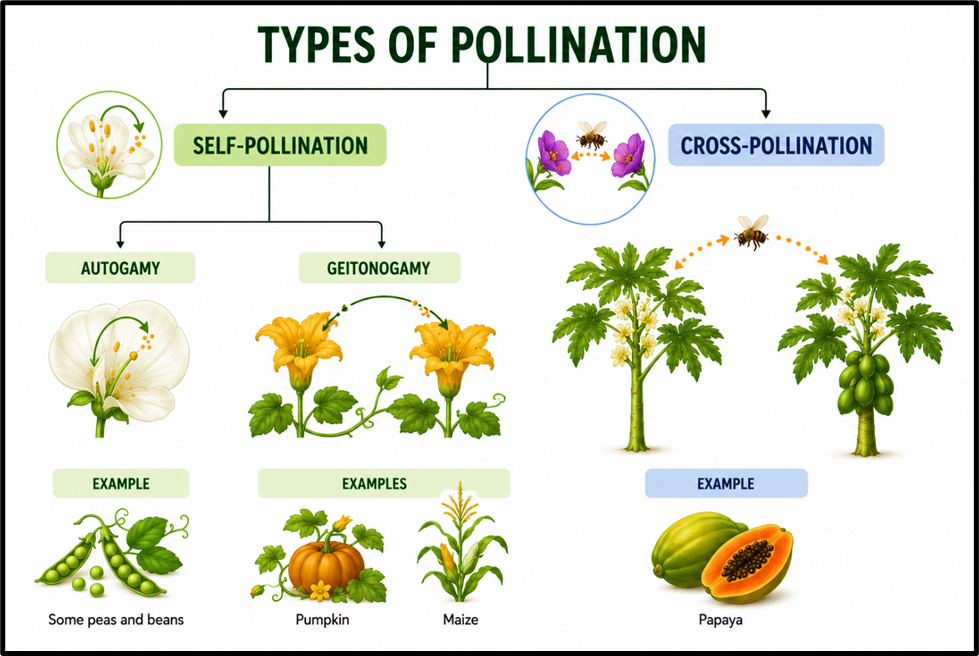
Self-Pollination: pollen of a flower lands on the stigma of the same flower or another flower on the same plant. Common in bisexual, self-fertilising plants like peas. It produces low genetic variation. Two sub-types:
- Autogamy — pollen lands on the stigma of the same flower (common in cleistogamous flowers, which do not open fully, e.g., some peas and beans).
- Geitonogamy — pollen is transferred between different flowers on the same plant (e.g., pumpkin, maize).
Cross-Pollination (Xenogamy): pollen is transferred between flowers of two different plants of the same species. Common in dioecious plants such as papaya. Produces high genetic variation.
Self vs Cross-Pollination — A Comparative Look
| Feature | Self-Pollination | Cross-Pollination (Xenogamy) |
| Definition | Transfer of pollen within the same flower or between flowers of the same plant. | Transfer of pollen between flowers of different plants of the same species. |
| Types | Autogamy and Geitonogamy | Only one type |
| Genetic Diversity | Low — offspring less able to adapt to environmental change. | High — offspring better adapted to environmental change. |
| Common in Plant Type | Bisexual plants | Unisexual plants |
| Flower Structure | Chasmogamous (open) or Cleistogamous (closed) | Chasmogamous (open) |
| Pollinators | Not essential | Essential |
| Examples | Peas, tomatoes, beans | Apple, maize, sunflower, most fruit trees |
Agents of Pollination
Pollen does not walk by itself. It needs a carrier. These carriers, called agents of pollination, fall into two big groups.
Abiotic (Non-Living) Agents
Wind (Anemophily): light, dry pollen is carried by wind. Common in plants with small, inconspicuous flowers and exposed stamens. Examples: grasses, wheat, pine trees.
Water (Hydrophily): water carries pollen, typically in aquatic plants. Examples: Vallisneria, seagrasses.
Biotic (Living) Agents
Insects (Entomophily): the most famous category. Bright colours, sweet scents, and nectar attract bees, butterflies, moths, beetles, and flies — and pollen sticks to their bodies. Examples: sunflowers, roses, orchids.
Birds (Ornithophily): particularly hummingbirds, attracted to tubular, brightly coloured flowers. Examples: hibiscus, fuchsia.
Bats (Chiropterophily): nocturnal pollinators. They visit large, fragrant flowers that bloom at night. Examples: baobab, agave.
Animals (Zoophily): small mammals and lizards may occasionally pollinate while seeking nectar or pollen, particularly in tropical ecosystems.
Fertilisation in Flowering Plants
Once pollen has landed on the stigma, the real magic begins. The pollen grain absorbs moisture and germinates, producing a long structure called the pollen tube. This tube grows down through the style, carrying the male gametes (sperm cells) towards the ovule. On reaching the ovule, the tube releases the male gametes.
Double Fertilisation — The Angiosperm Speciality
Flowering plants (angiosperms) display a uniquely elegant trick called double fertilisation. Two male gametes are released, and each has a separate job:
- First fusion: one male gamete fuses with the egg cell to form the zygote — which becomes the embryo.
- Second fusion: the other male gamete fuses with the two polar nuclei inside the ovule to form the endosperm — the food storage tissue that nourishes the developing embryo.
This double event — one fertilisation producing the embryo, another producing its food supply — is a unique signature of flowering plants.
Formation of Seed and Fruit
- Seed: after fertilisation, the ovule develops into a seed, containing the embryo and the endosperm.
| Type of Seed | What is special about it | Examples |
| Non-Albuminous | All the endosperm is used up during embryo development. | Pea, groundnut |
| Albuminous | Some endosperm is retained even after embryo development. | Wheat, maize, barley |
| Perisperm | Some seeds retain a part of the nucellus. | Black pepper, beet |
- Fruit: the ovary develops into a fruit, which protects the seed and aids in dispersal. Fruits may be fleshy (guava, mango) or dry (groundnut, mustard).
| Type of Fruit | How it forms | Examples |
| True Fruits | Develop only from the ovary. | Mango, tomato |
| False Fruits | Other flower parts (e.g., thalamus) also contribute. | Apple, strawberry, cashew |
| Parthenocarpic Fruits | Form without fertilisation; therefore seedless. | Banana |
Seed Dispersal — Travelling to a New Home
A seed left at the base of the parent plant has little chance of becoming a tree of its own — sunlight and nutrients are already monopolised. So Nature has invented dispersal. Wind, water, and animals are the chief agents.
Some fruits even burst open explosively, scattering their seeds. Once a seed lands in a favourable spot, it germinates — and a new plant begins its life.
Human Reproduction — Coming Home to Ourselves
We now come to the most personal section. Human beings, like all placental mammals, reproduce sexually with internal fertilisation. Let us examine the male and female reproductive systems scientifically — there is nothing here that needs hesitation; it is biology in its most elegant form.
The Male Reproductive System
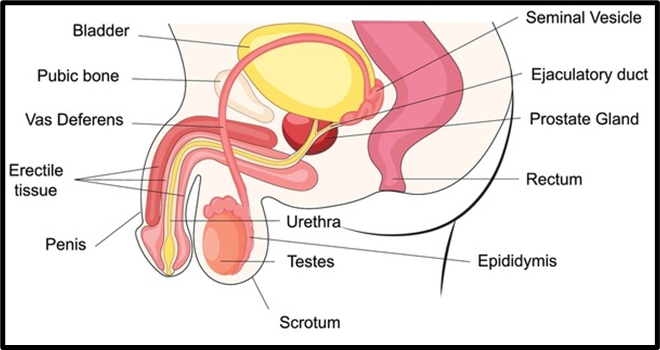
The function of the male reproductive system is straightforward: produce sperm and deliver them. Sperm cells are tiny, motile cells with long tails that allow them to swim. They carry the genetic material that, on fusing with the female egg, gives rise to a new life.
| Key Part | Function |
| Testes | The primary male sex organs. They produce sperm and the hormone testosterone, which drives sperm production and the physical changes of male puberty. |
| Scrotum | A sac-like structure that holds the testes outside the body, where temperatures are slightly cooler — ideal for sperm production. |
| Vas Deferens | A long tube that carries sperm from the testes to the urethra. |
| Prostate and Seminal Vesicles | Glands that add nutrient-rich fluids to the sperm, both to nourish them and to help them move. |
| Urethra | A common tube that carries both urine and sperm out of the body. |
The Female Reproductive System
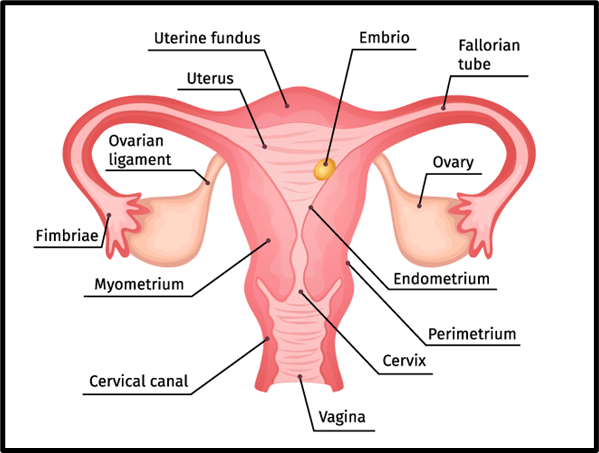
The female system is designed for three remarkable tasks — producing eggs, nurturing a developing baby, and finally giving birth. It is, in a sense, an entire incubator built into the body.
| Key Part | Function |
| Ovaries | Produce eggs (ova) and the hormones estrogen and progesterone. Astonishingly, a girl is born with thousands of immature eggs already in her ovaries. From puberty onwards, one egg matures each month and is released. |
| Oviducts (Fallopian Tubes) | Two narrow tubes that carry the egg from the ovary to the uterus. |
| Uterus (Womb) | A muscular organ where the fertilised egg implants and grows into a baby. Each month, the uterus thickens its lining and increases its blood supply to be ready for a possible pregnancy. |
| Cervix | The lower, narrow part of the uterus that opens into the vagina. |
| Vagina | A muscular tube leading from the cervix to the outside of the body. |
Fertilisation and Pregnancy — The Nine-Month Journey
- Fertilisation: during sexual intercourse, sperm enter through the vagina and travel upwards. If a sperm meets the egg in the oviduct, fertilisation occurs and a zygote is formed.
- Implantation: the zygote travels to the uterus and implants itself into the thickened uterine lining.
- Development: the zygote develops first into an embryo and then into a fetus.
- Placenta: a specialised tissue that links the developing baby to the mother’s uterus, supplying nutrients and oxygen and removing waste products.
- Birth: after about nine months, the baby is delivered through the vagina.
- Hormones: a finely tuned hormonal orchestra regulates the changes throughout pregnancy and childbirth.
Menstruation — The Monthly Reset
Each month, the ovary releases an egg, and the uterus prepares for a possible pregnancy by forming a thick, spongy lining. If fertilisation does not occur, this elaborate lining is no longer needed. It breaks down and leaves the body as blood and mucus through the vagina. This cyclical process is called menstruation, and it typically lasts two to eight days.
| A Small But Important Fact If the egg is not fertilised, it survives for only about one day. This narrow window explains why fertility is so cycle-dependent. |
Quick Revision Pointers
- Reproduction is not a fundamental life process — it is essential for the species, not the individual.
- Asexual reproduction — single parent, identical clones; faster, but no genetic variation.
- Sexual reproduction — two parents, genetic variation, slower, energy-intensive.
- Methods of asexual reproduction: fission, budding, sporulation, fragmentation, vegetative propagation, parthenogenesis, apomixis.
- Plasmodium reproduces by multiple fission; Amoeba by binary fission.
- Vegetative propagules: runner, rhizome, sucker, tuber, offset, leaf bud, bulb.
- Water hyacinth = “Terror of Bengal.”
- Parthenogenesis — development from an unfertilised egg; e.g., honeybees, aphids.
- Apomixis — seeds without fertilisation.
- Oestrus cycle in non-primates; menstrual cycle in primates.
- Bamboo flowers once every 50–100 years; Neelakurinji flowers once every 12 years.
- Three stages of sexual reproduction: Pre-fertilisation, Fertilisation, Post-fertilisation.
- In haploid organisms, gametes form by mitosis; in diploid organisms, by meiosis (in meiocytes).
- Double fertilisation is unique to angiosperms: one fusion forms the embryo, the other forms the endosperm.
- Oviparous = egg-laying (birds, reptiles); viviparous = live birth (most mammals).
- Parthenocarpic fruits (e.g., banana) form without fertilisation — hence seedless.
- Pollination agents: Anemophily (wind), Hydrophily (water), Entomophily (insects), Ornithophily (birds), Chiropterophily (bats), Zoophily (animals).
- Unfertilised egg in humans survives only about one day.