
UPSC CURRENT AFFAIRS — 23 OCTOBER 2026
1. Tusk’s Visit: India–Poland Ties
(INTERNATIONAL RELATIONS) (PMI) Polish Prime Minister Donald Tusk visited India from 21–23 October 2026 with about 100 CEOs. The two sides set a target to double bilateral trade by 2030 and proposed a Defence Industry Dialogue, building on the Strategic Partnership of August 2024.
Key outcomes
| Area | Outcome |
| Trade | Double trade by 2030; push for early signing of the EU–India FTA |
| Defence | Defence Industry Dialogue for co-development and co-production; classified-information pact expected soon |
| Critical minerals | MoU on geology, mining and critical minerals under negotiation; battery recycling and rare-earth refining |
| Technology | Joint research on AI, semiconductors and quantum; start-up links |
| Connectivity | More direct flights; port cooperation; support for IMEC |
| Multilateral | Poland backs India’s UNSC bids (permanent seat; 2028–29 term); Poland joins CDRI |
Bonds of history
- Good Maharaja: The Jam Saheb of Nawanagar and the Principality of Kolhapur sheltered thousands of Polish women and children in World War II.
- Operation Ganga (2022): Poland helped over 2,000 Indian students leave Ukraine.
- Indology: ICCR Chair of Indian Studies at Jagiellonian University, Kraków.
Friendly ties ➜ Strategic Partnership (2024) ➜ Action Plan 2024–28 ➜ Trade & defence push (2026)
Why Poland matters
- Gateway: Entry point to Central and Eastern Europe and part of the Visegrad Group (V4).
- EU voice: Influential in ratifying the EU–India FTA (see India and Europe).
- Friction points: Different views on Russia and the Ukraine war.
📖 Read More: India and Europe • Political Map of Europe • Critical Minerals
2. India Hosts BRICS Parliamentary Forum
(INTERNATIONAL RELATIONS) (DYN) India will host the 12th BRICS Parliamentary Forum at the Parliament complex in New Delhi on 26–27 October 2026, chaired by Lok Sabha Speaker Om Birla. The theme is ‘Fostering Parliaments for people-centric development’.
What the forum does
- Legislative wing: Brings the Speakers and MPs of BRICS countries together.
- From summit to statute: Helps turn leaders’ declarations into domestic laws and budgets.
- Democratic legitimacy: Adds a citizens’ voice to executive-led diplomacy.
BRICS at a glance
| Feature | Details |
| Origin | BRIC (2009); South Africa joined in 2010 |
| Expansion | Egypt, Ethiopia, Iran, UAE (2024); Indonesia (2025) |
| Institutions | New Development Bank; Contingent Reserve Arrangement |
| India’s role | Chair of BRICS in 2026 |
Leaders’ summit ➜ Parliamentary forum ➜ National legislation ➜ Implementation
Challenges
- Diverse regimes: Democracies, monarchies and one-party states find common legislative ground hard.
- Rivalries: India–China tensions limit cohesion (see India and BRICS).
- Non-binding: Forum resolutions lack enforcement.
📖 Read More: BRICS • The United Nations
3. Saving a Fair International Law
(INTERNATIONAL RELATIONS) (TH) The 2026 Nobel Peace Prize to South African jurist Navi Pillay, former UN High Commissioner for Human Rights, ‘for her efforts to promote peace and international law’, comes as wars and selective compliance strain the global legal order.
What international law rests on
- Article 2(4), UN Charter: Bars the threat or use of force against any state.
- Article 38, ICJ Statute: Sources are treaties, custom, general principles and judicial decisions.
- Silent success: Most rules — aviation (ICAO), telecom (ITU), shipping (UNCLOS), ozone (Montreal Protocol) — work daily with near-universal compliance.
How states are reshaping it
| Trend | Example |
| Sovereignty as a shield | Rejecting UN human-rights reports as interference |
| Rejecting adjudication | China’s rejection of the 2016 South China Sea arbitral award |
| Attacks on courts | US sanctions on ICC officials since 2025 |
| Trade by ‘security’ | Paralysis of the WTO Appellate Body |
| ‘Rules-based order’ | Rules applied to rivals but not to oneself |
‘Authoritarian international law’ describes norms recast to protect regimes rather than individuals.
Selective compliance ➜ Credibility deficit ➜ Return of spheres of influence ➜ Weaker small & middle powers
Why it matters for India
- Maritime security: India relies on UNCLOS for a free and open Indo-Pacific.
- Trade: A working WTO protects India from unilateral tariffs.
- Reform agenda: India pushes UNSC expansion and fairer IMF–World Bank quotas (see UN reform).
📖 Read More: The United Nations • International Criminal Court
4. Sakharov Prize 2026 Goes to the ICC
(INTERNATIONAL RELATIONS) (EP) The European Parliament has awarded the 2026 Sakharov Prize for Freedom of Thought collectively to the International Criminal Court (ICC) and its officials, recognising their work for international justice amid sanctions on the Court.
| Feature | Details |
| Award | EU’s top human-rights prize, given by the European Parliament |
| Established | 1988; named after Soviet physicist and dissident Andrei Sakharov |
| First laureates | Nelson Mandela and Anatoly Marchenko |
| Prize money | €50,000 |
| Ceremony | December, Strasbourg plenary |
About the ICC
- Mandate: Tries individuals for genocide, war crimes, crimes against humanity and aggression.
- Basis: Rome Statute; world’s first permanent international criminal court, acting as a court of last resort.
- Context: MEPs want the EU ‘blocking statute’ used to shield ICC staff from US sanctions.
India is not a party to the Rome Statute (see India and the ICC).
📖 Read More: International Criminal Court (ICC)
5. Alberta Votes to Stay in Canada
(INTERNATIONAL RELATIONS) (AJ) In a non-binding referendum on 19 October 2026, about 76% of Albertans voted to remain a province of Canada, while 24% backed starting a process towards separation, according to preliminary results.
- Choice: Remain in Canada, or ask the province to begin the legal process for a binding separation referendum.
- Drivers of separatism: Sense of unfair fiscal treatment, federal climate rules and control over oil resources.
- Oil: Alberta holds most of Canada’s oil sands; Canada has among the world’s largest proven reserves.
- Politics: A boost for Prime Minister Mark Carney.
Regional grievance ➜ Non-binding vote ➜ Pro-unity majority ➜ Federal–provincial bargaining
Separatist movements in federations raise questions of fiscal federalism and regional identity (see North America map, India–Canada Relations).
📖 Read More: Political Map of North America • India–Canada Relations
6. India’s Highest High Court Bench in Leh
(POLITY AND GOVERNANCE) (IE) CJI Surya Kant inaugurated the Ladakh bench of the Jammu and Kashmir and Ladakh High Court in Leh. At about 3,500 metres, it is India’s highest-altitude High Court bench and began work on 21 October 2026.
- Legal basis: A regulation promulgated by the President on 28 August 2026 under Article 240, which lets the President make regulations for certain Union Territories (see Union Territories).
- Common High Court: Since 2019, one High Court serves both J&K and Ladakh.
- Working: About 75 cases listed initially; sits two days a week with judges in rotation.
- Video hearings: The Supreme Court plans to list Ladakh cases on one day via video conferencing.
Remote region ➜ Bench in Leh ➜ Lower travel cost & time ➜ Better access to justice
Article 214 provides a High Court for each state; Parliament can set up a common High Court for two or more states or UTs (Article 231).
📖 Read More: Union Territories • Supreme Court
7. PHP2Shell Flaws Take Websites Offline
(INTERNAL SECURITY) (IE) Two critical flaws in the PHP programming language, dubbed PHP2Shell, forced precautionary shutdowns of websites worldwide on 21 October 2026 — including Japan’s Finance Ministry and the Wikimedia Foundation — until patches were installed.
Why it is serious
- Reach: PHP runs on about 70% of websites whose server language is known; WordPress, built on PHP, powers over 40% of all websites.
- No login needed: Attackers could run code remotely or read server memory before any security check runs.
- AI found them: Researchers at Wiz and Calif used AI tools to discover the bugs.
The two flaws
| Flaw | What goes wrong |
| Memory-error flaw | An interrupted request leaves incomplete data that PHP later treats as valid |
| Stale-state flaw | Data from an earlier request is wrongly reused for the next one |
Malicious web request ➜ PHP memory bug ➜ Remote code execution ➜ Data theft / backdoors
Lessons
- Patch fast: Shared hosting makes it hard to find every PHP instance.
- AI cuts both ways: It speeds up both discovery and exploitation (see Cyber threats).
📖 Read More: Understanding Cyber Security and Cyber Threats • India’s Cyber Security Framework
8. Shamonda Virus: First Human Case
(SCIENCE AND TECHNOLOGY) (RT) France has reported the first known human case of Shamonda virus, in a severely immunocompromised patient in Lyon who died. WHO called it an isolated case, unlikely to spread further.
| Feature | Details |
| Type | Orthobunyavirus, Simbu serogroup; related to Schmallenberg virus |
| First detected | Nigeria, decades ago |
| Vector | Biting Culicoides midges; also passes from mother to foetus |
| Hosts | Mainly cattle; also sheep, goats, horses, alpacas |
| Europe (2026) | Detected across several countries, including France, Germany, Belgium, the Netherlands, Austria and Switzerland |
Effects
- Animals: Fever, diarrhoea, lower milk yield, abortions and foetal deformities.
- Humans: Considered low risk; the case likely followed a midge bite in eastern France.
Warmer climate ➜ More midges ➜ Virus spreads in livestock ➜ Rare spillover
The episode supports a One Health approach linking animal, human and environmental surveillance (see Important diseases).
📖 Read More: Important Diseases Explained • Impact of Global Warming
9. A Solid That Stores Two Fuel Gases
(SCIENCE AND TECHNOLOGY) (TH) Scientists at IISER Thiruvananthapuram have made a solid compound that releases hydrogen and methane when moderately heated. The work, published in Science Advances, points to new ways to store and move fuel gases.
- Compound: Magnesium hydridomethylzincate — made of magnesium, zinc, hydrogen and carbon; solid at room temperature.
- Why it helps: Hydrogen’s very low density makes it costly to store and transport as compressed gas.
- Limits: Very sensitive to moisture; reusability not yet shown.
| Gas | Key facts |
| Hydrogen | Lightest element; burns without CO₂; used in ammonia, refining and fuel cells |
| Methane | Simplest alkane (CH₄); main part of natural gas; a potent greenhouse gas |
Solid carrier ➜ Gentle heating ➜ H₂ + CH₄ released ➜ Fuel use
Better storage is a key bottleneck for India’s green hydrogen plans (see Energy Technologies).
📖 Read More: Energy Technologies
10. 16 New Native Animal Breeds
(ECONOMICS) (NIE) The Ministry of Agriculture has notified 16 newly registered indigenous breeds of livestock and dogs from 13 states and one UT. The Breed Registration Committee recommended them, and ICAR–NBAGR, Karnal gave each a unique accession number.
| Species | New breeds (home tract) |
| Cattle (4) | Koppal (Karnataka), Mahakaushali (MP), Periyar (Kerala), Umarda (Maharashtra) |
| Buffalo (1) | Gomanchali (Goa) |
| Goat (2) | Battisi, Totapuri (Rajasthan / UP) |
| Sheep (4) | Asomi (Assam), Kow Debar (Uttarakhand), Madgyal (Maharashtra), Seemanchali (Bihar) |
| Others (5) | Braj donkey (UP), Kashmiri horse (J&K), Nagal pig (Nagaland), Sikkimese yak (Sikkim), Kombai dog (Tamil Nadu) |
Field survey of breed ➜ Genetic & physical study ➜ Breed Registration Committee ➜ Accession number & notification
Why it matters
- Adaptation: Native breeds suit local climate, fodder and disease conditions.
- Conservation: Registration helps target breeding and conservation schemes.
- Caveat: Registration alone does not bring funding or higher productivity.
📖 Read More: Introduction to Indian Agriculture
11. Bharat Pavilion at WETEX 2026
(ECONOMICS) (NOA) Indian firms showcased water-treatment and environmental technologies at the Bharat Pavilion of WETEX 2026, held at the Dubai World Trade Centre on 20–22 October.
- Organiser of WETEX: Dubai Electricity and Water Authority (DEWA).
- Bharat Pavilion: Set up by the Services Export Promotion Council (SEPC) under the Ministry of Commerce and Industry.
- On show: Sewage and water-treatment plants, membranes, pumps, underwater robots, AI facility systems and water-quality monitors.
- Support: Exhibitors helped under the Export Promotion Mission.
Indian water tech ➜ Gulf buyers & partners ➜ Services exports ➜ Stronger India–UAE ties
Services exports are a growing pillar of India’s trade (see Service Sector).
📖 Read More: Service Sector of Indian Economy • India and West Asia Policy
12. Khajuraho: Vishnu’s Head to Return
(HISTORY) (IE) The Archaeological Survey of India (ASI) plans to re-attach the long-lost head of the headless Vishnu idol at Khajuraho’s Javari temple, recently found in an ASI store, by November.
Khajuraho at a glance
| Feature | Details |
| Location | Chhatarpur district, Madhya Pradesh |
| Builders | Chandela rulers, mainly 10th–11th centuries CE |
| Scale | About 85 temples once; around 20 survive |
| Groups | Western (Lakshmana, Kandariya Mahadeva, Vishvanatha), Eastern (Javari, Jain temples), Southern |
| UNESCO | Inscribed 1986; criteria (i) and (iii) |
Architecture
- Nagara style: High platform, mandapas, garbhagriha and soaring shikharas (see Nagara style).
- Panchayatana plan: Lakshmana and Vishvanatha temples have four subsidiary shrines at the corners.
- Sculpture: Deities, dancers, musicians, daily life and mithuna figures.
Rediscovery
Chandela peak (10th–11th c.) ➜ Obscurity by 16th c. ➜ T.S. Burt’s visit (1838) ➜ Cunningham’s surveys (1852, 1864–65)
📖 Read More: Hindu Temple Architecture • Archaeological Survey of India • Safeguarding India’s Art Heritage
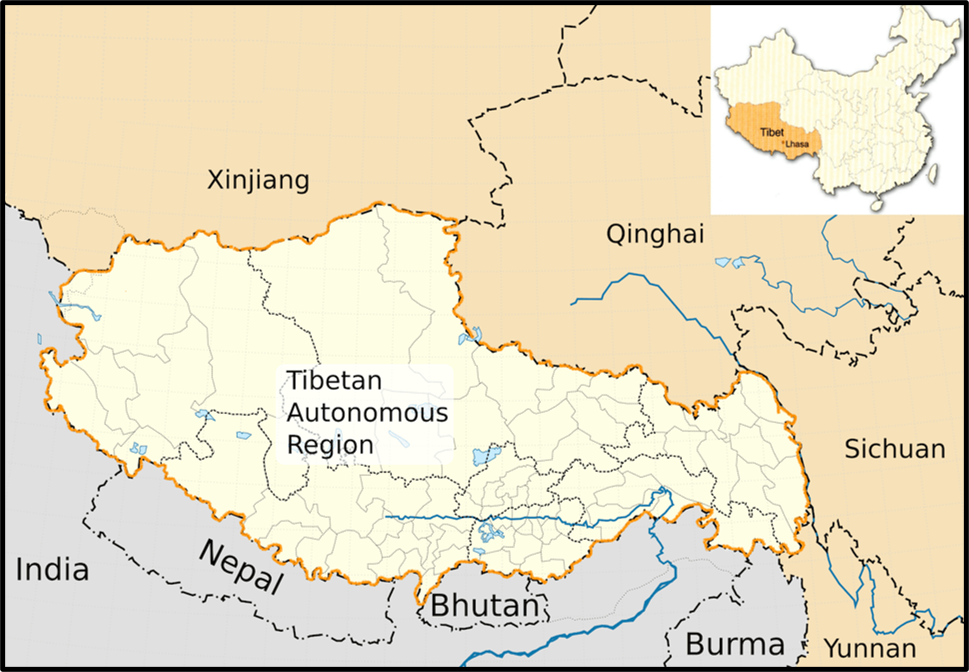
13. Tibet in the Map
(GEOGRAPHY) (DD) A magnitude-7.0 earthquake struck Tibet on 22 October, killing at least 16 people and collapsing over 300 houses. India’s National Centre for Seismology put its depth at 173 km, about 400 km from Lhasa.
| Feature | Details |
| Status | Autonomous region of China; capital Lhasa |
| Nicknames | ‘Roof of the World’, ‘Third Pole’ |
| Neighbours | India, Nepal, Bhutan, Myanmar |
| Rivers born here | Indus, Sutlej, Brahmaputra (Yarlung Tsangpo), Mekong, Yangtze, Salween |
| Climate | Cold desert in the Himalayan rain shadow |
Indian Plate pushes north ➜ Collision with Eurasian Plate ➜ Plateau uplift & faults ➜ Frequent earthquakes
- Hazards: Earthquakes, glacial lake outburst floods and ice-rock avalanches threaten downstream India and Nepal (see Earthquake risk).
📖 Read More: Earthquake: A Natural Hazard • Plate Tectonic Theory