
UPSC CURRENT AFFAIRS — 12 NOVEMBER 2026
1. Delhi Revisits Cloud Seeding for Smog
(ENVIRONMENT) (IE) After Diwali, severe air pollution in Delhi-NCR revived discussion of cloud seeding. Fresh trials were reportedly under consideration after the October 2025 attempts produced little rain. The proposal turns on whether suitable clouds are present and whether any rainfall would deliver meaningful relief.
How seeding changes precipitation
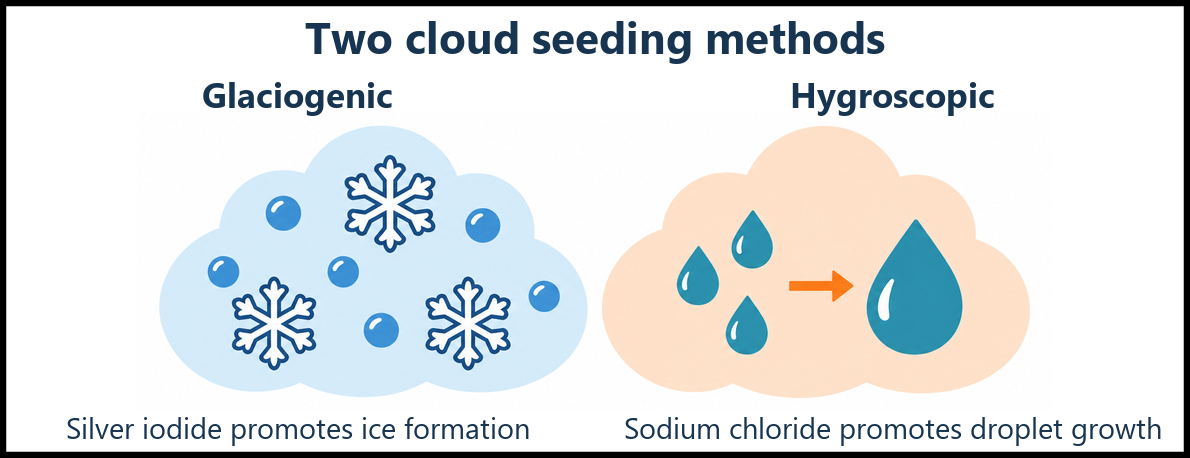
Cloud seeding introduces particles into existing clouds to encourage droplet growth or ice formation. In an unseeded cloud, water vapour condenses on cloud condensation nuclei such as dust or sea salt. Tiny droplets must then grow enough to fall as precipitation.
| Method | Suitable clouds | What the added particles do |
|---|---|---|
| Glaciogenic | Clouds containing supercooled water | Silver iodide (AgI) promotes ice-crystal formation and growth. |
| Hygroscopic | Suitable liquid-water clouds | Salts such as sodium chloride (NaCl) promote droplet growth and coalescence. |

What rain can do for air quality
Rain scavenges airborne particles, including PM₂.₅ and PM₁₀. The improvement can fade as emissions continue. In Delhi’s cooler season, moisture-bearing western disturbances can create an opportunity, but success also depends on cloud depth, liquid water, temperature and winds.
Cloud suitability depends on the type of seeding and the cloud’s physical conditions. The World Meteorological Organization distinguishes published findings at customary silver iodide doses from the need to assess higher doses or unfamiliar agents. Downwind effects require evidence from the particular operation.
The Delhi pilot is a collaboration between the Delhi government and IIT Kanpur. Cloud seeding belongs in the same policy discussion as local dust controls, but sustained air pollution control depends on cutting emissions from transport, industry, combustion and construction. Evaluate trial results against natural rainfall variability and monitor how long any air-quality improvement lasts.
📖 Read More: Prevention and Control of Air Pollution
2. Nasha Mukt Bharat at Six
(SOCIAL JUSTICE) (PIB) The Ministry of Social Justice and Empowerment marked six years of Nasha Mukt Bharat Abhiyaan (NMBA) by reviewing its expansion from a targeted awareness campaign to a nationwide drug demand reduction effort.
From prevention to recovery
Launched on 15 August 2020 in 272 districts, NMBA expanded nationwide in 2023. It works under the National Action Plan for Drug Demand Reduction (NAPDDR). Article 47 directs the State to endeavour to prohibit consumption of intoxicating drinks and drugs injurious to health, with an exception for medicinal purposes.
| Indicator | Government figures |
|---|---|
| Cumulative outreach | Over 35.84 crore people by 10 November 2026, including over 14.33 crore youth and 11.32 crore women. |
| Treatment or counselling | 2.08 lakh to over 9.11 lakh from 2020–21 to 2025–26 at supported facilities. |
| Volunteer mobilisation | Over 2 lakh citizens registered as Nasha Mukti Mitr. |
How services connect
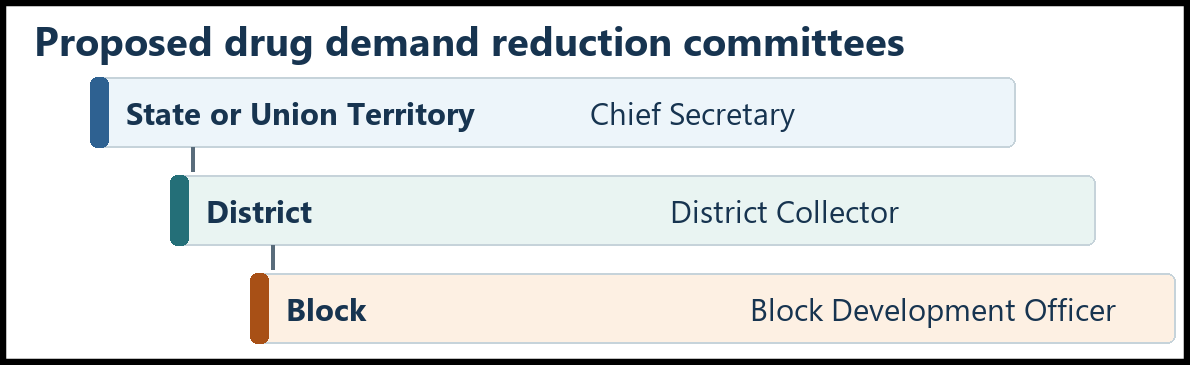
● The proposed coordination mechanism places State steering committees under Chief Secretaries. Drug Demand Reduction Committees at district and block levels would bring local agencies together under the District Collector and Block Development Officer respectively.
● Integrated Rehabilitation Centres for Addicts (IRCAs), Outreach and Drop-In Centres (ODICs), Community-based Peer-Led Intervention Centres (CPLIs), District De-Addiction Centres and hospital-based Addiction Treatment Facilities serve different stages of care.
● The national toll-free helpline 14446 offers counselling and referrals. The NMBA 2.0 App provides information, an e-pledge and a centre locator.
Outreach measures campaign reach. To assess impact, compare survey estimates of harmful substance use, treatment access, continuity of care and recovery.
3. FCRA Bill Tests the Limits of Oversight
(POLITY AND GOVERNANCE) (TH) Debate over the Foreign Contribution (Regulation) Amendment Bill, 2026 has focused on oversight of overseas donations and the autonomy of civil society and minority educational institutions. The Bill was introduced on 25 March 2026 and referred to a Joint Parliamentary Committee.
The Foreign Contribution (Regulation) Act, 2010 regulates acceptance and use of foreign contributions. A registration certificate allows eligible organisations to receive such contributions under the Act. Prior permission provides a route for specified contributions where the recipient lacks a certificate.
What the Bill proposes
| Provision | Proposed change |
|---|---|
| Section 12 | Prescribe time limits for receipt and use of contributions under prior permission. |
| Sections 13 and 14B | Restrict dealings in relevant assets during suspension. Provide for cessation on expiry, non-renewal or refusal of renewal. |
| Chapter IIIA | Create a Designated Authority and provide for provisional or permanent vesting, supervision and disposal of foreign contribution and assets in specified cases. |
| Sections 35 and 43 | Substitute a maximum imprisonment term of one year for the general penalty carrying up to five years. Require prior Central Government approval for investigation under the Act. |
The Bill also broadens the definition of key functionaries to cover persons who govern or control an organisation. Its offence provisions address responsibility within organisations and provide a defence based on lack of knowledge or due diligence in specified circumstances.
The governance question
Auditable records and clear asset rules can help prevent diversion of funds. Wide vesting powers and costly reporting can also disrupt education, healthcare and charitable work. For non-governmental organisations and minority educational institutions, the practical questions are how much discretion authorities have, what process precedes asset control and how decisions can be reviewed.
📖 Read More: Non-Governmental Organisations
4. Microcredit Guarantee Extended to 2031
(ECONOMICS) (PIB) The Cabinet continued the Credit Guarantee Fund for Micro Units (CGFMU) until 31 March 2031. A guarantee protects participating lenders against eligible default losses, which can make them more willing to lend to micro-enterprises with limited collateral.
What the fund covers
| Eligible facility | Limit or condition |
|---|---|
| Pradhan Mantri Mudra Yojana loans | Up to ₹20 lakh for eligible micro-enterprises. |
| Pradhan Mantri Jan Dhan Yojana overdrafts | Up to ₹10,000 on eligible accounts. |
| Self-Help Group loans | Eligible portfolios in the ₹10 lakh to ₹20 lakh range. |
The National Credit Guarantee Trustee Company Limited (NCGTC) administers the guarantee. Coverage tracks disbursement for working capital and outstanding balances for term loans. The annual guarantee fee falls from 1% to 0.75%. SHG fees remain 0.25% in the first year and 0.50% thereafter.
The January 2016 fund now covers the Sixteenth Finance Commission cycle (FY 2026–27 to FY 2030–31). The Cabinet approved a ₹5,000 crore corpus and expects it to facilitate ₹12.6 lakh crore in PMMY loans over five years. That figure is projected lending, distinct from the corpus.
📖 Read More: Economic and Financial Schemes • Self-Help Groups
5. Stand-Up India Extended to 2031
(ECONOMICS) (PIB) The Cabinet extended Stand-Up India until 31 March 2031. The scheme targets at least 2.5 lakh additional women, Scheduled Caste (SC) and Scheduled Tribe (ST) entrepreneurs over five years.
Who can borrow and for what
Launched in April 2016, the Ministry of Finance scheme backs greenfield enterprises in manufacturing, services, trading and agri-allied activities. A greenfield enterprise is the borrower’s first venture in the relevant line of activity. For a non-individual enterprise, eligible entrepreneurs must hold at least 51% of the shareholding and controlling stake.
| Feature | Terms of the extension |
|---|---|
| Loan | Above ₹10 lakh and up to ₹1 crore as a term or composite loan, up to 85% of project cost. |
| Lender protection | 85% of the loan amount covered, with a standard guarantee fee of 0.50%. |
| Approved corpus | ₹4,111 crore for the credit guarantee. |
The scheme aims to finance at least one SC or ST borrower and at least one woman borrower per scheduled commercial bank branch. The credit facility finances a new business. The Credit Guarantee Fund for Stand-Up India reduces the lender’s risk, while handholding can help applicants prepare viable proposals.
📖 Read More: Economic and Financial Schemes
6. Higher Fertiliser Support for Rabi 2026–27
(ECONOMICS) (AIR) The Cabinet approved Nutrient Based Subsidy (NBS) rates for phosphatic and potassic (P&K) fertilisers from 1 October 2026 to 31 March 2027. Higher international input and fertiliser prices raised the expected subsidy bill.
How the subsidy works
The Department of Fertilizers has administered NBS since 1 April 2010. The subsidy on an eligible grade depends on the quantities of nitrogen (N), phosphorus (P), potassium (K) and sulphur (S) it contains. The Cabinet decision covers 28 grades, including diammonium phosphate (DAP) and NPKS grades.

Manufacturers and importers receive the subsidy through fertiliser Direct Benefit Transfer (DBT) based on recorded retail sales. Farmers benefit through subsidised prices. Urea operates under a separate subsidy regime.

The tentative requirement is ₹24,417.73 crore higher, an increase of about 64.3%. Affordable P&K fertilisers can encourage balanced application, but actual use also depends on relative prices, soil needs and farmer advice.
📖 Read More: Nutrient Based Subsidy Scheme • Fertiliser Subsidy in India
7. Maharashtra Beaches Earn Blue Flag
(ENVIRONMENT) (NOA) Ladghar and Guhagar in Ratnagiri district and Shrivardhan in Raigad district received the International Blue Flag award for 2026–27. The same beaches were among five reported as certified in 2025.
How certification works
The Foundation for Environmental Education runs Blue Flag as a voluntary international award for beaches, marinas and tourism boats. Beach applicants must meet criteria covering environmental education and information, water quality, environmental management, and safety and services.

For the 2026 and 2027 seasons, FEE introduced a transitional two-year award. This is a temporary departure from its usual one-season model. Awarded sites must continue to comply with applicable requirements.
In India, Beach Environment and Aesthetics Management Services (BEAMS) supports beach improvements under the Integrated Coastal Zone Management (ICZM) Project. Operational priorities include keeping bathing water clean, controlling litter, maintaining safety services and protecting coastal habitats.
8. Paraguay After Peña’s Impeachment
(GEOGRAPHY) (TH) The collapse of Ueno Bank triggered a political crisis in Paraguay. After the Chamber of Deputies brought charges, the Senate removed Santiago Peña from office on 6 November 2026 under the impeachment process provided for in Article 225 of the Constitution.
Physical and political geography
| Feature | What to remember |
|---|---|
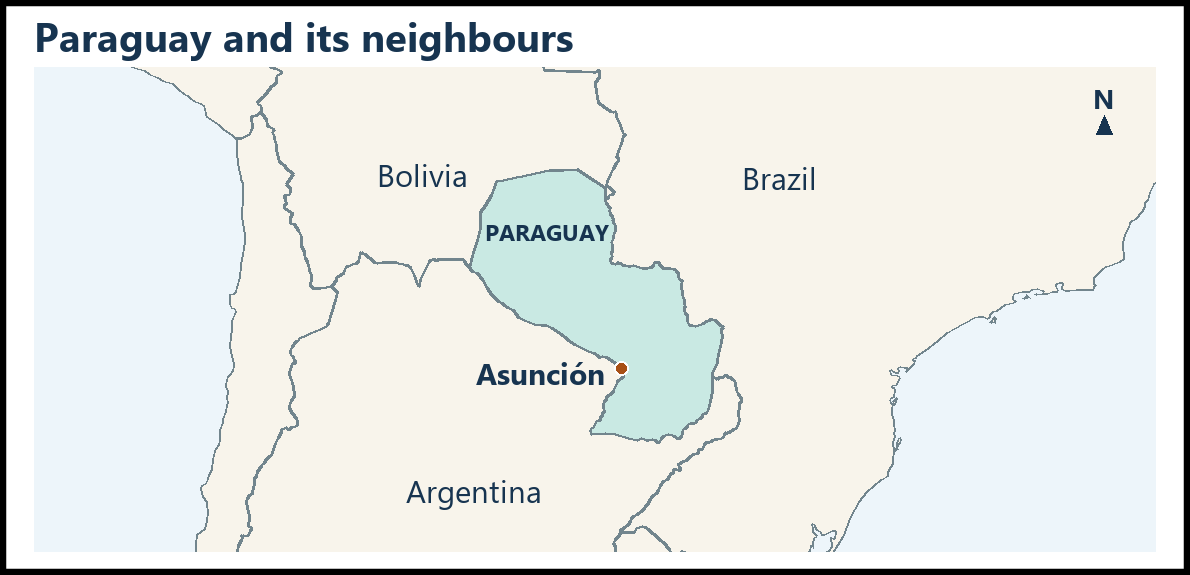
| Location | Landlocked in central South America. Borders Bolivia, Brazil and Argentina. |
| Capital | Asunción, on the Paraguay River. |
| Physical divide | The Paraguay River separates the eastern region from the western Gran Chaco, a lowland of dry forests, savannas and seasonal wetlands. |
| Regional grouping | A founding member of MERCOSUR. |
The case illustrates how loss of confidence in a major bank can become a crisis of political accountability when its ties to public officeholders come under scrutiny. The Senate’s decision concerns removal from office under the Constitution.
9. Climate Trade Deals Leave Technology Barriers
(ECONOMICS) (DTE) UN Trade and Development (UNCTAD) released a Global Trade Update on climate action and trade cooperation around COP31 in Antalya, Türkiye. It finds that climate language has spread in trade agreements while relatively few clauses tackle the barriers that make technology expensive to access.
What the numbers measure
| Indicator | Finding |
|---|---|
| Solar and wind value chains | More than $1.8 trillion in global goods exports in 2025. |
| Agreements with climate provisions | More than half of agreements signed in 2016–2021, compared with 18% in 1990–2015. |
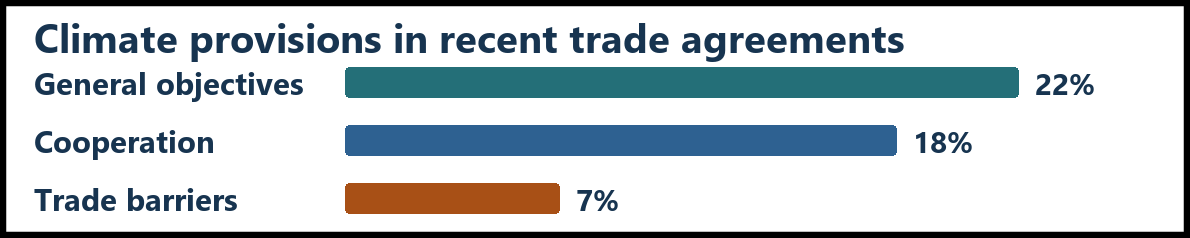
| Recent provisions | Of 179 provisions in eight agreements signed in 2023–2025 that reference the Paris Agreement, 22% set general climate objectives, 18% call for cooperation and 7% target tariffs or non-tariff barriers. |
| Green trade facilitation | Only 7 of 174 economies in the 2025 UN survey reported full implementation of measures for green and climate-smart goods. |
Why a climate clause may change little
Tariffs raise import costs. Divergent testing, labelling and certification requirements can add compliance costs. Regulatory cooperation, mutual recognition where appropriate and access to testing can help turn general commitments into usable market access.
Technology Needs Assessments (TNAs) help developing countries identify priorities. More than half of the 41 developing countries assessed since 2015 prioritised water augmentation and climate-resilient agriculture for adaptation. UNCTAD also cites a scenario in which 3°C of warming could reduce global GDP by 10%.
📖 Read More: United Nations Framework Convention on Climate Change
10. India and Myanmar Hold IMNEX-26
(INTERNATIONAL RELATIONS) (PIB) The eighth edition of the India–Myanmar Naval Exercise (IMNEX-26) opened at Visakhapatnam on 10 November 2026 and is scheduled through 14 November. The exercise develops interoperability, or the ability of the two navies to work together.
The Harbour Phase includes professional exchanges and cross-deck visits. The Sea Phase is scheduled to test coordination at sea. Participants include INS Rana, INS Sumedha and UMS King Sin Phyu Shin.
India links the exercise to MAHASAGAR (Mutual and Holistic Advancement for Security and Growth Across Regions). The exercise is part of India’s maritime engagement with Southeast Asia.
📖 Read More: India and South-East Asia Policy