
UPSC CURRENT AFFAIRS — 7 NOVEMBER 2026
1. Internet Access Is a Fundamental Right, Rules SC
(POLITY AND GOVERNANCE) (TH) In Just Rights for Children Alliance v. S. Harish (2026), the Supreme Court held that the right to access and use the internet is a fundamental right of every individual — children included — under Article 21 read with Article 19(1)(a). The order was passed on 15 October 2026 by a Bench of Justices J.B. Pardiwala and K. Vinod Chandran.
What the Court Held
- Constitutional basis: for a child, the internet is a gateway to learning, information and self-expression, so access is protected as part of life, liberty and the freedom of speech and expression.
- No blanket age bans: sweeping age-based restrictions were found disproportionate and unsupported by evidence that they make children safer.
- Targeted limits are allowed: the Union may still block children’s access to inherently harmful services, such as adult websites.
- Safety by design: parental oversight, private-by-default child accounts, curbs on contact from unknown adults, and moderation of advertisements and content.
The Court rejected the idea that safety and freedom pull in opposite directions. Protecting a child, it reasoned, does not require shutting the child out of the digital world.
Directions on Child Sexual Exploitation and Abuse Material (CSEAM)
| Direction | What it requires |
|---|---|
| National Hash and URL List Database | The Union must build a database of digital fingerprints (hashes) and web addresses of known CSEAM |
| Takedown | Intermediaries must remove database-matched CSEAM immediately |
| Reporting | Unknown-origin CSEAM to be reported within 2 hours of removal or complaint resolution; weekly reports on database-matched removals |
| Grievance redressal | A separate CSEAM reporting option, reachable within two steps of the content, profile, group or link |
How the Right Evolved
| Case | Contribution |
|---|---|
| Shreya Singhal (2015) | Struck down Section 66A of the IT Act, 2000; online speech gets the same protection as offline speech |
| K.S. Puttaswamy (2017) | Privacy, including informational privacy, is a fundamental right under Article 21 |
| Faheema Shirin (Kerala HC, 2019) | Internet access linked to the right to education and privacy |
| Anuradha Bhasin (2020) | Speech and trade over the internet protected under Articles 19(1)(a) and 19(1)(g); restrictions must be proportionate; left open whether access itself is a fundamental right |
| Pragya Prasun (2025) | Digital access recognised as part of Article 21 |
| Just Rights for Children Alliance (2026) | Express recognition of the right to access and use the internet, for children as well |
Why It Matters
- Digital divide: strengthens the case for affordable connectivity and devices for schoolchildren, especially in rural areas.
- Shutdowns: any suspension of internet services must now clear a higher bar of necessity and proportionality.
- Platform duty: shifts the burden of child safety to intermediaries rather than to blanket exclusion of children.
- Data protection link: the Digital Personal Data Protection Act, 2023 already requires verifiable parental consent before a child’s data is processed, complementing the Court’s safety-by-design approach.
📖 Read More: Introduction to Fundamental Rights • Right to Freedom • Anuradha Bhasin Case (2020) • K.S. Puttaswamy Case (2017)
2. OBC Creamy Layer: Ruling to Govern CSE 2025
(SOCIAL JUSTICE) (IE) On 6 November 2026, the Supreme Court settled the Centre’s plea on its March 2026 verdict in Union of India v. Rohith Nathan. It declined to limit the verdict to future cases: the ruling will govern service allocation of OBC candidates of the Civil Services Examination (CSE) 2025, but selections and appointments already concluded will not be reopened.
The Core Dispute
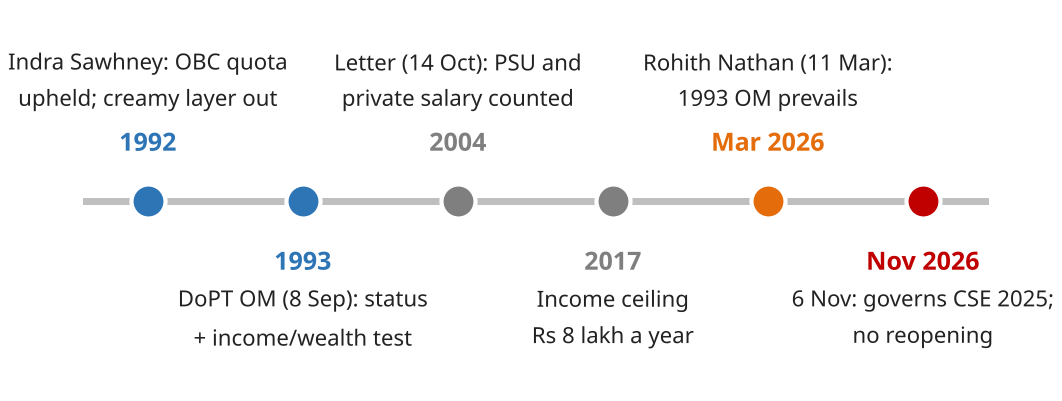
The creamy layer concept comes from Indra Sawhney (1992), which upheld 27% OBC reservation but excluded the advanced among them. The DoPT Office Memorandum of 8 September 1993 identified this group mainly by the parent’s rank or status, with a residual income/wealth test that excludes salary and agricultural income.
A 2004 clarificatory letter then told officials to count the salary of parents in PSUs and private firms where their posts had no government equivalent. Many OBC candidates were thus pushed into the creamy layer on income alone.
What the Court Clarified
- Parties protected: the March 2026 judgment fixes the rights of the respondent candidates, who are non-creamy layer and entitled to reservation with consequential placement.
- No reopening: the ruling is not, by itself, a ground to reopen selections or appointments concluded before 11 March 2026; settled seniority and promotions stay untouched.
- CSE 2025 covered: since allocation is still pending, the creamy layer principle as interpreted in the judgment will govern it.
- After 11 March 2026: all selections, appointments and roster allotments must follow the 1993 OM as interpreted by the Court.
Creamy Layer at a Glance
| Element | Position |
|---|---|
| Constitutional basis | Article 15(4) (education) and Article 16(4) (public employment) |
| Status test | Children of constitutional post-holders, Group A/Class I and Group B/Class II officers, Colonels and above, and certain professionals and property owners |
| Income/wealth test | Gross annual income of ₹8 lakh or more for three consecutive years (ceiling last revised in 2017) |
| Excluded from income test | Salary income and agricultural income |
| Open issue | Equivalence of PSU, bank and private-sector posts with government posts is still not fully mapped |
Way Forward
- Map post-equivalence across PSUs, banks and the private sector so status, not salary, decides eligibility uniformly.
- Index the income ceiling to inflation and revise it on a fixed cycle.
- Sub-categorise OBCs so that a few dominant castes do not corner the benefits, as the Justice G. Rohini Commission examined.
📖 Read More: Affirmative Action in India • Indra Sawhney Case (1992) • SCs, STs and OBCs • National Commission for SCs, STs and OBCs
3. Centre to Re-examine UGC Equity Regulations, 2026
(SOCIAL JUSTICE) (TH) The Centre has told the Supreme Court that it is considering a special committee to re-examine the University Grants Commission (Promotion of Equity in Higher Education Institutions) Regulations, 2026. The aim is a neutral framework that protects every student from discrimination.
How We Got Here
Abeda Salim Tadvi v. Union of India (2019) ➜ Regulations notified (13 Jan 2026) ➜
Supreme Court stay (29 Jan 2026) ➜ Centre reconsiders (Aug 2026) ➜ Special committee (Nov 2026)
The petition was filed by the mothers of Rohith Vemula and Payal Tadvi, two students whose deaths drew attention to caste discrimination on campuses. While the 2026 rules stay suspended, the 2012 Regulations continue to apply.
What the 2026 Regulations Proposed
- Scope: end discrimination on grounds of religion, race, caste, sex or place of birth, with a focus on SCs, STs, Socially and Educationally Backward Classes and EWS.
- Institutions: an Equal Opportunity Centre with an Equity Committee, and an Ombudsperson for escalated grievances.
- Support tools: an Equity Helpline, mobile ‘Equity Squads’ and ‘Equity Ambassadors’.
- Teeth: penalties, including withdrawal of UGC grants, for institutions that ignore complaints.
Why the Court Paused Them
| Concern | Explanation |
|---|---|
| Vagueness | Provisions were prima facie vague and capable of misuse |
| Exclusion | The caste-discrimination mechanism allegedly left general-category students without recourse |
| False complaints | A draft clause penalising false complaints was dropped in the final rules |
| Segregation | Separate hostels, classes or mentoring could create a ‘separate but equal’ regime, against Articles 14 and 15 and fraternity |
| Gaps | Ragging was not named as discrimination; protection for the most backward within SC, ST and OBC groups was unclear |
Striking the Balance
Any redraft must reconcile two duties: the State’s obligation under Articles 15(4), 15(5) and 46 to uplift weaker sections, and the guarantee of equal protection to every student. Clear definitions, an independent ombudsperson and published complaint data would serve both goals.
📖 Read More: Right to Equality • Vulnerable Sections and Social Justice • Education: A Social Perspective
4. Hallmarking: 65 Crore Gold Articles Now Traceable
(ECONOMICS) (PIB) Since mandatory gold hallmarking began in 2021, over 65 crore gold articles have received Hallmark Unique Identification (HUID) numbers (as of 15 October 2026). Over 90 lakh silver articles also carry HUID, which became compulsory for hallmarked silver on 1 September 2025.
What Is Hallmarking?
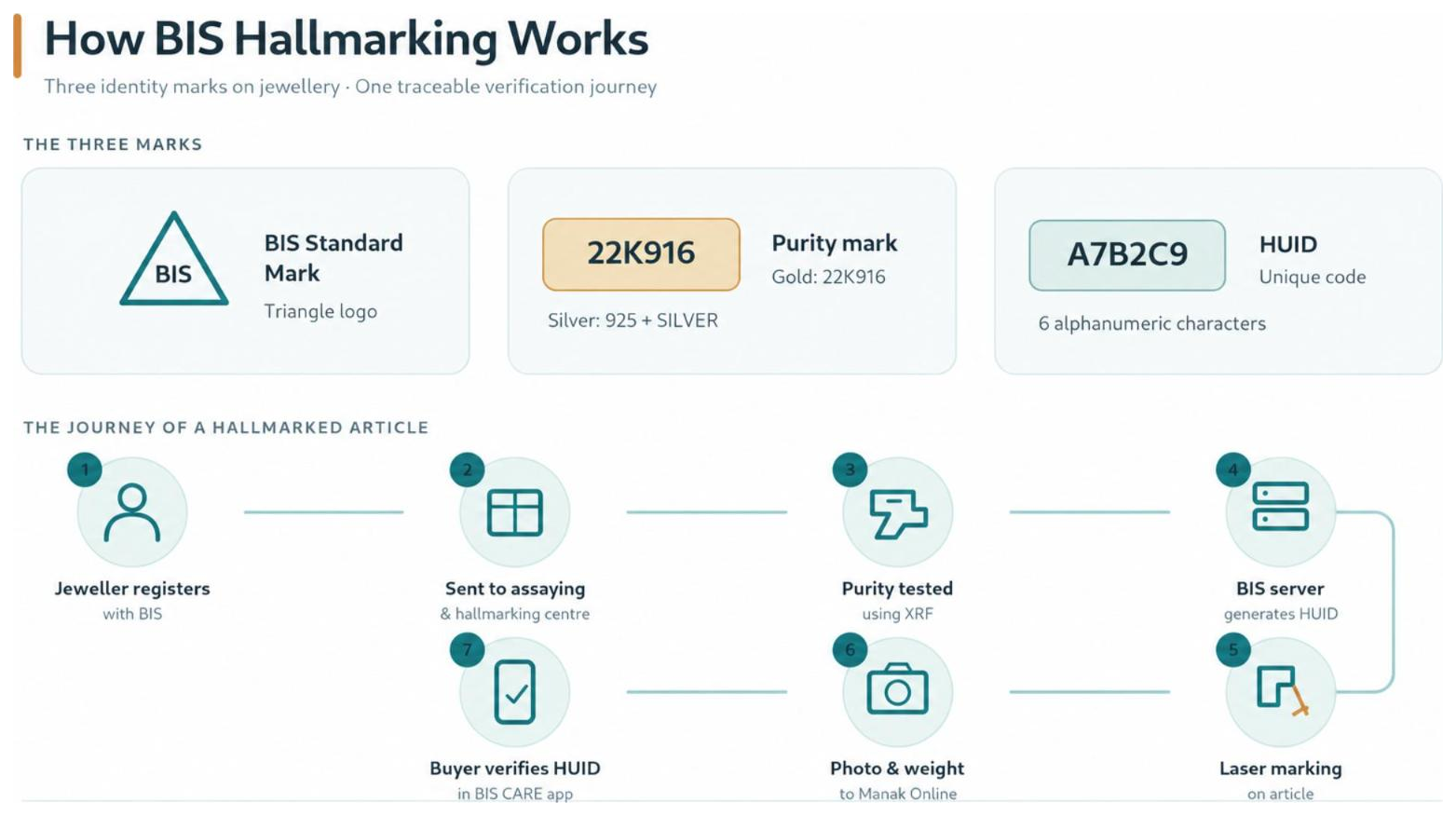
Hallmarking certifies the purity of a precious-metal article against Indian Standards, so buyers do not pay for purity they never receive. The Bureau of Indian Standards (BIS) is the sole operating agency. It began voluntary hallmarking of gold in 2000 and of silver in 2005.
Gold hallmarking became mandatory on 23 June 2021 in 256 districts; coverage has since grown to 392 districts.
Gold vs Silver Hallmarking
| Basis | Gold | Silver |
|---|---|---|
| Status | Mandatory in notified districts | Voluntary; HUID compulsory if hallmarked |
| Indian Standard | IS 1417 | IS 2112:2025 |
| Grades (parts per thousand) | 7: 9K (375), 14K (585), 18K (750), 20K (833), 22K (916), 23K (958), 24KS (995) | 8: 800, 835, 900, 925, 958, 970, 990, 999 |
| Marks | BIS Standard Mark, purity (e.g. 22K916), HUID | BIS Standard Mark with ‘SILVER’, purity (e.g. 925), HUID |
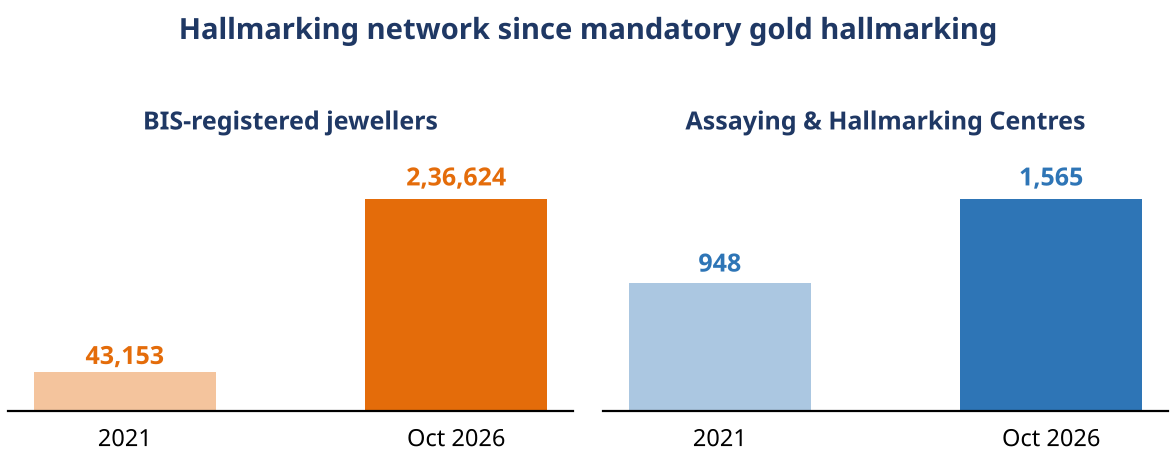
A Fast-Growing Network
Digital Traceability
- Machine integration: XRF machines feed results directly to BIS software since 1 September 2024, ending manual entry.
- Photo records: since 8 June 2026, centres upload a photograph and weight of each article to the Manak Online portal.
- Transfer HUID: Phase 1 (from 1 June 2026) lets an HUID move digitally when gold passes between corporate jewellers or to a corporate entity.
- BIS CARE app: buyers enter the HUID to see purity, jeweller, testing centre, photo and weight — in 12 languages.
About BIS: the national standards body, under the Ministry of Consumer Affairs, Food and Public Distribution. It grew out of the Indian Standards Institution (1947) and now functions under the BIS Act, 2016.
📖 Read More: Government Institutions in Indian Economy • Consumer Protection • Gold
5. Adaptation Gap Report 2026: Finance Falls Short
(ENVIRONMENT) (DD) The United Nations Environment Programme (UNEP) launched its Adaptation Gap Report 2026: ‘Ready? Not’ on 4 November 2026, ahead of COP31 in Antalya, Türkiye. With warming set to exceed 1.5°C, it finds adaptation finance far below needs, weak institutions slowing action, and losses and damages mounting.
The Money Gap
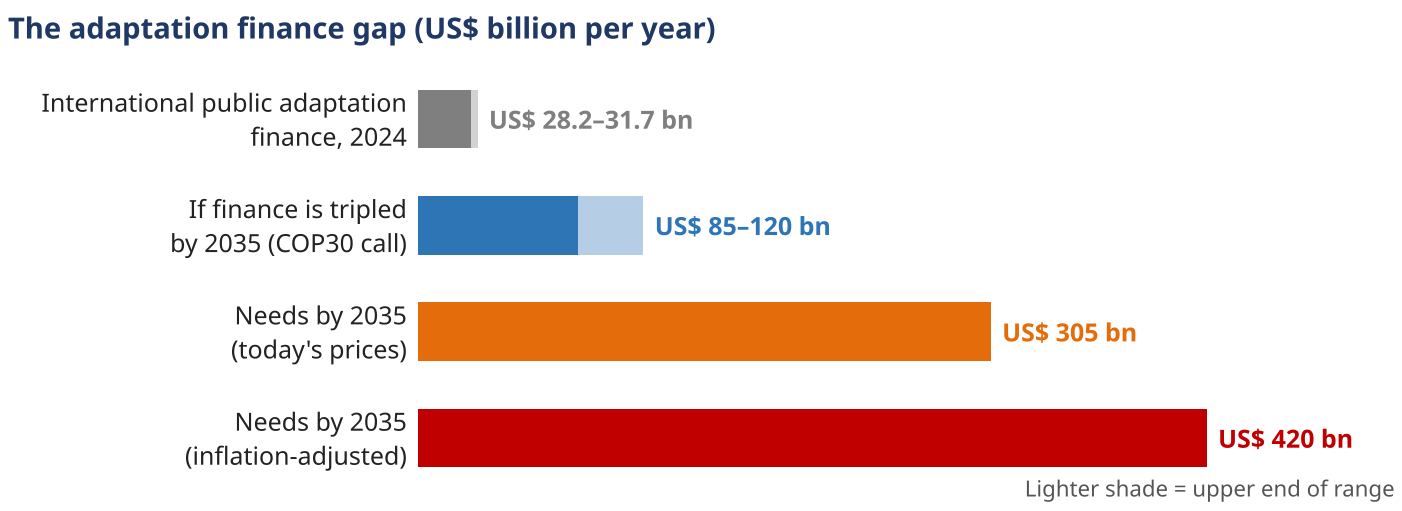
- Needs: about US$305 billion a year by 2035 (about US$420 billion after inflation); this largely excludes the private sector’s own needs, which could almost double it.
- Flows: US$28.2–31.7 billion in 2024 — just US$1 billion more than in 2023, below the pace needed for the Glasgow Climate Pact goal of doubling to about US$40 billion by 2025.
- South–South finance: rose from US$3.8 billion (2019) to US$9.6 billion (2024).
- Debt risk: 55% of adaptation finance to developing countries in 2024 came as loans, though 80–90% of LDC and SIDS funding was concessional.
- Private capital: mobilised private finance doubled to US$3 billion, but may bridge only 15–20% of public-oriented needs.
Loss and Damage
- Of 765 million people hit by floods and landslides in 2020–2025, 99% lived in low- and middle-income countries.
- Of 118 countries assessed, 89% recognise loss and damage in their NDCs or NAPs, but only 54% track it and 38% have legal frameworks.
- The Fund for Responding to Loss and Damage received US$2.8 billion of requests in its first round against an envelope of US$342 million.
Mitigation vs Adaptation
| Aspect | Mitigation | Adaptation |
|---|---|---|
| Aim | Cut emissions or enhance sinks | Reduce vulnerability to climate impacts |
| Benefit | Global | Mostly local and regional |
| Examples | Renewables, energy efficiency | Heat action plans, flood defences, drought-tolerant seeds |
| Paris Agreement anchor | Article 4 (NDCs) | Article 7 (Global Goal on Adaptation) |
India’s Position
- Grounds its stance in CBDR-RC and seeks predictable, grant-based public finance from developed countries.
- Wants indicators under the Global Goal on Adaptation to stay voluntary and not become conditions for finance.
- At home, aligns the NAPCC with State Action Plans on Climate Change.
📖 Read More: UNFCCC • COP30 Belém (2025) • COP29 Baku (2024) • COP26 Glasgow (2021) • Climate and Environment Diplomacy
6. Why Satellite Collars Cannot 'Live-Track' Cheetahs
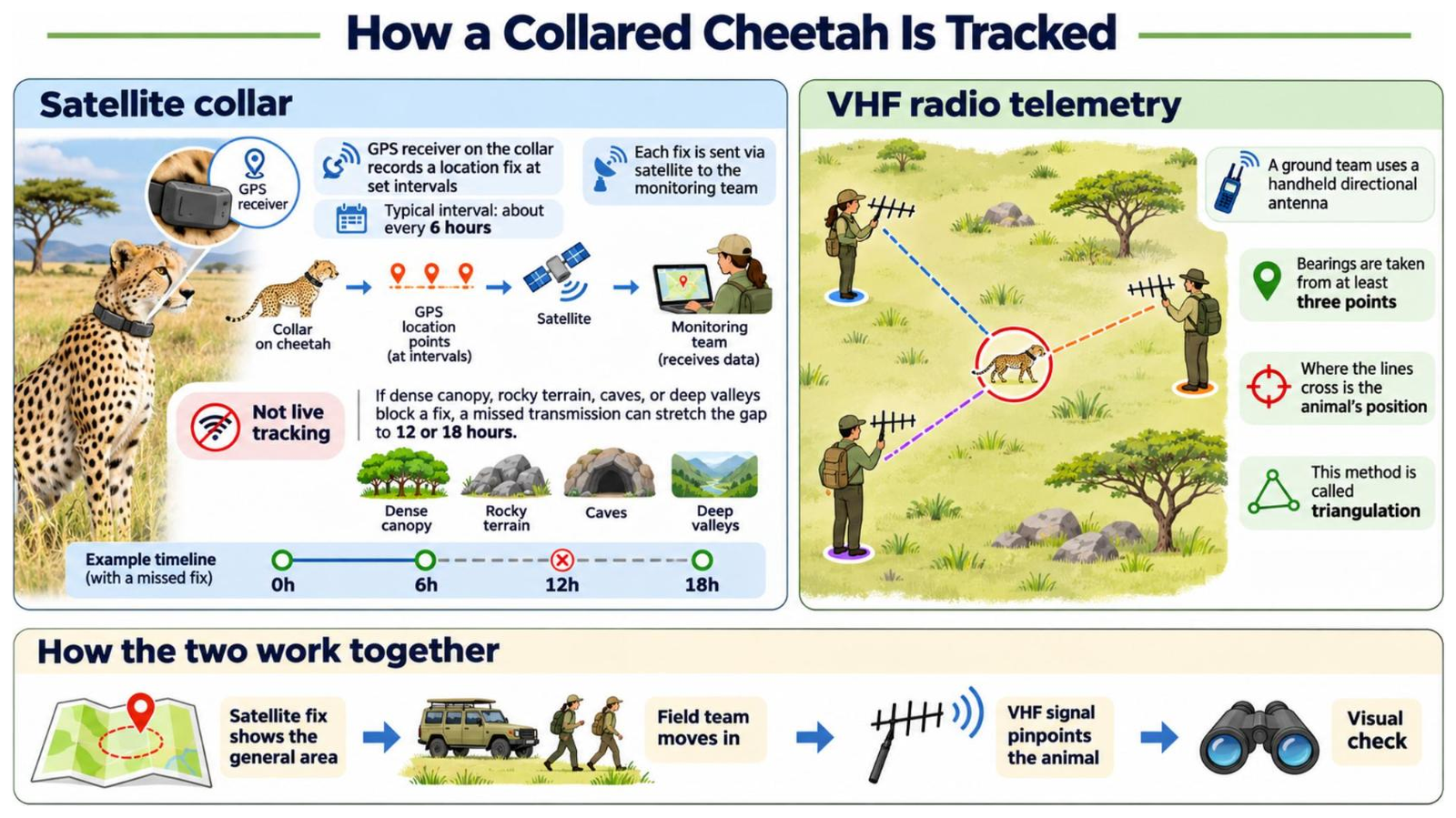
(ENVIRONMENT) (IE) KNG22, a 19-month-old male cheetah born to Nirva, died on 27 October 2026 from gunshot wounds after straying beyond Kuno National Park into the territorial forests near the Sheopur–Morena border. Kuno’s Director has since explained that satellite collars do not give continuous ‘live’ tracking.
Two Tools, Two Roles
| Feature | Satellite (GPS) collar | VHF radio telemetry |
|---|---|---|
| Coverage | Whole landscape, including remote areas | Local, within radio range of a ground team |
| Method | GPS fix at set intervals (about every 6 hours) relayed via satellite | Bearings from at least three points with a handheld directional antenna |
| Limitation | Not real time; canopy, rocks, caves and valleys can block fixes, stretching gaps to 12–18 hours | Needs a team close by; terrain can weaken the signal |
| Trade-off | More frequent fixes drain the battery and shorten collar life | Labour-intensive |
Project Cheetah at a Glance
- Launch: 17 September 2022, with eight cheetahs from Namibia; twelve from South Africa followed in February 2023.
- Lead agency: the National Tiger Conservation Authority — the first intercontinental translocation of a large wild carnivore.
- Second home: Gandhi Sagar Wildlife Sanctuary in Madhya Pradesh.
- Kuno: in Sheopur district on the Vindhyan hills, named after the Kuno river (a Chambal tributary); upgraded to a national park in 2018.
The Lesson
Young cheetah disperses ➜ Collar gaps of hours ➜ Exposure outside the park ➜
Landscape-level protection with communities
A reintroduced population will always test its boundaries. Safety therefore depends on vigilant territorial forest divisions, informed villagers and secure corridors — not on technology alone.
📖 Read More: National Parks in India • Big Cat Conservation in India • India and Namibia Relations
7. Cellophane Bees: Nature's Biodegradable Polyester
(ENVIRONMENT) (TH) A new study of the cellophane bee Colletes inaequalis shows that the plastic-like film it uses to line its underground nest cells breaks down in natural soil within about a year. The finding offers clues for designing truly biodegradable plastics.
Meet the Cellophane Bee
- Family: Colletidae; also called polyester or plasterer bees.
- Lifestyle: solitary and ground-nesting, yet often found in dense nest aggregations.
- Nest lining: a thin, translucent, waterproof film made of silk and polyester, secreted from the Dufour’s gland and spread with the tongue.
- Purpose: keeps moisture and microbes away from the larva and its pollen-nectar store.
- Role: early-spring native pollinators of trees such as red maple, willow and apple.
What the Study Found
0–4 months: lining stays flexible ➜ Polyester share falls from 73% to 40% by weight ➜
7 months: visible cracks ➜ 11 months: brittle and crumbling
The polyester is semicrystalline: ordered and disordered regions coexist, and its molecular packing resembles polyethylene. Yet, unlike polyethylene, it degrades quickly — possibly because water can break its chemical bonds.
Why It Matters
- Biomimicry: understanding how a bee makes a degradable polyethylene-like material could guide greener packaging films.
- Plastic burden: conventional films persist for decades, adding to plastic pollution and microplastics.
- Indian context: complements the ban on identified single-use plastic items in force since 1 July 2022.
📖 Read More: Plastic Pollution • Environmental Biotechnology
8. The Bahamas Becomes ISA's 116th Member
(INTERNATIONAL RELATIONS) (NOA) The Bahamas has joined the International Solar Alliance (ISA) as its 116th member. High Commissioner Peter Nicholas Symonette Jr. handed over the Instrument of Accession to the ISA Framework Agreement in New Delhi, on the sidelines of the Ninth Session of the ISA Assembly.
About the ISA
| Feature | Details |
|---|---|
| Origin | Launched by India and France at COP21, Paris, on 30 November 2015 |
| Legal status | Treaty-based intergovernmental body; the Framework Agreement entered into force on 6 December 2017 |
| Membership | First meant for countries between the Tropics; opened to all UN members by a 2020 amendment |
| Headquarters | Gurugram, India — the first treaty-based international organisation headquartered in India |
| UN link | Observer status at the UN General Assembly (2021) |
| Apex body | The Assembly, meeting annually at ministerial level |
‘Towards 1000’ Strategy
US$1,000 bn invested by 2030 ➜ 1,000 mn people with clean energy access ➜
1,000 GW solar installed ➜ 1,000 mn tonnes CO₂ avoided every year
Why the Bahamas Matters
Small island states in the Caribbean depend heavily on imported diesel for power. Solar energy cuts fuel bills and strengthens resilience against hurricanes. Each new member also widens India’s climate diplomacy reach across the Global South.
📖 Read More: Climate and Environment Diplomacy • Solar Energy • Measures to Boost Renewable Energy
9. India Extends USD 500 Million Credit Line to Guyana
(INTERNATIONAL RELATIONS) (DD) External Affairs Minister S. Jaishankar met Guyana’s President Irfaan Ali on the sidelines of the Commonwealth Heads of Government Meeting (CHOGM) 2026 in Antigua and Barbuda. India announced a USD 500 million Line of Credit (LoC) for roads, health and defence, and the two sides signed three agreements.
Outcomes
| Measure | Purpose |
|---|---|
| USD 500 million LoC | Road, healthcare and defence projects |
| Micro and Small Enterprises | Supply and installation of manufacturing projects to create jobs |
| Quick Impact Projects | Indian grants for community-level development |
| Digital Public Infrastructure | A UPI-like payment system in Guyana, built with Indian technical support |
What is an LoC? A soft loan to a partner government on concessional terms. India extends LoCs through the Exim Bank under the Indian Development and Economic Assistance Scheme (IDEAS); projects usually source goods and services from India.
Guyana: Profile
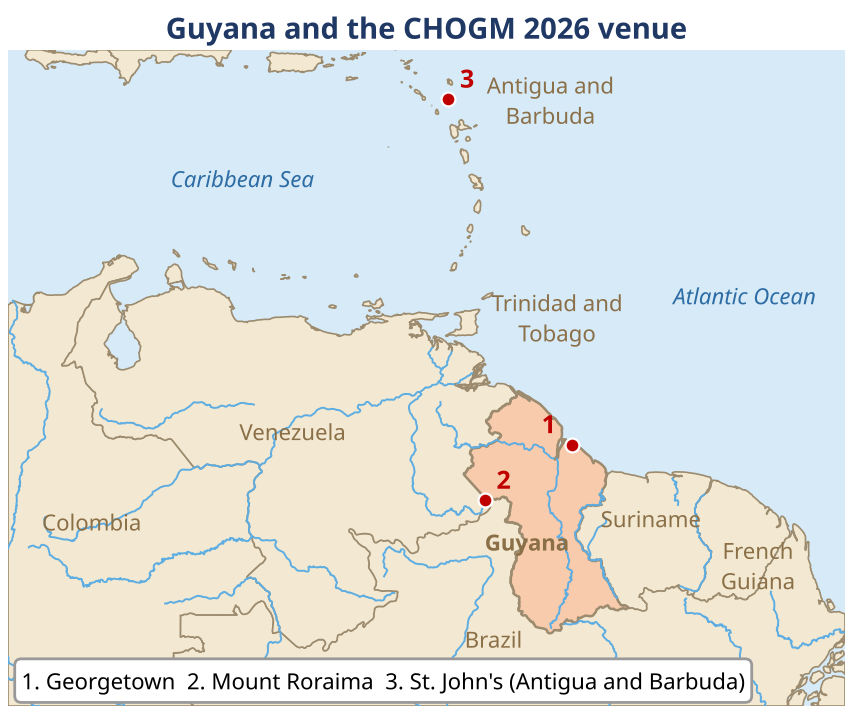
- Location: north-eastern South America; borders Venezuela (west), Brazil (south and south-west) and Suriname (east), with the Atlantic to the north.
- Identity: capital Georgetown; the only South American country with English as its official language; member of the Commonwealth and CARICOM, whose Secretariat is in Georgetown.
- Physical: rivers Essequibo (longest), Demerara, Berbice and Courantyne; the Pakaraima and Kanuku Mountains; Mount Roraima on the tri-junction with Brazil and Venezuela.
- Diaspora: people of Indian origin form the largest ethnic group, descended from indentured workers who arrived from 1838.
- Energy: large offshore oil discoveries in the Stabroek Block have made Guyana one of the world’s fastest-growing economies.
Why Guyana Matters to India
Energy security ➜ Gateway to CARICOM ➜ Diaspora bonds ➜ Global South partnership
📖 Read More: India and Latin America • The Indian Diaspora • Political Map of South America • Digital Payment Infrastructure of India
10. INS Sahyadri Joins Exercise Malabar 2026 in Japan
(INTERNATIONAL RELATIONS) (PIB) INS Sahyadri, the Indian Navy’s indigenous guided-missile stealth frigate of the Eastern Fleet, reached Yokosuka Naval Base, Japan, on 4 November 2026 for MALABAR 2026. The exercise brings together the navies of India, Japan, the United States and Australia.
How Malabar Grew
1992: India–US bilateral ➜ 2015: Japan becomes a permanent member ➜ 2020: Australia rejoins ➜ 2026: hosted by Japan
Malabar began in 1992 as an India–US naval exercise and now involves all four Quad navies. This edition has a harbour phase of planning and professional exchanges, followed by a sea phase with US, Australian and Japanese units.
About INS Sahyadri
- A Shivalik-class (Project 17) frigate built by Mazagon Dock Shipbuilders and commissioned in 2012.
- Earlier in the same deployment it exercised with the Republic of Korea Navy at Busan.
Significance
- Interoperability: common procedures and communication help the four navies respond together, from disaster relief to anti-submarine operations.
- MAHASAGAR: reflects India’s vision of Mutual and Holistic Advancement for Security and Growth Across Regions.
- Indo-Pacific order: signals shared commitment to a free, open and rules-based maritime domain.
📖 Read More: India–Japan Relations • Maritime Foreign Policy Strategy • Naval Defence • India and Australia Relations
11. CERT-In Issues AI Security Auditing Guidelines
(INTERNAL SECURITY) (TH) The Indian Computer Emergency Response Team (CERT-In) has issued its Artificial Intelligence (AI) Security Auditing Guidelines. The framework sets out how AI systems should be audited across their lifecycle, with special checks for agentic AI that can act on its own.
Generative AI vs Agentic AI
| Aspect | Generative AI | Agentic AI |
|---|---|---|
| What it does | Produces text, images or code in response to prompts | Plans and takes actions to reach a goal with little human input |
| Reach | Usually confined to its own output | Can call software, run commands, browse and edit files |
| Typical risks | Misinformation, data leakage | Unauthorised tool use, privilege abuse, chains of harmful actions |
Key Features of the Guidelines
- Four risk tiers: Low, Moderate, High and Critical — based on impact, data sensitivity and decision-making autonomy; the tier sets the depth, frequency and independence of audits.
- Nine audit domains: including governance, data privacy, model risk, bias and fairness, explainability, continuous monitoring, human oversight and supply-chain assurance.
- Emerging-tech safeguards: dedicated checks for generative AI, Retrieval-Augmented Generation (RAG) and agents against prompt injection, data or model poisoning and misinformation.
- Human in the loop: AI tools may assist auditors, but cannot replace an auditor’s independent judgement.
- Alignment: consistent with MeitY’s India AI Governance Guidelines and ISO/IEC 42001, the first international standard for AI management systems.
The Audit Cycle
Classify risk tier ➜ Scope audit domains ➜ Adversarial testing ➜
Independent human review ➜ Continuous monitoring
About CERT-In: the national nodal agency for cyber incident response under Section 70B of the IT Act, 2000, functioning under the Ministry of Electronics and IT.
📖 Read More: India’s Cyber Security Framework • Artificial Intelligence • Generative AI and LLMs • AI Governance
12. Sharjah Award for Nirmala Lakshman's 'The Tamils'
(HISTORY) (TH) Nirmala Lakshman’s The Tamils: A Portrait of a Community (Aleph Book Company, 2025) won the Sharjah Award for Best International Non-Fiction Book at the 45th Sharjah International Book Fair. Sheikha Bodour bint Sultan Al Qasimi, Chairperson of the Sharjah Book Authority, presented it on 4 November 2026.
About the Book
Written for general readers, the book follows the Tamil people from prehistory and the Sangam age through the Pallavas, Cholas, Cheras and Pandyas and the Jain tradition. It then covers colonial rule, the freedom struggle and the Non-Brahmin movement, ending with Tamil society in the twenty-first century.
Tamil Heritage: Quick Revision
| Theme | Key facts |
|---|---|
| Classical status | Tamil became the first classical language of India in 2004 |
| Earliest grammar | Tolkappiyam, which also covers poetics and social conventions |
| Sangam literature | Eighteen major works (Pathinenmelkanakku): Eight Anthologies (Ettuthokai) and Ten Idylls (Pattuppattu) |
| Themes | Akam (inner life, love) and Puram (outer life, war, polity) |
| Five landscapes (tinai) | Kurinji, Mullai, Marutam, Neytal and Palai |
📖 Read More: Sangam Literature • The Sangam Age • Three Early Kingdoms of Tamilakam