
UPSC CURRENT AFFAIRS — 8 NOVEMBER 2026
1. Beyond Calories: The Case for Nutritional Security
(SOCIAL JUSTICE) (IE) With poverty falling sharply over the past decade, a fresh policy debate asks whether India's food safety net should move beyond handing out cheap cereals towards securing nutritional security — a diet that actually builds healthy bodies and minds.
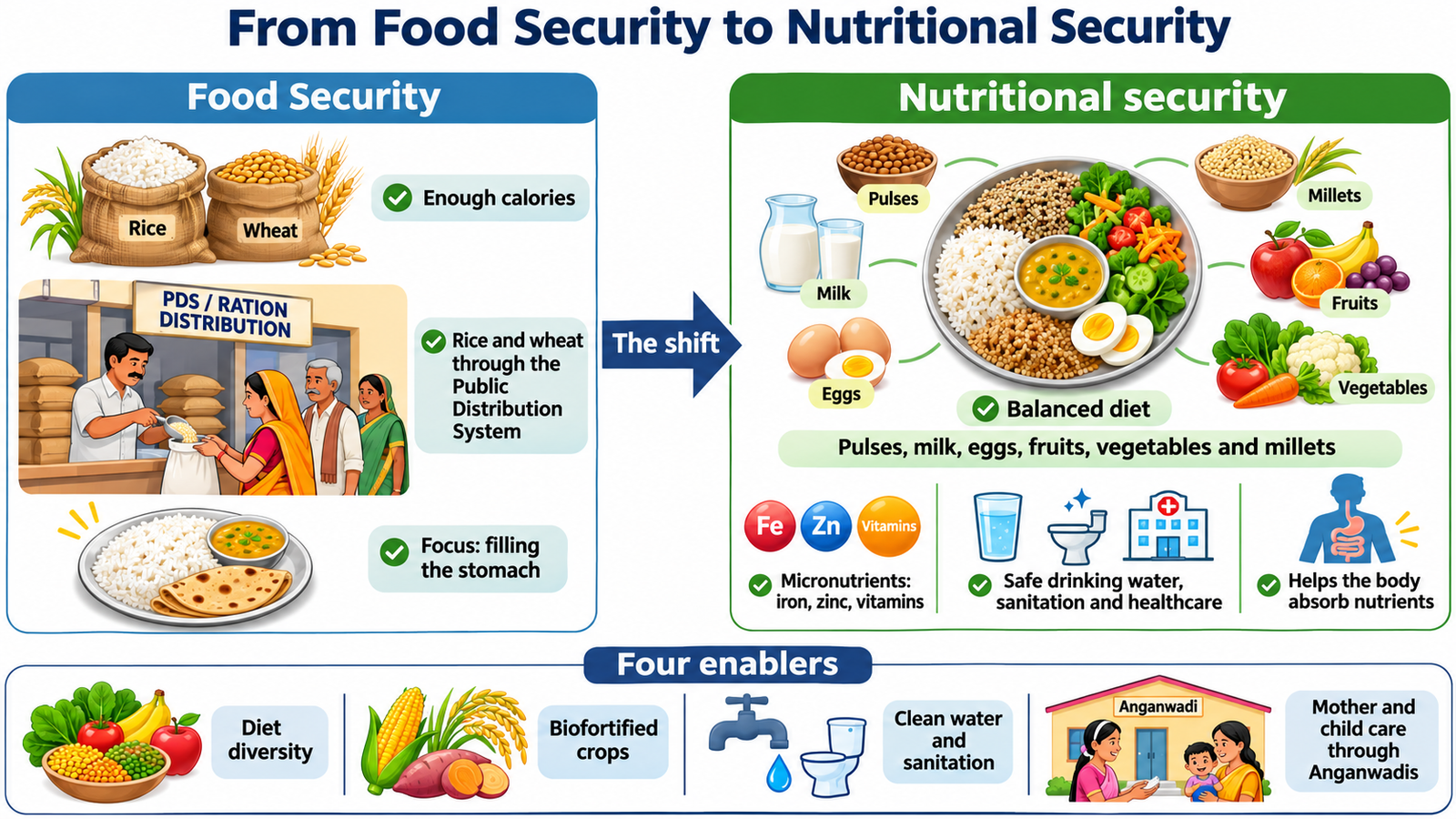
Food Security vs Nutritional Security
| Aspect | Food security | Nutritional security |
|---|---|---|
| Core question | Is there enough food to eat? | Does the body get, and absorb, the nutrients it needs? |
| Focus | Calories, mainly from cereals | Proteins, fats and micronutrients (iron, zinc, iodine, vitamins) |
| Inputs | Availability, access and affordability of grain | Diet diversity plus clean water, sanitation, healthcare and child care |
| Typical tool | Rice and wheat through the Public Distribution System | Pulses, milk, eggs, fruits, vegetables, millets and fortified or biofortified foods |
Why the Shift Is Needed
- Stubborn undernutrition: the latest NFHS-6 (2023-24) survey shows stunting among under-fives at 29.3%, wasting at 19.0% and underweight at 31.8% — better than before, but still high.
- Cereal-heavy safety net: grain entitlements solve hunger for calories but not for protein and micronutrients.
- Hidden hunger: shortages of iron, zinc, iodine and vitamins drive anaemia, weak immunity and poor learning.
- Narrow plates: low intake of pulses, fruits, vegetables and milk keeps diets unbalanced, especially in poorer households.
- Human capital: better nutrition in the first 1,000 days lifts cognition, schooling and lifetime productivity.
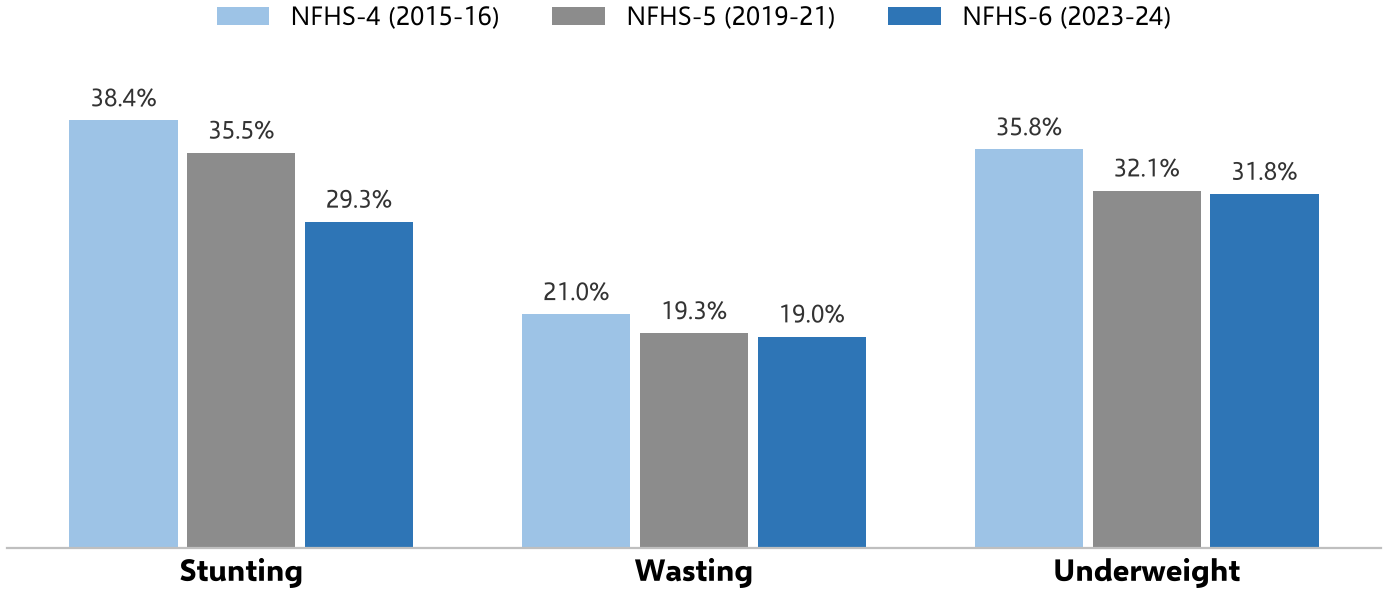
The chart shows the core paradox. Stunting, a marker of long-term deprivation, is falling, yet wasting and underweight have barely moved since NFHS-5. Calories alone cannot close this gap.
What Already Exists
| Programme | What it does |
|---|---|
| National Food Security Act (NFSA), 2013 | Legal right to subsidised grain for up to 75% of rural and 50% of urban population; special support for pregnant women, lactating mothers and children |
| PM Garib Kalyan Anna Yojana (PMGKAY) | Free grain to about 81.35 crore NFSA beneficiaries, extended for five years from 1 January 2024 |
| POSHAN Abhiyaan | Convergence, behaviour change and real-time monitoring of nutrition outcomes |
| Saksham Anganwadi and POSHAN 2.0 | Supplementary nutrition, early childhood care and upgraded Anganwadi centres |
| ICAR biofortification | Crop varieties enriched with iron, zinc and protein |
Roadblocks
- Cost of a healthy plate: pulses, dairy, fruits and vegetables stay out of reach for many poor families.
- Policy tilt to cereals: procurement and minimum support prices have long rewarded rice and wheat over diversification.
- Intergenerational cycle: undernourished mothers, poor breastfeeding and weak complementary feeding pass deprivation on to the next generation.
- Water and sanitation: unsafe water and repeated infections stop the body from absorbing nutrients, linking nutrition to Swachh Bharat.
- Silos: health, agriculture and nutrition schemes are often planned and monitored separately.
Way Forward
Diversify the PDS basket (pulses, millets) ➜ Promote biofortified seeds ➜ Strengthen Anganwadi feeding ➜
Link WASH and health ➜ Track outcomes, not grain moved
Bringing millets and pulses into the ration basket, paired with nutrition education, would turn a calorie programme into a nourishment programme.
📖 Read More: Health and Nutrition • Food Insecurity and Hunger • National Family Health Survey • National Food Security Act (NFSA), 2013
2. REACH Becomes First Indian NGO to Win Kochon Prize
(SOCIAL JUSTICE) (TH) Chennai-based REACH (Resource Group for Education and Advocacy for Community Health) has won the Kochon Prize 2026 for its work against tuberculosis (TB), becoming the first civil-society non-profit from India to receive the award. The prize was presented on 5 November 2026 at the Stop TB Partnership Board meeting in Bali, Indonesia.
About the Kochon Prize
| Feature | Details |
|---|---|
| Given by | Kochon Foundation (South Korea), in partnership with the Stop TB Partnership |
| Established | 2006, in memory of Chong-Kun Lee, founder of Chong Kun Dang Pharmaceutical Corporation |
| Reward | US$ 65,000 and a medal — the largest award devoted solely to TB |
| 2026 winners | REACH (India), Centre for Health Solutions (Kenya) and the Marshall Islands TB Control Program |
What REACH Does
REACH works on a people-centred model of TB care. It brings private clinics and pharmacies into the national TB response, helps patients get diagnosed early, and stands by them through treatment with counselling and stigma reduction.
Why It Matters
- India's burden: India carries roughly a quarter of the world's TB cases, as the WHO Global TB Report shows, making community partners vital.
- Private sector gap: many patients first visit private providers; linking them to public programmes prevents missed and late diagnoses.
- Civil society: the award underlines how NGOs complement public health systems in reaching the last mile, a theme in the social perspective on health.
📖 Read More: Major Human Diseases • Health: A Social Perspective
3. Chemicals Sector Eyes USD 1 Trillion by 2040
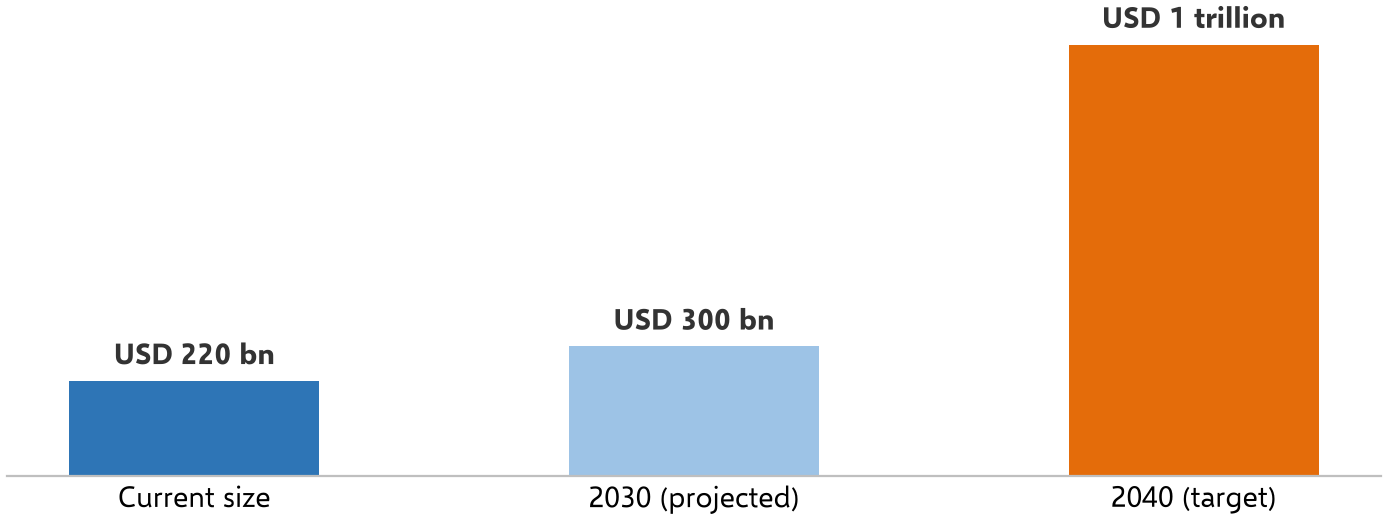
(ECONOMICS) (DD) At India Chem 2026 (14th edition, Mumbai, 22–24 October), held under the theme “Advantage Bharat: An Emerging Global Chemicals Hub”, industry and government set out the goal of turning India into a global chemicals manufacturing hub worth USD 1 trillion by 2040.
Where India Stands
| Indicator | Status |
|---|---|
| Global rank | 6th-largest chemicals producer in the world; 4th in Asia |
| Export strengths | 2nd-largest manufacturer and exporter of dyes; 3rd-largest exporter of agrochemicals |
| Industry base | About 13,000 large units and 4.45 lakh MSMEs |
| Output | Major chemicals and petrochemicals rose from 45.6 million tonnes (2015-16) to 58.6 million tonnes (2024-25) |
| FDI | 100% via the automatic route in most segments; inflows of ₹1,04,895 crore in 2014–26 against ₹45,240 crore in 2004–14 |
Why the Sector Matters
- Backbone industry: supplies inputs to pharma, textiles, automobiles, electronics, semiconductors and renewables.
- Strategic autonomy: home-grown intermediates cut exposure to supply shocks from concentrated foreign suppliers.
- China Plus One: global firms diversifying supply chains open space for Indian speciality chemicals.
- Energy transition: battery chemicals and speciality polymers feed electric mobility and solar manufacturing.
- Farm output: crop-protection chemicals cut pre-harvest losses, while farmer training curbs residues — see the pesticide regulatory regime.
Key Government Initiatives
| Initiative | Key features |
|---|---|
| PCPIRs (policy of 2007) | Integrated regions of about 250 sq km, around 40% for processing; operational at Dahej (Gujarat), Visakhapatnam–Kakinada (Andhra Pradesh) and Paradeep (Odisha) |
| BHAVYA Rasayan (approved July 2026) | Three chemical parks of at least 2,000 acres each; up to ₹1,000 crore central grant per park; outlay ₹3,030 crore for 2026-27 to 2030-31 |
| Plastic Parks | Centre funds up to 50% of project cost, capped at ₹40 crore; 10 parks approved |
| RDI Scheme | ₹1 lakh crore corpus for private R&D; advanced chemicals and materials added from 8 October 2026 |
| CIPET | 51 centres for skilling in polymers and plastics, three focused on plastic waste management |
Structural Bottlenecks
- Feedstock dependence: heavy reliance on imported crude and naphtha keeps the chemicals trade in deficit.
- Low R&D: firms stay focused on bulk commodity chemicals instead of high-value speciality grades.
- Weak clusters: poor port storage, pipelines and effluent treatment raise logistics costs.
- Clearance delays: long environmental approvals deter greenfield investment; safety lapses recall industrial and chemical disasters.
📖 Read More: Petrochemical Industry • Schemes under Ministry of Chemicals and Fertilisers • Make in India
4. BOB-NOR Links Ocean Science to Fisheries
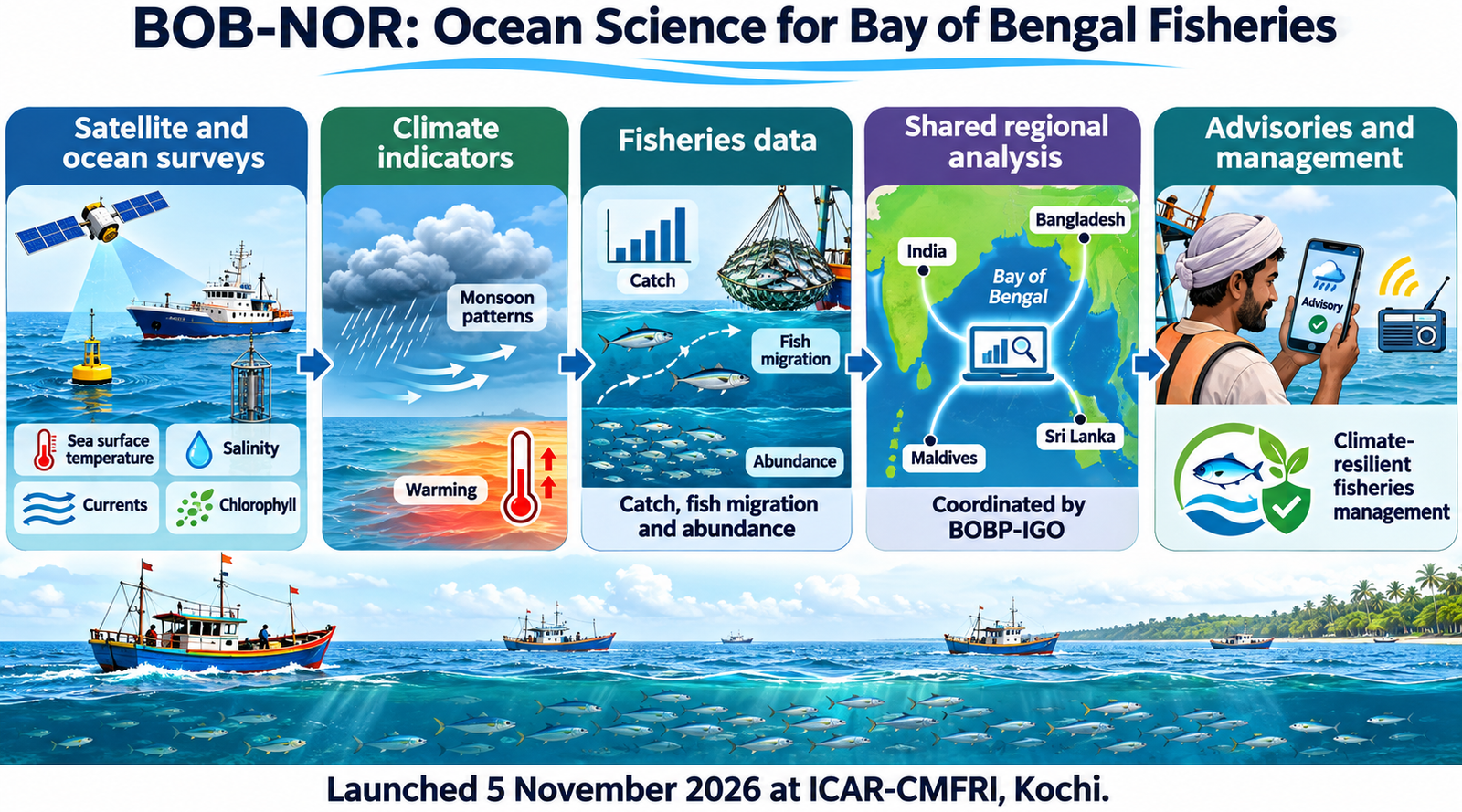
(ECONOMICS) (DD) India, Sri Lanka, Bangladesh and the Maldives have launched the Bay of Bengal Network of Ocean Researchers for Fisheries (BOB-NOR) at ICAR–Central Marine Fisheries Research Institute (CMFRI), Kochi, on 5 November 2026. The network, coordinated by the Bay of Bengal Programme Inter-Governmental Organisation (BOBP-IGO), will feed ocean and climate data into fisheries management.
Why a Network Was Needed
Fish do not respect maritime boundaries. Warming seas, shifting monsoons and changing salinity are moving fish stocks across the Bay of Bengal, yet most management still relies on past catch records. BOB-NOR aims to predict change before it hits fishers.
Key Objectives
- Climate-resilient fisheries: help management systems adapt to climate-driven changes in marine ecosystems.
- Data integration: combine satellite observations, oceanographic surveys and catch data for evidence-based decisions.
- Tracking fish: study how sea temperature, salinity, ocean currents and productivity alter fish distribution, migration and abundance.
- Predictive management: move beyond catch-based assessments to forward-looking, climate-informed advisories.
- Regional cooperation: pool scientists and institutions from the four member countries.
About BOBP-IGO
| Feature | Details |
|---|---|
| Nature | Regional fisheries advisory body and think tank on transboundary fisheries issues |
| Origin | Set up in 2003, succeeding the FAO-supported Bay of Bengal Programme |
| Headquarters | Chennai, India |
| Members | Bangladesh, India, Maldives and Sri Lanka |
| Focus | Sustainable small-scale fisheries, capacity building and regional cooperation |
Significance for India
- Livelihoods: coastal fishing communities gain early warnings on where fish are likely to move — a boost to the fishing industry.
- Blue economy: complements the Blue Revolution and PMMSY.
- Neighbourhood diplomacy: science-led cooperation in the Bay supports regional groupings such as BIMSTEC.
📖 Read More: Fishing Industry • Ocean Salinity • BIMSTEC
5. Asian Parties Adopt the Seoul Declaration
(INTERNATIONAL RELATIONS) (TH) The International Conference of Asian Political Parties (ICAPP) adopted the Seoul Declaration at its 13th General Assembly in Seoul, South Korea (4–7 November 2026). Amid rising geopolitical tension, Asian parties stressed sovereignty, territorial integrity and respect for the UN Charter, and rejected unilateral actions.
Key Messages of the Declaration
- Trust deficit: rebuilding trust in a changing world needs respect for international law and responsible national leadership.
- Institutions: calls for stronger and more inclusive national and international institutions.
- Sovereignty: reaffirms territorial integrity and peaceful settlement of disputes under the United Nations framework.
- Inclusive dialogue: reaffirms ICAPP as a platform for parties of all ideologies, ruling and opposition alike.
About ICAPP
| Feature | Details |
|---|---|
| Founded | 2000; first General Assembly held in Manila, Philippines |
| Nature | A forum of political parties, not an inter-governmental organisation |
| Secretariat | Seoul, Republic of Korea |
| Aim | Exchanges among parties across ideologies, mutual trust among Asian states and regional peace |
| 13th Assembly hosts | Co-hosted by South Korea’s ruling Democratic Party and the main opposition People Power Party |
Why It Matters for India
Party-to-party diplomacy adds a track-two layer to state ties. Forums such as ICAPP let Indian parties engage Asian counterparts on rules-based order and connectivity, complementing the India–South Korea partnership.
📖 Read More: India and South Korea Relations • The United Nations
6. RAHAT MITRA: First India–Myanmar HADR Exercise
(INTERNATIONAL RELATIONS) (DD) India and Myanmar held their first bilateral Tri-Services Humanitarian Assistance and Disaster Relief (HADR) exercise, ‘RAHAT MITRA’, in Chennai, concluding on 6 November 2026. More than 300 personnel from the Army, Navy and Air Force of both countries took part under the aegis of the Indian Navy.
Exercise at a Glance
| Feature | Details |
|---|---|
| Type | Bilateral, tri-service HADR exercise (first edition) |
| Venue | Chennai, Tamil Nadu |
| Lead service | Indian Navy |
| Theme | “Together for Humanity, Stronger through Partnership” |
Objectives
- Interoperability: sharpen joint planning and coordination for disaster response.
- Shared experience: exchange lessons from past relief operations.
- Preparedness: build a collective response to cyclones, earthquakes and floods common to the Bay of Bengal rim.
Strategic Significance
Myanmar is India's land gateway to South-East Asia and a key partner in the Act East outlook. The drill reflects India's Neighbourhood First policy and the MAHASAGAR vision, which casts India as a first responder in the region, as in past cyclone relief to Myanmar.
📖 Read More: India and Myanmar • International Cooperation on Disaster Management
7. Pralay Quasi-Ballistic Missile Clears User Trial
(SCIENCE AND TECHNOLOGY) (PIB) The Defence Research and Development Organisation (DRDO) successfully flight-tested the indigenously developed quasi-ballistic missile Pralay from Dr APJ Abdul Kalam Island off the Odisha coast on 5 November 2026. Conducted as a user evaluation trial, the test met all objectives, making induction of the system imminent.
What Is a Quasi-Ballistic Missile?
A ballistic missile follows a predictable arc once its engine burns out. A quasi-ballistic missile flies a flatter, lower path and can manoeuvre during flight, so air-defence systems find it much harder to track and intercept.
Key Features of Pralay
| Feature | Details |
|---|---|
| Type | Surface-to-surface, short-range, quasi-ballistic; solid-propellant |
| Developer | DRDO, with Research Centre Imarat (RCI), Hyderabad as lead laboratory |
| Range | 150–500 km |
| Payload | Conventional warheads of roughly 350–1,000 kg |
| Targets | Radar and communication sites, command centres and forward airfields |
| Production partners | Bharat Dynamics Limited and Bharat Electronics Limited |
| First flight test | December 2021 |
Significance
- Conventional deterrence: gives the Army and Air Force a precise, non-nuclear deep-strike option.
- Hard to intercept: manoeuvring flight complicates enemy missile defence.
- Self-reliance: an indigenous design produced by Indian industry strengthens defence Make in India.
📖 Read More: Missile Technology
8. Navy Receives Shallow-Water Warship ‘Amini’
(INTERNAL SECURITY) (DD) The Indian Navy has taken delivery of ‘Amini’, an Anti-Submarine Warfare Shallow Water Craft (ASW SWC) built by Garden Reach Shipbuilders and Engineers (GRSE), Kolkata. With over 80% indigenous content, it is designed to hunt submarines in coastal waters, conduct surveillance and lay mines.
Know the Ship
| Feature | Details |
|---|---|
| Class | Arnala class ASW SWC; built to Indian Register of Shipping (IRS) rules |
| Place in series | 4th of the eight ships ordered from GRSE in April 2019 |
| Size | About 77 m long, ~900 tonnes; top speed 25 knots |
| Propulsion | Three marine diesel engines driving waterjets — among the largest waterjet-propelled warships of the Navy |
| Weapons and sensors | Lightweight torpedoes, indigenous anti-submarine rockets, mine-laying capability and sonars |
| Name | After Amini Island, Lakshadweep; revives the name of the earlier INS Amini, a Petya-class corvette decommissioned in 2002 |
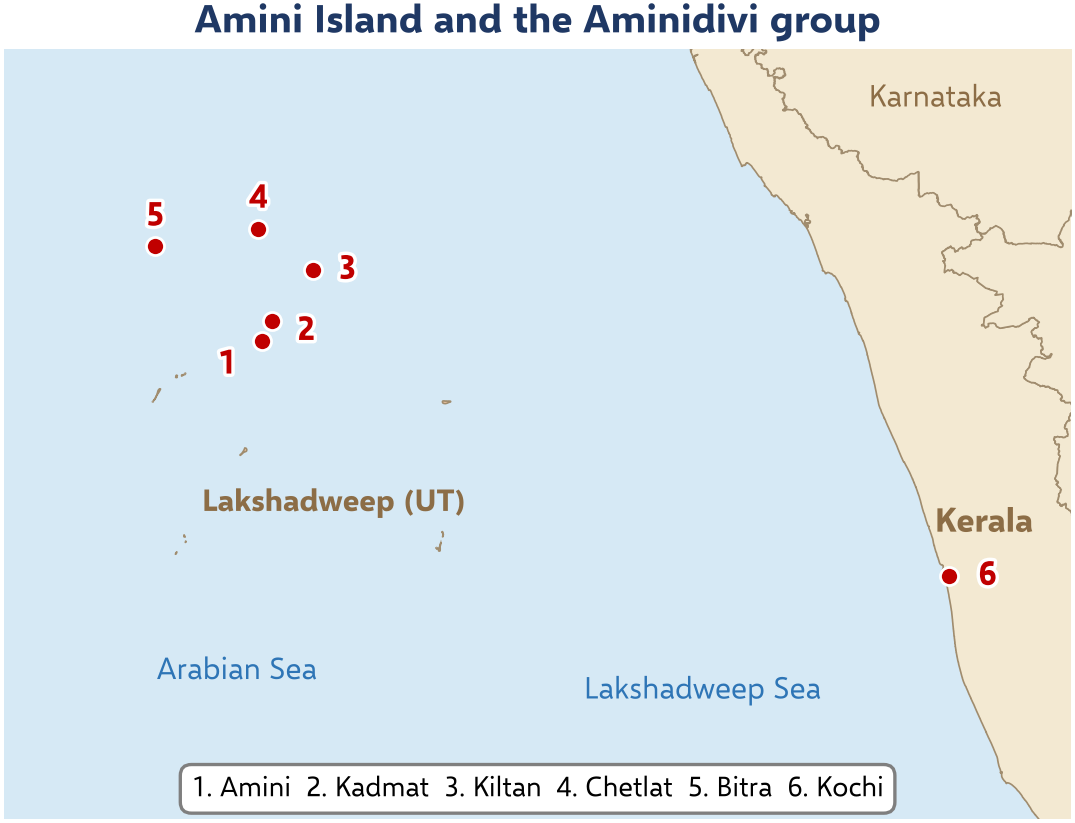
Amini lies in the Aminidivi group, the northern cluster of Lakshadweep, about 400 km west of Kochi. Its inhabited islands are Amini, Kadmat, Kiltan, Chetlat and Bitra.
Why Shallow-Water ASW Matters
- Littoral threat: coastal waters are noisy and shallow, making submarines hard to detect with big ships.
- Replacing old craft: the class replaces the ageing Abhay-class corvettes; 16 such craft are planned across two shipyards.
- Coastal security: strengthens the layered coastal and maritime security framework and sea-lane protection in the Indian Ocean.
📖 Read More: Naval Defence • Coastal and Maritime Security • Development of Lakshadweep Islands
9. Ranivas Mound Gets National Importance Tag
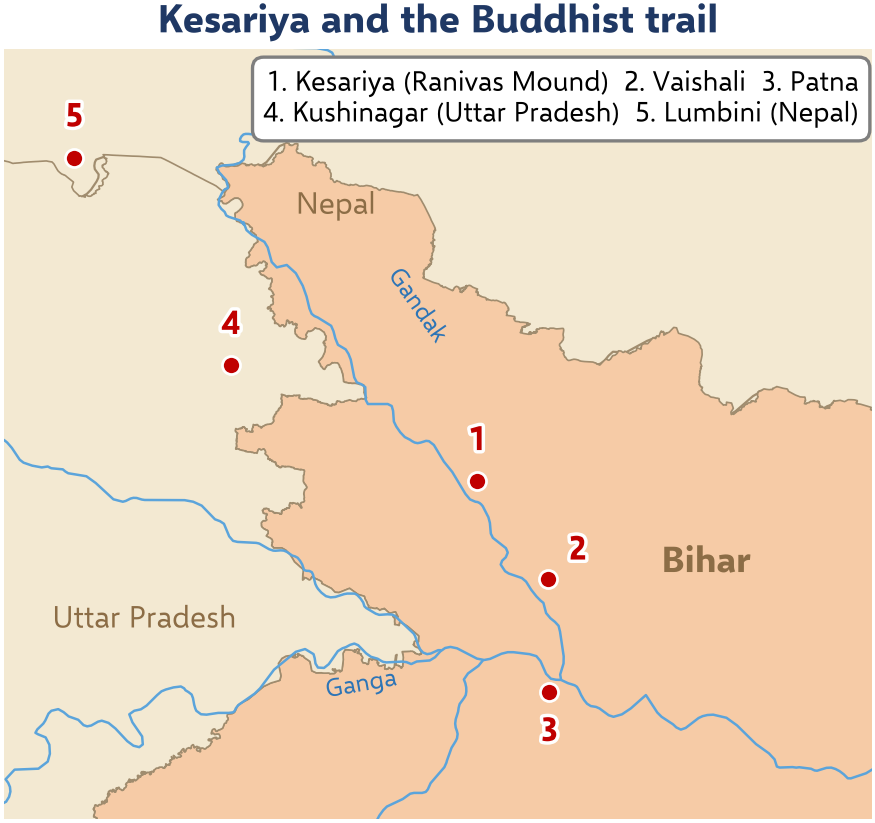
(HISTORY) (TH) The Ministry of Culture has declared Ranivas (Raniwas) Mound at Kesariya, East Champaran (Bihar), an archaeological site of national importance under the Ancient Monuments and Archaeological Sites and Remains (AMASR) Act, 1958. The site lies close to the famous Kesariya Buddhist stupa.
The Site and Its Significance
- Buddhist link: early explorations here found a temple with a colossal Buddha image and the remains of a monastery, tying it to the stupa complex.
- Kesariya stupa: among the tallest Buddhist stupas, about 32 m high; tradition links it to the alms bowl the Buddha gave the Licchavis of Vaishali on his last journey to Kushinagar.
- Protection: central protection allows systematic excavation and guards the 1.63-acre plot against encroachment.
How a Site Becomes Nationally Important
ASI proposal ➜ Preliminary notice (8 Jun 2026) ➜ 2-month objection window ➜
Objections weighed ➜ Final declaration
The Centre issued its preliminary notification under Section 4 of the AMASR Act on 8 June 2026, inviting objections for two months before the final declaration.
AMASR Act, 1958 at a Glance
| Provision | Details |
|---|---|
| Purpose | Preserve monuments and sites of national importance; regulate excavations; protect sculptures and antiquities |
| Ancient monument | Structure, inscription, cave or object of historical or archaeological interest at least 100 years old |
| Protected limits | 100 m around a monument is prohibited for construction; the next 200 m is a regulated area |
| Administered by | Archaeological Survey of India (ASI), under the Ministry of Culture |
Founded in 1861 with Alexander Cunningham as its first Director-General, the ASI today protects more than 3,600 centrally protected monuments and sites.
📖 Read More: Buddhist Architecture • Archaeological Survey of India (ASI) • Life of Gautama Buddha • Mahajanapadas