
Chemical Coordination and Integration in Humans
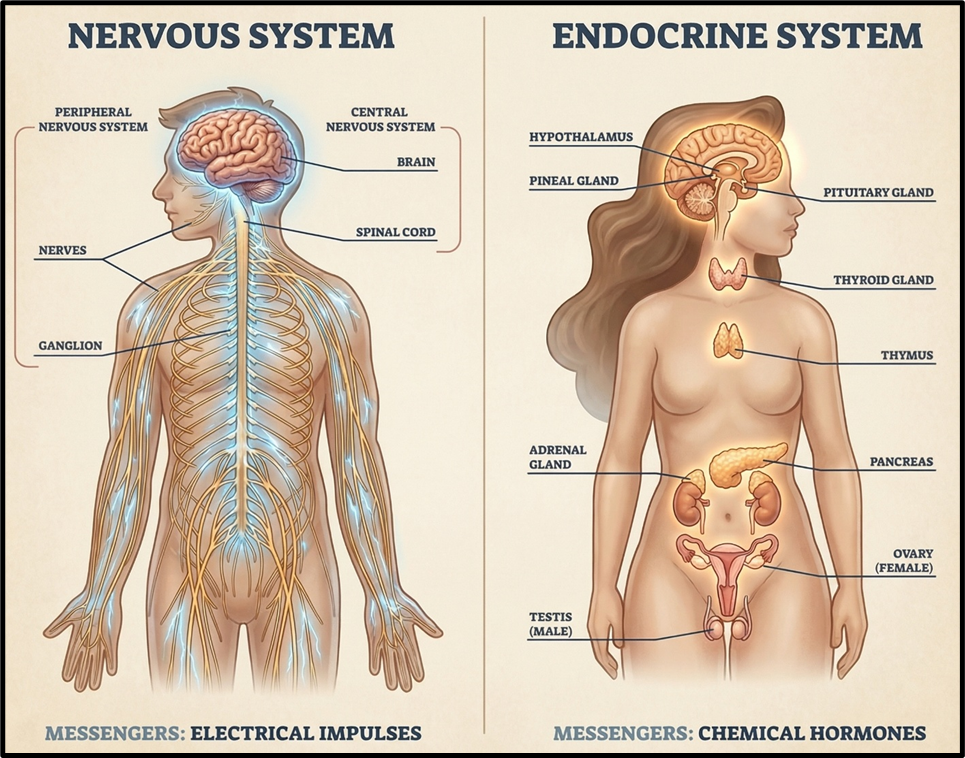
In the human body, not every cell is directly connected through nerve fibres. So, how do distant organs communicate?
This is where chemical coordination comes into play. Hormones are released into the bloodstream and travel to target cells.
- Compared to neural coordination:
- Slower in action
- But long-lasting and widespread effects
Think of it like:
- Nervous system → instant messaging ⚡
- Endocrine system → broadcast message with lasting impact 📡
Endocrine Glands and Hormones
Endocrine glands are called ductless glands because:
- They do not have ducts
- Their secretions (hormones) are released directly into blood
What are Hormones?
- Non-nutrient chemicals, Act as intercellular messengers, Produced in very small quantities. Yet, they have powerful regulatory roles
Modern understanding has expanded this definition:
- Not only traditional glands, but even organs like heart, kidney, liver, gastrointestinal tract also produce hormone-like signalling molecules.
Evolutionary Perspective
- Invertebrates → Simple endocrine system, fewer hormones
- Vertebrates (Humans) → Highly complex, multiple hormones ensuring fine regulation
Human Endocrine System
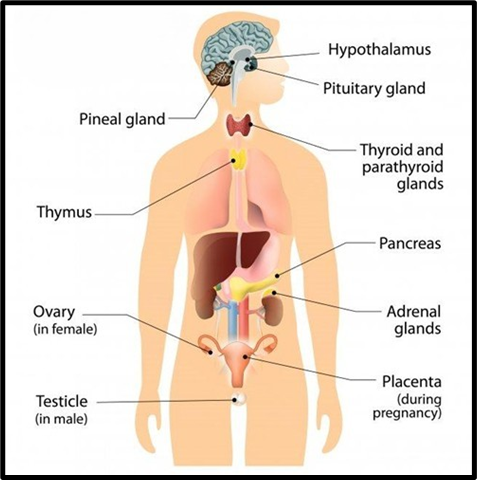
The endocrine system consists of:
- Dedicated glands: Pituitary, Pineal, Thyroid, Adrenal, Pancreas, Parathyroid, Thymus, Gonads
- Other hormone-secreting organs: Liver, kidney, heart, gastrointestinal tract
This system ensures → Growth, Metabolism, Reproduction, Homeostasis
The Hypothalamus
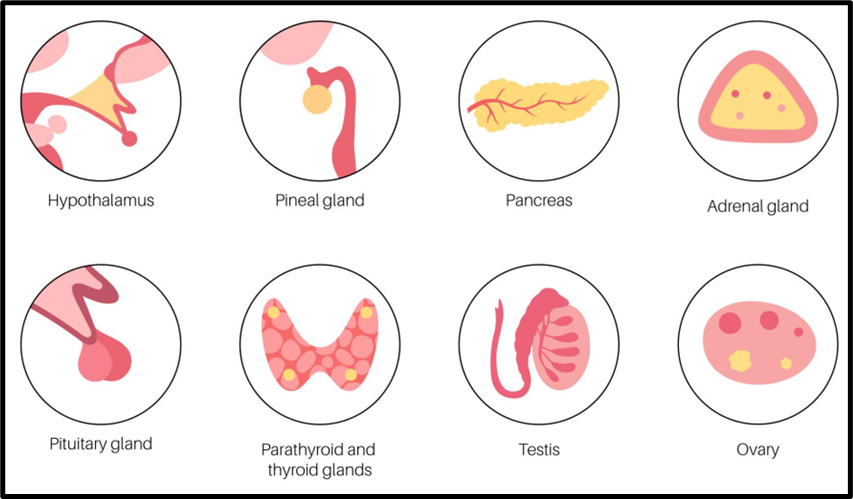
Located in the forebrain, the hypothalamus acts as a bridge between the nervous and endocrine systems.
It contains neurosecretory cells (nuclei) that produce hormones.
Two Types of Hormones
- Releasing Hormones
- Stimulate pituitary secretion
- Example: Gonadotropin-Releasing Hormone (GnRH)
- Inhibiting Hormones
- Suppress pituitary activity
- Example: Somatostatin (inhibits Growth Hormone)
👉 In simple terms:
The hypothalamus is like a controller, deciding when to start or stop hormone production
The Pituitary Gland: The Master Gland
The pituitary gland:
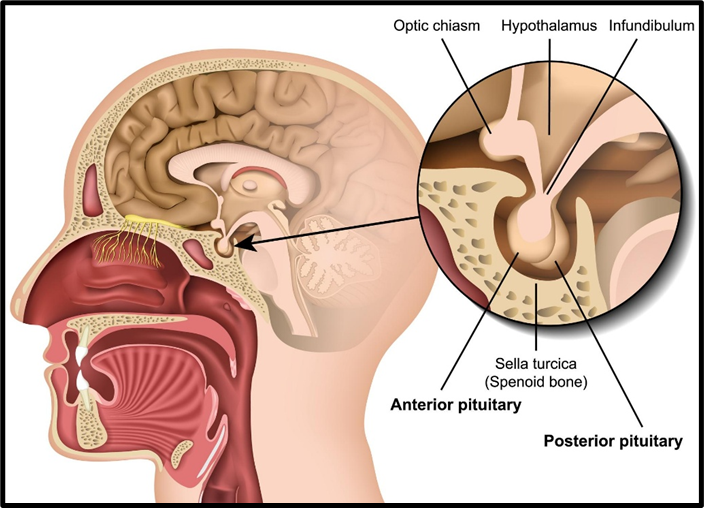
- Located in sella turcica (a bony cavity of skull)
- Attached to hypothalamus
- Divided into:
- Adenohypophysis (Anterior Pituitary)
- Neurohypophysis (Posterior Pituitary)
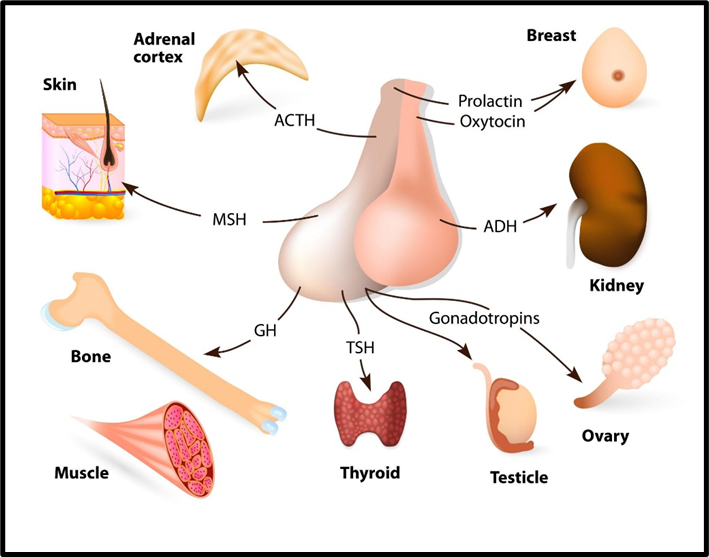
Hormones of Adenohypophysis (Anterior Pituitary)
| Hormone | Function | Key Insight |
| Growth Hormone (GH) | Body growth | Excess → Gigantism; Deficiency → Dwarfism |
| Prolactin (PRL) | Mammary gland growth & milk production | Important for lactation |
| TSH | Stimulates thyroid gland | Controls metabolism indirectly |
| ACTH | Stimulates adrenal cortex | Releases stress hormones |
| LH | Ovulation & testosterone production | Reproductive control |
| FSH | Follicle growth & spermatogenesis | Gamete formation |
| MSH | Skin pigmentation | Acts on melanocytes |
TSH: Thyroid Stimulating Hormone; ACTH: Adrenocorticotropic Hormone; LH: Luteinizing Hormone; FSH: Follicle-Stimulating Hormone; MSH: Melanocyte Stimulating Hormone
👉 Conceptually: Anterior pituitary = “Executive gland” controlling other endocrine glands.
Hormones of Neurohypophysis (Posterior Pituitary)
| Hormone | Function | Clinical Relevance |
| Oxytocin | Uterine contraction & milk ejection | Important in childbirth |
| Vasopressin (ADH) | Water reabsorption in kidneys | Deficiency → Diabetes Insipidus |
👉 ADH ensures → Water conservation, Prevents dehydration
Without it → Excessive urination + water loss.
The Pineal Gland: The Biological Clock
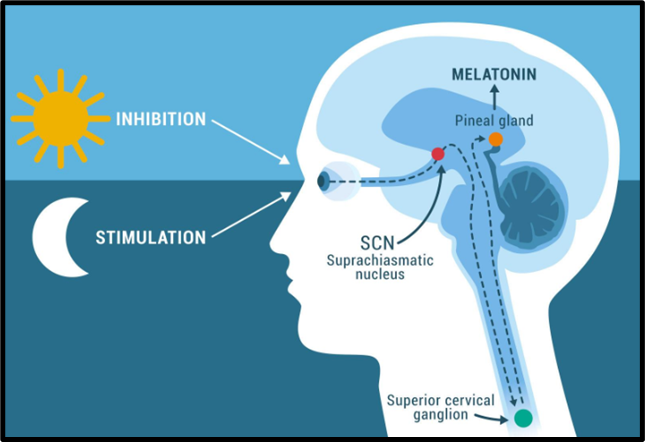
Located at the back of the forebrain, the pineal gland secretes melatonin.
Functions of Melatonin
- Regulates 24-hour (diurnal/circadian rhythm)
- Controls → Sleep–wake cycle, Body temperature, Metabolism, Menstrual cycle, Immunity
👉 In essence:
Pineal gland acts as the body’s internal clock, synchronising biological activities with day–night cycles.
Thyroid Gland: The Metabolic Regulator
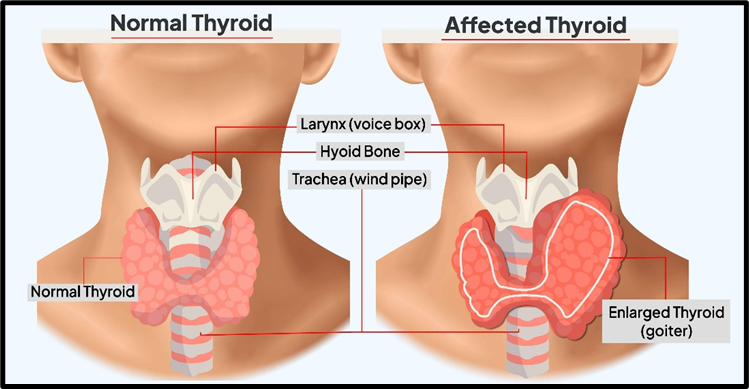
The thyroid gland is a butterfly-shaped gland located in the front of the neck. It produces:
- Thyroxine (T4)
- Triiodothyronine (T3)
- Thyrocalcitonin (TCT)
Functions
- Regulates metabolism (Basal Metabolic Rate)
- Supports RBC formation
- Maintains water and electrolyte balance
- TCT regulates blood calcium levels
A key point: Iodine is essential for thyroid hormone synthesis. Its deficiency leads to goitre (enlargement of thyroid).
Thyroid Disorders
- Hyperthyroidism → Excess hormone
- Symptoms: weight loss, anxiety, rapid heartbeat
- Hypothyroidism → Deficiency
- Symptoms: fatigue, weight gain, cold intolerance
- In infants → cretinism (growth + mental retardation)
- Graves’ Disease
- Enlarged thyroid + bulging eyes (exophthalmos)
👉 Conceptual takeaway:
Thyroid = “metabolic accelerator” of the body
Parathyroid Glands: Calcium Balance Controllers
These are four tiny glands located behind the thyroid.
They secrete Parathyroid Hormone (PTH) → a hypercalcemic hormone.
Functions of PTH
- Increases blood calcium by:
- Bone resorption
- Kidney reabsorption of calcium
- Enhanced intestinal absorption
👉 In short: PTH = “Calcium raiser”
Thymus: The Immunity Trainer
The thymus gland, located in the chest, plays a crucial role in immunity.
- Secretes thymosins
- Helps in T-lymphocyte maturation
Key Insight
- Active in childhood
- Degenerates with age → reduced immunity
👉 Thymus = “training school of immune cells”
Adrenal Glands: Stress Managers of the Body
Located on top of kidneys, adrenal glands have two parts:
1. Adrenal Medulla
- Hormones: Adrenaline & Noradrenaline
- Function: Fight or Flight Response
- ↑ Heart rate, ↑ Blood glucose, ↑ Alertness
2. Adrenal Cortex
- Glucocorticoids (Cortisol) → metabolism, anti-inflammatory
- Mineralocorticoids (Aldosterone) → electrolyte balance
- Androgens → secondary sexual traits
Disorders
- Addison’s disease → low hormone production
- Cushing’s syndrome → excess cortisol
👉 Adrenal gland = “emergency response system”
Pancreas: The Blood Sugar Regulator
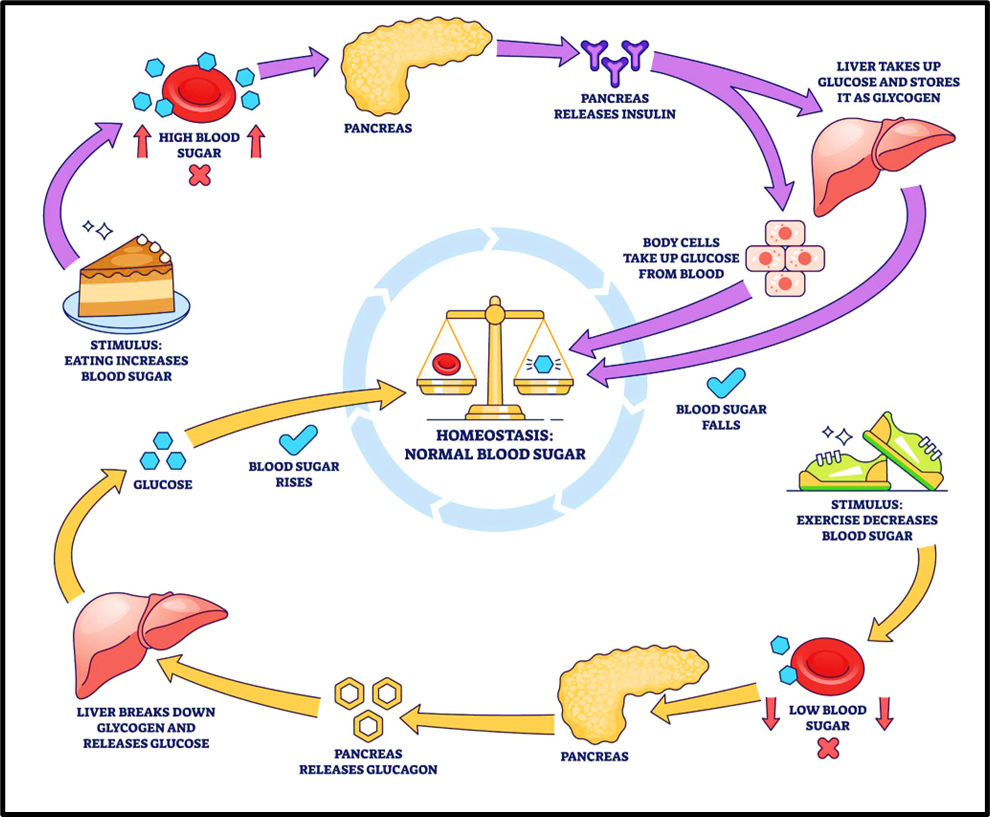
The pancreas is a mixed gland:
- Exocrine (digestive enzymes)
- Endocrine (Islets of Langerhans)
Hormones
- Glucagon (α-cells) → increases blood glucose
- Insulin (β-cells) → decreases blood glucose
Mechanism
- Glucagon → glycogenolysis + gluconeogenesis
- Insulin → glycogenesis + glucose uptake
If imbalance persists → Diabetes Mellitus
👉 Pancreas = “glucose balance regulator”
Testis (Male)
The testis, located in the scrotal sac, performs a dual role:
- Primary sex organ (reproduction)
- Endocrine gland (hormone secretion)
Hormone Produced
- Androgens, mainly testosterone, secreted by Leydig (interstitial) cells
| Aspect | Role of Androgen (Testosterone) |
| Secondary Sexual Characteristics | Promotes facial hair growth, deepening of voice, and increased muscle growth. |
| Reproductive Function | Regulates development and function of male reproductive organs; stimulates sperm production; regulates libido. |
| Bone and Muscle Health | Helps maintain bone density and muscle mass. |
👉 In essence: Testis = “driver of male identity and reproductive capacity”
Ovary (Female)
The ovaries, located on either side of the uterus, also perform dual functions:
| Aspect | Description |
| Egg Production | Produces one ovum (egg cell) during each menstrual cycle. |
| Hormone Production | Produces two steroid hormones: estrogen and progesterone. |
Hormonal Functions
| Hormone | Functions |
| Estrogen | Promotes growth of female secondary sex organs; development of ovarian follicles; development of secondary sexual characteristics (e.g., high-pitched voice); growth of mammary glands |
| Progesterone | Supports pregnancy; stimulates formation of milk-producing alveoli; aids in milk secretion |
Hormones from Other Organs
| Organ/System | Hormone | Function |
| Heart | Atrial Natriuretic Factor (ANF) | Released during high blood pressure; increases sodium and water excretion; relaxes blood vessels, thereby lowering blood pressure |
| Kidneys | Erythropoietin (EPO) | Stimulates red blood cell production in response to low oxygen levels |
| Gastrointestinal Tract | Gastrin | Stimulates secretion of gastric acid and pepsinogen for digestion |
| Secretin | Stimulates pancreas to release bicarbonate ions to neutralise stomach acid | |
| Cholecystokinin (CCK) | Stimulates release of digestive enzymes from pancreas and bile from gallbladder | |
| Gastric Inhibitory Peptide (GIP) | Slows gastric emptying and stimulates insulin release | |
| Other Tissues | Growth Factors | Regulate cell growth, repair, and regeneration in tissues like skin, bones, and muscles |