
Mural Paintings
Now we move from rock shelters to walls, from the first human scratch on stone to sophisticated visual storytelling integrated with architecture. This is the world of Mural Paintings—where Indian art attains classical maturity.
I want you to see murals not as isolated paintings, but as part of a sacred space, meant to be seen, felt, and experienced. Excited? So, Let’s Begin 😊.
What are Mural Paintings?
Murals are large-scale paintings executed directly on the walls of solid structures such as → Rock-cut caves, Temples, Palaces
In India, the tradition of mural painting evolved from around the 2nd century BCE, building upon earlier artistic practices but reaching a far higher level of technical skill, narrative complexity, and aesthetic refinement.
Classical and Regional Spread of Indian Murals
Classical Core Regions
The finest examples of classical Indian mural tradition are found at → Ajanta Caves, Ellora Caves, Bagh Caves, Badami Caves
These sites represent the North Indian and Deccan classical mural tradition at its peak.
Southern Penetration
The mural tradition also spread deeply into South India, visible at → Sittanavasal Cave, Kanchipuram, Malayadipatti, Tirunalaipuram, Kerala
This shows that mural painting was not regionally confined but pan-Indian in spirit, adapting to local religious and cultural contexts.
Features of Indian Mural Painting
A. Integration with Architecture
One of the defining features of Indian murals is that they are inseparable from architecture.
- Painted on → Cave walls, Pillars, Ceilings
- The surface, scale, and placement were decided in harmony with the structure
👉 Art here is not an add-on; it is architectural storytelling.
B. Themes
Indian murals are deeply narrative and symbolic.
They primarily depict:
- Religious and mythological themes
- Gods and goddesses
- Stories from → Ramayana, Mahabharata
- Episodes from Buddhist and Jain texts
These murals served both didactic (teaching) and devotional purposes.
C. Colour Palette
Indian mural paintings are known for their rich, bold, and vibrant colours, which create visually powerful compositions.
Principal colours used:
- Red ochre (Dhaturaga)
- Vivid red (Kumkum / Sindura)
- Yellow ochre (Haritala)
- Indigo (Blue)
- Lapis lazuli (Blue)
- Lampblack (Kajjala)
- Chalk white (Khadi Mitti)
- Green
Source of colours
- All colours were locally sourced
- Except lapis lazuli, which was imported from Afghanistan
👉 This reflects trade connections and resource awareness.
Major Mural Sites in India
Indian mural traditions evolved across different regions and periods, reflecting religious beliefs, courtly life, and social practices, and together they represent the continuity and regional diversification of India’s painting heritage:
- Ajanta Cave Paintings – Masterpieces of Buddhist mural art depicting the life of the Buddha and Jataka tales with exceptional naturalism and emotional depth.
- Ellora Cave Paintings – Later murals reflecting a synthesis of Buddhist, Hindu, and Jain themes, subordinate to monumental rock-cut sculpture.
- Bagh Cave Paintings – Gupta-period murals closely resembling Ajanta, known for their rhythmic movement, dance scenes, and courtly elegance.
- Ravanachhaya Rock Paintings – One of India’s earliest surviving non-religious murals, portraying a royal procession with inscriptional evidence.
- Sitabenga and Jogimara Cave Paintings – Among the oldest painted caves in India, notable for secular themes, early inscriptions, and theatrical associations.
- Badami Cave Paintings – Early Chalukyan murals extending the Ajanta tradition into South India, combining court life with religious themes.
- Pallava Paintings – Early South Indian temple murals marked by royal patronage, graceful figures, and Shaiva iconography.
- Sittanavasal Paintings – Delicate Jain murals famed for their lotus-pond theme and refined fresco-secco technique.
- Armamalai Cave Paintings – Jain murals closely allied to Sittanavasal, illustrating Jain cosmology and guardian deities.
- Chola Murals – Grand Shaiva murals integrating royal portraits with divine imagery, reflecting imperial Chola ideology.
- Vijayanagara Murals – Vibrant, narrative-rich paintings depicting religion, court life, and cultural syncretism of a cosmopolitan empire.
- Nayaka Paintings – Post-Vijayanagara murals continuing earlier traditions with regional storytelling and epic narratives.
- Murals of Kerala – Distinctive temple and palace murals characterised by bold colours, mythological themes, and Kathakali influence.
The most celebrated mural sites include:
- Ajanta and Ellora (Maharashtra)
- Bagh (Madhya Pradesh)
- Panamalai and Sittanavasal (Tamil Nadu)
Most of these are → Natural caves, Or rock-cut chambers
In addition, palaces and temples across India also preserve murals from different historical periods.
Ajanta Cave Paintings
Location
- Located on the River Waghur
- In the Aurangabad district, now known as Chhatrapati Sambhaji Nagar district, Maharashtra
Historical and Architectural Significance
The Ajanta Caves consist of:
- 30 rock-cut Buddhist caves
- Include Chaityas (prayer halls) and Viharas (monasteries)
- Chronology: 2nd century BCE to 7th century CE
The paintings cover → Walls, Pillars, Ceilings
They are often described as “the finest surviving examples of Indian art, particularly painting.”
Discovery
The caves were forgotten for centuries and rediscovered accidentally in 1819 by John Smith, a British officer, during a tiger hunt.
Features of Ajanta Paintings
A. Technique – Tempera (Fresco-Secco)
Ajanta paintings are not true frescoes.
- True fresco: painting on wet plaster
- Ajanta method: Tempera, also called → Dry fresco, Fresco-secco
In this method:
- Painting is done after the plaster dries
- Pigments are mixed with water-soluble binders, such as egg yolk
👉 This allowed precision and permanence.
B. Colours
Ajanta painters used a limited but effective palette, consistent with the Shilpa Sutra tradition.
Five principal colours:
- Red Ochre (Geru)
- Yellow Ochre (Pilimitti)
- Black (Kajal)
- Blue (Lapis lazuli)
- White (Lime / Khadia)
A striking feature is the variation in skin tones, indicating awareness of diverse human complexions.
C. Themes
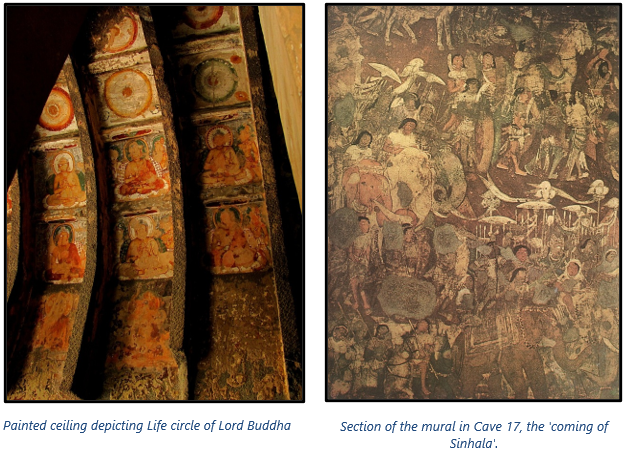
Ajanta murals are purely Buddhist in content, depicting → Life of Lord Buddha, Jataka tales, Avadanas
They are celebrated for:
- Rich detailing of clothing and jewellery
- Realistic portrayal of nature, animals, and birds
- Scenes of court life, common people, and monks
D. Style
- Sharp, confident lines
- Strong sense of naturalism
- Body colour merges smoothly with outlines
- Creates a three-dimensional volume effect
👉 Figures appear alive, not flat.
E. Period and Religious Phases
Most paintings belong to → Gupta period, Vakataka period (major share)
They represent two Buddhist phases:
- Hinayana phase – Buddha shown through symbols
- Mahayana phase – Buddha depicted in human form
Important Ajanta Paintings
Bodhisattva Avalokitesvara (Padmapani)
- Found in Cave No. 1
- Dates to 5th century CE
- Depicts Padmapani Bodhisattva
- Features:
- Tribhanga posture
- Blue lotus in hand
- Elongated, downward-looking eyes
- Expression of calm compassion
- Vajrapani Bodhisattva is painted beside him as a shrine guardian
Apsara
- Depicts a female celestial figure
- Dark brown complexion
- Holding a musical instrument resembling a cymbal
Decorative Elements: Ceilings richly decorated with → Human figures, Animals, Birds, Floral motifs along with repeated images of the Buddha.
For further visual understanding of the Ajanta paintings, students may visit the official page of the Ministry of Culture, where high-quality images and short videos provide valuable visual insight into the themes, techniques, and artistic excellence of Ajanta murals.
Ellora Cave Paintings
Location and Nomenclature
The Ellora Caves, also known as Verul Leni or Elura (a shortened form of the ancient name Elloorpura), are located in the Charanandri Hills, in the Aurangabad district of Maharashtra.
Historical and Religious Significance
Ellora represents a rare civilisational harmony.
- The cave complex dates from the 7th century CE onwards
- Out of more than 100 caves, only 34 are accessible
- These belong to → Hindu caves – 17, Buddhist caves – 12, Jain caves – 5
This makes Ellora a living testimony to religious coexistence.
Dynastic patronage
- Hindu and Buddhist caves: Built under the Rashtrakuta dynasty (c. 753–982 CE)
- Jain caves: Built under the Yadava dynasty (1187–1317 CE)
Paintings at Ellora
Unlike Ajanta, painting is not the dominant art form at Ellora.
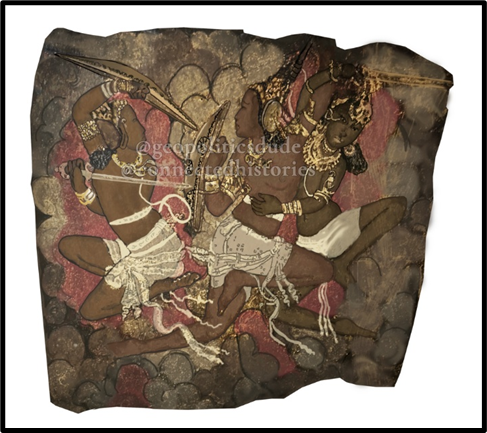
- Only the Kailasa Temple (Cave 16) preserves mural remains
- Subjects include:
- Vishnu and Lakshmi flying through clouds on Garuda
- Shiva
- Apsaras
👉 At Ellora, sculpture dominates, and painting plays a supporting role.
An Important Difference from Ajanta
- Ajanta was lost and rediscovered
- Ellora was never forgotten
Ellora is mentioned by travellers such as → Al-Masudi, Firishta, Jean de Thevenot, Niccolao Manucci
This continuity of memory affected both preservation and perception.
Ajanta and Ellora – Similarities and Differences
Similarities
- Location: Both are in Maharashtra
- Themes: Religious and spiritual
- Narrative style: Storytelling from sacred texts
- Aesthetic principles → Attention to detail, Expressive human figures, Use of colour
- Naturalism: Realistic depiction of humans, animals, and surroundings
Differences:
| Aspect | Ajanta | Ellora |
|---|---|---|
| Period | 2nd century BCE – 7th century CE | 7th – 12th century CE |
| Religious focus | Exclusively Buddhist | Hindu, Buddhist & Jain |
| Artistic priority | Painting dominates | Sculpture dominates |
| Style | Classical, refined, fluid lines | Simpler, more linear |
| Scale of murals | Extensive and detailed | Limited, secondary |
| Preservation | Better preserved | Largely damaged |
👉 Inference: Ellora marks a transition phase where painting yields primacy to monumental sculpture.
Bagh Cave Paintings
Location
The Bagh Caves are located in the Dhar district of Madhya Pradesh.
Historical Significance
- Comprise Buddhist Viharas and Chaityas
- Dated to 5th–6th century CE
- Stylistically very close to Ajanta
👉 Often described as Ajanta’s provincial counterpart, not inferior, but regionally adapted.
Notable Paintings
Dancing Panel (5th century CE)
- Shows graceful young dancers
- Scantily dressed
- Heavily ornamented
- One dancer plays a drum
This panel reflects → Movement, Rhythm, Celebration of life
Elephant Procession
- Depicts a ceremonial procession
- Shows mastery over large animal anatomy
- Suggests royal or ceremonial themes
Ravanachhaya Rock Paintings
Location
The Ravanachhaya Rock Paintings are located in:
- Sitabhinji Rock Shelters
- Kendujhar (Keonjhar) district of Odisha
Historical Significance
- Dated to around the 4th century CE
- Unique because they depict → A king’s procession, Non-religious theme
This is rare in early Indian mural tradition, which is otherwise heavily religious.
Inscriptions
- Presence of Sanskrit inscriptions
- Also includes early Odiya inscriptions
- Boulder surfaces bear epigraphic material
👉 Ravanachhaya shows the intersection of painting, inscription, and political life.
Sitabenga and Jogimara Cave Paintings – Art, Theatre, and Love
Location
- These caves are located on the northern side of the Ramgarh Hills
- Also known as Ramgiri Hills or Devapahari
- Present-day Chhattisgarh
Historical Significance
These caves date from 3rd century BCE to 1st century BCE, placing them among the earliest mural traditions in India.
They are exceptional for several reasons:
- The caves are partly natural and partly man-made
- They contain non-religious inscriptions written in → Brahmi script, Magadhi language
This itself is rare in early Indian art, which is otherwise heavily religious.
Cultural Uniqueness
- The inscriptions include the earliest known mention of the term “devadasi”
- They preserve one of the oldest coloured frescoes in Asia
- The Sitabenga Cave is regarded as the earliest theatre cave in India
👉 It likely served as a space for dramatic performances, reminding us that painting, music, dance, and drama were deeply interconnected in ancient India.
Badami Cave Paintings
Location and Historical Context
The Badami Caves belong to the 6th century CE.
- Badami was earlier known as Vatapi
- It was the capital of the Early Chalukya dynasty
- The Chalukyas ruled large parts of Karnataka between the 6th and 8th centuries CE
Artistic Significance
Originally, Badami caves were richly covered with murals, but only fragments survive today.
Notable Painting
One important surviving mural depicts → Kirtivarman, son of Pulakesi I → Seated in his palace with his queen and feudatories → watching a dance performance
👉 This is significant because:
- It depicts royal court life, not mythology alone
- It marks the southward extension of the Ajanta mural tradition
Hence, scholars rightly describe Badami murals as
“An extension of Ajanta’s mural tradition into South India.”
Pallava Paintings
Dynastic Context
After the Chalukyas, the Pallava dynasty rose to prominence in South India.
- Mahendravarman I (7th century CE) was:
- A great patron of art
- Called “Citrakara Puli” (Tiger among painters)
Notable Pallava Mural Sites
Panamalai – Talagirisvara Temple (Tamil Nadu)
- Contains a mural of a female figure, probably Goddess Parvati
- She stands gracefully against a wall holding an umbrella
- Shows refined elegance and restraint
Kailasanatha Temple, Kanchipuram
- Contains nearly 50 painted cells
- Most celebrated mural: Somaskanda Panel → Depicts Shiva and Parvati with their son Kartikeya
👉 Pallava murals are important because they:
- Transition mural painting from Buddhist to Shaiva traditions
- Show increasing iconographic discipline
Sittanavasal Paintings
Location and Context
The Sittanavasal Cave is one of the finest Jain mural sites in India.
- Meaning: “Abode of the Jaina Siddhas”
- Dates to the 8th century CE
- Originally a Jain monastery
Patronage
- Cave excavated by Mahendravarman I before his conversion from Jainism to Hinduism
- Later renovated by the Pandya rulers
Artistic Features
- Technique: Fresco-secco
- Colours: Mineral-based pigments
Themes
- Lotus pond (symbol of spiritual purity)
- Dancing figures
- Lilies
- Animals like buffaloes and elephants
- The ardhamandapa ceiling is decorated with → Murals and Sculptures of Jaina Tirthankaras
👉 Sittanavasal reflects Jain metaphysics through serene natural imagery.
Armamalai Cave Paintings
- Located at Ambur town, Tamil Nadu
- Jain cave temple of the 8th century CE
- Stylistically similar to Sittanavasal
Themes
- Stories of Jainism
- Ashtadik Palakas (guardians of the eight directions)
👉 Shows the spread and continuity of Jain mural tradition in Tamil Nadu.
Chola Murals
Dynastic Context
The Chola dynasty (9th–13th centuries CE) were extraordinary patrons of architecture and art.
Major Sites
Early Chola Murals
- Fragmentary remains at Nartamalai (Pudukkottai district)
Brihadeeswarar Temple, Thanjavur
The most important Chola murals are found here.
- Located in the circumambulatory corridor of the inner vimana
- Themes include Shiva in multiple forms → Dakshinamurti, Tripurantaka, Nataraja
Royal Portraiture
- Murals depict Rajaraja Chola I → Worshipping Shiva, Accompanied by his family
- A rare portrait painting shows → Rajaraja Chola, His guru Karuvur Devar
👉 This marks a shift where murals become historical documents, not just religious art.
Later Additions
- Upper layers of paintings include Nayaka-period murals (16th century CE)
- Shows layering and reuse, similar to prehistoric superimpositions
Vijayanagara Murals
Historical Context and Patronage
The Vijayanagara Empire ruled South India from the 14th to the 16th century.
Foreign travellers repeatedly mention that → Temples and Palaces → were richly decorated with paintings, confirming that mural art enjoyed state patronage and popular visibility.
Artistic Features
Vijayanagara murals are extremely important because they validate historical texts visually.
- Costumes, jewellery, and headgear show a syncretic material culture
- While religion remains central, murals also depict → Court life, Social activities, Royal processions
A striking example:
- Male courtiers wearing white tunics paired with tall conical caps → Showing Islamic influence
👉 This confirms that Vijayanagara society was culturally plural and globally connected.
Location of Paintings
Today, Vijayanagara paintings are mostly found on → Temple ceilings, Temple walls
Palace murals have largely perished.
Notable Sites and Murals
Tiruparankunram (Tamil Nadu)
- 14th-century murals
- Represent the early phase of Vijayanagara style
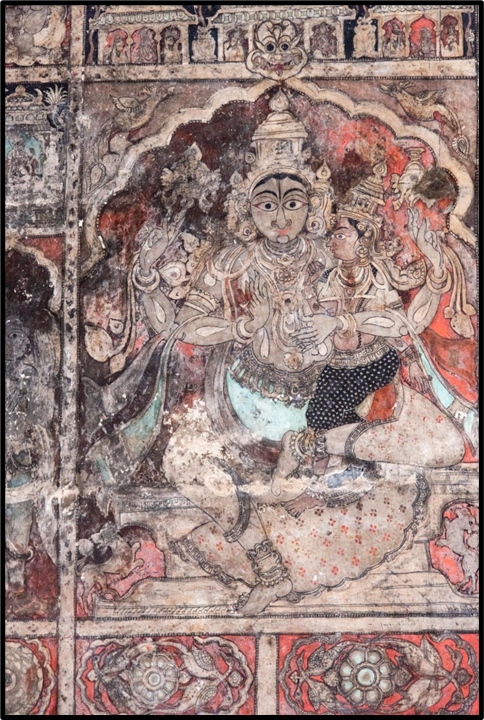
Virupaksha Temple, Hampi
Located in Hampi, the former capital of Vijayanagara.
Murals depict:
- Dynastic history
- Saint Vidyaranya in a palanquin (spiritual guide of Vijayanagara rulers)
- Dashavatara (Ten Avatars of Vishnu)
- Girijakalyana (Marriage of Parvati)
- Scenes from the Ramayana and Mahabharata
👉 This is where politics, devotion, and mythology converge on the same wall.
Lepakshi (Virabhadra) Temple, Andhra Pradesh
- Built in the 16th century
- Contains the finest Vijayanagara murals
The Veerabhadra Mural
- Size: 24 × 14 feet
- Subject: Veerabhadra (a fierce form of Shiva)
- Painted on the ceiling
- Largest single-figure mural in India
Artistic Legacy
- Lepakshi murals are considered precursors to Kalamkari painting
- Motifs of → Birds, Animals, Foliage → continue to influence regional textiles and visual culture even today.
Other Vijayanagara Sites
- Ranganathaswamy Temple, Srirangam
- Varadaraja Temple, Kanchipuram
Nayaka Paintings
Historical Context
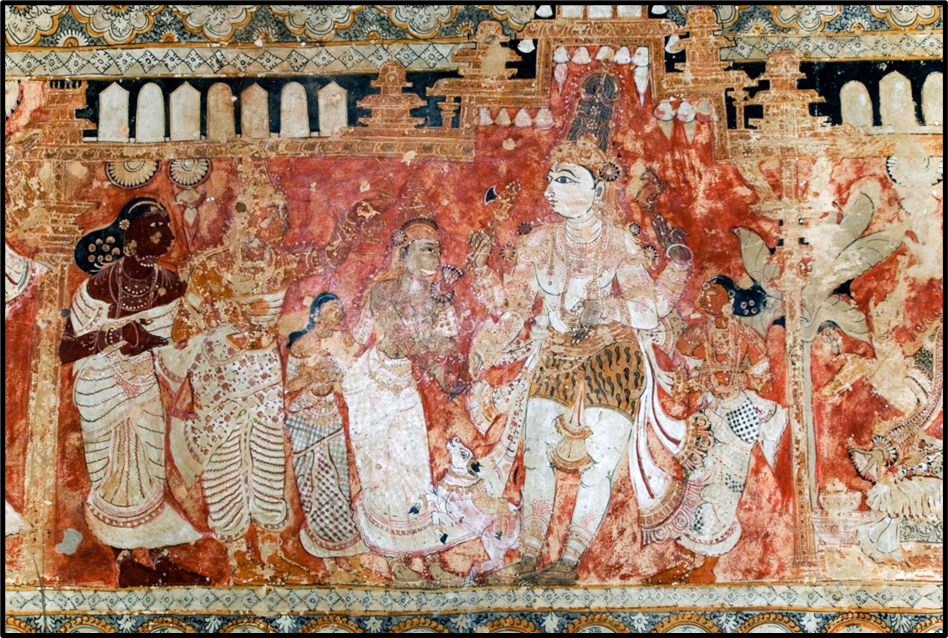
After the fall of Vijayanagara in 1565, power shifted to regional rulers known as the Nayaka dynasties.
- Period: 16th–18th centuries
- Nayaka paintings are an extension of Vijayanagara style
- With regional modifications, not a complete break
Themes → Ramayana, Mahabharata, Krishna Leela
Religion remains central, but narrative becomes more decorative and expansive.
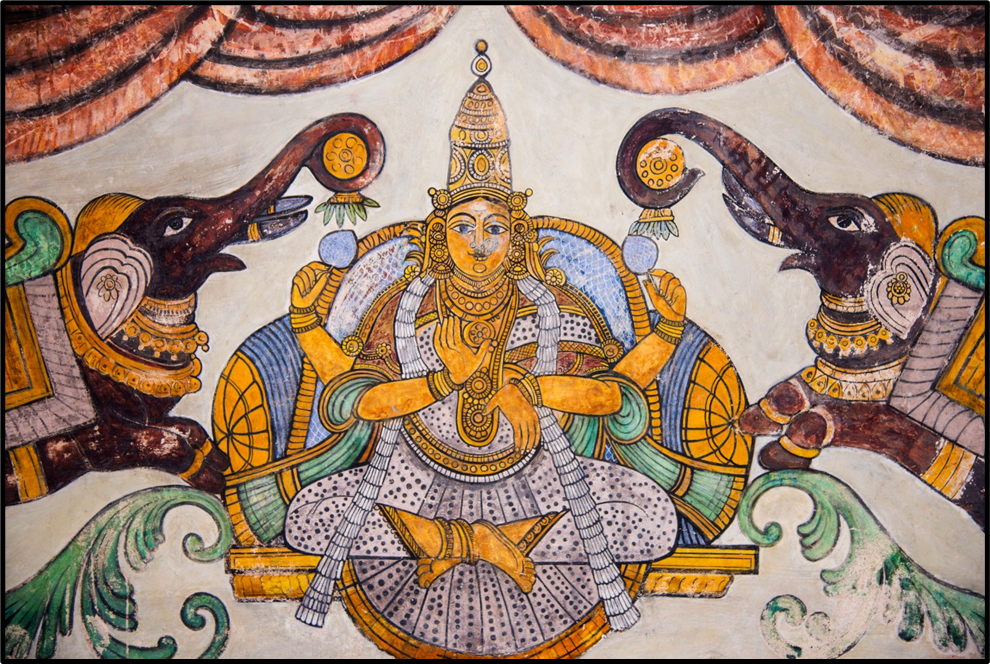
Notable Nayaka Murals
Thiruvarur Temple (Tamil Nadu)
- Painted ceiling
- Depicts the legend of Muchukunda, a Chola king
Thiruparankunram
- Two distinct phases:
- 14th century: Jain themes (life of Vardhaman Mahavira)
- 17th century: Hindu religious themes
👉 This shows layering of belief systems over time.
Chidambaram (Tamil Nadu)
- Painted panels showing:
- Shiva as Bhikshatana Murti
- Vishnu as Mohini
Sri Krishna Temple, Chengam (Arcot district)
- Murals depicting the Ramayana
- Represent the late phase of Nayaka painting
Murals of Kerala
Emergence and Themes
Kerala mural tradition developed around the 16th century.
Themes include → Hindu mythology, Epics, Krishna’s frolics, Forms of Shiva and Shakti
Artistic Characteristics
Kerala murals are immediately recognisable due to → Vivacious imagery; Bold, confident strokes; Vivid colour scheme
Dominant colours → Ochre-red, Yellow-ochre, Bluish-green
Stylistic Influences
Kerala muralists borrowed elements from → Nayaka and Vijayanagara schools and combined them with local traditions such as → Kathakali and Kalam Ezhuthu
This helped in creating three-dimensional figures with dramatic expressions.
Major Sites of Kerala Murals
Temple Sites
- Vadakkumnathan Temple, Thrissur
- Triprayar Sri Rama Temple, Thrissur
- Ettumanoor Shiva Temple, Kottayam
Palace Murals
- Mattancherry Palace (Dutch Palace)
- Krishnapuram Palace, Alappuzha
- Padmanabhapuram Palace, Kanyakumari district (Tamil Nadu)
👉 These palace murals show how sacred art entered royal and domestic spaces.
For chapter-wise Art and Culture Notes for UPSC Prelims and Mains, refer to the complete Art and Culture notes page.