
UPSC CURRENT AFFAIRS — 14 OCTOBER 2026
1. A Head Rejoins History: Javari Temple’s Vishnu Idol and the Chandela Legacy at Khajuraho
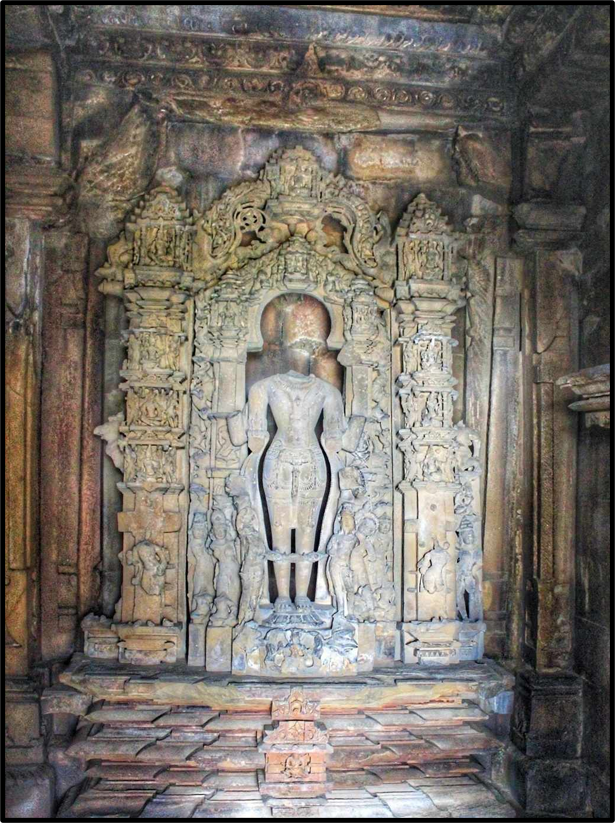
(HISTORY) (TOI) The Archaeological Survey of India (ASI) has traced the long-missing head of the Vishnu idol of the Javari Temple at Khajuraho in one of its own storerooms. The find closes a dispute that had reached the Supreme Court, and reopens a classic heritage question: how should a damaged image inside a protected monument be restored?
The temple at a glance
| Feature | Details |
| Location | Eastern Group of the Khajuraho Group of Monuments, Chhatarpur district, Madhya Pradesh |
| Builders | Chandela rulers, roughly the late 10th–11th century CE |
| Deity | Vishnu; the roughly 7-ft sanctum image had stood headless for decades |
| Plan | Nirandhara — no internal circumambulatory path (pradakshinapatha) |
| Signature feature | An ornate makara-torana (arch with mythical crocodile motifs) at the entrance porch |
| Heritage status | Part of a UNESCO World Heritage Site inscribed in 1986 |
Reading the architecture
Javari is a compact example of the Nagara style: units rise in a line from the entrance to a tall, curvilinear shikhara over the sanctum.
Ardhamandapa (porch) ➜ Mandapa (hall) ➜ Antarala (vestibule) ➜ Garbhagriha (sanctum)
- Sculptural bands: The outer walls carry horizontal bands of apsaras, deities, vyalas (composite beasts) and mithuna couples typical of Chandela art.
- Sanctum doorway: The lintel shows Brahma, Vishnu and Shiva along with the navagrahas (nine planetary deities).
- Twin temple: Its plan closely resembles the nearby Chaturbhuj Temple, which also lacks an ambulatory.
From courtroom to storeroom
In September 2025, a bench of CJI B.R. Gavai and Justice K. Vinod Chandran dismissed a PIL seeking a replacement idol, calling it “publicity interest litigation”. The Court noted the temple falls under the ASI, which had said that replacing the idol would violate conservation norms.
Tracing the original head changes the equation. Re-fixing an authentic fragment is a recognised conservation practice, whereas carving a new head would erase historical authenticity.
The rules behind restoration
- Legal cover: Centrally protected monuments are governed by the AMASR Act, 1958, under which the ASI (Ministry of Culture) protects monuments and the National Monuments Authority regulates construction around them.
- Minimum intervention: Conservation aims to stabilise and repair, not to recreate; additions must be distinguishable and, ideally, reversible.
- Living vs non-living monuments: Worship-related demands often clash with archaeological norms at protected sites — a recurring theme in safeguarding India’s art heritage.
Who were the Chandelas?
The Chandelas ruled Jejakabhukti (Bundelkhand) from the 9th to 13th centuries, with strongholds at Khajuraho, Mahoba and Kalinjar. Khajuraho once had around 85 temples, of which about 25 survive. Landmarks include the Lakshmana Temple (Yashovarman) and the Kandariya Mahadeva Temple (Vidyadhara). For background, see Rise and Nature of Rajput States.
📖 Read More: Hindu Temple Architecture • India’s UNESCO World Heritage Sites • Archaeological Survey of India (ASI) • Safeguarding India’s Art Heritage • North Indian Kingdoms (Post-Gupta Era)
2. Every Islander a Reader: Lakshadweep Declared Fully Literate under ULLAS
(SOCIAL JUSTICE) (NOA) (TH) Administrator Praful Patel has declared Lakshadweep a Union Territory that has achieved total literacy. The announcement in Kavaratti followed special teaching and assessment drives under ULLAS – Nav Bharat Saaksharta Karyakram, after which all eligible learners cleared the literacy test.
What does “fully literate” mean?
Under ULLAS, a literacy rate above 95% is treated as equivalent to full literacy (benchmark). Lakshadweep started from a high base — its literacy rate was 91.85% in Census 2011 — so the drive targeted the last few thousand non-literate adults.
ULLAS at a glance
| Feature | Details |
| Full form | Understanding of Lifelong Learning for All in Society |
| Type | Centrally Sponsored Scheme aligned with NEP 2020 |
| Period | FY 2022–23 to 2026–27 |
| Target group | Non-literate adults aged 15 years and above; 5 crore learners (1 crore a year) |
| Outlay | ₹1,037.90 crore (Centre ₹700 crore; States ₹337.90 crore) |
| Nodal body | Department of School Education & Literacy, Ministry of Education |
| Assessment | FLNAT (Foundational Literacy and Numeracy Assessment Test); certificates issued jointly with NIOS |
Five components of the curriculum
Foundational Literacy & Numeracy ➜ Critical Life Skills ➜ Basic Education ➜ Vocational Skills ➜ Continuing Education
How it is delivered
- Volunteerism: Built on Kartavya Bodh — students, teachers and citizens teach voluntarily, making it a jan-bhagidari movement.
- Schools as hubs: Government and aided schools serve as units for learner surveys and classes.
- Digital spine: The ULLAS app and portal register learners and volunteer teachers; content is offered in multiple Indian languages.
- Functional focus: Literacy goes beyond signing a name to digital, financial and legal literacy, health awareness and civic skills.
The “fully literate” club
Ladakh became the first UT to be declared fully literate in June 2024, followed by Mizoram, Goa, Tripura and Himachal Pradesh (99.3%) in 2025. Lakshadweep now joins this group as an island territory with scattered, small habitations.
Why it matters
- Equity: Adult literacy drives prioritise women, SC/ST communities and other groups left out of formal schooling — a core concern of social justice.
- Development link: Literacy improves health-seeking behaviour, financial inclusion and participation in local governance.
- Sustaining gains: Continuing-education centres and digital content are needed so that neo-literates do not relapse.
📖 Read More: Miscellaneous Education Schemes & Initiatives • Development of Lakshadweep Islands • Education after Independence • Union Territories
3. One Bay, One Security Space: BIMSTEC Home Ministers Adopt the Delhi Declaration
(INTERNATIONAL RELATIONS) (DD) (DD) The first-ever BIMSTEC Home Ministers’ Meeting concluded in New Delhi on 13 October 2026 with the adoption of the Delhi Declaration. The seven members recognised the Bay of Bengal as a common security space and agreed on joint action against terrorism, trafficking, online scam centres, drugs and money laundering.
How the mechanism took shape
4th Summit, Kathmandu (Aug 2018): Home Ministers’ track proposed ➜ 6th Summit, Bangkok (4 Apr 2025): mechanism welcomed ➜ 1st meeting, New Delhi (13 Oct 2026): Delhi Declaration
What the Delhi Declaration commits to
| Area | Key commitments |
| Terrorism | Condemns terrorism in all forms, including cross-border terrorism; calls for effective implementation of UNSC sanctions, including the 1267 Sanctions Committee regime |
| Terror financing & technology | Promote agreed AML/CFT standards; counter radicalisation and recruitment; prevent misuse of emerging technologies |
| Trafficking & scam centres | Victim-centred cooperation among countries of origin, transit and destination, and countries hosting scam centres that force trafficked persons into online fraud |
| Legal instruments | Implement the Convention on Combating International Terrorism, Transnational Organised Crime and Illicit Drug Trafficking (in force March 2021) and the Convention on Mutual Legal Assistance (signed Colombo, March 2022); finalise conventions on extradition, transfer of sentenced persons and trafficking, plus an SOP on rescue and reintegration |
| Institutions | Develop the BIMSTEC Drug Offences Monitoring Desk; consult on a regional information-sharing mechanism on trafficking and migrant smuggling; JWG on Counter-Terrorism and Transnational Crime to follow up |
| Partnerships | Welcomes the Secretariat’s observer status at the Asia/Pacific Group on Money Laundering; explore ties with UNODC, INTERPOL and FATF |
BIMSTEC in brief
- Origin: Set up on 6 June 1997 through the Bangkok Declaration; members are Bangladesh, Bhutan, India, Myanmar, Nepal, Sri Lanka and Thailand.
- Bridge role: Links South Asia and Southeast Asia around the Bay of Bengal; the Secretariat is in Dhaka.
- Institutional upgrade: A Charter adopted at the Colombo Summit (2022) gave the grouping a formal framework; cooperation now runs through seven sectors, with India leading the security sector.
Why it matters for India
- Alternative to SAARC: With SAARC stalled, BIMSTEC carries India’s Neighbourhood First and Act East priorities without Pakistan.
- Cyber-slavery: Indians trafficked to scam compounds in the Mekong region make cross-border coordination urgent.
- Narcotics: Proximity to the Golden Triangle and instability in Myanmar feed drug trafficking into the North-East.
- Financial crime: Links between terror financing and organised crime need regional data-sharing and common standards.
📖 Read More: BIMSTEC • India and Neighbourhood Policy • India and South-East Asia Policy • Terror Financing and the Crime–Terror Nexus • FATF and International AML/CFT Cooperation • Organised Crime
4. A Flag in San José: India Opens a Resident Embassy in Costa Rica
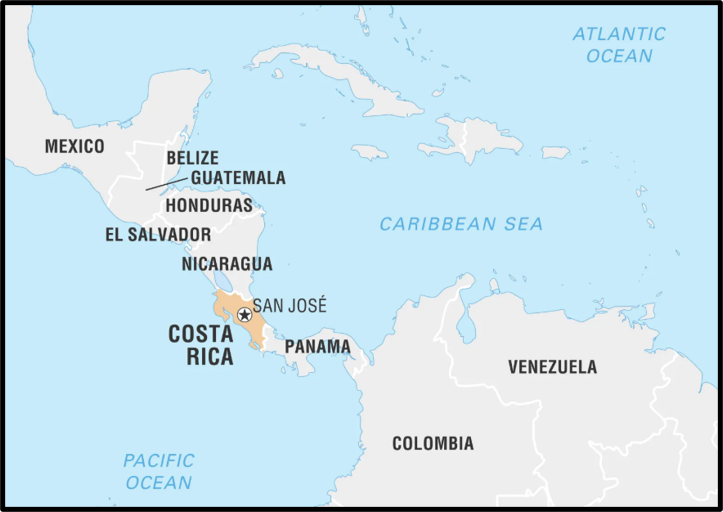
(INTERNATIONAL RELATIONS) (ANI) India’s new resident diplomatic mission in San José, Costa Rica, became operational on 10 October 2026. Until now, the Indian Embassy in Panama was concurrently accredited to Costa Rica. The step expands India’s footprint in Central America under its wider Latin America outreach.
Why a mission now?
- Economic agenda: Both sides want deeper cooperation in trade, investment, pharmaceuticals and information technology.
- People and services: Around 600 Indians work in Costa Rica’s IT sector; the embassy will provide on-the-spot consular support.
- Regional gateway: Costa Rica is a member of the Central American Integration System (SICA), opening doors to the wider isthmus.
- Reciprocity: Costa Rica opened its embassy in New Delhi in April 2010 and has signed the International Solar Alliance framework agreement.
Costa Rica on the map
| Feature | Details |
| Location | Central American isthmus, between the Caribbean Sea (east) and the Pacific Ocean (west) |
| Capital | San José, in the fertile Central Valley (Meseta Central) |
| Neighbours | Nicaragua (north) and Panama (south-east) |
| Highest point | Cerro Chirripó (3,821 m) in the Cordillera de Talamanca |
| Volcanoes | Arenal, Poás and Irazú in the volcanic cordilleras of the north and centre |
| Distinctive trait | Abolished its army in 1948; the 1949 Constitution bars a standing army |
| Economy | From coffee, bananas and pineapples to medical devices, services and ecotourism |
Costa Rica is also a biodiversity showcase, with an extensive network of national parks and reserves. See the region’s layout in the Political Map of North America and Central America.
📖 Read More: India and Latin America • Political Map of North America and Central America • Other Important Geographical Features of North America
5. Three Navies, Two Oceans: INS Tarkash Sails for IBSAMAR IX off South Africa
(INTERNATIONAL RELATIONS) (PIB) The Indian Navy’s guided-missile stealth frigate INS Tarkash is on an overseas deployment to South Africa for the ninth edition of the India–Brazil–South Africa Maritime Exercise (IBSAMAR IX). Its theme is “Stronger Together Towards a Shared Future in the Maritime Domain”.
Exercise at a glance
| Feature | Details |
| Edition | Ninth |
| Frequency | Biennial, held since 2008 under the IBSA framework |
| Host | South Africa |
| India | INS Tarkash with an integral Chetak helicopter |
| Brazil | BNS Barroso with an integral Lynx helicopter |
| South Africa | SAS Amatola, SAS King Sekhukhune I, SAS Adam Kok III and the submarine SAS Manthatisi |
What the drills cover
Surface & anti-air warfare ➜ Anti-submarine warfare & naval air operations ➜ Maritime interdiction & VBSS ➜ Anti-piracy, search & rescue, damage control
VBSS stands for Visit, Board, Search and Seizure — the boarding drills used to inspect suspect vessels in anti-piracy and interdiction missions.
Know the ship
INS Tarkash is a Talwar-class frigate built at the Yantar Shipyard in Kaliningrad, Russia, and commissioned in 2012. It can fight on the surface, in the air and under water, which suits the multi-domain profile of IBSAMAR (see Naval Defence).
IBSA: the larger frame
- Origin: The IBSA Dialogue Forum was formed through the Brasília Declaration of 2003, uniting three large, multi-ethnic democracies from three continents.
- Development arm: The IBSA Fund, managed with the UN, finances small development projects in other developing countries.
- Strategic value: The exercise links the Indian and South Atlantic Oceans and adds a Global South dimension to India’s maritime strategy.
Significance
- Interoperability: Common procedures make joint anti-piracy and humanitarian operations smoother.
- Africa outreach: Regular presence off southern Africa supports India’s role as a security partner in the western Indian Ocean.
- Partnership depth: Complements bilateral ties with South Africa and Brazil.
📖 Read More: India and South Africa Relations • India and Brazil Relations • Naval Defence • Maritime Foreign Policy Strategy • Coastal and Maritime Security
6. Growth Without Enough Jobs: Decoding India’s Employment Puzzle
(ECONOMICS) (MoSPI) India remains the fastest-growing major economy, yet the debate over job-deficient growth refuses to fade. A low headline unemployment rate sits alongside high youth joblessness, a large informal workforce and too many people in farming. The gap between output and decent work is now a central policy concern.
What the latest numbers say
The PLFS Annual Report 2025 (January–December 2025) gives the following picture for persons aged 15 and above (usual status):
| Indicator | Value | What it hides |
| Unemployment rate (15+) | 3.1% | Anyone who worked for a relatively long part of the year — even as an unpaid family helper — is counted as employed |
| Youth (15–29) unemployment | 9.9% (urban: 13.6%) | Joblessness concentrates among the young and educated |
| Urban female LFPR | 27.7% | Roughly one in four urban women is in the labour force |
| Regular wage/salaried workers | 23.6% | Only about one in four workers has a regular salary |
| Workers in agriculture | 43.0% | Farming contributes only around a sixth of GDP, signalling disguised unemployment |
| Self-employed | 56.2% | Much self-employment is survival activity, not enterprise |
The ILO’s India Employment Report 2024 found that youth made up almost 83% of India’s unemployed. Note that PLFS changed its sampling design in January 2025, so 2025 figures are not strictly comparable with earlier years.
Why growth is not translating into jobs
Agriculture ➜ (labour-intensive manufacturing largely skipped) ➜ High-skill services
- Skipped factory stage: Unlike East Asia, India moved from farms straight to IT and finance — a case of premature deindustrialisation.
- Capital intensity: New manufacturing invests in machines and automation rather than large workforces.
- Missing middle: Many micro-units and a few giants, but few medium firms employing 100–500 workers; regulation and compliance costs discourage scaling up.
- Skills gap: A large share of graduates lack industry-ready skills.
- Women left out: Safety, poor transport and unpaid care work keep women out of paid jobs.
Policy responses and their limits
| Initiative | Aim | Gap |
| PLI schemes | Incentives for domestic manufacturing | Concentrated in capital-heavy sectors such as electronics and pharma |
| PM Mudra Yojana | Collateral-free loans for micro-enterprises | Most loans are small and support self-employment rather than hiring |
| Skill India | Short-term vocational training | Weak alignment with local industry needs; modest placements |
| Platform (gig) work | Quick earning options | Little income security, health cover or pension |
Way forward
- Back labour-intensive sectors: Garments, leather, footwear, food processing and tourism can absorb semi-skilled workers at scale.
- Fix the MSME pipeline: Timely payments through platforms like TReDS and simpler rules so firms are not penalised for growing (see RAMP).
- Labour reforms with protection: Implementation of the New Labour Codes should balance flexibility with social security, including for gig workers.
- Apprenticeship model: Combine classroom learning with shop-floor training.
- Women’s work: Creches near industrial parks and safe, affordable public transport.
- Urban safety net: An urban employment programme for city works and green infrastructure during downturns.
📖 Read More: Unemployment • Inclusive Growth • Premature Deindustrialization and Growth of Services in India • New Labour Codes • Economic Growth and Economic Development
7. Raising the Cost of Betting Against the Rupee: RBI’s Foreign Exchange Risk Reserve
(ECONOMICS) (IE) On 10 October 2026, the Reserve Bank of India unveiled emergency steps to defend the rupee. The centrepiece is a new Foreign Exchange Risk Reserve (FERR), a tool borrowed from China. The rupee is down almost 7% in 2026 and hit a record low of 96.96 per dollar in May, even after the repo rate was raised by 25 bps to 5.5% on 7 October.
How the FERR works
User books forward dollars (above $2 million) ➜ Bank keeps 20% of notional value as cash with RBI ➜ Hedging becomes costlier ➜ Speculative dollar demand falls
- Rate: 20% of the rupee value of the notional amount; the RBI can change the ratio.
- Coverage: Rupee-linked forex derivative contracts in which users buy foreign currency against the rupee to hedge current-account exposure, above the equivalent of $2 million.
- Duration: The reserve is held daily until the contract ends and is reported to the RBI.
- Anti-evasion: Splitting transactions to stay below the threshold counts as a violation.
The rest of the package
| Measure | Purpose |
| Cancelled rupee derivative contracts cannot be rebooked (rollovers allowed) | Stops repeated speculative positioning |
| Unhedged derivative threshold cut from $100 million to $5 million | Requires proof of genuine underlying exposure for most contracts |
| Undertaking that the same exposure is not hedged with another bank | Prevents double hedging |
| RBI to handle dollar purchases of the three public sector oil marketing companies | Takes large, lumpy oil demand off the market; RBI can supply dollars from its reserves |
The China playbook — in reverse
| China (March 2026) | India (October 2026) | |
| Problem | Yuan strengthening too fast | Rupee weakening near record lows |
| Action | Cut FX risk reserve ratio from 20% to zero | Imposed a 20% reserve |
| Effect | Removed the cost of betting against the yuan | Raised the cost of betting against the rupee |
Concept check: why the rupee weakens
India imports more than it exports, so demand for dollars usually exceeds supply — a structural pressure visible in the balance of payments. A market-driven fall in value is depreciation; an official cut under a fixed regime is devaluation (see Exchange Rate).
Trade-offs
- Costlier protection for genuine importers: Firms with real dollar bills also pay more to hedge.
- Only breathing room: Like the 2013 taper tantrum curbs, these steps buy time; lasting stability depends on crude prices and FPI flows.
- Predictability: Sudden rule changes can unsettle markets and price discovery.
- Structural fix: Narrowing the current account deficit and boosting exports remain the long-term answer.
📖 Read More: Exchange Rate • Foreign Exchange Reserves • Balance of Payment • Derivatives • Instruments of Monetary Policy
8. From Farm Output to Value Chains: Agrivision–2026 Calls for Market-Led Agriculture
(ECONOMICS) (PIB) The 10th National Convention of Agrivision–2026 was held at the ICAR–NASC Complex, Pusa, New Delhi on 13–14 October. Around 450 students from 25 States joined scientists, entrepreneurs and farmers. The ICAR Director General urged a shift from a production-centric approach to agri-food value chains.
Key messages
- Beyond production: Output targets alone do not raise incomes; Indian agriculture must link production to markets.
- Market intelligence: Farmers need demand signals before sowing, not after harvest.
- Value addition: Processing, grading and branding capture a larger share of the consumer rupee.
- Young agripreneurs: Students were encouraged towards agri-startups, research and extension — supported by schemes such as Startup India.
The value-chain idea
Market intelligence ➜ Demand-aligned production ➜ Aggregation & value addition ➜ Better price realisation
Collectives such as Farmer Producer Organisations help small farmers aggregate produce, bargain better and invest in storage and processing.
📖 Read More: Introduction to Indian Agriculture • Agriculture and Allied Sectors • Farmer Producer Organizations (FPOs) • Government Policies in Agriculture Sector
9. Doubling the Bean: ICAR’s NRC 268 and NRC 270 Soybean Varieties Show Promise
(ECONOMICS) (PIB) At a Soybean Harvest Day in Indore on 9 October 2026, ICAR’s soybean research institute reported that its new varieties NRC 268 and NRC 270 yielded about 20 quintals per hectare in preliminary data — despite adverse weather. That is nearly double the national average.
Yield in perspective
| Scenario | Yield (quintals/hectare) |
| Current national average | 10–11 |
| Achievable with improved varieties and practices | 15–20 |
| NRC 268 / NRC 270 (preliminary, adverse weather) | ~20 |
| Under favourable conditions | 22–25 |
The institute plans multi-year data collection across regions to track productivity trends and evaluate research and extension efforts.
Soybean basics
- Crop profile: Soybean (Glycine max) is a kharif legume that fixes atmospheric nitrogen and is rich in protein and oil.
- Where it grows: Madhya Pradesh, Maharashtra and Rajasthan are the leading producers.
- Uses: Edible oil, and protein-rich soymeal for livestock and poultry feed.
Why yields matter: the oilseed gap
India imports more than half of its edible oil needs. The National Mission on Edible Oils – Oilseeds (NMEO-Oilseeds), approved in October 2024 for 2024–25 to 2030–31 with an outlay of ₹10,103 crore, aims to raise primary oilseed output to 69.7 million tonnes by 2030–31.
High-yield, climate-resilient seed ➜ Higher farm productivity ➜ More domestic oil and meal ➜ Lower import dependence
📖 Read More: Oilseeds — Soyabean • NMEO–Oilseeds • Biotechnology in Agriculture • The Seed Industry
10. Algorithms in the Field: UN Initiative on AI for Agri-Food Systems Meets in New Delhi
(SCIENCE AND TECHNOLOGY) (PIB) The second meeting of the UN Global Initiative on AI for Agri-Food Systems (GI-AI4FS) was held alongside India Mobile Congress 2026 in New Delhi. It was hosted by the Telecommunication Engineering Centre (Department of Telecommunications) with the Indian Council of Agricultural Research, and focused on trustworthy, interoperable and farmer-centric AI.
About GI-AI4FS
- Coordinators: The International Telecommunication Union (ITU) with the FAO, IFAD and the World Food Programme.
- Goal: Responsible use of AI and IoT in agri-food systems, with common governance, standards and capacity building.
- This meeting: About 70 delegates attended in person and 25 online; it discussed governance structure and working groups. A two-day hackathon on AI for agri-food systems was held at the ICAR campus on 8–9 October.
Where AI helps farmers
| Use | How it works |
| Precision farming | Sensor, drone and satellite data guide water and fertiliser use plot by plot |
| Weather advisories | AI-assisted forecasts help farmers time land preparation and sowing |
| Pest and disease detection | Image recognition flags infestations from field photographs |
| Crop insurance | Remote sensing and geotagged photos speed up yield and damage assessment under PMFBY |
| Price discovery | Market data analytics help farmers decide when and where to sell |
India’s digital agriculture base
The Digital Agriculture Mission builds AgriStack (farmer IDs linked to land and crop records) and a Krishi Decision Support System that integrates satellite, weather and soil data. Voice-based chatbots such as Kisan e-Mitra answer farmer queries on schemes in regional languages.
Challenges
- Smallholder reality: Most holdings are below 2 hectares; models trained on large, mechanised farms can mislead.
- Cost barrier: Sensors, drones and machinery are expensive for individual farmers.
- Data rights: Farm data needs consent-based protection to prevent misuse (see data privacy).
- Land records: Outdated or disputed records weaken the foundation of digital registries.
- Environmental footprint: Data centres use water, and fast hardware turnover adds to e-waste.
Way forward
Farming-as-a-Service via FPOs & CHCs ➜ Phygital extension through KVKs ➜ Consent-based farm data ➜ Global standards via GI-AI4FS
📖 Read More: Digital Agriculture Mission (DAM) • Artificial Intelligence (AI) • Pradhan Mantri Fasal Bima Yojana (PMFBY) • Government Policies in Agriculture Sector
11. Sharing the Gains of Seeds: NBA Releases ₹2.02 Crore in Access and Benefit-Sharing Funds
(ENVIRONMENT) (PIB) The National Biodiversity Authority (NBA) has released ₹2.02 crore of Access and Benefit-Sharing (ABS) money, collected from seed companies, to 27 State Biodiversity Boards and 3 UT Biodiversity Councils. Cumulative ABS disbursement by the NBA has now reached ₹202 crore.
Key facts
| Aspect | Details |
| Source of funds | Seven seed firms using parental lines and hybrids of crops such as rice, brinjal, cauliflower, cucumber, chilli, gourds, tomato and okra |
| Allocation basis | Cultivation area of each crop (Agriculture Ministry data), since individual benefit-claimers could not be traced for market-procured material |
| Top recipients | Madhya Pradesh (~₹23.8 lakh), West Bengal (~₹23.3 lakh), Odisha (~₹19.8 lakh) |
| Use of funds | Strengthening Biodiversity Management Committees, updating People’s Biodiversity Registers, conserving landraces and medicinal plants, habitat restoration |
How ABS works
Company accesses a biological resource ➜ Approval from NBA ➜ Benefit-sharing payment ➜ Funds routed to SBBs/UTBCs ➜ Local BMCs & communities
Legal and global framework
- Convention on Biological Diversity (1992): Its third objective is fair and equitable sharing of benefits from genetic resources.
- Nagoya Protocol: Adopted in 2010 and in force since 2014, it operationalises ABS globally (CBD ABS).
- India: The Biological Diversity Act, 2002 creates a three-tier structure — NBA (Chennai), State Biodiversity Boards and local Biodiversity Management Committees.
- Targets: ABS advances Targets 13 and 19 of the Kunming–Montreal Global Biodiversity Framework and India’s NBSAP 2024–2030.
Why now
The release comes ahead of CoP 17 to the CBD, beginning on 19 October 2026 in Yerevan, Armenia, where India will showcase its record on benefit-sharing. ABS activities can also converge with tribal livelihood schemes such as PM-JANMAN and the Pradhan Mantri Van Dhan Yojana.
📖 Read More: Biological Diversity Act, 2002 • International Initiatives for Biodiversity Conservation • National Initiatives for Biodiversity Conservation