
Suez Crisis of 1956
See, the Suez Crisis of 1956 can be called as a “watershed moment.” Why? Because it was the final, desperate gasp of old European imperialism and the definitive arrival of the Cold War in the Middle East.
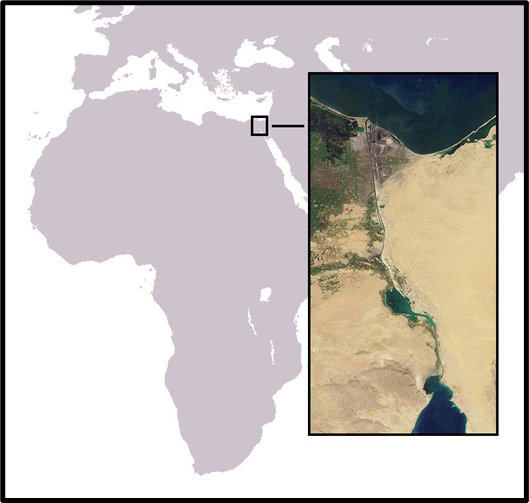
The Catalyst: Gamal Abdel Nasser and the Spirit of Defiance
To understand Suez, you must understand Nasser. He wasn’t just the President of Egypt; he was the heartbeat of “Pan-Arabism.” His actions in the mid-1950s were a series of “shocks” to the Western system.
- First, he refused to renew the 1936 treaty that allowed British troops to stay in the Suez zone.
- Second, he supported Algerian rebels against France.
- Third, and most shockingly for the West, he signed an arms deal with Czechoslovakia (1955).
By buying Soviet-bloc tanks and jets, Nasser broke the Western monopoly on arms in the region. To the Americans, this wasn’t just a local trade; it was seen through the “Cold War lens” as the Soviet Union moving into the Middle East.
In retaliation, the US and Britain cancelled the funding for the Aswan High Dam, a project Nasser saw as the key to Egypt’s industrial future. Nasser’s response was swift and electric: he nationalized the Suez Canal. He told the world, “If you won’t fund my dam, the canal’s profits will.”
The Psychology of the Conflict: “The Ghost of Munich”
Why did Britain and France react so violently? You have to understand the “Munich Complex.” Prime Minister Anthony Eden had lived through the 1930s when Hitler was “appeased.” In his eyes, Nasser was a “Mussolini on the Nile” or a “Malicious Swine” sitting on Britain’s lifeline to the East.
Even the Labour leadership in Britain initially agreed that Nasser could not be appeased. The British and French ignored Nasser’s promise of compensation and freedom of navigation (except for Israel). They weren’t just protecting a canal; they were trying to protect their imperial prestige, which they felt was slipping away.
The Secret “Protocol of Sèvres”: A Conspiracy Hatched
Since international law didn’t give them a clear reason to attack, Britain, France, and Israel hatched a secret, almost “filmic” plot:
- Israel would invade the Sinai Peninsula.
- Britain and France would then issue an ultimatum for both sides to “withdraw” from the canal to “protect” it.
- When Egypt (predictably) refused to abandon its own territory, the Europeans would occupy the canal and, hopefully, topple Nasser.
The War and the “Great Power” Intervention
The military part went exactly to plan. Israel’s invasion was a “brilliant success,” capturing Sinai in a week. British and French paratroopers landed at Port Said.
However, the political part was a disaster. The planners made a fatal mistake: they assumed the United States would support them. Instead, President Eisenhower was furious. He didn’t want to be seen as supporting “colonialism” while he was trying to win over the Third World against Communism.
For the first (and perhaps only) time in the Cold War, the USA and the USSR agreed. They demanded a ceasefire. The US threatened to collapse the British pound, and the UN prepared to send an emergency force. Faced with global isolation and economic ruin, the “imperial powers” were forced to withdraw in humiliation.
The Consequences: A New World Order
The Suez War did not just end; it transformed the world. Let’s look at its multidimensional impact:
- For Nasser and the Arabs: Nasser emerged as a pan-Arab superhero. He had been attacked by three powers and survived. His prestige soared, leading directly to the fall of pro-British regimes elsewhere, like in Iraq (1958).
- For Britain and France: It was the “end of the road.” It proved that Britain was no longer a “Great Power” that could act independently of the United States. It accelerated decolonization, encouraging the Algerians to fight harder for their freedom.
- For Israel: While they had to give back the land, they proved their military superiority. They gained a “breathing space” from guerrilla raids and realized that their future security lay in an alliance with the USA, not the fading Europeans.
- For the Cold War: The Middle East was now a primary theatre of the Cold War. The Soviet Union stepped in to fund the Aswan Dam, firmly establishing their influence in Egypt.
Critical Analysis: The Folly of Anachronism
In retrospect, the Suez War was a battle fought with 20th-century weapons but 19th-century minds. Eden and the French leadership failed to realize that the era of “Gunboat Diplomacy” was over. By trying to destroy Nasser, they only succeeded in making him the undisputed leader of the Arab world.
The Suez Crisis taught us a vital lesson in international relations: Strategic interests are worthless if you don’t have the moral or economic support of the global community.