
World War I Explained
1914
The Western Front
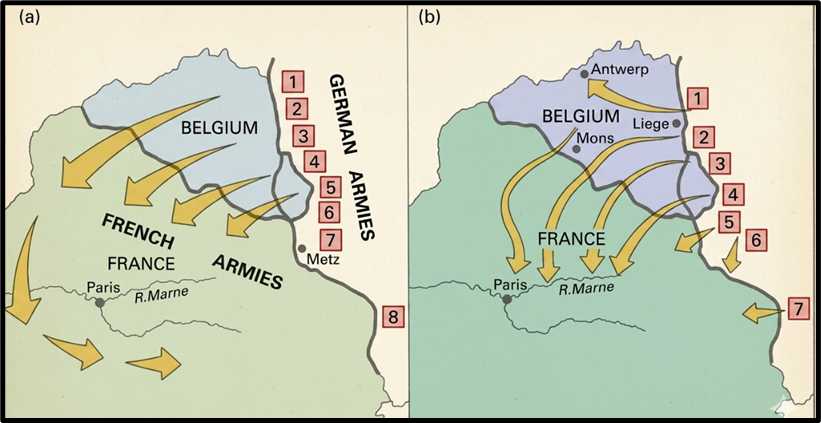
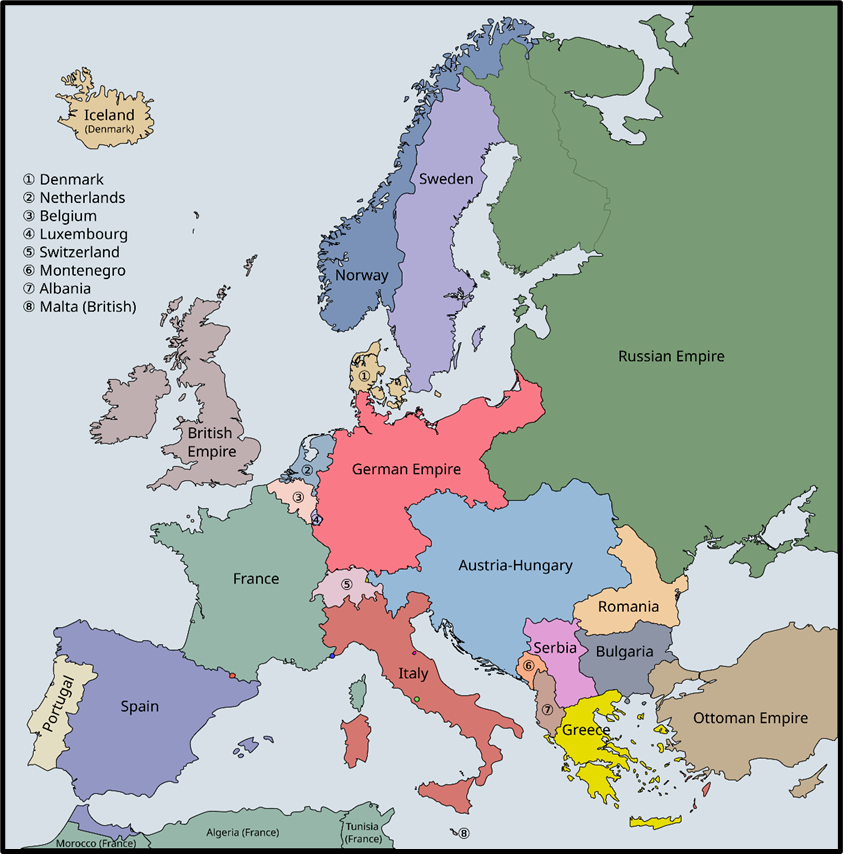
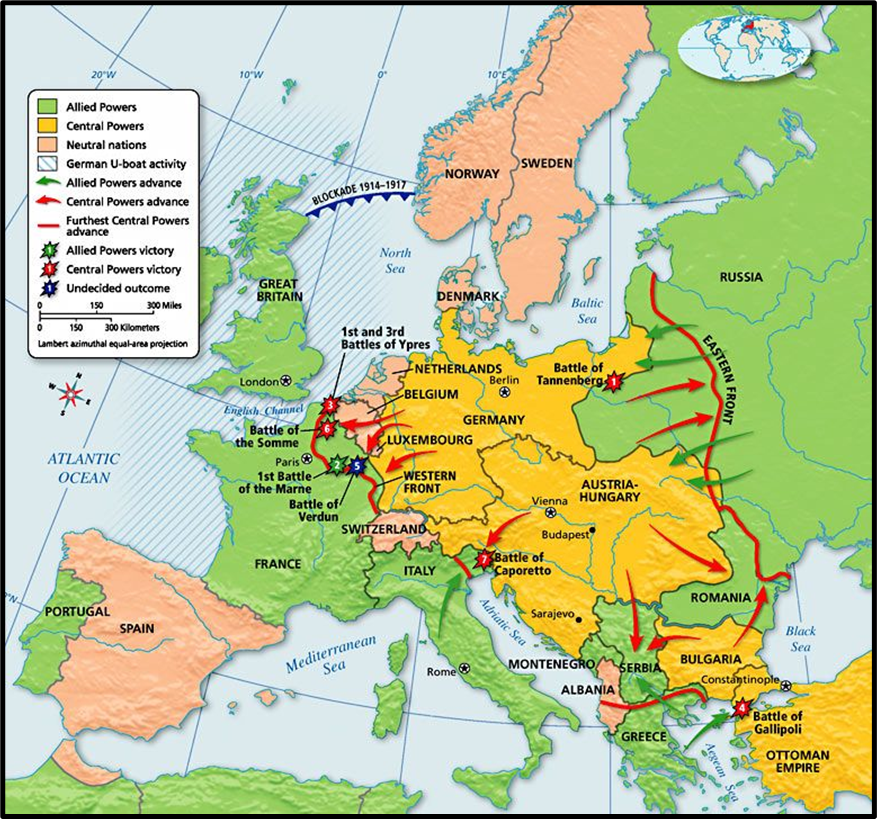
At the very outset of the war, Germany’s strategy was guided by the famous Schlieffen Plan—a bold attempt to defeat France quickly by sweeping through Belgium and encircling Paris (see a below). However, reality unfolded very differently (see in b below).
Belgian Resistance and Strategic Delay
The German advance was unexpectedly slowed by strong Belgian resistance, particularly around Brussels. This delay proved crucial. It allowed Britain to mobilize and deploy the British Expeditionary Force (BEF) and ensured that key Channel ports remained accessible to Allied forces.
Thus, what was supposed to be a swift, decisive campaign began to lose momentum almost immediately.
The Battle of the Marne: Turning Point of 1914
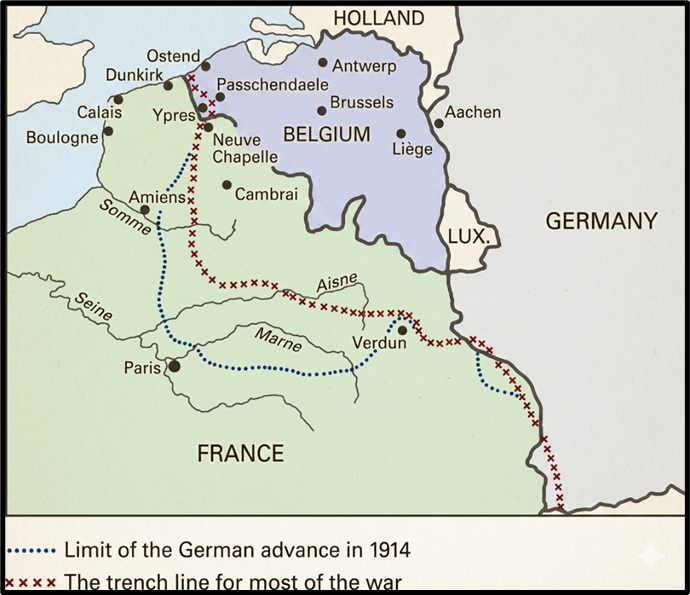
By September 1914, German forces had reached within 20 miles of Paris, forcing the French government to flee to Bordeaux. However, several factors weakened the German advance:
- Supply line overstretch
- Troop exhaustion due to rapid marches
- Logistical breakdowns
At this critical juncture, French forces under Joseph Joffre launched a counterattack in the Battle of the Marne.
Why was the Battle of the Marne decisive?
This battle is often considered one of the most decisive in modern history because:
- It permanently ended the Schlieffen Plan
- It ensured that France would not collapse quickly
- It transformed the war into a prolonged conflict
Birth of Trench Warfare
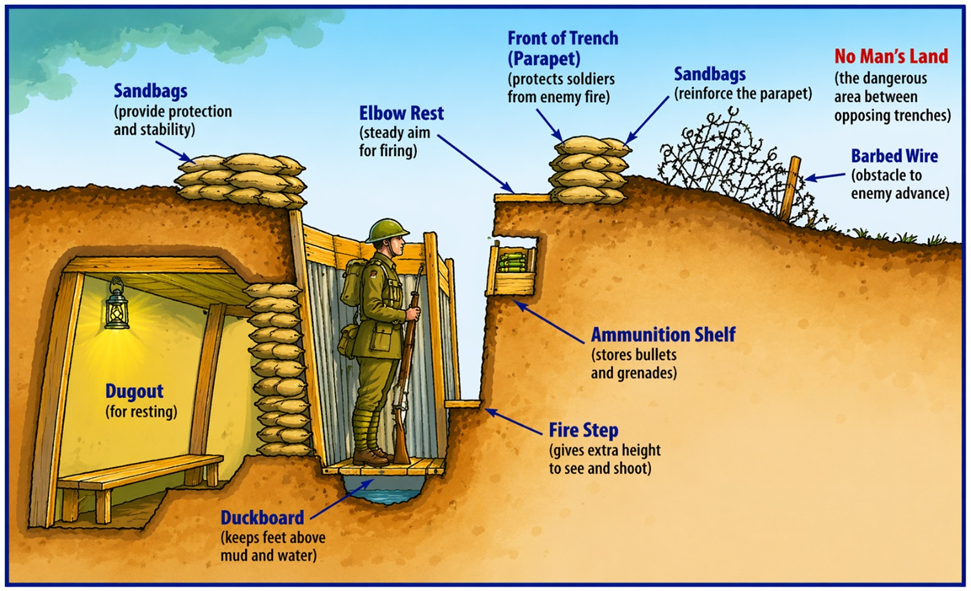
Following the German retreat to the River Aisne, both sides began digging trenches. Gradually, these trench lines extended:
- From the Alps to the English Channel
- Creating a static front with little movement
This marked the end of the war of movement and the beginning of trench warfare, which would define the Western Front for years.
Strategic Consequences
The failure at the Marne had far-reaching implications:
- Germany was forced into a two-front war, something it had hoped to avoid
- Britain gained time to impose a naval blockade, weakening Germany economically
- The war turned into a long-term struggle of attrition, not a quick victory
The fighting at Ypres, where British forces held firm, ensured that key Channel ports remained in Allied hands—another strategic success.
The Eastern Front
Unlike the static Western Front, the Eastern Front was more fluid and dynamic.
Russian Mobilization and Strategic Errors
Russia mobilized faster than expected, surprising Germany. However, it made a crucial mistake:
- It attacked both Austria-Hungary and Germany simultaneously
While Russia achieved success against Austria (occupying Galicia), it faced disaster against Germany.
German Victories: Tannenberg and Masurian Lakes
Under the leadership of Paul von Hindenburg, German forces decisively defeated Russia at:
- Tannenberg (August 1914)
- Masurian Lakes (September 1914)
Consequences of these defeats:
- Massive Russian losses in equipment and manpower
- Severe shortages (even rifles were lacking for many soldiers)
- Long-term weakening of Russian war capacity
Historiographically, many scholars view these defeats as laying the foundation for Russia’s eventual collapse in 1917.
Entry of Turkey and Strategic Isolation of Russia
When the Ottoman Empire (Turkey) entered the war on the side of the Central Powers:
- It blocked Russia’s access to the Mediterranean via the Dardanelles
- This cut off vital supply and trade routes
Thus, Russia became increasingly isolated and vulnerable.
A Rare Allied Success: Serbia
One bright spot for the Allies was Serbia’s successful defense against Austria-Hungary. However, this success was temporary and would not alter the broader strategic imbalance.
1915
The Western Front in 1915: The Logic of Stalemate
By 1915, the Western Front had settled into a deadlock.
Failed Attempts to Break the Deadlock
All sides attempted offensives:
- British at Neuve Chapelle and Loos
- French in Champagne
- Germans at Ypres
However, none achieved a decisive breakthrough.
Why Was Trench Warfare So Difficult?
The nature of trench warfare made progress extremely difficult:
- Barbed wire and machine guns made frontal attacks deadly
- Artillery bombardments destroyed surprise
- Reconnaissance aircraft exposed troop movements
- Terrain became muddy and impassable
- Gains created salients, which were hard to defend
Even new technologies like poison gas (used at Ypres) failed to break the stalemate decisively.
Emergence of Attrition Warfare
The war evolved into a war of attrition, where:
- Victory depended on exhausting the enemy
- Industrial capacity and manpower became decisive
This marked a fundamental transformation in the nature of warfare.
The Eastern and Balkan Fronts in 1915: Allied Failures Multiply
Continued Russian Decline
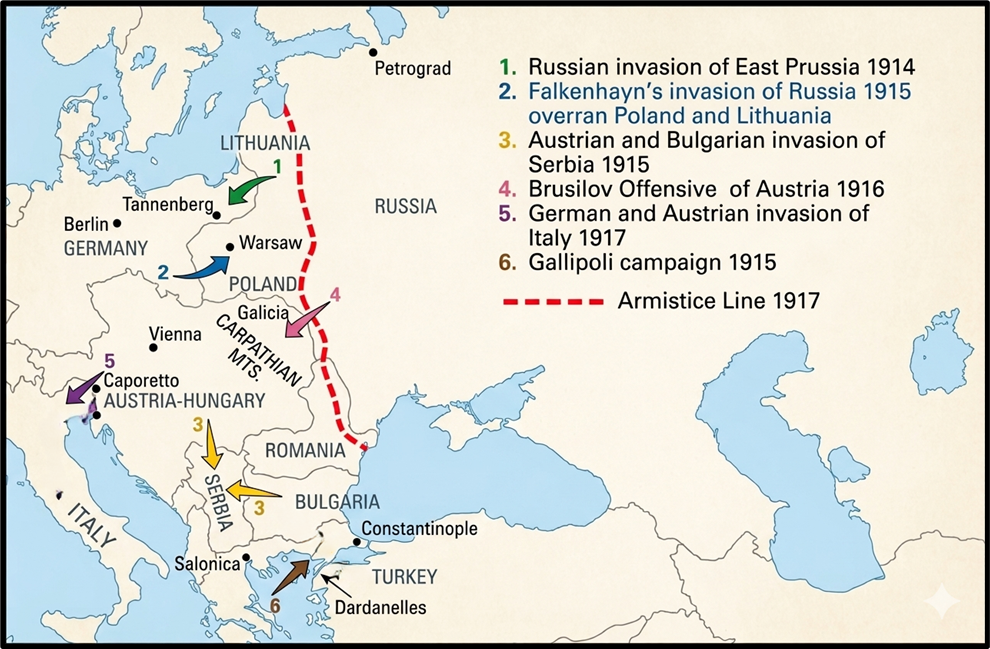
Russia experienced mixed results → Some success against Austria; Continued defeats against Germany
Germany captured Warsaw and Poland, further weakening Russia.
The Gallipoli Campaign: A Strategic Gamble
The Allies attempted to break the deadlock through the Gallipoli Campaign, strongly advocated by Winston Churchill.
Objectives:
Knock Turkey out of the war | Open the Dardanelles to supply Russia | Encourage Balkan states to join the Allies
Why did it fail?
Naval attack failed due to mines | Loss of surprise | Strong Turkish resistance | Difficult terrain and poor planning
Consequences:
Major blow to Allied morale | Russia remained isolated | Encouraged Bulgaria to join Central Powers | Prolonged the war
Collapse of Serbia
With Bulgaria joining the Central Powers in 1915:
- Serbia was quickly overrun
- Allied efforts from Salonika came too late
This marked a major strategic setback in the Balkans.
Mesopotamian Setback
A British campaign to protect oil interests ended in disaster at Kut-el-Amara, where British forces were besieged and forced to surrender.
Italy Enters the War (1915): Opportunism in Alliances
Italy joined the Allies after signing the Treaty of London (1915).
Motivations:
- Territorial gains (Trentino, South Tyrol, Istria, etc.)
- Expansion along the Adriatic
Outcome:
Despite high expectations:
- Italy made little progress
- Failed to significantly relieve pressure on Russia
This highlights a broader theme: alliances were often driven by opportunism rather than ideology.
1916
The year 1916 stands as one of the most brutal phases of the World War I. By this time, the war had settled into a deadlock, especially on the Western Front, where trench warfare made decisive victories nearly impossible. As a result, both sides increasingly adopted a strategy of attrition—aiming not to win quickly, but to wear down the enemy through massive casualties.
The Western Front: War of Attrition at Its Peak
The Battle of Verdun (1916): Germany’s War of Exhaustion
The German Chief of Staff Erich von Falkenhayn launched an attack on Verdun in February 1916 with a chilling objective: not merely to capture territory, but to “bleed France white.”
Verdun was symbolically and strategically important for France. Falkenhayn believed that the French would commit all their forces to defend it, allowing Germany to destroy them in a prolonged battle.
However, under the leadership of Philippe Pétain, the French army resisted fiercely. Despite horrific losses—around 315,000 French casualties—the Germans also suffered immensely (around 280,000 casualties) and failed to achieve any decisive breakthrough.
Critical Insight
Verdun reflects the shift from war of movement to war of endurance. Victory was no longer about capturing land, but about destroying the enemy’s capacity to fight. Ironically, Germany’s strategy of attrition backfired, draining its own strength as much as France’s.
The Battle of the Somme (1916): The Futility of the ‘Big Push’
The Somme offensive, launched by Britain under Douglas Haig in July 1916, was intended to relieve pressure on Verdun and weaken German forces.
From the very first day, the battle turned catastrophic. British soldiers advanced in waves, only to be cut down by machine-gun fire—leading to 20,000 deaths on the first day alone.
Despite this, Haig continued the offensive for over four months. The Allies gained only minimal territorial advances, while casualties were staggering:
- Germans: ~650,000
- British: ~418,000
- French: ~194,000
Critical Analysis: Leadership and Strategy
The Somme became a symbol of military miscalculation and rigid thinking. Generals persisted with outdated tactics—mass infantry assaults—despite clear evidence of their failure.
This led to the famous critique of the British army as “lions led by donkeys”, highlighting the bravery of soldiers and the incompetence of leadership.
However, historiography is divided:
- Critical View (e.g., W. J. Laffin): Haig is portrayed as a butcher responsible for needless slaughter.
- Revisionist View (e.g., J. P. Harris): Haig operated under unprecedented conditions and gradually adapted, later contributing to victory in 1918.
Strategic Outcome
Although tactically unsuccessful, the Somme had long-term significance:
- It weakened German morale
- It demonstrated Britain’s emergence as a major military power
- It contributed to the overall exhaustion of German forces
Political Transformation: Rise of Lloyd George
David Lloyd George and Total War Mobilization
David Lloyd George replaced Asquith as British Prime Minister in December 1916, marking a shift toward more dynamic and centralized war leadership.
Even before becoming PM, as Minister of Munitions, he had:
- Boosted production of weapons and ammunition
- Encouraged innovation (e.g., tanks, Stokes mortar)
- Brought industries under state control
As Prime Minister, he introduced:
- A small war cabinet for quick decision-making
- Greater control over shipping, agriculture, and manpower
- The Ministry of National Service for efficient mobilization
Significance
This marks the evolution of “Total War”, where the entire economy and society are mobilized for war. It also shows how political leadership became as crucial as battlefield performance.
The Eastern Front: Temporary Russian Success
The Brusilov Offensive (1916)
In June 1916, Russian General Brusilov launched a major offensive against Austria-Hungary. It was one of the most successful Allied operations of the war, achieving:
- A breakthrough of about 100 miles
- Capture of 400,000 prisoners
Austria-Hungary was severely weakened, but the offensive exhausted Russian forces as well.
Romania’s Entry and Failure
Encouraged by Russian success, Romania entered the war on the Allied side. However, Germany quickly intervened, defeating Romania and capturing its vital oil and wheat resources.
Analytical Link
This episode highlights a recurring pattern: short-term successes failing to produce long-term strategic gains, due to lack of coordination and overextension.
The War at Sea
British Naval Strategy and Blockade
Britain aimed to:
- Blockade Germany, starving it of resources
- Maintain global trade routes
- Transport and supply troops
The British navy largely succeeded, isolating Germany economically. However, the blockade also created tensions with neutral countries like the USA, whose trade was affected.
German Response: Submarine Warfare and the Lusitania
U-boat warfare became Germany’s main response.
In 1915, the sinking of the RMS Lusitania—with American casualties—caused international outrage and pushed the USA closer to war.
This shows how technological warfare blurred the line between military and civilian targets, raising moral and diplomatic issues.
The Battle of Jutland (1916): A Tactical Draw, Strategic Victory
The Battle of Jutland was the only major naval clash of the war.
Although Germany inflicted slightly heavier losses, it failed to break British naval dominance. After this, the German fleet remained largely inactive.
Strategic Consequence
Britain retained control of the seas, ensuring:
- Continued blockade of Germany
- Safe transport of troops and supplies
Unrestricted Submarine Warfare (1917): A Desperate Gamble
Germany resumed unrestricted submarine warfare, targeting all ships, including neutral ones.
Initially, it was highly effective—Britain nearly ran out of food. However:
- It provoked the USA to enter the war (April 1917)
- The British introduced the convoy system, reducing losses significantly
Critical Outcome
Germany’s gamble failed. What seemed like a short-term tactical success turned into a long-term strategic disaster, as American entry tipped the balance in favor of the Allies.
1917
If 1916 was the year of attrition, then 1917 was the year of crisis and transformation. At first glance, it appeared to be a disastrous year for the Allies—marked by failures on the battlefield, internal breakdowns, and the collapse of a major ally. Yet, paradoxically, it also laid the foundation for the final Allied victory in 1918.
The Western Front
The Nivelle Offensive and French Mutiny
In 1917, the French commander Robert Nivelle promised a decisive breakthrough through a massive offensive in the Champagne region. However, like earlier offensives, it failed disastrously.
The consequences were unprecedented: mutiny broke out within the French army. Soldiers, exhausted by years of futile attacks, refused to continue suicidal offensives.
At this critical moment, leadership shifted again to Philippe Pétain, who restored discipline not through brutality, but by:
- Improving living conditions
- Ensuring better rotation of troops
- Avoiding reckless offensives
Analytical Insight
This episode highlights a crucial shift: the limits of human endurance in industrial warfare. The war was no longer just about strategy—it had become a test of morale, psychology, and societal resilience.
Passchendaele (Third Battle of Ypres): Symbol of Futility
The British, under Douglas Haig, launched another offensive at Ypres, remembered as Passchendaele.
Fought in horrific muddy conditions, the battle became a symbol of the senseless suffering of trench warfare:
- British casualties: ~324,000
- German casualties: ~200,000
- Territorial gain: barely four miles
Critical Perspective
Passchendaele reinforced criticisms of Allied leadership. Yet, from a broader perspective, it continued the strategy of wearing down German strength, even if at immense human cost.
The Battle of Cambrai: The Dawn of Modern Warfare
The Battle of Cambrai marked a turning point in military tactics.
For the first time, the British deployed 381 tanks in a coordinated assault, achieving a dramatic breakthrough in German lines. Although the success could not be sustained due to lack of reserves, the battle demonstrated that:
- Technology could overcome trench deadlock
- Combined arms (tanks + infantry + artillery) were the future
Strategic Significance
Cambrai became the blueprint for the successful Allied offensives of 1918, showing that innovation—not brute force—was the key to victory.
The Italian Front and the Shock of Caporetto
At Battle of Caporetto, Italian forces suffered a crushing defeat at the hands of German and Austrian troops.
The Italian army retreated chaotically, threatening a complete collapse. However, this defeat produced two unexpected outcomes:
- Italian morale revived when defending their homeland
- The Allies created a Supreme War Council to improve coordination
Leadership Factor
The rise of Georges Clemenceau in France further strengthened Allied resolve. Like Lloyd George, he embodied determined and centralized war leadership.
The Eastern Front: Collapse of Russia
The Russian Revolution and Withdrawal from War
The most dramatic development of 1917 was Russia’s withdrawal from the war.
Years of → Heavy military losses, Economic breakdown, Poor leadership under Tsar Nicholas II → led to two revolutions in 1917. Eventually, the Bolsheviks, led by Vladimir Lenin, seized power and sought peace.
Consequences
- Russia exited the war (formally in 1918, but effectively by late 1917)
- Germany was now free to transfer troops to the Western Front
Analytical Link
This created a dangerous situation for the Allies: without a new ally, Germany could have achieved victory in the west through numerical superiority.
The Global Dimension: Allied Gains in the Middle East
While Europe saw setbacks, the Allies achieved success elsewhere:
- British forces captured Baghdad and Jerusalem from the Ottoman Empire
This gave them control over strategic oil resources, highlighting how the war was becoming increasingly global and resource-driven.
The Entry of the USA: The Decisive Turning Point
Why Did the USA Enter the War?
The entry of the United States in April 1917 was a game-changing event.
The causes were multiple and interconnected:
- German U-boat warfare threatened American trade
- The Zimmermann Telegram revealed Germany’s attempt to ally with Mexico against the USA
- The fall of the Tsar removed ideological hesitation about supporting an autocratic regime
Nature of American Contribution
Initially, the USA’s role was more economic than military:
- Supply of food, credit, and ships
- Gradual deployment of troops (over 500,000 by mid-1918)
Most Important Impact: Psychological and Strategic
- Boosted Allied morale enormously
- Crushed German hopes of victory
- Signaled that the Allies had superior long-term resources
Let us now move into the final phase of the First World War, where the long stalemate finally breaks, leading to the defeat of the Central Powers. This phase is crucial because it not only explains how the war ended, but also why it lasted so long and how it reshaped the modern world.
Defeat of Central Powers
The German Spring Offensive: A Gamble of Desperation
By early 1918, Germany found itself in a race against time. With Russia out after the Treaty of Brest-Litovsk, Germany could transfer troops from the Eastern Front to the West. However, a new threat loomed—the rapid arrival of American forces.
In this context, General Erich Ludendorff launched a massive offensive in March 1918. The idea was simple: win quickly before American strength becomes decisive.
Initially, the results were dramatic. German forces broke through at the Somme and advanced to within 40 miles of Paris. For a moment, it seemed as if the Allies might collapse. But this success contained its own weakness. The advance created an overextended bulge (salient), making German lines difficult to defend and supply.
The offensive gradually lost momentum—not because of a single defeat, but due to exhaustion, logistical strain, and stiffening Allied resistance.
Allied Counter-Offensive: The Beginning of the End
The real turning point came on 8 August 1918, often described by Ludendorff himself as the “Black Day of the German Army.”
Under unified command of Ferdinand Foch, the Allies launched a new kind of warfare. Instead of concentrating forces narrowly, they used coordinated, multi-point attacks supported by tanks, artillery, and aircraft.
This marked a mature phase of industrial warfare, where coordination replaced brute force.
The impact was decisive:
- German forces were steadily pushed back.
- The formidable Hindenburg Line was breached by September.
- German leadership realized that defeat was inevitable.
Recognizing the situation, Ludendorff urged the government to seek an armistice based on Woodrow Wilson’s Fourteen Points—hoping for relatively lenient peace terms.
Finally, on 11 November 1918, the war ended with an armistice.
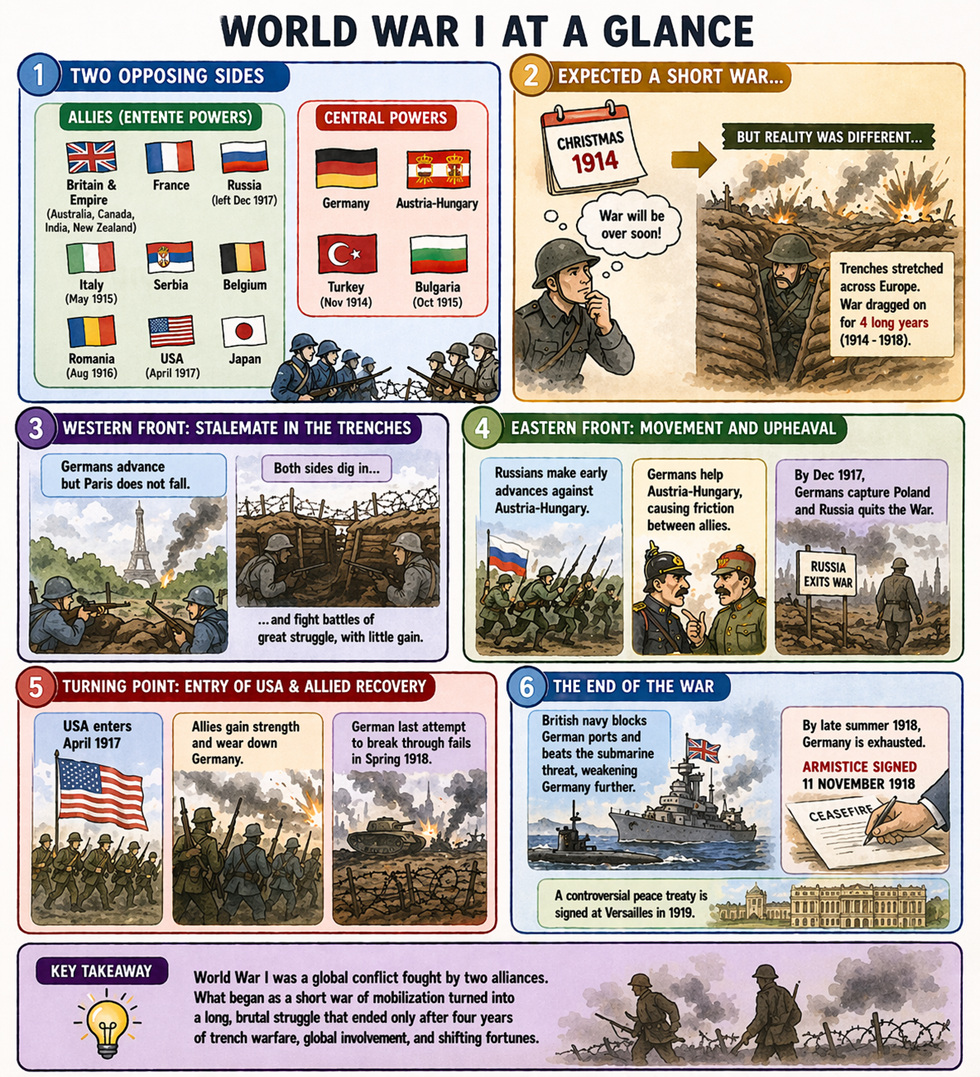
WHY DID THE WAR LAST SO LONG?
At the beginning, most people expected a short war. Yet it lasted over four years. This paradox reveals deeper structural realities.
1. Balance of Power and Globalization of War
Neither side had a decisive advantage. The conflict quickly expanded beyond Europe, drawing in countries like Italy, Japan, and eventually the United States.
Thus, it transformed into a global war of resources, not just armies.
2. Irreconcilable War Aims
Each power had non-negotiable objectives:
- Germany wanted strategic buffer zones.
- France sought to recover Alsace-Lorraine.
- Britain aimed to prevent German dominance over Belgium.
- Austria-Hungary wanted to crush Serbian nationalism.
These conflicting goals made compromise nearly impossible, ensuring a “fight to the finish.”
3. Trench Warfare and Technological Deadlock
Once trench systems developed, warfare entered a stalemate phase.
Defensive technology—machine guns, barbed wire—was far superior to offensive tactics. Soldiers attacking trenches faced devastating losses.
Thus, the war became a war of attrition, where victory depended on endurance rather than quick strategy.
4. Role of Propaganda and Morale
Governments mobilized entire societies. Through propaganda—posters, newspapers, films—they sustained morale and justified sacrifices.
Even in Germany, despite food shortages and unrest, public support did not collapse immediately, prolonging the war.
5. Total War Dynamics
This was the first “total war”, involving entire populations, economies, and industries. Once mobilized at this scale, it became extremely difficult to stop midway.
WHY DID THE CENTRAL POWERS LOSE?
The defeat of Germany and its allies was not due to a single factor, but a combination of structural weaknesses and strategic failures.
1. Failure of the Schlieffen Plan
Germany’s initial strategy failed, forcing it into a two-front war, which stretched resources beyond limits.
2. Allied Naval Superiority
Britain’s naval blockade crippled Germany’s economy:
- Severe food shortages
- Decline in industrial output
- Civilian suffering leading to unrest
3. Strategic Miscalculation: Submarine Warfare
Germany’s unrestricted submarine campaign backfired by bringing the United States into the war—a decisive turning point.
4. Entry of the United States
The arrival of American troops and industrial power shifted the balance irreversibly. It compensated for Russia’s exit and ensured that the Allies had superior manpower and resources.
5. Leadership and Military Adaptation
Allied leadership—especially figures like David Lloyd George and Georges Clemenceau—proved more effective.
A key historiographical debate revolves around Douglas Haig:
- Earlier historians criticized him for heavy casualties.
- Later historians like Gary Sheffield argue that Haig adapted effectively and played a crucial role in eventual victory.
This shows how historical interpretation evolves over time.
6. Exhaustion and Collapse
Germany suffered:
- Heavy casualties (especially in 1918)
- Declining troop quality
- Psychological collapse (mass surrenders)
The outbreak of the Spanish Flu further weakened morale and manpower.
7. Collapse of Allies
Germany’s allies fell one by one:
- Bulgaria (September 1918)
- Austria-Hungary (October 1918)
- Ottoman Empire (October 1918)
This left Germany isolated.
EFFECTS OF THE WAR: A TRANSFORMED WORLD
The consequences of World War I were profound and far-reaching, marking the transition from the old world order to a new, unstable one.
1. Human Cost and the “Lost Generation”
The war caused unprecedented casualties—millions of soldiers dead.
The idea of a “lost generation” emerged, symbolizing the destruction of youth. However, historian Dan Todman challenges this, arguing that while losses were severe, they were not as total as popularly believed.
This reflects how memory and myth shape historical understanding.
2. Political Revolutions and Collapse of Empires
The war destroyed long-standing empires:
- In Germany: Kaiser Wilhelm II abdicated, leading to the Weimar Republic.
- In Russia: Two revolutions brought Vladimir Lenin to power.
- In Austria-Hungary: The empire disintegrated into new nation-states.
Thus, WWI triggered the rise of new political ideologies—communism, fascism, and unstable democracies.
3. Rise of Fascism
In Italy, post-war dissatisfaction enabled Benito Mussolini to establish a fascist regime—setting a precedent for authoritarian movements in Europe.
4. Shift in Global Power
Europe’s dominance declined:
- The United States emerged as an economic superpower.
- Countries like Japan and China expanded industrially.
This marked the beginning of a shift from European to global power centres.
5. Economic Consequences and Future Crisis
Post-war economic instability eventually led to the Great Depression.
Thus, the war laid the groundwork for future global crises.
6. League of Nations: Idealism vs Reality
Woodrow Wilson proposed the League of Nations to ensure collective security.
However, structural weaknesses and flawed peace settlements limited its effectiveness—foreshadowing future conflicts.
7. Colonial Reconfiguration
Germany’s colonies were redistributed under League mandates, effectively extending imperial control of Britain and France—especially in Africa.
This shows that despite rhetoric of peace, imperialism continued in new forms.
5 Comments