
Zimbabwe under Rober Mugabe
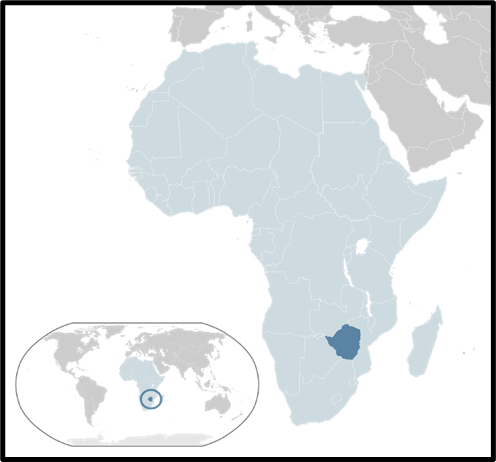
Next, we arrive at one of the most polarizing and tragic chapters in modern African history: Zimbabwe under Robert Mugabe.
Zimbabwe’s story is a dramatic “fall from grace.” It began with Mugabe as the intellectual hero of the liberation struggle—the man who promised a “Rainbow Nation” before South Africa even coined the term—and ended with him as a pariah presiding over an economic collapse of historic proportions.
The “Golden Decade”: 1980–1990
When Robert Mugabe took power in 1980, the world was stunned by his moderation. Despite being a Marxist guerrilla leader, he spoke of reconciliation.
- The Breadbasket of Africa: Zimbabwe inherited a robust agricultural sector. Mugabe invested heavily in education and healthcare, making Zimbabweans among the most literate people on the continent.
- The Hidden Shadow (Gukurahundi): While the world saw “statesmanship,” a darker reality was unfolding at home. Mugabe used his “Fifth Brigade” to brutally suppress Joshua Nkomo’s supporters in Matabeleland. Thousands were killed. This was the first sign that Mugabe would tolerate no rivals.
- The Unity Accord (1987): To end the violence, ZANU and ZAPU merged into ZANU-PF. Mugabe became an executive president, effectively moving the country toward a one-party state.
The Tarnish: Economic Struggles and Discontent (1990–2000)
By the 1990s, the “honeymoon” was over. The economy began to stutter, and Mugabe’s image began to crack.
- IMF Structural Adjustments: After the USSR fell, Mugabe lost his socialist backers. He turned to the West, but the IMF’s “austerity” measures led to cuts in the very social services (health and school) that had made him popular.
- The Land Question: Land remained the “original sin” of Zimbabwe. Roughly 4,000 white farmers owned half the best land. While the 1979 Lancaster House Agreement had a “willing seller, willing buyer” clause, the hunger for land among black Zimbabweans was growing, and Mugabe began to use this as a political weapon.
The Great Collapse: The Third “Chimurenga”
The year 2000 was the turning point. Facing his first real political threat from the Movement for Democratic Change (MDC), Mugabe launched a radical campaign to stay in power.
- Fast-Track Land Reform: Groups of “war veterans” violently seized white-owned farms. Mugabe framed this as the “Third Chimurenga” (liberation war) against British neo-colonialism.
- The Economic Result: This was a disaster. The farms were often given to ZANU-PF elites who had no interest in farming. Tobacco and wheat production plummeted.
- Hyperinflation: By 2004, inflation reached 600% (and would eventually reach billions of percent). The Zimbabwean dollar became worthless. Unemployment hit 70%.
The Struggle for Democracy: Mugabe vs. Tsvangirai
The 2000s were a decade of “stolen” elections and state-sponsored violence.
- The 2008 Election: For the first time, Mugabe actually lost the first round to Morgan Tsvangirai. However, ZANU-PF launched a campaign of terror so severe that Tsvangirai withdrew from the run-off to save his supporters’ lives.
- The Government of National Unity (GNU): Under pressure from South Africa and the African Union, a “marriage of convenience” was formed. Tsvangirai became Prime Minister, while Mugabe kept the Presidency and control of the army.
- A Fragile Recovery: The economy stabilized slightly when Zimbabwe abandoned its own currency for the US dollar, but the political “shambles” remained.
Critical Analysis: The Tragedy of the “Strongman”
Mugabe’s legacy is a debate between two perspectives:
- The Anti-Colonial Hero: To many in Africa, Mugabe was a hero who stood up to Britain and corrected the historical injustice of land theft. They see the sanctions from the EU and USA as “racist” attempts to bring down a defiant black leader.
- The Dictator: To others, Mugabe used “anti-colonialism” as a smokescreen to hide his own corruption and incompetence. He destroyed a thriving economy and murdered his own people to maintain a “fantasy” of sovereignty.
Conclusion:
Mugabe’s tragedy is that he couldn’t distinguish between Liberation and Governance. He remained a guerrilla fighter in his mind, treating any political opposition as a foreign enemy to be destroyed.
Looking at how Mugabe used the “Land Issue” to rally support when he was losing popularity, do you think his land seizures were a genuine attempt to help poor peasants, or was it simply a clever political trick to stay in power?