
US Domination in Nicaragua
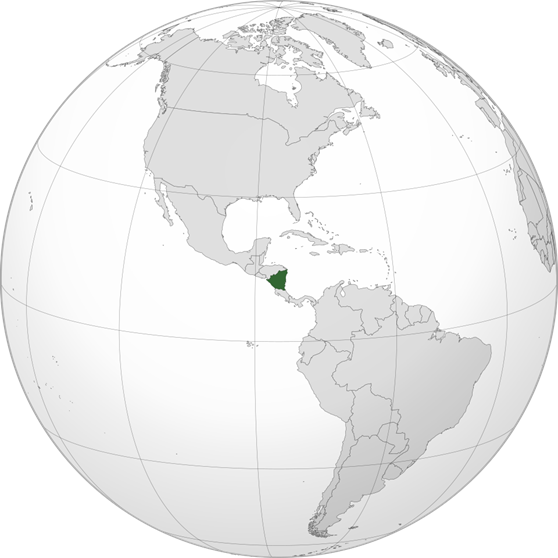
We now turn to Nicaragua, a nation whose history serves as a dramatic centerpiece for the study of “Cold War Geopolitics.” In Nicaragua, we see the complete arc of US involvement: from the early 20th-century “Gunboat Diplomacy” to the support of a long-standing family dictatorship, and finally to the controversial “Contra” wars of the 1980s.
The Early 20th Century: Gunboat Diplomacy and the Somoza Ascent
Nicaragua’s 19th-century history was a tug-of-war between Liberals (León) and Conservatives (Granada).
- The Zelaya Experiment (1893–1909): The Liberal leader José Santos Zelaya was a modernizer who built railways and schools, but he was also a regional “troublemaker.” When he tried to unite Central America by force and threatened US interests, Washington orchestrated his removal.
- Marine Occupation: Between 1912 and 1933, US Marines were almost constantly present in Nicaragua to “prop up” conservative governments and ensure stability.
- The Rise of the Somozas: As the Marines left, they helped establish the National Guard, headed by Anastasio Somoza Garcia. By 1937, the Somoza family had seized power—a power they would hold with an “iron fist” and US backing for the next 42 years.
The Somoza Dynasty: “Our Son of a Bitch”
The Somoza era was characterized by extreme corruption and loyalty to Washington.
- Regional Launchpad: On three separate occasions, the US used Nicaragua as a military base to attack other governments: Guatemala (1954), Cuba (1961), and the Dominican Republic (1965).
- The Fall: By the 1970s, the blatant corruption of the last Somoza became an embarrassment even to the US. When a massive earthquake hit Managua in 1972, Somoza allegedly embezzled the international aid, alienating even the business elite and the Church.
The Sandinista Revolution and the Reformist Wave (1979)
In 1979, the Sandinista National Liberation Front (FSLN)—named after the martyred anti-imperialist hero Augusto Sandino—overthrew Somoza.
- Social Transformation: The new government launched what Oxfam called “exceptional” reforms:
- Literacy Crusade: Reducing illiteracy from 50% to 13%.
- Land Reform: Redistributing 5 million acres to landless peasants.
- Health: Massive vaccination campaigns that eliminated polio.
The Reagan Era and the “Contra” War (1980s)
The election of Ronald Reagan in 1981 changed everything. The US saw the Sandinistas as a “Soviet-Cuban outpost” on the American mainland.
- The Contras: The US CIA financed and trained the Contras (counter-revolutionaries). The Contras engaged in a strategy of “economic sabotage”—blowing up health clinics, schools, and burning crops to make the country ungovernable.
- The World Court Ruling: In a historic moment, the International Court of Justice (ICJ) condemned the US for mining Nicaraguan harbors. The US, in a blow to international law, rejected the ruling and refused to pay compensation.
- The Iran-Contra Scandal: When the US Congress banned aid to the Contras, the Reagan administration illegally sold weapons to Iran and funneled the profits to the Contras.
Transition to Democracy and the “Ruined Economy”
By 1990, the Nicaraguan people were exhausted by war and the US-led trade blockade.
- The 1990 Election: In a surprise result, Violeta Chamorro (the first female president in Latin America) defeated Daniel Ortega. The Sandinistas accepted the defeat, marking a rare peaceful transition of power.
- The Legacy of Debt: While Chamorro brought peace and disarmed the guerrillas, she inherited a country in ruins. By the early 2000s, Nicaragua was the poorest country in the Western hemisphere.
- The Return of Ortega (2006): After 16 years in the opposition, Daniel Ortega made a historic comeback in 2006, riding a wave of nostalgia for the social programs of the 1980s and a rejection of the corruption seen in subsequent conservative governments.
The story of Nicaragua in the 21st century is one of the most tragic “full circles” in political history. The man who helped topple the Somoza dynasty, Daniel Ortega, has spent the last two decades constructing a regime that many historians and survivors now describe as indistinguishable from—or even more repressive than—the one he once fought.
The “Pragmatic” Return (2007–2018)
When Ortega returned to power in 2007, he did so not as a fiery Marxist, but as a “reconciled” pragmatist.
- The Unholy Alliance: He formed a “pact” with his former enemies: the Catholic Church (by passing an absolute ban on abortion) and the business elite (allowing them to run the economy as long as he ran the politics).
- The Venezuelan Lifeline: During this decade, billions of dollars in oil subsidies from Hugo Chávez’s Venezuela flowed into Nicaragua. This “petro-wealth” allowed Ortega to fund social programs and infrastructure without structural reform, creating a facade of stability and growth.
2018: The Breaking Point and “Operación Limpieza”
The illusion of the “New Nicaragua” shattered in April 2018. What began as a student protest against social security reforms exploded into a national uprising demanding Ortega’s resignation.
- The Crackdown: The regime responded with “Operation Clean-up” (Operación Limpieza), using police and pro-government paramilitaries armed with military-grade weapons.
- The Toll: The Inter-American Commission on Human Rights (IACHR) confirmed at least 355 deaths, thousands of injuries, and a massive wave of exile that has seen over 600,000 Nicaraguans flee (mostly to Costa Rica and the US).
The Descent into Totalitarianism (2021–2024)
As the 2021 elections approached, Ortega and his wife/Vice President, Rosario Murillo, abandoned all pretenses of democracy.
- The “Sham” Election: In the months leading up to the vote, the regime arrested all seven potential opposition candidates on “treason” charges. Ortega “won” a fourth consecutive term with no real competition.
- The “Stateless” Dissidents: In early 2023, the regime took the radical step of releasing 222 political prisoners, putting them on a plane to the US, and immediately stripping them of their Nicaraguan nationality. This included world-renowned writers like Sergio Ramírez and Gioconda Belli.
- War on the Church: Once an ally, the Catholic Church became the last standing independent institution. In 2023, Bishop Rolando Álvarez was sentenced to 26 years in prison (later exiled to the Vatican) as the regime shuttered Catholic radio stations and banned outdoor religious processions.
May 2026: The Family Fortress
As of May 2026, Nicaragua is an isolated, family-run state often referred to as the “North Korea of Central America.”
- The Murillo Succession: Power has increasingly shifted toward Rosario Murillo. She now manages the day-to-day operations of the state, with the couple’s children controlling the nation’s media outlets and key businesses.
- The Pivot to China and Russia: With Western sanctions biting, Nicaragua has officially broken ties with Taiwan and embraced China, even reviving talk of a “Nicaraguan Canal.” Russia maintains a significant military presence, using Nicaragua as its primary intelligence and training hub in the Americas.
- NGO Erasure: By mid-2026, the government has shuttered over 4,500 non-governmental organizations (NGOs), including the Red Cross and the Academy of Letters, leaving the population entirely dependent on the state.
Comparison: The Two Dynasties
| Feature | The Somoza Dynasty (1937–1979) | The Ortega-Murillo Dynasty (2007–2026) |
| Ideology | Anti-Communist / Right-wing | “Sandino-Christian” / Populist Left |
| Geopolitical Ally | United States | Russia / China / Iran |
| Enforcement | The National Guard | National Police / Sandinista “Militias” |
| Key Opposition | FSLN (Sandinistas) | Students, Church, Ex-Sandinistas |
Nicaragua today is a nation in “frozen time.” While the economy survives on remittances from the very people who fled the regime, the political space is a vacuum. The revolution that promised to end “caudillismo” (strongman rule) has ended by perfecting it.
Given how Daniel Ortega utilized the very revolutionary symbols he once fought for to build a new dictatorship, do you think revolutionary movements are inherently destined to replicate the systems they overthrow, or is Nicaragua a unique case of “power corrupting”?