
US domination in Guatemala
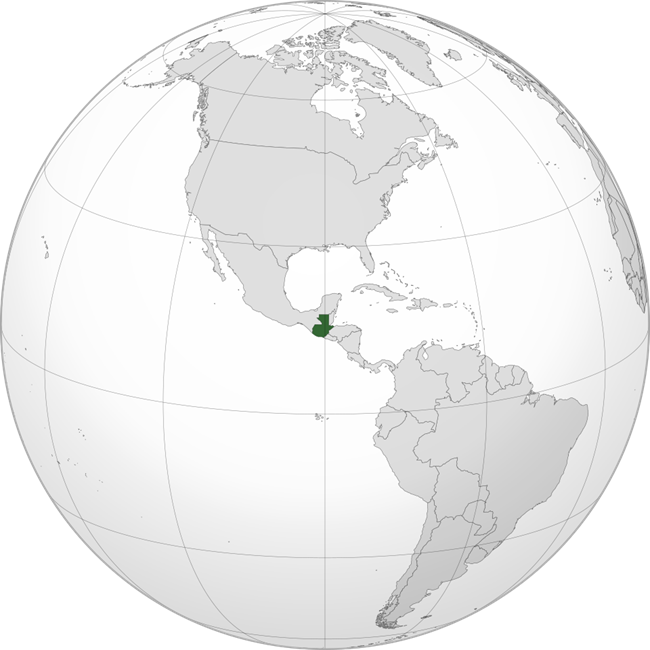
We now arrive at a case study that is perhaps the most poignant and textbook example of how “Cold War Paranoia” and “Corporate Interests” can collide to dismantle a young democracy. Let us analyze the tragic and complex history of Guatemala.
To understand Guatemala, one must understand that it wasn’t just a country; for much of the 20th century, it was treated as a “Company Town” by the United States.
The Context: A Republic under the Shadow of a Giant
Guatemala is an agricultural heartland, but its history is one of extreme disparity.
- The Demographic Divide: A small elite of Spanish descent and the military controlled the land, while the majority—including 40% who were Mayan Indians—lived as landless, impoverished peasants.
- The “Banana Republic” Phenomenon: Enter the United Fruit Company (UFC). By WWII, this US-based corporation was the largest landowner in Guatemala. It didn’t just grow bananas; it owned the railways, the telegraphs, and the electricity.
- The Conflict of Interest: When a private company owns a nation’s infrastructure, national development stops where corporate profit ends. For example, the UFC refused to build roads because it wanted to force everyone to use its expensive railways.
The “Ten Years of Spring” (1944–1954)
In 1944, a “Revolution of the Students and Professionals” overthrew the dictator Jorge Ubico. This ushered in a decade of hope known as the Ten Years of Spring.
A. The Reformists: Arévalo and Arbenz
- Juan José Arévalo (1945–1951): A Christian Socialist who introduced the first “Minimum Wage,” built schools and hospitals, and allowed trade unions.
- Jacobo Arbenz (1951–1954): He went further. His Agrarian Reform aimed to take uncultivated land from large estates (like the UFC) and give it to peasants. He offered compensation, but the UFC—which had undervalued its land for tax purposes—was furious that the government offered to pay that same “low” tax value as compensation.
B. The Fatal Mistake: Legalizing the Communist Party
Arbenz believed in true democracy, so he legalized the Communist Party. In the 1950s, through the lens of the McCarthy-era USA, this was seen as an unforgivable sin. The US interpreted a “demand for land reform” as “Soviet-style Communism.”
1954: Operation PBSuccess – The CIA Steps In
The US reaction was swift and devastating.
- The Strategy: The CIA trained a rebel force under Castillo Armas in neighboring Honduras. They used “Psychological Warfare,” bombing the capital and broadcasting propaganda to make the Guatemalan army believe a massive invasion was happening.
- The Fall: The official army, fearing US power, refused to defend Arbenz. He was forced to resign.
- The Historiographical Perspective: Historians today argue whether the US moved against Arbenz to “stop Communism” or simply to “protect the UFC.” In reality, it was both—the US leadership (like the Dulles brothers) had deep personal and professional ties to the United Fruit Company.
The Long Dark Night: 36 Years of Civil War
The 1954 coup didn’t bring “stability”; it brought a catastrophe.
- The Cycle of Dictators: For decades, military men like Ríos Montt and Mejía ruled. The reforms were rolled back, the land was given back to the elites, and dissent was met with “Death Squads.”
- The Mayan Genocide: The civil war was particularly brutal for the Mayan Indians. Targeted because of their perceived support for left-wing guerrillas, over 200,000 people were killed or “disappeared.”
- The “Nicaragua Factor”: Guatemala became a puppet in the wider regional conflict. The US pressured Guatemalan dictators to help crush the Sandinistas in Nicaragua, further militarizing the society.
The Fragile Path to Peace (1985–1999)
By the mid-1980s, the “Caudillo” model was failing.
- The Return to Civilian Rule: In 1985, Cerezo Arévalo became the first civilian president in years. He walked a “narrow tightrope”—trying to reform the country without provoking the army or the US into another coup.
- The Role of the UN and the Church: After decades of bloodshed, the United Nations and the Catholic Church mediated peace talks.
- The 1996 Accord: Finally, under President Álvaro Arzú, a formal peace agreement was signed, legalizing the rebels and ending the war.
The Post-War Crisis: Corruption as the New War (2000–2014)
The end of the Civil War didn’t bring immediate prosperity. Instead, the military structures that once fought insurgents pivoted to organized crime and state capture.
- The CICIG Experiment: In 2006, Guatemala took a radical step by inviting the UN to create the International Commission against Impunity in Guatemala (CICIG). It was an unprecedented move: an international body with the power to prosecute domestic corruption.
- The 2015 “Guatemalan Spring”: CICIG’s investigation into a customs fraud ring known as La Línea led to the historic resignation and imprisonment of sitting President Otto Pérez Molina. This sparked a wave of civic activism not seen since 1944.
The “Pacto de Corruptos” and Democratic Backsliding (2016–2023)
The traditional elite struck back. Under Presidents Jimmy Morales and Alejandro Giammattei, the government dismantled the anti-corruption apparatus.
- Expelling the Watchdogs: In 2019, the CICIG was expelled. What followed was a “judicial purge” where anti-corruption judges and prosecutors were arrested or forced into exile.
- The Pact of the Corrupt: This term describes the alliance between Congress, the Supreme Court, and the Attorney General’s office (led by Consuelo Porras) to ensure total immunity for political and economic crimes.
2024: The “Second Spring” and the Semilla Movement
The most dramatic shift in modern Guatemalan history occurred during the 2023 elections. Bernardo Arévalo, the son of the 1945 “Spring” president Juan José Arévalo, pulled off a shock victory on a platform of dignity and anti-corruption.
- The Judicial Coup: Between his victory and his inauguration in January 2024, the Public Ministry (led by Porras) attempted to disqualify his party, Semilla, and seize ballot boxes.
- The Role of Indigenous Leaders: Democracy was saved not just by the courts, but by a massive, months-long peaceful mobilization led by the 48 Cantones of Totonicapán (Indigenous authorities). They blocked highways to protect the electoral results, bridging the historical divide between the Mayan majority and the urban middle class.
Guatemala Today (May 2026)
As of mid-2026, President Arévalo is halfway through his term, navigating a political minefield.
- The Executive-Judicial Deadlock: Arévalo remains in a “cold war” with Attorney General Consuelo Porras, whose term expires soon. While he controls the executive, the “Pact” still holds significant sway in the legislature and courts.
- US Relations: The 180-Degree Turn: In a complete reversal of 1954, the United States is now Arévalo’s strongest ally. Washington has used targeted sanctions (under the Magnitsky Act) against those undermining Guatemalan democracy, viewing Arévalo as the best hope to stem migration by fixing the “broken” domestic system.
- Economic Landscape: Despite political turmoil, Guatemala remains the largest economy in Central America, though wealth inequality remains among the highest in the world.
Comparison: 1944 vs. 2026
| Feature | 1944–1954 Spring | 2024–2026 “Second Spring” |
| Primary Reformer | Juan José Arévalo | Bernardo Arévalo (his son) |
| US Role | Adversary (CIA Coup) | Strategic Ally (Anti-corruption support) |
| Main Enemy | United Fruit Co. / Landowners | “The Pact of the Corrupt” / Organized Crime |
| Key Support Base | Students / Army Officers | Indigenous Leaders / Urban Youth |
Note on Sovereignty: While the 1954 intervention was about corporate interests, the 2026 reality is about “Institutional Integrity.” The struggle has moved from the battlefield to the courtroom, but the core issue—land, power, and who the state serves—remains the same.