
US Domination in Mexico
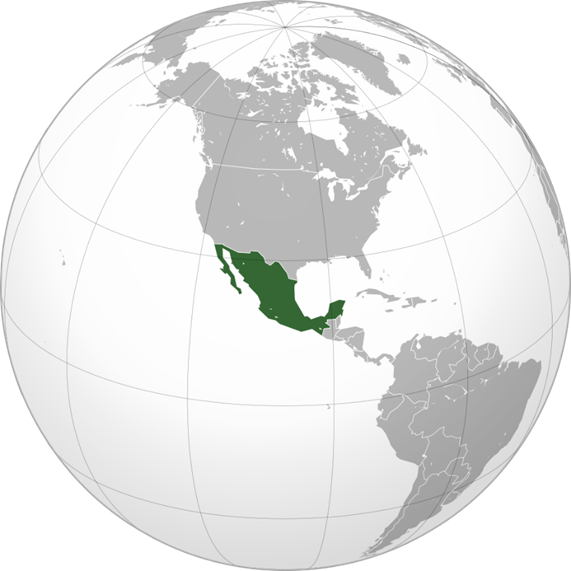
Let us move our focus to a country that shares a nearly 2,000-mile border with the United States—Mexico.
There is a famous saying in Mexico: “Pobre México, tan lejos de Dios y tan cerca de los Estados Unidos” (Poor Mexico, so far from God and so close to the United States).
This single sentence captures the essence of Mexican history—a story of immense potential perpetually shaped, and often curtailed, by its powerful northern neighbor.
The Century of Trauma: Territory and Dictatorship (1821–1910)
Mexico’s relationship with the US began not with cooperation, but with territorial amputation.
- The Great Loss: In the mid-19th century, Mexico lost nearly half of its territory to the US. First came the loss of Texas (1836), followed by the Mexican-American War (1846–48). States like California, Arizona, and New Mexico were once Mexican soil. While the US paid $18 million in compensation, the psychological and economic scar remained deep.
- The Porfiriato (1876–1910): Under the dictator Porfirio Díaz, Mexico saw “Order and Progress.” He modernized the country but did so by opening the doors wide to foreign (mostly US) capital.
- The Result: Rail and oil grew, but the masses stayed poor, and the country became “uncomfortably dependent” on Washington. This inequality eventually ignited the Mexican Revolution in 1910.
The PRI Hegemony: The “Perfect Dictatorship”
From the ashes of the Revolution emerged the Institutional Revolutionary Party (PRI), which would rule Mexico for an incredible 71 years.
A. Economic Sovereignty: The 1938 Oil Strike
A defining moment of Mexican pride occurred in 1938 when President Lázaro Cárdenas nationalized the oil industry.
- The Crisis: The US and UK were furious and boycotted Mexican goods.
- The Pivot: Mexico was forced to sell oil to Nazi Germany and Fascist Italy. However, WWII changed the math. The US needed oil for the war effort, leading to a reconciliation. Mexico even joined the Allies, sending the “Aztec Eagles” air squadron to fight in the Philippines.
B. The “Mexican Miracle” (1945–1960s)
For 25 years, Mexico was the envy of the developing world. It achieved a consistent 3–4% growth rate, invested in education, and became a major oil producer. But beneath this “miracle,” the PRI was becoming corrupt, autocratic, and heavily indebted to foreign banks.
The Cracks in the System: 1968 and the Debt Trap
The year 1968 was a global turning point, and for Mexico, it was a bloody one.
- The Tlatelolco Massacre: Just ten days before the Mexico City Olympics, the government massacred hundreds of students demanding democracy.
- Analytical Note: The US role here was subtle but significant; Washington provided “riot control” experts and weapons, prioritizing “stability” near its border over the democratic aspirations of Mexican youth.
- The Debt Explosion: In the 1970s, Mexico borrowed billions, confident that oil prices would stay high. When oil prices crashed in the early 80s, Mexico was left with a $96 billion debt.
The Neoliberal Pivot and NAFTA (1980s–1990s)
To survive the debt crisis, Mexico had to surrender its protectionist past and embrace Neoliberalism—a policy shift demanded by the IMF and the US.
The NAFTA Gamble (1994)
Mexico joined the North American Free Trade Agreement with the US and Canada. This was a “double-edged sword”:
| Pros for Mexico | Cons for Mexico |
| Massive increase in exports to the US. | Small Mexican farmers were crushed by cheap US corn/meat. |
| Inflow of foreign investment and factories. | Increased economic dependence on US market cycles. |
| Modernization of the industrial sector. | Rise in inequality and the “informal” economy. |
1994: The Year of Crisis
If 1968 was the year the PRI lost its soul, 1994 was the year it lost its grip. Three events shook the nation:
- The Zapatista Uprising: On the day NAFTA started, indigenous rebels in Chiapas rose up, proving that the “modernization” of Mexico had left the poorest behind.
- Political Assassination: The PRI’s own presidential candidate, Luis Donaldo Colosio, was murdered. Many suspected the “old guard” of the party was behind it to stop his reforms.
- The Peso Crisis: A sudden devaluation of the currency nearly collapsed the economy. It took a $50 billion bailout from President Clinton and the IMF to prevent a total meltdown.
The End of an Era (2000)
By the end of the 20th century, the PRI was a “stagnant” force. Despite pockets of prosperity, one-third of the population lived in poverty.
- The Historic Shift: In the 2000 election, Vicente Fox (of the PAN party) won the presidency. For the first time in 71 years, the PRI was out of power.
The narrative of Mexico in the 21st century is a story of a “double transition”: one from a one-party state to a pluralistic democracy, and another from a neoliberal trade partner to a populist powerhouse.
The “Blood and Oil” Years (2006–2018)
The transition away from the PRI didn’t bring immediate peace. Instead, it brought a decade of internal conflict that redefined the Mexican state.
- The Kingpin Strategy: In 2006, President Felipe Calderón (PAN) launched a full-scale military offensive against drug cartels. While it took down many “capos,” it fractured the cartels into smaller, more violent cells, leading to a soaring homicide rate that has yet to fully recede.
- The PRI’s Brief Return: Enrique Peña Nieto (2012–2018) attempted to modernize the economy through the “Pacto por México,” opening the state-owned oil giant PEMEX to private investment for the first time since 1938. However, his term was swallowed by massive corruption scandals (like the Casa Blanca) and the tragic disappearance of 43 students in Ayotzinapa, which permanently broke the public’s trust in the old parties.
The “Fourth Transformation” (2018–2024)
The frustration of the masses culminated in the 2018 landslide victory of Andrés Manuel López Obrador (AMLO) and his new party, Morena.
- The 4T Agenda: AMLO declared the end of the “neoliberal era.” He focused on direct cash transfers to the poor and massive infrastructure projects like the Tren Maya and the Dos Bocas refinery.
- Centralization of Power: While popular for his “Hugs, not Bullets” rhetoric and his daily press conferences (mañaneras), critics pointed to a growing “militarization” of civilian life, as the National Guard and the military were given control over everything from airports to customs.
The Sheinbaum Presidency: A New Frontier (2024–Present)
On June 2, 2024, Mexico made history by electing Claudia Sheinbaum Pardo as its first female president in a landslide victory (nearly 60% of the vote). As of May 2026, she has proven to be both a loyal successor to AMLO and a pragmatic technician in her own right.
- The Judicial Revolution: In late 2024, Mexico passed a world-first constitutional reform: the popular election of all judges, including the Supreme Court. The first round of these elections took place in 2025, fundamentally altering the “checks and balances” system and causing significant jitters in international markets.
- The Nearshoring Boom: Mexico’s greatest economic asset in 2026 is its geography. As US-China tensions persist, “nearshoring” has turned northern Mexico into a global manufacturing hub. Mexico is now the #1 trade partner of the US, though this comes with intense pressure to resolve issues like energy stability and water scarcity.
- The 2026 USMCA Review: A cloud currently hanging over the nation is the 2026 review of the USMCA trade agreement. With a second Trump administration in Washington, Mexico is navigating threats of 25% “blanket tariffs” tied to demands for tighter migration control and a crackdown on fentanyl labs.
Present Day Snapshot (May 2026)
| Sector | Current Reality |
| Governance | Morena Dominance. The party holds a “super-majority,” effectively replacing the old PRI as the new hegemonic force. |
| The Economy | Moderate Growth (1.8% GDP). Fueled by manufacturing exports but hampered by a massive fiscal deficit and the debt of PEMEX. |
| Security | Status Quo. Territorial control by cartels (Sinaloa and CJNG) remains the biggest challenge to Sheinbaum’s “Rule of Law” promises. |
| US Relations | High Stakes. Mexico has become a “buffer zone” for migration, managing large-scale deportations in exchange for maintaining trade access. |
Mexico in 2026 is no longer just “so far from God and so close to the US”—it is the vital organ of North American industry. The “Perfect Dictatorship” of the past has been replaced by a “Popular Transformation” that is as popular at home as it is controversial abroad.
Given that Mexico is now the US’s top trading partner, do you think the new system of electing judges by popular vote will strengthen Mexican sovereignty or jeopardize its economic integration with the North?
The first 100 days of Claudia Sheinbaum’s presidency
This video provides an expert analysis of the transition from AMLO to Sheinbaum and the immediate challenges her administration faces in the context of the 2024-2026 period.
.