
US Domination in Venezuela
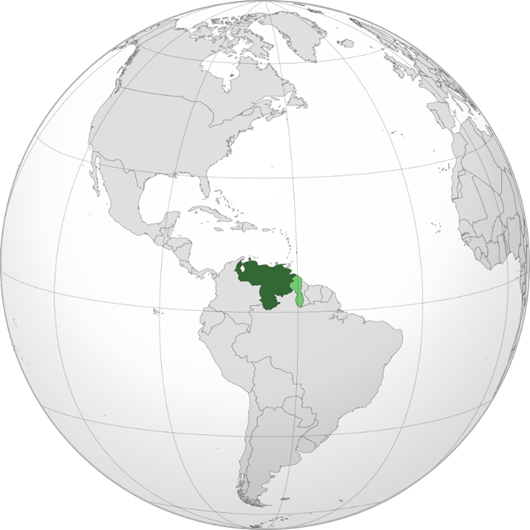
Moving our lens slightly north from Brazil, we arrive at Venezuela. If Brazil was a story of “industrial ambition,” Venezuela is a classic, almost textbook case of the “Resource Curse” or the “Paradox of Plenty.”
Let’s analyze how a nation sitting on the world’s largest oil reserves struggled to translate that liquid gold into dignity for its people, leading eventually to a seismic political shift.
The 1945 “Democratic Spring” and the Reactionary Blowback
In the mid-1940s, Venezuela attempted to break the cycle of military rule.
- The Reformer: Rómulo Betancourt and his party, Acción Democrática, came to power in 1945. His vision was radical for its time: use oil wealth to fund land reform, education, and health.
- The Conflict: He dared to tax foreign (US and British) oil companies heavily.
- The Consequence: In a pattern we see across Latin America, the “holy trinity” of the elite—wealthy landowners, foreign capital, and the military—united to crush the reform. In 1948, Betancourt was ousted in a coup.
The Decade of “Oil and Iron” (1948–1958)
For the next ten years, Venezuela was under the “ruthless” dictatorship of Marcos Pérez Jiménez.
- US Interests: Washington was perfectly happy with this dictatorship because it provided “stability.” While political parties and trade unions were banned, American dollars flowed in.
- Diversification Attempt: The regime began building steel plants to exploit iron ore. Iron and steel became the second pillar of the economy.
- Social Failure: Despite the skyscrapers and steel plants, the wealth stayed at the top. In 1957, even the Catholic Church (historically conservative) had seen enough. Archbishop Blanco publicly condemned the “subhuman conditions” of the majority while the leaders lived in luxury. This moral authority gave the final push to the 1958 general strike that ended the dictatorship.
The Era of “Puntofijo” Democracy (1958–1980s)
Democracy returned, and Betancourt was re-elected. This period is crucial for its cautious balancing act.
A. The 60/40 Oil Compromise
Betancourt learned from 1948. He raised the state’s share of oil revenue to 60% but stopped short of full nationalization. He didn’t want to provoke a US-backed coup. This “moderate” path disappointed the Left but stabilized the country.
B. The Birth of PdVSA (1976)
By the 1970s, during the global oil boom, Venezuela felt strong enough to take control. President Carlos Andrés Pérez nationalized the oil industry, creating the state giant PdVSA. For a while, Venezuela was the “poster child” of Latin American stability—legalizing the Communist Party and even opening ties with the USSR.
The 1980s: The Collapse of the “Oil Mirage”
The stability of Venezuela was built on a single pillar: High Oil Prices. When prices fell in the 1980s, the entire house of cards collapsed.
- The Steel Blow: To make matters worse, the US—the champion of “free trade”—turned protectionist. Washington slashed imports of Venezuelan steel by nearly 80%. This was a “disastrous blow” to the industrial sector.
- The IMF “Straitjacket”: Falling revenues led to debt. To get loans, the government had to follow IMF Austerity: cutting social spending and reducing imports.
- Social Explosion: Inflation hit 40%, and poverty, which had been hidden by oil subsidies, came roaring back. When the government sent the army into poor neighborhoods to crush riots, the military itself began to fracture.
Enter Hugo Chávez: The Outsider as Savior
The frustration of the masses found a voice in a young paratrooper, Hugo Chávez.
- The 1992 Coup: Distrustful of the corrupt political elite, Chávez led a failed coup in 1992. Although he went to jail, his “for now” speech on television—admitting failure but hinting at a future return—made him a folk hero.
- The 1998 Election: By 1998, the traditional parties had lost all credibility. Half the banking system had collapsed. Chávez ran on a “pro-poor” platform: social spending and cooperation with Cuba. He won a landslide victory.
The Maduro Era: From Populism to Survival (2013–2018)
Following Chávez’s death in 2013, his hand-picked successor, Nicolás Maduro, took the reins. Unlike Chávez, who benefited from $100-per-barrel oil, Maduro inherited a “Dutch Disease” economy—where the domestic industry had been hollowed out in favor of oil imports.
- The Economic Freefall: When oil prices crashed in 2014, the government’s ability to fund social “Missions” evaporated. The result was hyperinflation so severe that the currency, the Bolívar, became essentially worthless, leading to a de facto dollarization of the economy.
- The Migration Crisis: This period triggered the largest displacement of people in the history of the Americas. By 2026, an estimated 7.9 million Venezuelans have fled the country, seeking refuge in neighboring Colombia, Peru, and the United States.
The 2024 Election: The Stolen Landslide
The most significant turning point in recent years was the July 28, 2024, presidential election. For the first time in decades, the opposition united under the leadership of María Corina Machado, though she was barred from running. Her surrogate, Edmundo González Urrutia, became the face of the movement.
- The “Actas” Evidence: While the government-controlled National Electoral Council (CNE) declared Maduro the winner, the opposition managed to digitize and publish over 80% of the physical tally sheets (actas) from polling stations. These documents showed a landslide victory for González (approx. 67% to 30%).
- Operation “Tun Tun”: In the aftermath, the Maduro government launched a brutal crackdown known as Operación Tun Tun (Knock-Knock), arresting over 2,000 protesters and forcing González into exile in Spain.
2026: “Operation Absolute Resolve” and a Fragile Reset
As of May 2026, Venezuela is in a state of high-stakes transition following a dramatic shift in U.S. policy and regional intervention.
- The 2026 Intervention: On January 3, 2026, the United States launched “Operation Absolute Resolve.” In a rapid military operation, Nicolás Maduro and several high-ranking officials were captured and transferred to the U.S. to face longstanding narcoterrorism and drug trafficking charges.
- The Interim Shift: In the wake of Maduro’s capture, Delcy Rodríguez was sworn in as acting president on January 5, 2026, under orders from the Supreme Tribunal. While the military remains a powerful arbiter of power, the government has been forced into a “pragmatic survival” mode.
- Economic “Normalization”: Paradoxically, 2026 has seen a slight economic rebound. With Maduro in U.S. custody, the U.S. Treasury has issued new licenses (like General License 46) allowing oil majors like Chevron and Repsol to expand operations. Oil production has climbed back above 1 million barrels per day for the first time in years.
Current Status (May 2026)
| Sector | Status |
| Governance | Fragile. Delcy Rodríguez serves as acting president while negotiations for a full democratic transition continue. |
| Economy | Projected 12% GDP growth. A “rebound effect” fueled by eased oil sanctions and rising exports to the U.S. |
| Opposition | Resurgent. María Corina Machado has announced plans to return to Caracas to lead the transition toward the 2024 election’s rightful winner. |
| Diplomacy | Reopening. The U.S. officially reopened its embassy in Caracas in March 2026 after a seven-year closure. |
Venezuela today is a nation caught between its authoritarian past and an uncertain, foreign-influenced recovery. The “Oil Mirage” has vanished, replaced by a gritty, dollarized reality where survival depends more on pragmatic deals with Washington than on the revolutionary rhetoric of the past.
How do you think the capture of a sitting leader by a foreign power will affect the long-term sovereignty and political stability of the region?