
UPSC CURRENT AFFAIRS — 22 NOVEMBER 2026
1. India–Indonesia Trade Talks Revive After Five Years
(INTERNATIONAL RELATIONS) (DD) India and Indonesia reviewed trade and economic cooperation at the second meeting of the Working Group on Trade and Investment (WGTI), held in hybrid mode at Vanijya Bhawan, New Delhi. Market access barriers, trade diversification, services and investment were on the table.
About the WGTI
- A bilateral forum for talks on trade, investment and market access; the inaugural meeting was held in August 2021, so this round came after a five-year gap.
- India pressed for early conclusion of the review of the ASEAN–India Trade in Goods Agreement (AITIGA), a free trade agreement in force since 2010.
- Indonesia, in turn, raised market access for its farm products and India’s Quality Control Orders.
Trade Snapshot
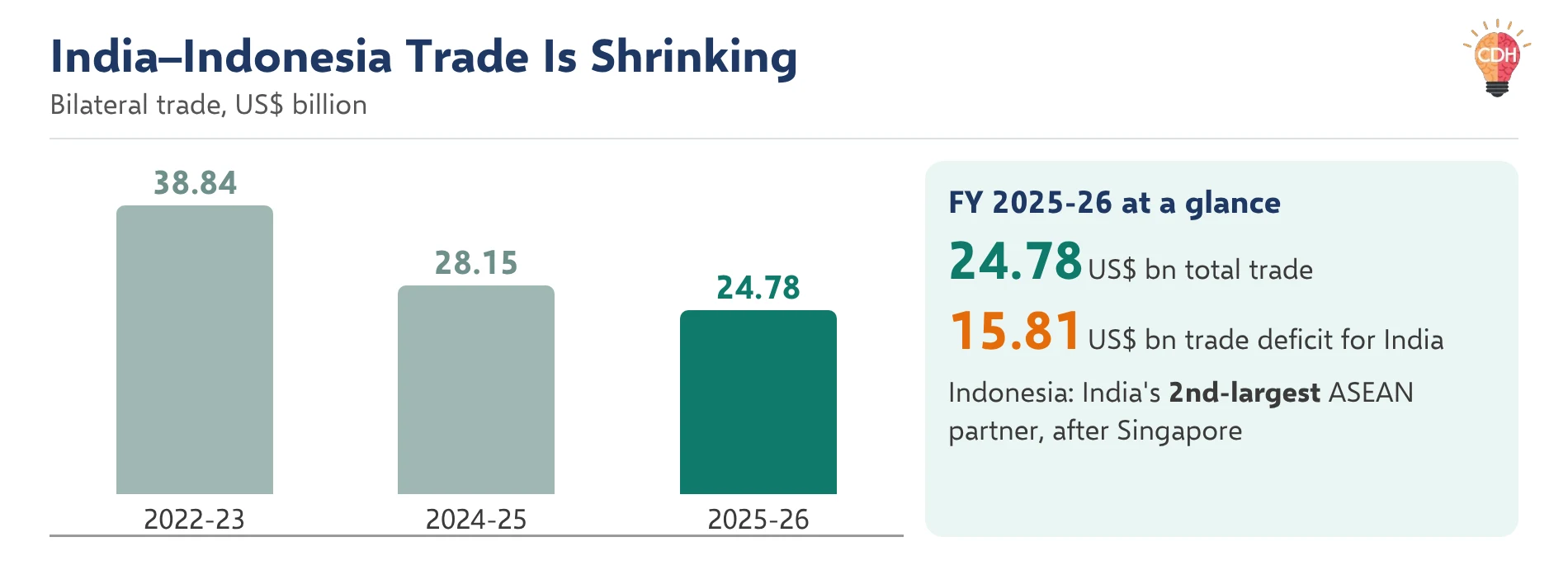
- Bilateral trade stood at US$24.78 billion in FY 2025-26, down from US$38.84 billion in 2022-23 (MEA brief).
- India ran a merchandise trade deficit of about US$15.81 billion in FY 2025-26.
- Indonesia accounted for about 19.3% of India’s trade with ASEAN in 2025-26.
Why Indonesia Matters
- Act East anchor: India’s second-largest trading partner in ASEAN (after Singapore) and a pillar of the Act East Policy; ties were upgraded to a Comprehensive Strategic Partnership in 2018.
- Energy and food security: a key source of coal and palm oil, India’s largest edible oil import.
- Critical minerals: Indonesia’s large nickel reserves suit EV battery and clean-energy supply chains.
- Market for Indian goods: pharmaceuticals, automobiles, engineering goods, farm products and digital services.
- Indo-Pacific: maritime neighbours across the Andaman Sea; stronger trade supports regional connectivity and stability.
Challenges
| Challenge | What it means |
|---|---|
| Trade deficit | Imports (mainly coal and palm oil) far exceed exports |
| Non-tariff barriers | Halal certification, product standards, licensing and local-content rules |
| Narrow export basket | India’s exports are concentrated in a few sectors |
| Regulatory gaps | Different drug-registration, farm and technical standards raise compliance costs |
| AITIGA imbalances | Limited market access and a widening deficit under the ASEAN pact |
📖 Read More: India and Indonesia Relations • ASEAN • India and South-East Asia Policy
2. Wildlife for Climate Declaration Launched at COP31
(ENVIRONMENT) (DTE) At COP31 of the UNFCCC in Antalya, Türkiye, 25 countries endorsed the Wildlife for Climate Declaration. It is the first time a group of governments has jointly promoted the role of wild animals in climate action at a UN climate conference.
About the Declaration
- Aim: treat protecting and restoring wild animal populations as a tool for both climate mitigation and adaptation.
- Nature: a voluntary, non-binding political commitment.
- Backers: 25 countries including Brazil, Belize, DR Congo, Fiji, Guatemala, Kenya and Zimbabwe; Zimbabwe championed it, following an announcement by African leaders at COP30 in Brazil.
- Science base: a Scientific Consensus on Wildlife and Climate signed by more than 350 scientists from 47 countries.
Key Commitments
- Policy integration: build wildlife conservation into NDCs, NBSAPs (National Biodiversity Strategies and Action Plans) and NAPs (National Adaptation Plans).
- Finance: predictable funding, technical help, technology transfer and capacity building, including from developed countries.
- Habitats: protect, restore and connect habitats so animals can move and ecosystems recover.
- Overexploitation: curb unsustainable hunting, trade, habitat loss and deforestation.
- Coexistence: reduce human–wildlife conflict.
- Food systems: farming practices that ease pressure on wildlife habitats.
- Safeguards: carbon markets and climate-finance projects must protect biodiversity and community rights, with fair benefit-sharing.
How Wild Animals Help the Climate
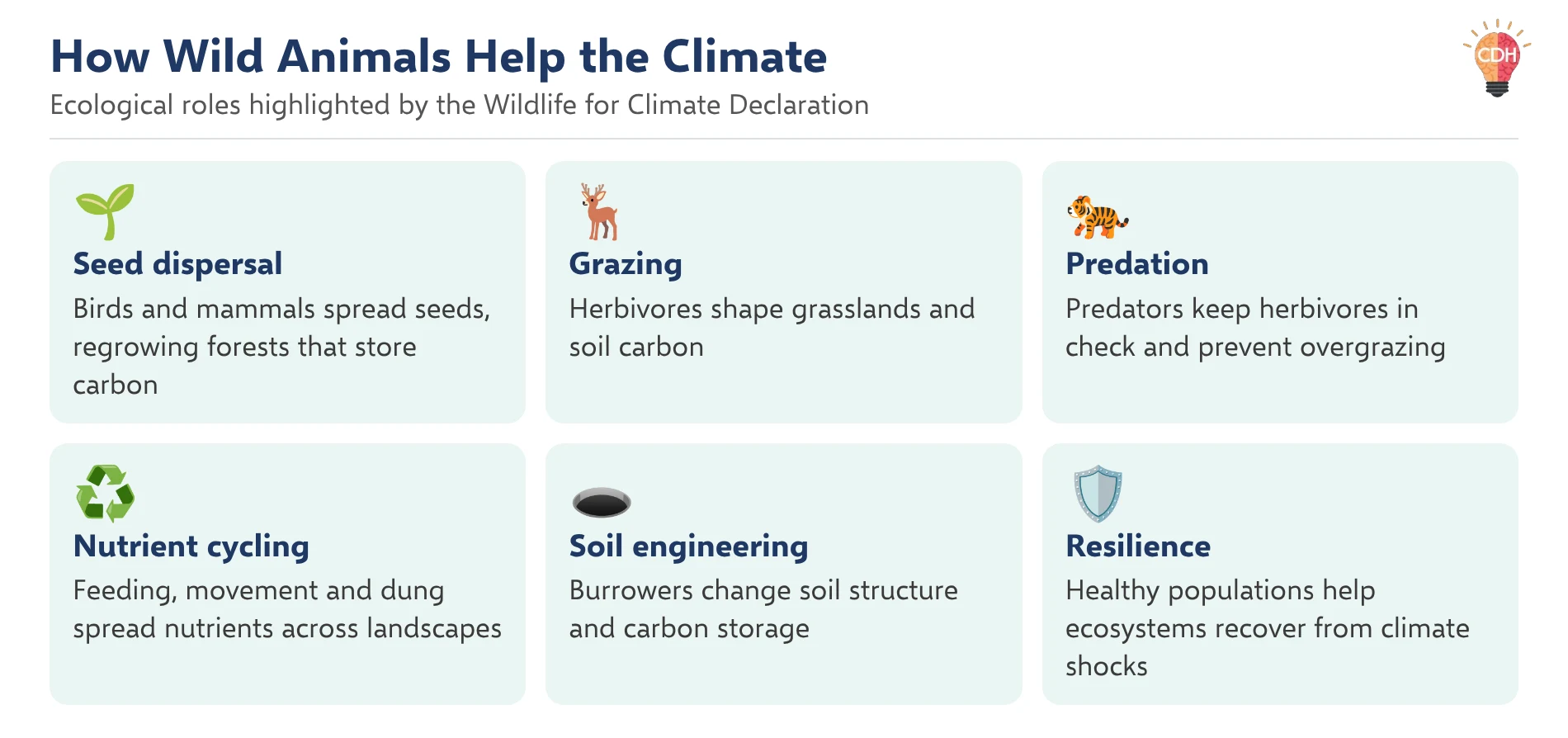
Animals are usually seen as victims of climate change. The declaration recasts them as contributors: by shaping vegetation, soils and nutrient flows, they keep ecosystems storing carbon and bouncing back from shocks.
📖 Read More: UNFCCC • COP30 Belém, Brazil 2025 • Biodiversity Conservation • Human–Animal Conflict in India
3. World AMR Awareness Week 2026: One Health Push
(SCIENCE AND TECHNOLOGY) (PIB) The Union Ministry of Health and Family Welfare inaugurated the national observance of World Antimicrobial Resistance Awareness Week (WAAW) 2026. The week runs from 18 to 24 November every year to promote responsible use of antimicrobials.
About WAAW
- A global campaign to improve understanding of antimicrobial resistance and encourage prudent use of medicines.
- 2026 theme: One Health, one action: Prevent AMR now.
- It is run jointly by WHO, FAO, UNEP and WOAH (the Quadripartite), and this year promotes the updated Global Action Plan on AMR 2026–2036.
What Is AMR?
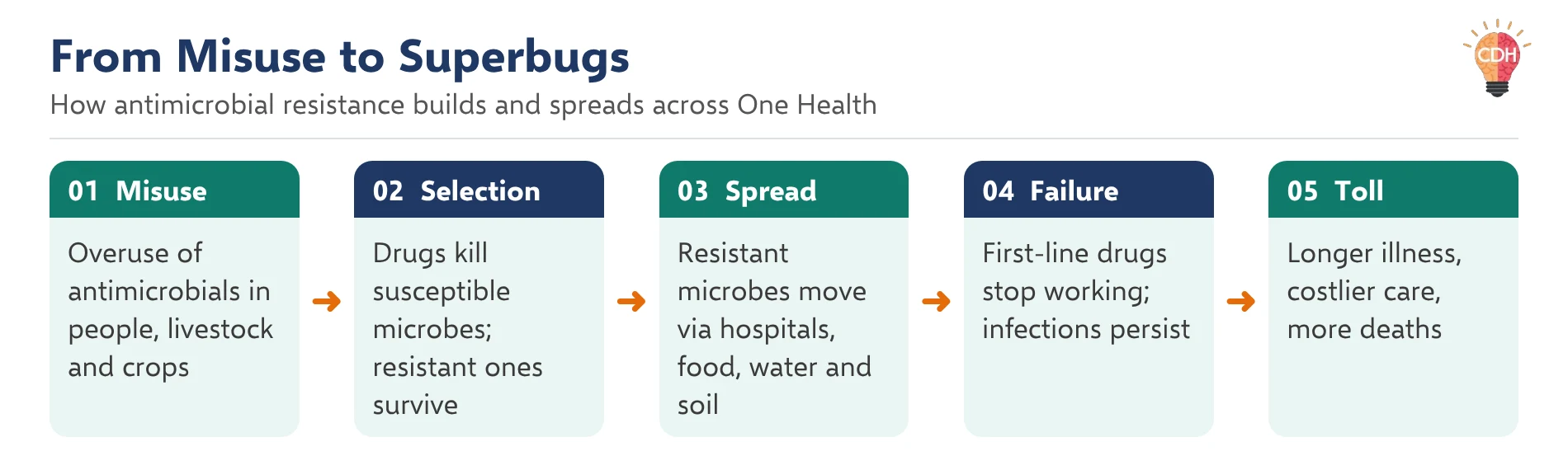
Antimicrobial resistance arises when bacteria, viruses, fungi and parasites evolve ways to survive the medicines meant to kill or control them. Infections then become harder to treat, raising the risk of long illness, complications and death.
Note: antibiotic resistance refers only to bacteria; AMR is the wider term covering all microbes and all antimicrobial medicines.
Scale of the Threat
- In 2021, bacterial AMR was associated with 4.71 million deaths worldwide, including 1.14 million directly attributable to resistant infections.
- Without urgent action, drug-resistant infections could cause up to 39 million deaths between 2025 and 2050; this projection comes from the GRAM study published in The Lancet (2024).
India’s Response
- NAP-AMR 2.0 (2025–29): launched on 18 November 2025, it follows the first National Action Plan on AMR (2017) and stresses a One Health approach and private-sector engagement.
- The One Health approach links human, animal, plant and environmental health, since resistant microbes move freely between them (health challenges).
📖 Read More: Medical Therapeutics and Health Challenges • Health and Nutrition • Immunity
4. Remembering Revolutionary Batukeshwar Dutt
(HISTORY) (AIR) The Union Home Minister paid tribute to revolutionary freedom fighter Batukeshwar Dutt on his 116th birth anniversary (18 November).
Life and Work
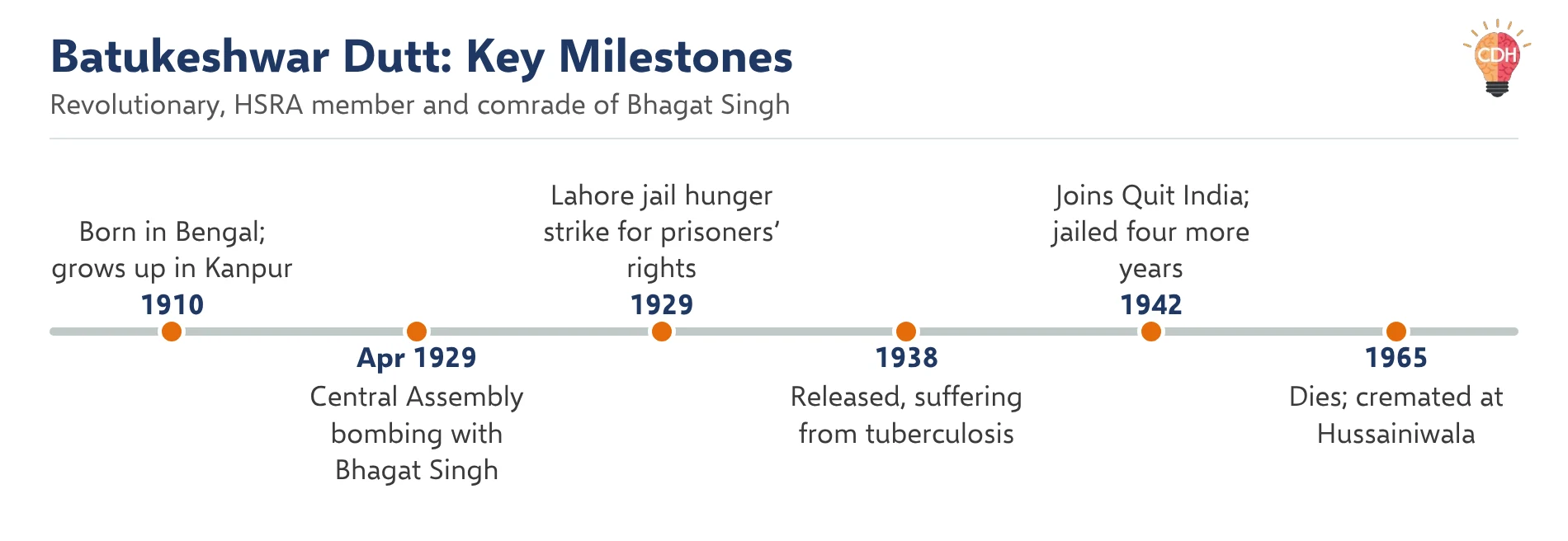
- Early life: born in 1910 in Bengal (in today’s Purba Bardhaman district, West Bengal) and raised in Kanpur.
- HSRA: a socialist revolutionary and key member of the Hindustan Socialist Republican Association (revolutionary nationalism of the 1920s).
- Assembly bombing (8 April 1929): with Bhagat Singh, he threw two low-intensity bombs in the Central Legislative Assembly to protest the Public Safety Bill and the Trade Disputes Bill, raised ‘Inquilab Zindabad’ and courted arrest. The aim was ‘to make the deaf hear’, not to kill.
- Punishment: sentenced to life imprisonment and sent to the Cellular Jail in the Andamans.
- Lahore jail hunger strike (1929): launched with Bhagat Singh to win political-prisoner status and better jail conditions.
- Later years: released with tuberculosis in 1938, he joined the Quit India Movement (1942), was re-arrested and spent four more years in Motihari Jail, Bihar.
- Death: he died in 1965 in New Delhi and was cremated at Hussainiwala, Punjab, beside Bhagat Singh, Sukhdev and Rajguru.
📖 Read More: Revolutionary Nationalism in the 1920s • Unsung Heroes of Revolutionary Nationalism • Quit India Movement