
Stability and Chaos in Sierra Leone
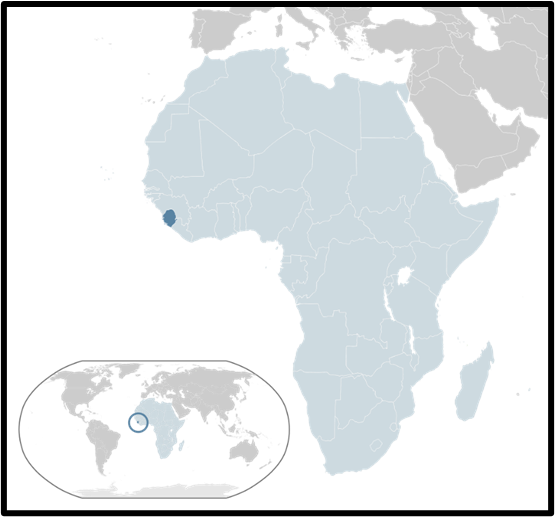
We now arrive at the tragic tale of Sierra Leone. If Liberia was an experiment in American-style settlement, Sierra Leone began as a similar British experiment—a haven for “Liberated Africans” and former slaves from the British Empire (the “Krios”).
However, Sierra Leone’s history is defined by a haunting paradox: it is one of the most naturally gifted nations on Earth, yet its wealth in diamonds became the very engine of its destruction. This is the ultimate case study of the “Resource Curse.”
The Lost Potential: From Prosperity to Decay
At independence in 1961, Sierra Leone was a “star pupil” of West Africa. It had a functioning democracy and a wealth of iron ore and diamonds.
- The Margai Brothers: Sir Milton Margai was the “founding father”—enlightened and respected. But his death in 1964 left a vacuum. His brother, Albert, lacked the same prestige, leading to the first military interventions.
- The Siaka Stevens Era (1968–1985): Stevens brought stability, but at a terrible price. He hollowed out the state’s institutions.
- The Diamond Drain: Under his watch, the diamond trade moved from the state treasury into the hands of smugglers.
- The One-Party State: To stay in power, he banned all opposition in 1978. By the time he retired, he had replaced a democracy with a “strongman” culture that prioritized personal loyalty over national development.
The “Descent into the Abyss”: The RUF and Civil War
When Stevens’ hand-picked successor, Joseph Momoh, proved incompetent and corrupt, the country snapped. This gave rise to the Revolutionary United Front (RUF) led by Foday Sankoh.
- Brainwashed Rebels: Sankoh did not lead a political movement; he led a cult of violence. He used drugs and coercion to turn young boys into soldiers.
- The “Amputation” Strategy: The RUF became infamous for a specific horror: hacking off the hands and legs of civilians. This was a psychological tactic to prevent people from voting or working, effectively “breaking” the spirit of the nation.
- The Logic of “Blood Diamonds”: The war wasn’t about ideology; it was about who controlled the diamond mines in the east. These “Blood Diamonds” were sold on the international market to buy the weapons that kept the war going.
The International Rescue: ECOWAS and Tony Blair
By 1999, the capital, Freetown, was a slaughterhouse. Roughly 7,000 people were murdered in just ten days during the “Operation No Living Thing.”
- The UN Failure: The UN sent peacekeepers, but they were initially overwhelmed and even taken hostage by the RUF.
- The British Intervention (2000): In a rare moment of effective post-colonial intervention, UK Prime Minister Tony Blair sent British paratroopers. Their arrival stabilized Freetown and provided the military “teeth” that the UN lacked, eventually forcing the RUF to disarm.
- The Death of Sankoh: Foday Sankoh was captured and died in prison in 2003, marking the end of the rebellion’s primary heartbeat.
The Long Road Back: Justice and Reconstruction
Since the war officially ended in 2002, Sierra Leone has been trying to rebuild from “Year Zero.”
- The War Crimes Tribunal: Unlike many other nations that chose only “reconciliation,” Sierra Leone pursued a hybrid court to prosecute those most responsible for the atrocities, including the intervention that led to the conviction of Liberia’s Charles Taylor.
- President Koroma’s Reforms: Under Ernest Bai Koroma (2007), there were signs of hope. He tackled the “new threat”—Latin American drug cartels using the country as a transit point—and introduced free healthcare for mothers and children.
- The Economic Reality: Despite the peace, Sierra Leone remains one of the poorest countries in the world. Its infrastructure was so thoroughly destroyed that a decade of peace has only begun to scratch the surface of recovery.
Critical Analysis: The Geography of Greed
Why did Sierra Leone fall so much harder than its neighbors?
- State Collapse: Siaka Stevens destroyed the “civil service” and the “police” long before the war started. When the RUF attacked, there were no institutions left to protect the people.
- The Allure of the “Easy Gem”: Unlike iron ore or oil, which require massive machinery to extract, diamonds can be picked up by hand in a riverbed. This made them the perfect “currency” for warlords.
- The Krio vs. Upcountry Divide: The historical tension between the educated elite in Freetown (the Krios) and the rural tribes provided the social “kindling” for the RUF’s recruitment.
Conclusion:
Sierra Leone’s history is a cautionary tale of what happens when a state’s natural wealth is not guarded by “Accountability.” It shows that “Stability” under a dictator (Stevens) is often just a mask for “Decay” that eventually leads to “Chaos.”
Having seen how British troops and the UN eventually brought peace, do you think Sierra Leone’s story proves that African states sometimes need outside military intervention to survive, or was that intervention just a temporary “band-aid” for a deeper problem?