
Poverty in Tanzania
Let us now shift our gaze to East Africa, to a nation that serves as a unique “moral laboratory” in world history: Tanzania.
If Nigeria was about oil and tribalism, and Ghana was about the rapid rise and fall of a “Messiah,” Tanzania is the story of “Mwalimu” (The Teacher)—Julius Nyerere. It is a story of how high-minded ideals met the cold, hard reality of global economics.
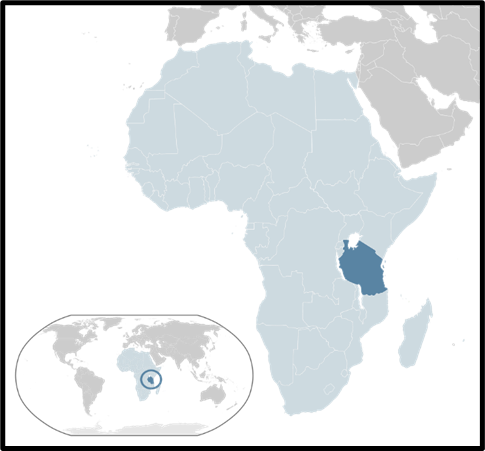
The Starting Point: A Nation of “Formidable Poverty”
When Tanganyika gained independence in 1961 (joining with Zanzibar in 1964 to form Tanzania), it didn’t have the oil of Nigeria or the cocoa of Ghana.
- The Baseline: It was one of the poorest states in Africa. Very little industry, almost no mineral resources at the time, and a total dependence on coffee.
- The Social Advantage: However, unlike Nigeria, Tanzania had a “silent strength.” Tribal differences were not as explosive, and the Swahili language acted as a cultural bridge, uniting diverse groups into a single national identity.
The Arusha Declaration (1967): African Socialism and Ujamaa
In 1967, Nyerere published a document that would define Tanzania for decades: the Arusha Declaration.
Nyerere’s philosophy was rooted in African Socialism, which he called Ujamaa (meaning “familyhood”). Let us understand its core pillars:
- Equality and Dignity: Every human must be treated as an equal. There was no room for a “wealthy elite” while the masses suffered.
- Self-Reliance: This is the most important concept. Nyerere argued that victory over poverty would not come through foreign aid or loans, but through hard work. He wanted Tanzania to be the master of its own destiny.
- Communal Farming: Under Ujamaa, families were encouraged to pool their resources in village co-operatives. The idea was to use modern techniques collectively to achieve food self-sufficiency.
- Personal Integrity: Nyerere himself lived a simple life, shunning the luxury and corruption that plagued other African leaders. He was the “Teacher” leading by example.
The Paradox: Social Success vs. Economic Failure
Now, here is where the analytical depth is required. Was Nyerere’s experiment a success? The answer is “Yes” in social terms, but “No” in economic terms.
A. The Social “Miracle”
By the time Nyerere retired in 1985, Tanzania’s social statistics were the envy of the continent:
- Literacy: A staggering 85%, one of the highest in Africa.
- Healthcare: Infant mortality dropped significantly, and life expectancy rose to 52.
- Unity: He had built a stable, peaceful nation without the civil wars seen in Nigeria or the Congo.
B. The Economic Stagnation
Despite the high ideals, the economy struggled to breathe:
- The Productivity Gap: Nationalization of industries (like the sisal estates) often led to a drop in production because of a lack of expert management and incentive.
- The “Global Village” Trap: Tanzania could not hide from the world. When coffee prices fell and oil prices rose, the country ran out of foreign exchange.
- The Cost of Morality: Nyerere spent a fortune (over £1,000 million) on a military campaign to overthrow the Ugandan dictator Idi Amin. While morally right, it was economically devastating.
The Post-Nyerere Era: The Shift to Liberalization
When Nyerere stepped down in 1985, his successor, Ali Hassan Mwinyi, faced a choice: continue the socialist path to bankruptcy or open the doors to the world.
- Enter the IMF: Unlike Nyerere, Mwinyi accepted help from the International Monetary Fund (IMF). But this came with “strings attached.”
- In one tragic instance, the IMF forced debt-relief conditions that required parents to pay for primary school—causing school enrollment to plummet in a country that once prided itself on education.
- The Mineral Boom: Under President Benjamin Mkapa (1995–2005), Tanzania discovered its hidden wealth: Gold and the rare gemstone Tanzanite.
- By 2005, Tanzania was on its way to becoming the world’s third-largest gold producer.
- The “CCM” Dominance: Throughout this, the ruling party (now called CCM) maintained a firm grip on power. While elections were generally peaceful, corruption began to seep into the upper echelons of the party—a far cry from Nyerere’s simple lifestyle.
Critical Analysis: The Legacy of Mwalimu
If you look at Tanzania today, you see a country that survived the “African Crisis” better than many of its neighbors.
- Historiographical Perspective: Critics of Nyerere argue that Ujamaa was a “romantic failure” that kept the country poor for twenty years. However, supporters argue that Ujamaa created the social cohesion and peace that allowed later presidents to build a market economy without the threat of civil war.
- The Interlinkage of Health and Economy: The spread of HIV/AIDS in the 1990s and 2000s acted as a massive “economic brake,” forcing the government to divert funds from development to public health—a common tragedy across the continent.
- The Transition: The shift from a socialist one-party state to a capitalist multi-party democracy (post-1992) was remarkably smooth compared to the violent transitions in other parts of Africa.
The Lesson: Tanzania teaches us that while “bread” (the economy) is essential, “peace and dignity” (social unity) are the foundations upon which a house is built. Nyerere may have failed as an economist, but he succeeded as a nation-builder.
I hope you can now see the contrast between the oil-rich but divided Nigeria and the poor but unified Tanzania.
Given the harsh conditions imposed by the IMF on Tanzania in the 2000s, do you think “Self-Reliance” was actually a more realistic goal than “Foreign Aid,” even if it meant slower growth?