
Liberia: A Unique Experiment
We now arrive at Liberia, a nation whose story is as ironic as it is tragic. If the other African states were “artificial” creations of European powers, Liberia was an “artificial” creation of American idealism and racial anxiety.
It is a unique experiment in the return of the African Diaspora, yet it ultimately fell into the same traps of elitism and violence we have seen across the continent.
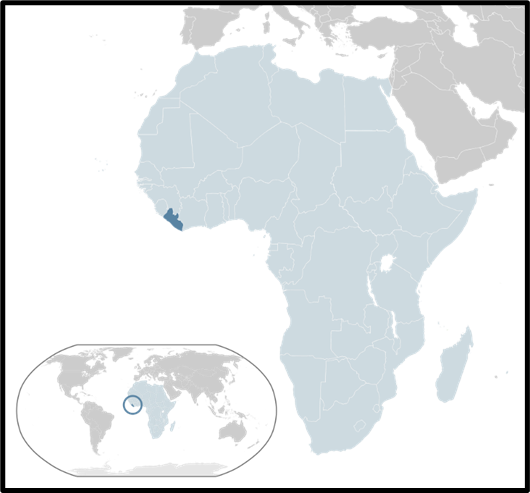
The Foundation: A “Mirror” of America
Liberia was founded in 1822 not by a colonial government, but by the American Colonization Society. Their goal was simple yet controversial: send freed slaves back to Africa.
- A Black Elite: The settlers (Americo-Liberians) modeled their new home exactly on the USA. They had a constitution based on the American one, a flag of stripes and a star, and a capital, Monrovia, named after US President James Monroe.
- The Irony of Oppression: Here is the great tragedy,: these former slaves, who had fled oppression in America, became the oppressors in Africa. They formed a tiny elite (the “True Whig Party”) and treated the indigenous African tribes as second-class citizens.
- The Slavery Scandal (1930): In a shocking twist of history, the League of Nations discovered that the Liberian government—founded by freed slaves—was actually selling indigenous citizens into forced labor.
It reminds us that power, regardless of race, can be incredibly corruptive.
The Tubman Era: Stability and Rubber (1943–1971)
For nearly 30 years, William Tubman ruled Liberia. He was the “grand old man” of Liberian politics.
- The Rubber Boom: During WWII, when the Allies lost their Asian rubber supplies, Liberia became vital. The Firestone company turned Liberia into a massive rubber plantation. This brought American cash and infrastructure, but it also made the economy dangerously dependent on a single export.
- The “Flag of Convenience”: Liberia became famous for allowing foreign ships to fly its flag. Why? Because regulations were lax and fees were low. It was a clever way to make money, but it gave Liberia a reputation for being a “lawless” regulatory haven.
The Descent into Chaos: Doe and Taylor
The “Americo-Liberian” monopoly on power finally shattered in 1980 when Samuel Doe, a native indigenous soldier, staged a bloody military coup.
- The 1980 Coup: President Tolbert was executed on a beach. This ended a century of settler rule but replaced it with a ruthless military dictatorship.
- The Warlord Era (1989–1996): A former government official, Charles Taylor, launched a rebellion that spiraled into one of Africa’s most gruesome civil wars. The conflict was defined by:
- Child Soldiers: Thousands of children were drugged and forced to fight.
- Regional Instability: Taylor didn’t just ruin Liberia; he fueled a horrific civil war in neighboring Sierra Leone to control their “blood diamonds.”
Ellen Johnson-Sirleaf: A New Dawn (2005–2018)
After years of UN intervention and the exile of Charles Taylor (who was eventually sentenced to 50 years for crimes against humanity), Liberia made history.
- Africa’s First Female President: Ellen Johnson-Sirleaf, the “Iron Lady” of Liberia. A Harvard-educated economist, she was the antithesis of the warlords who preceded her.
- The Nobel Peace Prize: In 2011, she was awarded the Nobel Peace Prize. Her task was Herculean: rebuilding a country that was “literally in ruins” and reconciling tribes that had spent 15 years killing one another.
- Economic Recovery: She used her World Bank expertise to cancel Liberia’s massive debts and attract new investment, though poverty and the scars of war remained deep.
Critical Analysis: The Settler vs. The Native
Liberia provides a unique lesson in identity politics:
- The Colonizer’s Mindset: The Americo-Liberian settlers viewed themselves as “civilizers” bringing Christianity and American values to a “dark” continent. This cultural arrogance created a divide that took over 150 years to explode.
- The Resource Curse (Diamonds and Rubber): Like Angola and Nigeria, Liberia’s natural wealth was used to fund weapons rather than schools, proving once again that wealth without strong institutions is a recipe for war.
- Justice at the Hague: The conviction of Charles Taylor was a landmark moment for international law. It sent a message to African “strongmen” that they could no longer hide behind national sovereignty to commit crimes against humanity.
Conclusion:
Liberia’s journey from a “colony for freed slaves” to a “warlord’s playground” and finally to a “pioneer of female leadership” is a testament to the resilience of its people. It highlights that democracy cannot be imported as a “template” from America; it must be grown from the soil of the people it serves.
Given that Liberia was founded by people who had been slaves in America, does it surprise you that they ended up creating a social hierarchy that marginalized the local African tribes? Or is this simply a case of “the oppressed becoming the oppressor”?