
UPSC CURRENT AFFAIRS — 24 NOVEMBER 2026
1. India–Nepal Unveil a Ten-Pillar Joint Vision
(INTERNATIONAL RELATIONS) (PIB) Nepal’s Prime Minister Balendra Shah made his first State Visit to India on 22–23 November 2026. The two sides adopted a Joint Vision with ten pillars for a “Viksit Bharat and Samunnat Nepal”, and India announced development assistance of ₹15,000 crore.
The Money on the Table
| Component | Amount | Purpose |
|---|---|---|
| Grant assistance | ₹3,500 crore (NPR 5,600 crore) | Rebuilding after the August 2026 floods in the Rasuwa–Trishuli basin, and new infrastructure |
| Rupee-denominated Line of Credit | ₹11,500 crore (NPR 18,400 crore) | Energy-sector projects |
| Total | ₹15,000 crore | NPR 24,000 crore |
What the Ten Pillars Cover
| Pillar | Key deliverables |
|---|---|
| Economy and development | Cross-border special economic zones and IT parks; new transit and air routes |
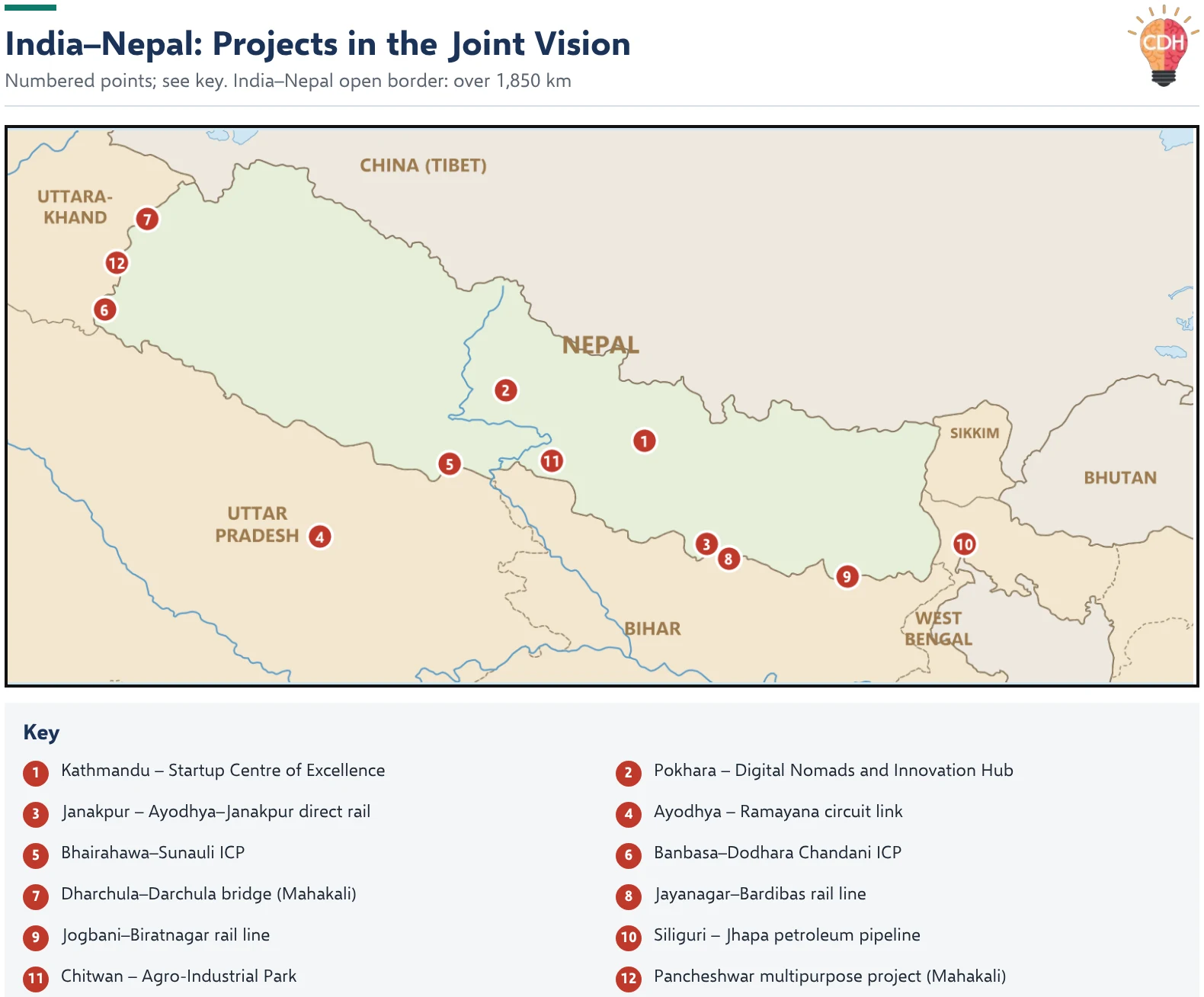
| Connectivity | Ayodhya–Janakpur direct rail; Dharchula–Darchula bridge over the Mahakali; ICPs at Bhairahawa–Sunauli and Banbasa–Dodhara Chandani; Jayanagar–Bardibas and Jogbani–Biratnagar rail; East–West Rail in Nepal; Siliguri–Jhapa petroleum pipeline; UPI linkage |
| Energy, water and climate | More hydropower and transmission investment; faster Pancheshwar, Saptakoshi and Sunkoshi projects; hydro-meteorological data sharing; a green hydrogen pilot |
| Governance and technology | Digital public infrastructure for the “Digital Nepal Framework”; a Nepali-language large language model with BHASHINI; space cooperation with ISRO and IN-SPACe |
| People-to-people | Explore an IIT campus; a cricket coaching academy; Ramayana, Buddhist and Shiv–Shakti circuits; a Nalanda Centre at Lumbini Buddhist University; Jan Aushadhi Kendras |
| Agriculture | Agro-Industrial Park in Chitwan; an ICAR Centre of Excellence |
A High-Level Monitoring Group, led by Nepal’s Foreign Secretary and India’s Ambassador, will meet at least once every six months and report to the Joint Commission.
The Relationship at a Glance
- Open border: over 1,850 km, touching Sikkim, West Bengal, Bihar, Uttar Pradesh and Uttarakhand.
- Treaty base: the 1950 Treaty of Peace and Friendship; the Joint Vision says existing agreements can be reviewed by mutual consent.
- Economy: India is Nepal’s largest trade partner and a leading investor; a 2024 long-term agreement targets 10,000 MW of power imports from Nepal.
- People: Gorkha soldiers from Nepal serve in the Indian Army, a link that predates both modern states.
Irritants to Manage
- Boundary: Kalapani–Lipulekh–Limpiyadhura and Susta remain disputed; the Kalapani claim rests on readings of the Treaty of Sugauli (1816).
- Delays: Pancheshwar has been stalled for decades; the 2018 Eminent Persons Group report is yet to be formally received.
- Trade gap: Nepal runs a large deficit and cites non-tariff barriers.
- Open border: useful for livelihoods but misused for trafficking and smuggling.
The new vision tries to move ties from aid to shared growth: power trade, digital links and connectivity give Nepal a stake in India’s growth and serve India’s Neighbourhood First approach.
📖 Read More: India and Nepal • India and Neighbourhood Policy
2. After New START: The Case for Nuclear Risk Reduction
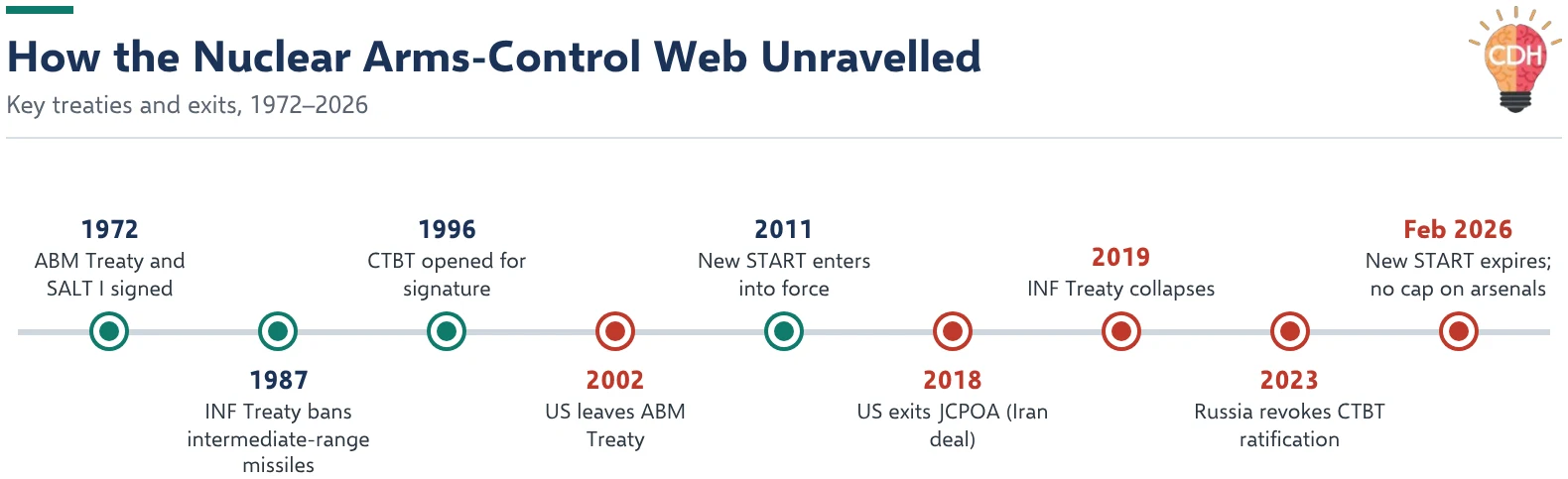
(INTERNATIONAL RELATIONS) (TH) The New START treaty, the last cap on US and Russian strategic arsenals, expired in February 2026. With no binding limits for the first time since 1972, there are renewed calls for a Nuclear Risk Reduction (NRR) framework among the major powers.
What Nuclear Risk Reduction Means
Arms control limits numbers; risk reduction lowers the chance that weapons are used by accident, miscalculation or unintended escalation. It works even when trust is low.
- Hotlines for crisis talks between leaders and militaries.
- Launch notifications before missile tests.
- De-alerting weapons so they cannot be fired within minutes.
- Protecting nuclear command, control and communications (NC3) from cyber and space attacks.
Why the Risk Has Grown
- No caps: New START had limited each side to 1,550 deployed strategic warheads and 700 deployed missiles and bombers, with on-site inspections.
- Three-way race: the US wants China in any new deal; Russia wants the UK and France included; China, with about 620 warheads, rejects equal limits.
- New technologies: AI in military command, hypersonic missiles, anti-satellite weapons and cyber attacks shorten decision time.
- Flashpoints: Ukraine, Taiwan and West Asia keep nuclear-armed states in tense standoffs.
Where India Stands
| Element | India’s position |
|---|---|
| Nuclear doctrine (2003) | No First Use, credible minimum deterrence, civilian control through the Nuclear Command Authority; retaliation option against a major biological or chemical attack |
| Arsenal | About 190 warheads (SIPRI, January 2026) |
| CBMs with Pakistan | Non-attack on nuclear installations (1988, lists exchanged every 1 January); pre-notification of ballistic missile tests (2005); agreement on nuclear accidents (2007) |
| Global norms | Subscribed to the Hague Code of Conduct (HCOC) against ballistic missile proliferation in 2016 |
Way Forward
- Revive talks among the five NPT nuclear powers (the P5 process) on doctrines and risk.
- Agree that a human must always decide on nuclear use, whatever role AI plays.
- Keep NC3 separate from conventional systems; set red lines on cyber and ASAT attacks.
- Expand launch notifications and widen No First Use pledges; build track-1.5 dialogue with China.
📖 Read More: India’s Nuclear Foreign Policy • International Nuclear Governance • Nuclear Defence
3. Parliament Left Unprorogued: What the Constitution Says
(POLITY AND GOVERNANCE) (TH) Both Houses were adjourned sine die on 13 August 2026 at the end of the Monsoon Session, but have not been prorogued for over 100 days. That is a record: the previous longest gap, in 2008, was 87 days. It has raised questions about the Winter Session.
The Life Cycle of a Session
Summoning by the President ➜ Sittings ➜ Adjournment sine die by the Presiding Officer ➜ Prorogation by the President ➜ Fresh summons
| Term | Who does it | What it ends | Effect on business |
|---|---|---|---|
| Adjournment | Speaker / Chairman | A sitting, for hours or days | Nothing lapses |
| Adjournment sine die | Speaker / Chairman | Sittings, with no date to meet again | Nothing lapses; the House can be recalled |
| Prorogation | President, on ministerial advice (Article 85(2)(a)) | The session itself | Pending bills do not lapse; pending notices lapse, except notices to introduce bills |
| Dissolution | President (Lok Sabha only; Article 85(2)(b)) | The House itself | Most pending bills in or from the Lok Sabha lapse |
What the Constitution Requires
- Article 85(1): no more than six months between the last sitting of one session and the first of the next.
- No deadline: the Constitution sets no time limit for proroguing a House after adjournment sine die. Convention is two to four days.
- States: Article 174 gives the Governor the same powers for State Legislatures.
- Accountability: under Article 75(3), the Council of Ministers is collectively responsible to the Lok Sabha, which is why regular sittings matter.
Why Keep a House Unprorogued?
An unprorogued House can be recalled by the Presiding Officer at short notice, while a fresh session needs about 14 days’ notice. Critics argue that this keeps the option of quick sittings open without accountability, and that Parliament should meet on a fixed calendar.
- Earlier long gaps: 87 days (2008), 28 days (2015) and 20 days (2021).
- Fewer sittings: the first Lok Sabha met about 135 days a year; the 17th met about 55.
- Monsoon Session 2026: repeated disruptions cut Question Hour in the Lok Sabha to about 1% of scheduled time.
📖 Read More: Sessions of Parliament • Presiding Officers of Parliament • Devices of Parliamentary Proceedings
4. Manila Gifts Showcase India’s Living Crafts
| Gift | Recipient | Craft hallmark |
|---|---|---|
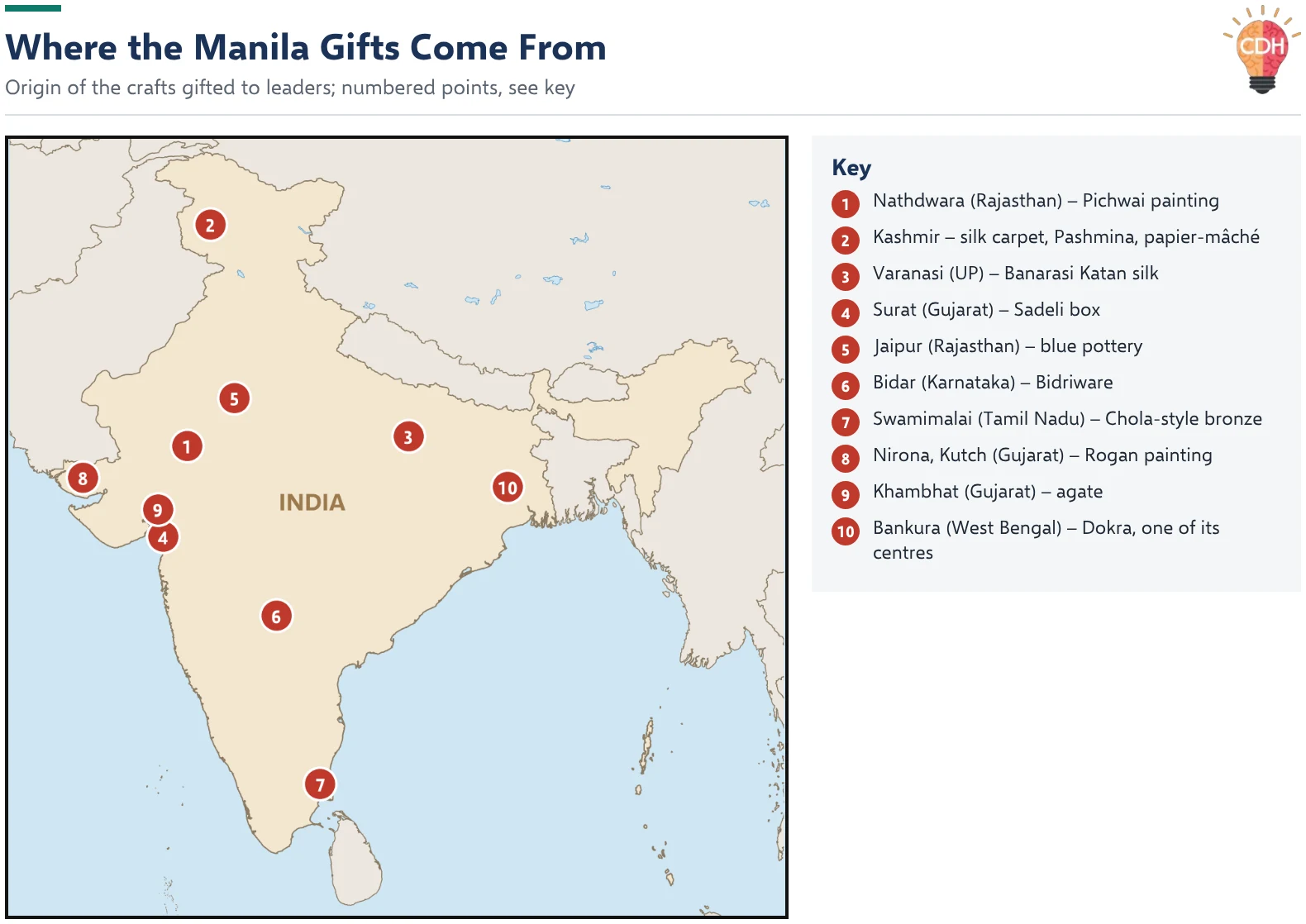
| Golden Pichwai painting | US President | Cloth painting of the Nathdwara school (Rajasthan), hung behind the idol of Shrinathji |
| Kashmiri silk carpet | President of the Philippines | Hand-knotted from a coded colour-and-knot script called talim |
| Pashmina shawl in a papier-mâché box | First Lady of the Philippines | Fibre from the Changthangi goat of Ladakh; hand-painted paper-pulp box from Kashmir |
| Banarasi Katan silk stole in a Sadeli box | Prime Minister of Japan | Katan is twisted pure-silk yarn of Varanasi; Sadeli is geometric wood-and-metal inlay from Surat |
| Jaipur blue pottery | Prime Minister of Australia | Made from quartz powder and glass instead of clay, with a cobalt-blue glaze |
| Bidriware vases | Leaders of Myanmar and Brunei | Silver inlay on a blackened zinc–copper alloy from Bidar (Karnataka) |
| Dokra boat | Prime Minister of Cambodia | Lost-wax brass casting of eastern and central India |
| Chola bronze sculpture | President of Indonesia | Lost-wax casting in the style perfected under the Cholas; Swamimalai (Tamil Nadu) is a major centre |
| Rogan painting | Prime Minister of Thailand | Castor-oil paste drawn with a stylus on cloth, from Kutch (Gujarat) |
| Agate bowl | Prime Minister of Timor-Leste | Polished stonework of Khambhat (Gujarat), a craft traced to Harappan times |
| Rose quartz elephant; silver urli; leather wall hanging | Leaders of Laos, Malaysia and Vietnam | Stone carving and metal and leather crafts |
Why Craft Diplomacy Matters
- Soft power: gifts tell a story of India’s civilisation and diversity without a word of diplomacy.
- Livelihoods: global visibility helps artisan clusters and supports the Geographical Indication (GI) brand that most of these crafts carry.
- Shared heritage: bronze casting, textiles and stonework link India with Southeast Asia’s own traditions.
📖 Read More: Traditional Crafts of India • Folk and Tribal Paintings • Soft Power and Cultural Diplomacy
5. India Joins OceanEye to Strengthen Ocean Observation
(GEOGRAPHY) (TH) India joined the OceanEye International Alliance for the Global Ocean Observing System (GOOS) at a side event of COP31 in Antalya, Türkiye, and pledged to double its Indian Ocean observation network. France-based Mercator Ocean International also agreed to work with INCOIS on “digital twins” of the ocean.
The Global System India Is Backing
| Feature | Details |
|---|---|
| GOOS | Permanent programme for sustained ocean observation, set up in 1991 by the IOC of UNESCO; co-sponsored by WMO, UNEP and the International Science Council |
| Scale | 64 countries, 17 global networks and about 8,000 platforms delivering some 1,20,000 observations a day |
| OceanEye Alliance | Launched in September 2026 at the UN General Assembly, co-chaired by the EU and Canada, to secure long-term money and in-kind support for GOOS |
| Funding gap | A handful of countries pay for most daily observations, leaving the system fragile |
Floats, buoys, ships, satellites ➜ Shared ocean data ➜ Models and digital twins ➜ Forecasts and warnings ➜ Fishers, ports, disaster managers
India’s Commitments
- Double the Indian Ocean network of moored buoys, drifters and Argo floats.
- Share expertise on Essential Ocean Variables (EOVs) such as sea surface temperature, oxygen and coral cover.
- Offer observation and multi-hazard early warning support to Least Developed Countries and Small Island Developing States.
INCOIS: India’s Ocean Information Hub
- Set up: 1999, Hyderabad; an autonomous body under the Ministry of Earth Sciences.
- Warnings: runs the Indian Tsunami Early Warning Centre (2007), a regional tsunami service provider for the Indian Ocean.
- Advisories: Potential Fishing Zone advisories, ocean state forecasts, storm-surge and marine heatwave alerts.
- Regional role: hosts the secretariat of IOGOOS, the Indian Ocean regional alliance of GOOS, and serves as a regional Argo data centre.
Better ocean data improves monsoon and cyclone forecasts, guides fisheries and strengthens tsunami warnings for India’s long coastline.
📖 Read More: Indian Ocean • Indian Ocean Currents • Introduction to Marine Resources
6. AI-Assisted Proof Claimed for the Riemann Hypothesis
(SCIENCE AND TECHNOLOGY) (TH) On 20 November 2026, mathematician Levent Alpöge of the AI company Anthropic said that he and the AI model Claude had found a proof of the Riemann hypothesis, posed in 1859. The proof is written in the Lean proof language; independent review by mathematicians is under way.
The Problem in Brief
- Primes: whole numbers greater than 1 divisible only by 1 and themselves (2, 3, 5, 7, 11…). They look random, but follow deep patterns.
- The hypothesis: German mathematician Bernhard Riemann linked prime distribution to the zeros of the zeta function, and conjectured that all its non-trivial zeros lie on one line (real part ½).
- Evidence: trillions of zeros had been checked by computer, but no general proof existed.
A Millennium Prize Problem
In 2000, the US-based Clay Mathematics Institute named seven Millennium Prize Problems, each carrying a US$1 million prize. Only the Poincaré Conjecture has been solved, by Grigori Perelman, who declined both the prize and the Fields Medal.
Why It Matters
- Mathematics: hundreds of results assume the hypothesis is true; a proof would settle them.
- Cryptography: large primes underpin public-key systems such as RSA used in online banking. A proof would not break these systems but deepens our understanding of primes.
- AI in research: machine-checked proofs in Lean let computers verify every logical step, changing how very long proofs are reviewed.
Human insight + AI model ➜ Proof written in Lean ➜ Machine checks each step ➜ Expert peer review ➜ Acceptance
Until mathematicians finish their review, the result should be treated as a claim. Either way, it shows how artificial intelligence is moving into frontier research.
📖 Read More: Cryptography • Artificial Intelligence (AI)
7. RBI Keeps SBI, HDFC Bank and ICICI Bank as D-SIBs
What Is a D-SIB?
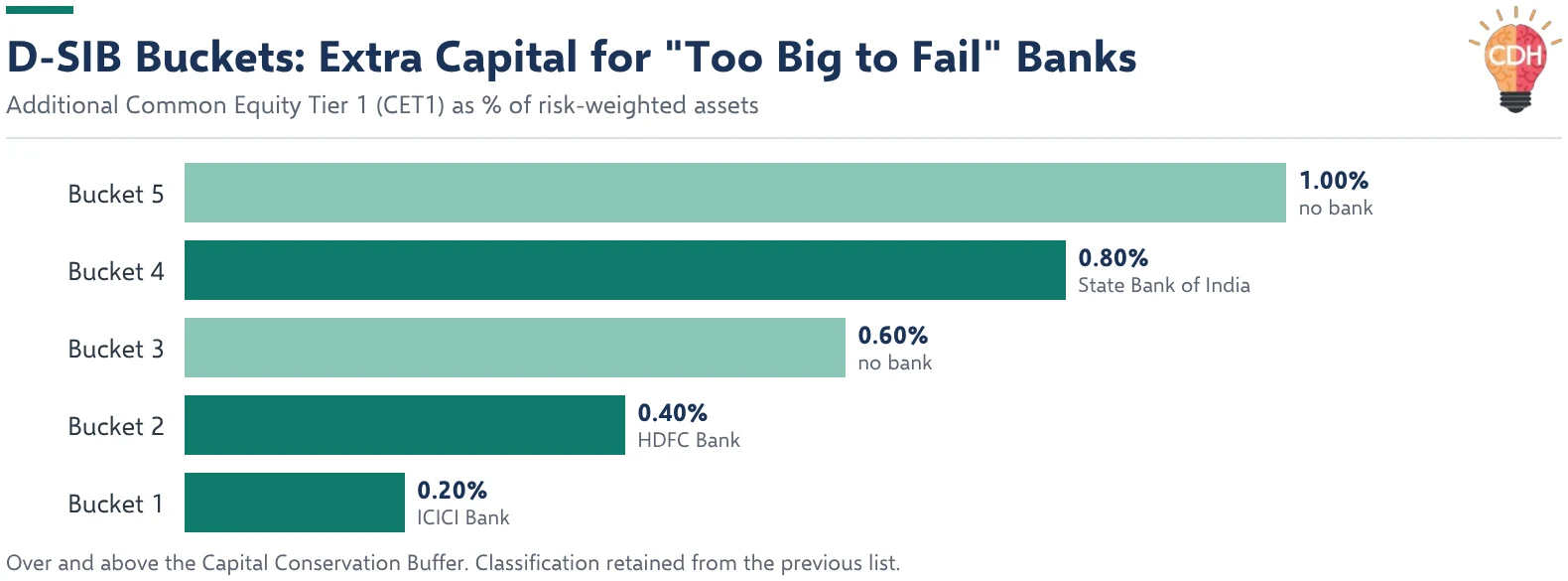
A D-SIB is a bank so large and interconnected that its failure could disrupt the whole financial system. Such banks are often called “too big to fail”, so they must hold extra Common Equity Tier 1 (CET1) capital and face closer supervision.
How the RBI Picks Them
| Indicator | What it measures |
|---|---|
| Size | Share of the banking system’s assets and exposures — the most heavily weighted indicator |
| Interconnectedness | Links with other banks and financial institutions |
| Substitutability | How hard it is to replace the bank’s payment, custody and other services |
| Complexity | Derivatives, cross-border business and other complex activities |
- Framework: issued in 2014 in line with Basel III and Financial Stability Board guidance; banks are scored on a Systemic Importance Score.
- History: SBI was named in 2015, ICICI Bank in 2016 and HDFC Bank in 2017. After the HDFC–HDFC Bank merger, SBI moved to bucket 4 and HDFC Bank to bucket 2 from 1 April 2025.
- CET1: the highest-quality capital — equity, share premium and retained earnings — that absorbs losses first.
- G-SIBs: global systemically important banks operating in India hold extra capital in proportion to their Indian risk-weighted assets.
Why It Matters
- Extra buffers reduce the risk that one bank’s distress spreads through payments and credit markets.
- They protect depositors and limit the moral hazard of implicit government bailouts.
- A higher buffer slightly raises a bank’s cost of capital, nudging it to manage risk carefully.
📖 Read More: Basel Norms • Banking Sector Reforms in India • Introduction to Banking
8. BepiColombo Becomes Second Mission to Orbit Mercury
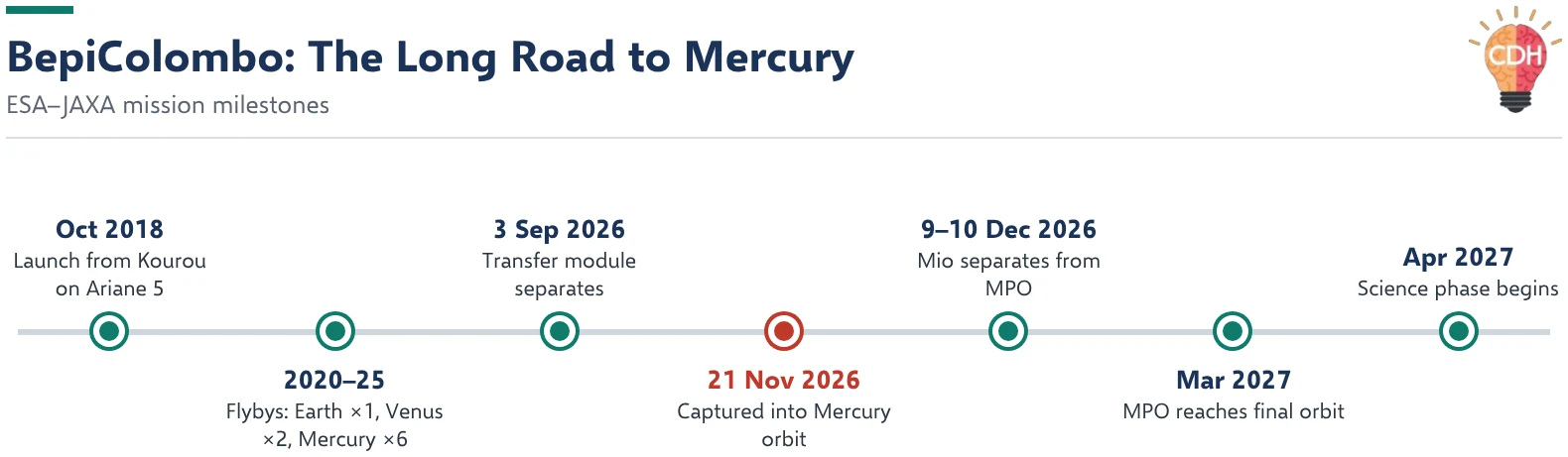
(SCIENCE AND TECHNOLOGY) (IT) The joint European Space Agency (ESA)–Japan Aerospace Exploration Agency (JAXA) mission BepiColombo was captured into orbit around Mercury on 21 November 2026. It is only the second mission to orbit the planet, after NASA’s MESSENGER, and the first to send two orbiters.
Mission Profile
- Two orbiters: ESA’s Mercury Planetary Orbiter (MPO) for surface and interior, and JAXA’s Mercury Magnetospheric Orbiter (Mio) for the magnetic field and space environment.
- Name: honours Italian scientist Giuseppe “Bepi” Colombo, who worked out Mercury’s spin–orbit resonance and the flyby technique used by NASA’s Mariner 10.
- Long route: a thruster problem in 2024 forced a gentler path, delaying arrival from December 2025 to November 2026.
What It Will Study
- Origin of Mercury’s magnetic field and its unusually large iron core.
- Surface geology, composition and water ice in permanently shadowed polar craters.
- How the solar wind strips material from the planet’s thin exosphere.
Mercury: Quick Facts
| Feature | Value |
|---|---|
| Position and size | Closest to the Sun; smallest planet, about 4,879 km across |
| Year and day | Orbits in about 88 Earth days; spins once in about 59 days; one solar day lasts about 176 Earth days |
| Temperature | About 430°C by day to −180°C at night |
| Atmosphere | Only a thin exosphere (oxygen, sodium, hydrogen, helium, potassium) |
| Features | Heavily cratered; large Caloris Basin; a weak global magnetic field; no moons or rings |
📖 Read More: Planets of Our Solar System • Solar, Lunar and Planetary Exploration
9. HPV Vaccination Crosses One Crore Doses
(SOCIAL JUSTICE) (AIR) (AIR) India has given over 1 crore doses of the Human Papillomavirus (HPV) vaccine in less than nine months of the National HPV Vaccination Campaign, covering nearly 87% of the year’s eligible girls. The WHO South-East Asia Regional Office congratulated India on the milestone.
The Campaign
| Feature | Details |
|---|---|
| Launched | February 2026 |
| Who | 14-year-old girls, free of cost, with parental consent |
| Schedule | Single dose, in line with WHO advice that one dose gives strong protection |
| Tracking | Real-time monitoring and digital certificates on U-WIN |
| Progress | 100% of target in Gujarat, Uttar Pradesh, Andhra Pradesh, Mizoram, Madhya Pradesh and Bihar; 12 States above 80% |
HPV and Cervical Cancer
- Virus: a group of DNA viruses with over 200 types; most infections clear on their own.
- Cancer link: persistent infection with high-risk types, mainly 16 and 18, causes about 76% of cervical cancers.
- Prevention: vaccines work best before exposure, which is why they target adolescents.
- Indigenous option: CERVAVAC, a quadrivalent vaccine by the Serum Institute of India, was developed with support from the Department of Biotechnology and BIRAC.
The Bigger Goal
WHO’s cervical cancer elimination strategy sets 90–70–90 targets for 2030: 90% of girls vaccinated by 15, 70% of women screened with a high-performance test by 35 and again by 45, and 90% of women with precancer or cancer treated. Vaccination must now be matched by screening and timely treatment, backed by stronger public health infrastructure.
📖 Read More: Important Diseases Explained • Biotechnology in Healthcare • Health and Nutrition
10. ICMR Report Flags Rising Resistance in Common Bacteria
(SCIENCE AND TECHNOLOGY) (IE) The Indian Council of Medical Research (ICMR) released the Antimicrobial Resistance Research and Surveillance Network (AMRSN) Annual Report 2025, based on samples from hospitals in 2025. It finds high resistance in E. coli and Klebsiella pneumoniae to widely used antibiotics, including third-generation cephalosporins and carbapenems.
Key Findings
| Pathogen | Common infections | Concern |
|---|---|---|
| Escherichia coli | Urinary tract and bloodstream infections | Low susceptibility to cefotaxime, ceftazidime and other third-generation cephalosporins |
| Klebsiella pneumoniae | Pneumonia, sepsis, hospital infections | High resistance to several important antibiotics, including carbapenems |
| Acinetobacter baumannii | ICU and hospital infections | Resistant to last-resort antibiotic classes |
| Pseudomonas aeruginosa | Infections in critically ill patients | Limits options in intensive care |
Why It Matters
- Last line failing: carbapenems are reserved for the toughest infections; resistance leaves doctors with few options.
- Vulnerable groups: newborns, ICU patients and people with weak immunity are most at risk.
- Network: ICMR has run AMRSN since 2013, giving India long-term data on resistance trends.
Drivers and Responses
Over-use and self-medication ➜ Poor infection control ➜ Antibiotics in farming ➜ Resistant bacteria spread
India’s National Action Plan on AMR 2.0 (2025–29) follows a One Health approach linking human, animal and environmental health. Prescription audits, faster diagnostics, hospital infection control and curbs on antibiotic use in livestock remain the priorities.
📖 Read More: Important Diseases Explained • Medical Therapeutics and Health Challenges
11. Genome Language Models: AI That Reads and Writes DNA
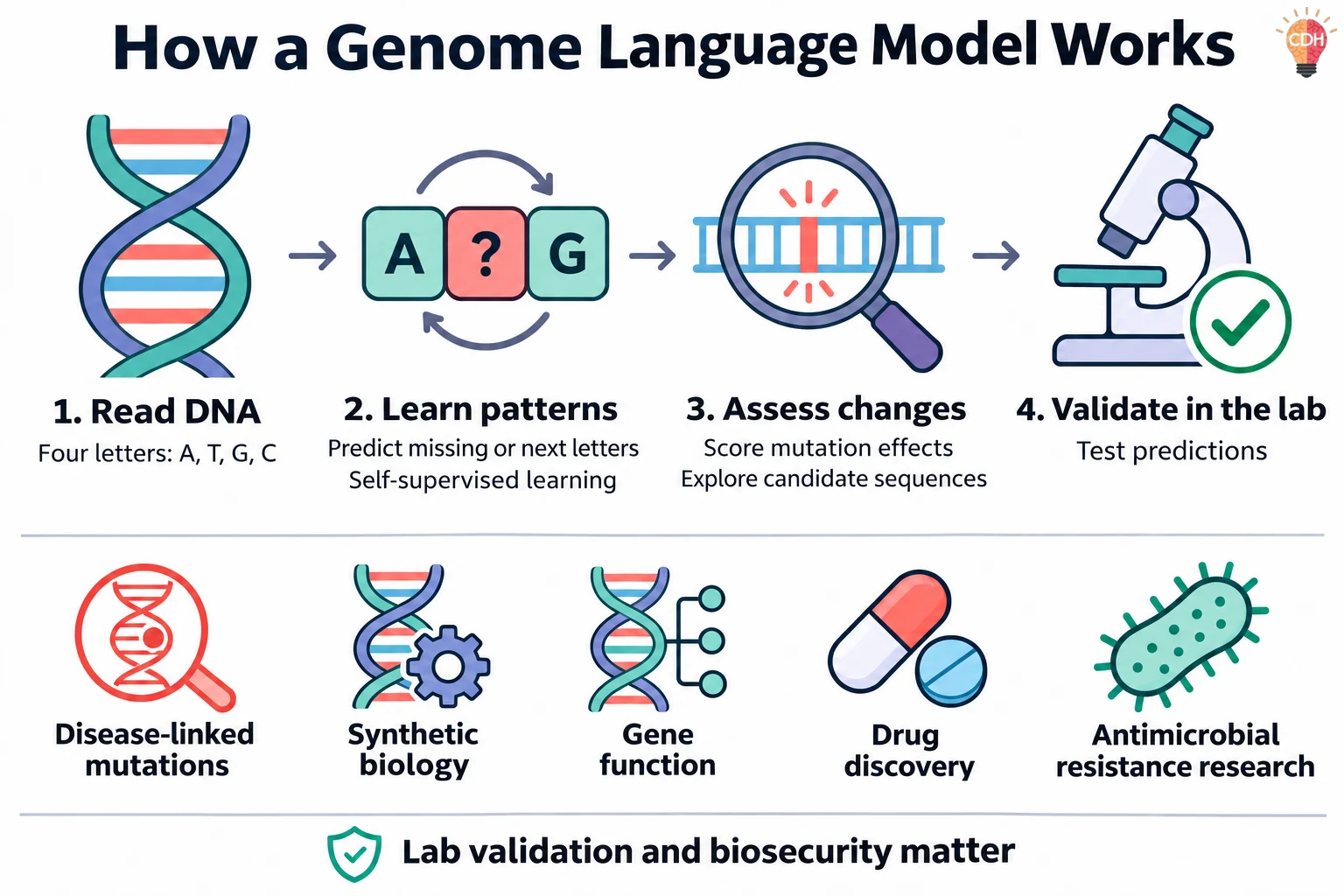
(SCIENCE AND TECHNOLOGY) (TH) Genome Language Models (GLMs) such as Evo 1 and Evo 2 treat DNA as a language of four letters and can now design new genetic sequences. Researchers have used them to design working bacteriophage genomes, raising hopes and biosecurity concerns.
How They Work
DNA read as text (A, T, G, C) ➜ Self-supervised training ➜ Predict missing or next bases ➜ Score mutations / write new sequences ➜ Lab synthesis and testing
- Language analogy: just as chatbots learn grammar from text, GLMs learn the “grammar” of genes from vast genome datasets.
- No labels needed: they learn by predicting hidden parts of sequences, so huge unlabelled data can be used.
- Evo results: of about 300 designed phage genomes that were synthesised, 16 were viable, and some infected bacteria that had resisted the original virus.
Uses and Limits
| Promise | Caution |
|---|---|
| Predicting the effect of mutations on disease | Mostly tested on simple organisms in laboratory settings |
| Designing synthetic genomes and gene circuits | Every design needs experimental validation |
| Phage therapy against drug-resistant bacteria | Biosecurity: the same tools could be misused, so access and screening need rules |
| Faster gene-function research and drug discovery | Data gaps for non-model organisms |
For India, GLMs could build on genome data from GenomeIndia and boost biotechnology in healthcare, provided biosafety rules keep pace.
📖 Read More: Biotechnology in Healthcare • Artificial Intelligence (AI)
12. Nayi Chetna 5.0: From Access to Agency
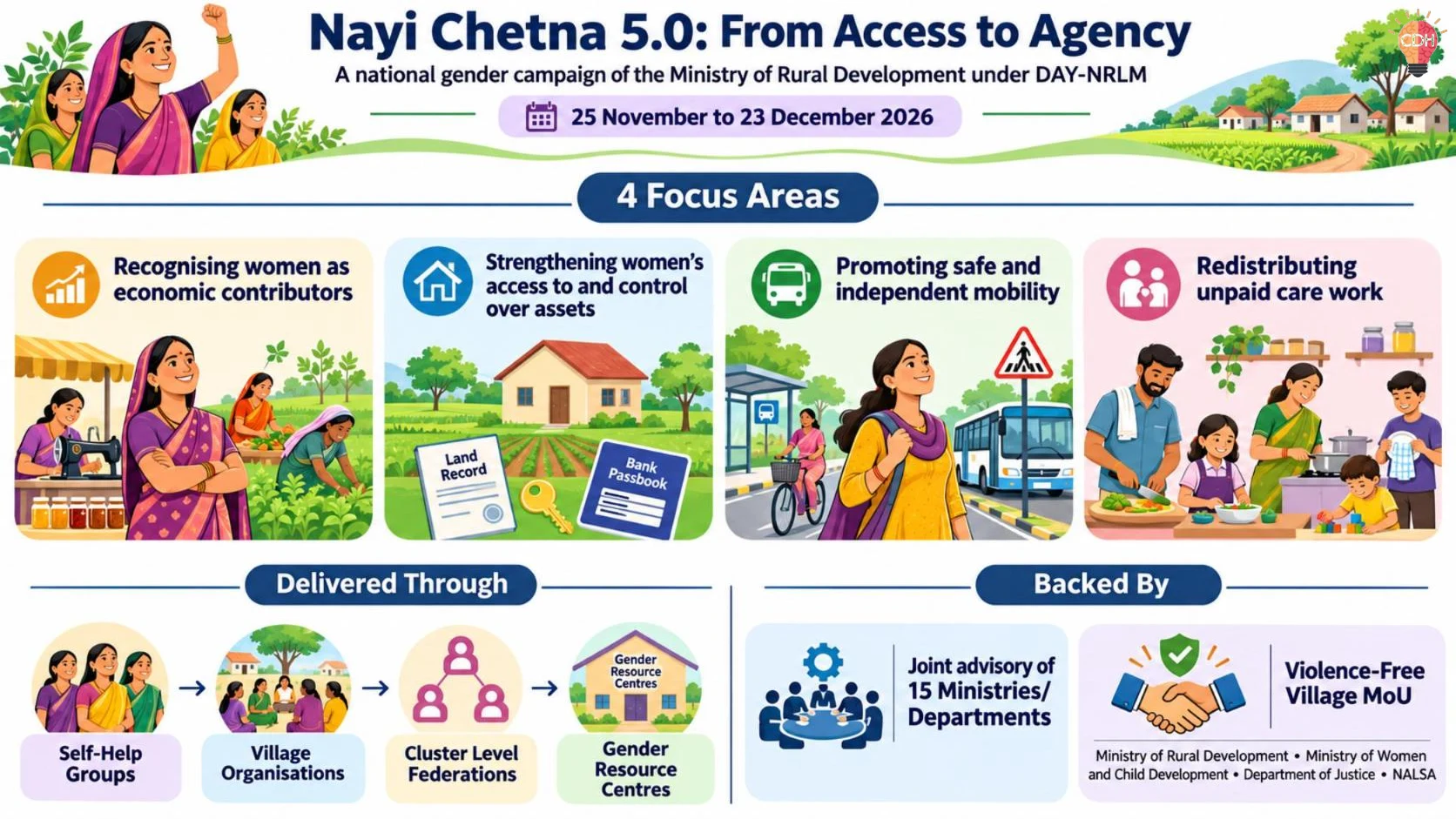
(SOCIAL JUSTICE) (PIB) The Ministry of Rural Development launched the fifth edition of its national gender campaign, Nayi Chetna – Pahal Badlav Ki, on 25 November 2026, the International Day for the Elimination of Violence against Women. It runs till 23 December 2026 under DAY-NRLM.
Theme: “From Access to Agency: Empowering Women through Livelihoods and Equal Opportunities for a Viksit Bharat”.
Highlights
- Convergence: a Joint Inter-Ministerial Advisory of 15 Ministries/Departments to align schemes with the campaign.
- Violence-Free Villages: a Quadripartite MoU among the Ministry of Rural Development, Ministry of Women and Child Development, Department of Justice and NALSA to prevent and respond to gender-based violence.
- Community platforms: new Gender Resource Centres for services, entitlements and grievance redressal.
- Learning: release of the Nayi Chetna 4.0 Assessment Report.
- Men and boys: the campaign also seeks their engagement in challenging discriminatory norms.
Background
Launched in 2022, Nayi Chetna is an annual, community-led campaign run through DAY-NRLM Self-Help Groups. It targets gender-based violence and unequal norms, in line with SDG 5 on gender equality. This edition shifts from awareness to measurable economic agency.
📖 Read More: DAY-NRLM • Equality, Empowerment and Women-Led Development
13. Bird Flu Outbreak Triggers Culling in Alappuzha
(SCIENCE AND TECHNOLOGY) (AIR) The ICAR-National Institute of High Security Animal Diseases (NIHSAD), Bhopal, confirmed avian influenza in quails, ducks and chickens at two poultry farms in Alappuzha district, Kerala. About 26,000 domestic birds around the affected farms are being culled.
About Avian Influenza
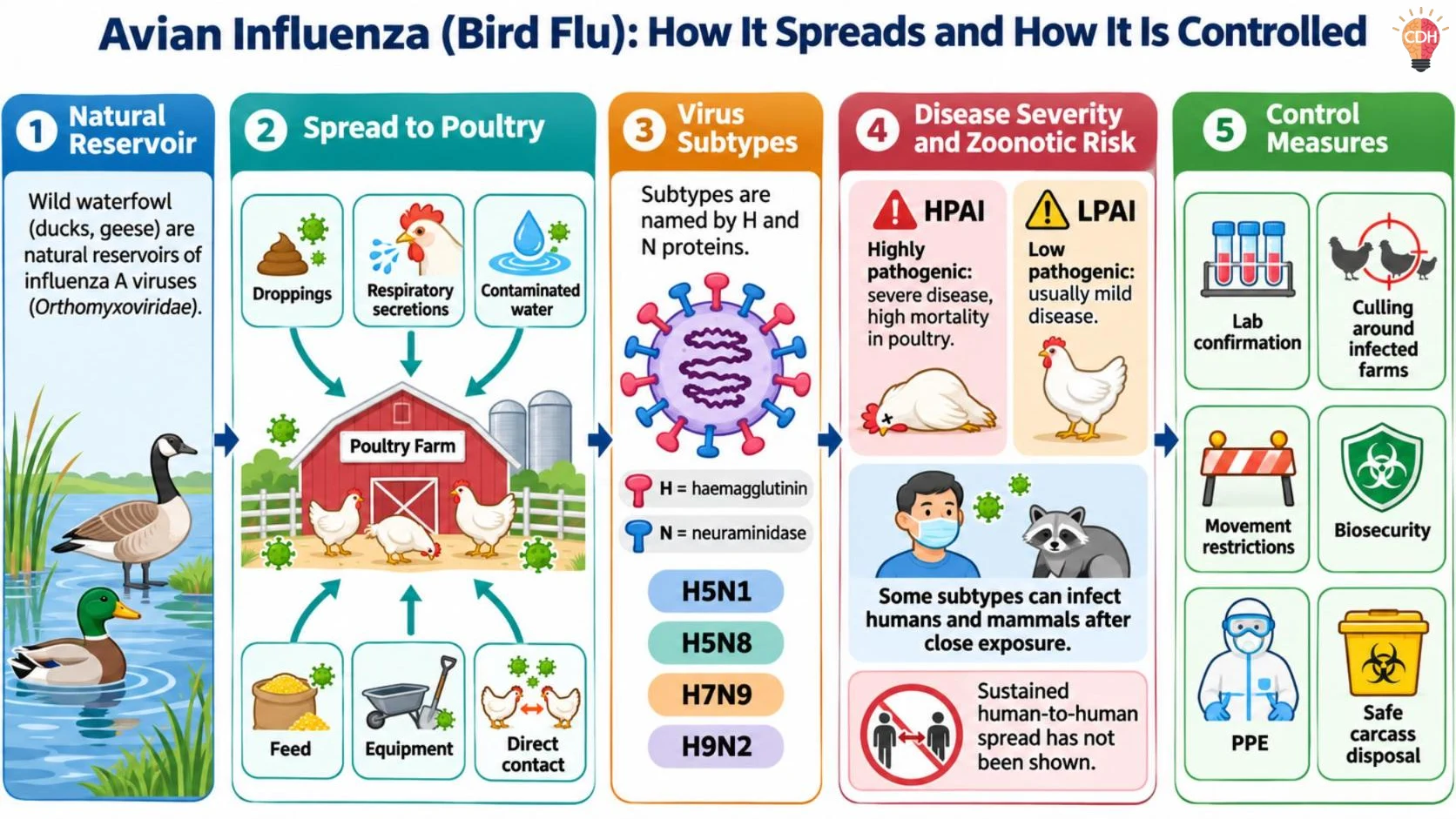
- Cause: influenza A viruses of the family Orthomyxoviridae; wild waterfowl are natural reservoirs.
- Naming: subtypes come from two surface proteins, haemagglutinin (H) and neuraminidase (N), e.g. H5N1, H5N8, H7N9, H9N2.
- Spread: droppings, respiratory secretions, contaminated water, feed, equipment and direct contact.
| Type | In poultry | Note |
|---|---|---|
| Low pathogenic (LPAI) | Mild or no illness | Can mutate into a highly pathogenic form |
| Highly pathogenic (HPAI) | Severe disease, high mortality | Classification reflects poultry, not human, severity |
Risk to People
Some subtypes can infect humans and mammals after close contact with infected birds, causing fever, cough, conjunctivitis and, in severe cases, pneumonia. Sustained human-to-human spread has not been shown, but each spillover gives the virus a chance to adapt.
Containment
Lab confirmation ➜ Culling around infected farms ➜ Movement curbs ➜ Disinfection and safe disposal ➜ Surveillance zone
Recurring outbreaks in Kerala’s duck-rearing wetlands show why a One Health approach — joint surveillance of birds, animals and people — matters. India’s first indigenous H5N1 poultry vaccine, discussed in our 23 November notes, adds another tool.
📖 Read More: Poultry • Important Diseases Explained