
UPSC CURRENT AFFAIRS — 23 NOVEMBER 2026
1. Youth at the Centre: UNFPA World Population Report 2026
(SOCIETY) (UNFPA) The United Nations Population Fund (UNFPA) launched the State of World Population (SWOP) Report 2026, titled ‘Succeeding Generations: Empowering Young People to Chart the Future’, in New Delhi on 19 November 2026. It urges countries to move from merely protecting future generations to helping young people actually succeed.
About the Report
- Publisher: UNFPA, the UN’s sexual and reproductive health agency. SWOP is its flagship annual report, published since 1978.
- Evidence base: UNFPA’s Demographic Futures Survey of more than 1,08,000 internet-connected adults aged 18–39 in 73 countries, including 1,722 respondents in India.
- Caveat: the survey reflects online young adults and is not nationally representative, so its numbers are not population-level estimates.
India at a Glance
| Indicator | What the report shows |
|---|---|
| Population aged 10–24 | More than one in four Indians |
| Outlook on the future | 83% of Indian respondents felt positive or very positive |
| Ideal family size | Women aged 18–39 reported 2.1 children as ideal |
| Wish for parenthood | Nearly 85% of childless respondents aged 35–39 want children |
| Maternal mortality ratio | 87 per 1,00,000 live births (Sample Registration System, 2022–24) |
| Skilled birth attendance | 91.3% (NFHS-6), up from 89.5% (NFHS-5) |
| Unmet need for family planning | 8.5%, down from 9.4% |
The Global Picture
- Money decides choices: financial insecurity and job uncertainty are the most common barriers young people cite against partnering and having children.
- Locked out: about one in five young people worldwide are not in employment, education or training (NEET), and young women are far more likely to be NEET than young men.
- Missing voice: only 2.8% of the world’s parliamentarians are aged 30 or under.
Why It Matters for India
India’s large youth cohort is the core of its demographic dividend. The dividend pays only if young people find decent jobs, quality health care and real reproductive choice. The report therefore shifts the population debate from numbers to agency and opportunity.
📖 Read More: Population and Associated Issues • Children, Adolescents and Youth • Demographic Transition Model
2. Women Entrepreneurship Day: From Aspirants to Business Leaders
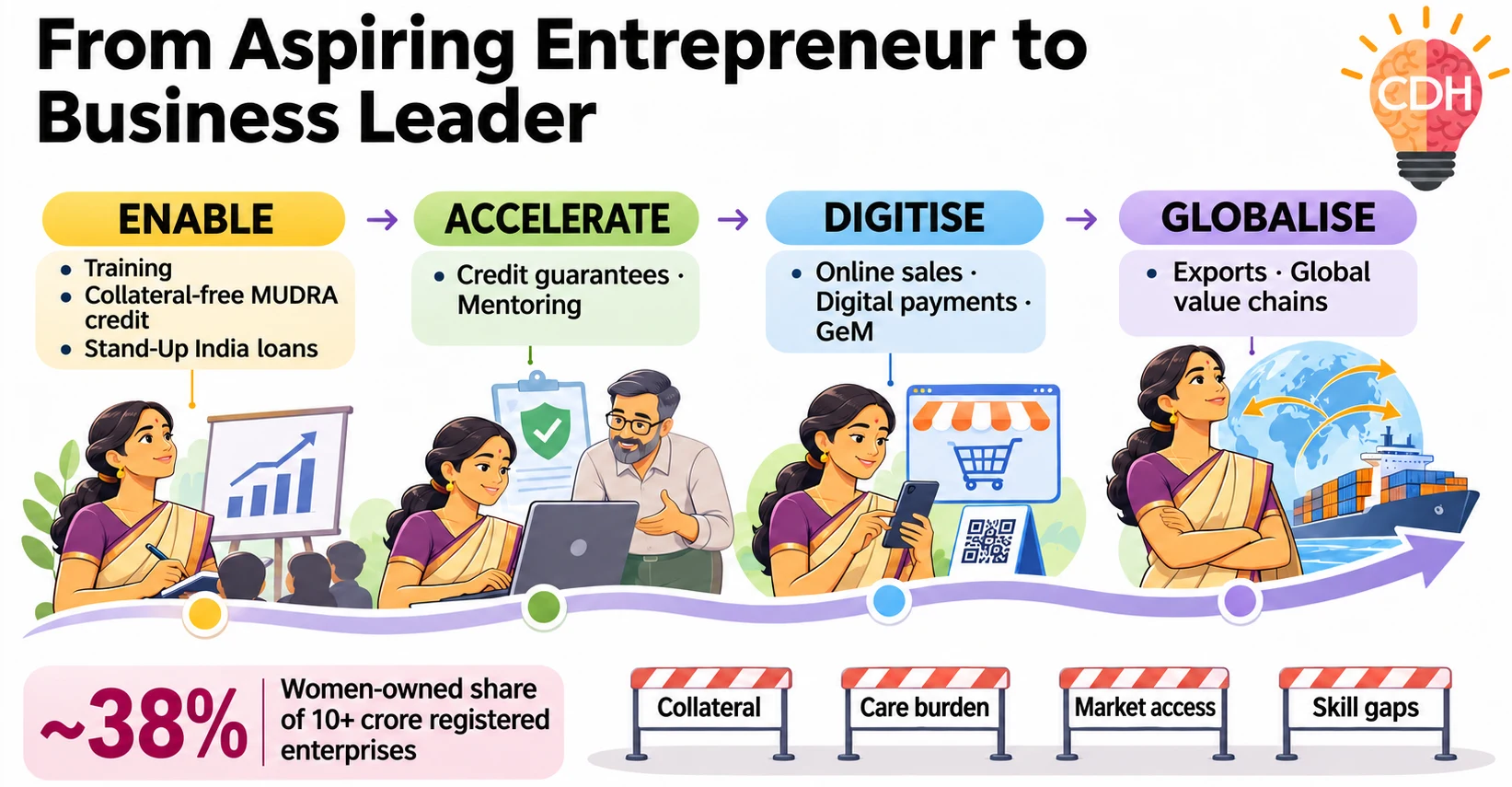
(ECONOMICS) (PIB) The Ministry of Micro, Small and Medium Enterprises (MSME), with the India SME Forum, celebrated Women Entrepreneurship Day 2026 in New Delhi on 19 November. Sessions were built around four themes, Enable, Accelerate, Digitise and Globalise, to help women move from aspiring entrepreneurs to business leaders.
Where Women Stand
- Share in MSMEs: women-owned enterprises make up about 38% of the more than 10 crore enterprises registered with the Ministry.
- Jobs: the Prime Minister’s Employment Generation Programme (PMEGP) has supported over 25 lakh jobs for women.
- Procurement: government purchases from women-owned Micro and Small Enterprises (MSEs) have crossed the mandatory 3% target.
Key Support Measures
| Measure | How it helps women entrepreneurs |
|---|---|
| PM MUDRA Yojana (2015) | Collateral-free loans to micro enterprises; women hold a large share of loan accounts |
| Stand-Up India (2016) | Bank loans of ₹10 lakh–₹1 crore, with at least one woman borrower per bank branch |
| Public Procurement Policy for MSEs | 25% of central procurement from MSEs, of which 3% is earmarked for women-owned MSEs |
| Womaniya on GeM | Brings women-led MSEs and SHGs onto the Government e-Marketplace |
| Credit Guarantee Scheme (CGTMSE) | Guarantees collateral-free credit; offers concessions for women borrowers |
Persistent Barriers
- Finance: low asset ownership leaves women short of collateral and formal credit.
- Scale: most women-led units remain micro enterprises with limited growth.
- Care burden and mobility: household duties and safety concerns cut time for business.
- Markets and skills: thin business networks and digital or managerial gaps limit competitiveness.
Way Forward
The aim must shift from formalisation to growth: equity and growth capital for women-led firms, mentoring and incubation, easier entry to GeM and export markets, and childcare and safe transport. Linking self-help groups under DAY-NRLM to value chains can turn job seekers into job creators.
📖 Read More: Miscellaneous Schemes for Ministry of MSME • Pradhan Mantri MUDRA Yojana • Equality, Empowerment and Women-Led Development
3. Small Hydro Gets a ₹2,584-Crore Revival Scheme
What Counts as Small Hydro
In India, hydro projects of up to 25 MW are ‘small’ and fall under the Ministry of New and Renewable Energy (MNRE). Larger projects come under the Ministry of Power.
| Category | Installed capacity |
|---|---|
| Micro hydel | Up to 100 kW |
| Mini hydel | 101 kW – 2 MW |
| Small hydro | 2 MW – 25 MW |
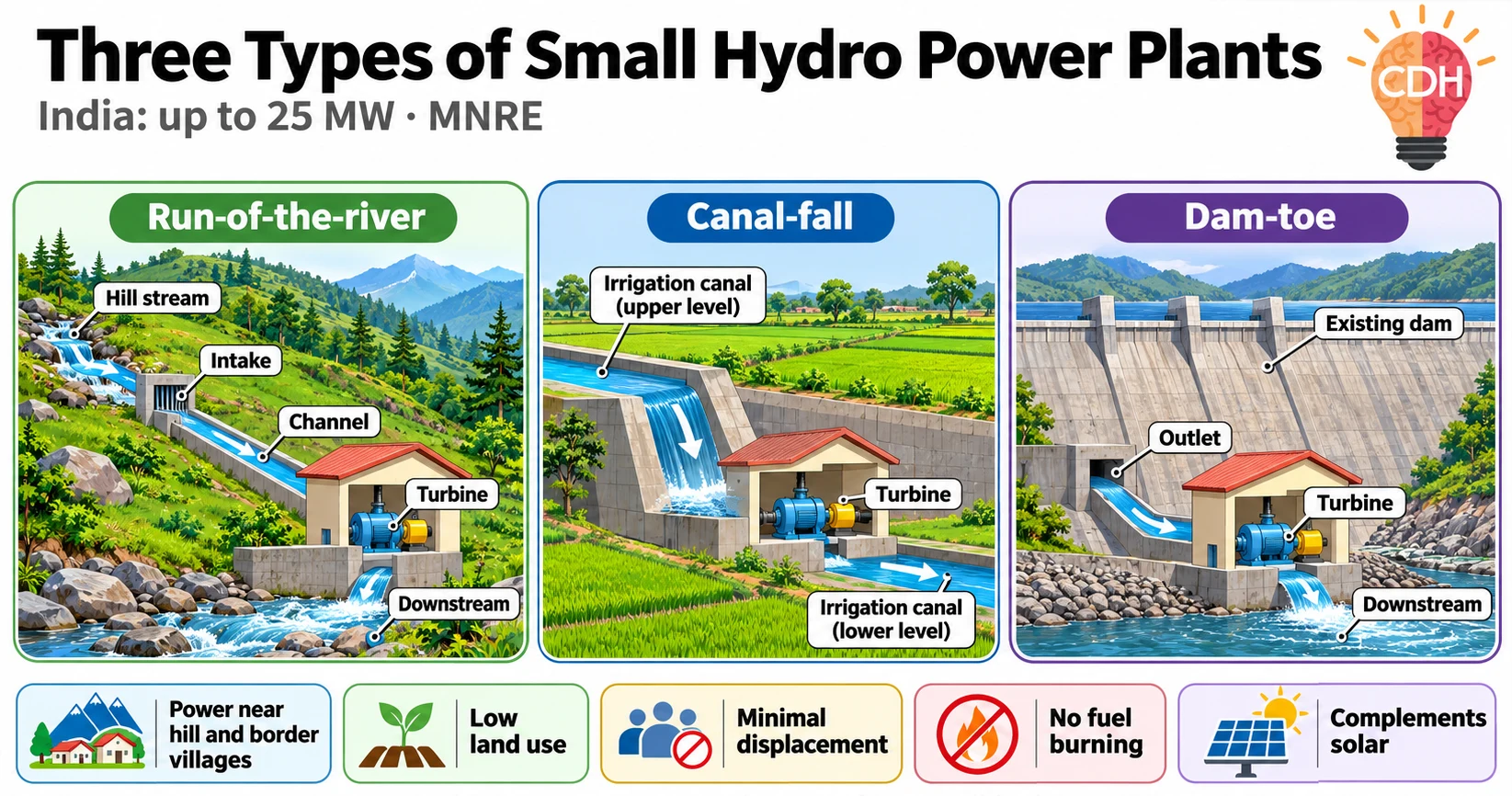
- Run-of-the-river: diverts part of a stream through turbines and returns it downstream, without a large reservoir.
- Canal-fall and dam-toe: uses the drop in water level on irrigation canals or below dams and barrages.
The Scheme at a Glance
| Feature | Provision |
|---|---|
| Project size | 1–25 MW |
| Support: North-East and border districts | ₹3.6 crore/MW or 30% of project cost (lower), capped at ₹30 crore per project |
| Support: other areas | ₹2.4 / 2.054 / 1.78 crore/MW (by size and location) or 20% of cost (lower), capped at ₹20 crore |
| Project pipeline | ₹30 crore for Detailed Project Reports (DPRs) of at least 200 projects |
| Expected investment | About ₹15,000 crore, with indigenous plant and machinery |
| Employment | About 51 lakh person-days during construction |
Why Small Hydro Matters
- Decentralised power: generation near hill and border settlements cuts transmission losses and steadies voltage on long rural lines.
- Grid balance: round-the-clock output complements daytime-only solar power.
- Light footprint: little land and minimal displacement, no fuel burning and a long working life.
- Local growth: supports rural livelihoods, small industry and local manufacturing under Atmanirbhar Bharat.
Hurdles to Watch
- Costly power: high capital costs keep tariffs above solar, so power distribution companies (DISCOMs) are reluctant to sign long-term deals.
- Clearances: forest, wildlife and other approvals delay projects in hill districts.
- Seasonality: lean winter flows in snow-fed and rain-fed streams lower output.
- Ecology and climate: cascades of diversion projects dry out river stretches and block fish movement. Floods also threaten assets: the 2021 Chamoli disaster badly damaged the 13 MW Rishiganga project.
📖 Read More: Measures to Boost Renewable Energy • Challenges Faced by Renewable Energy • Miscellaneous Schemes and Initiatives under MNRE
4. Africa and Asia Power India’s Export Growth
Region-wise Snapshot
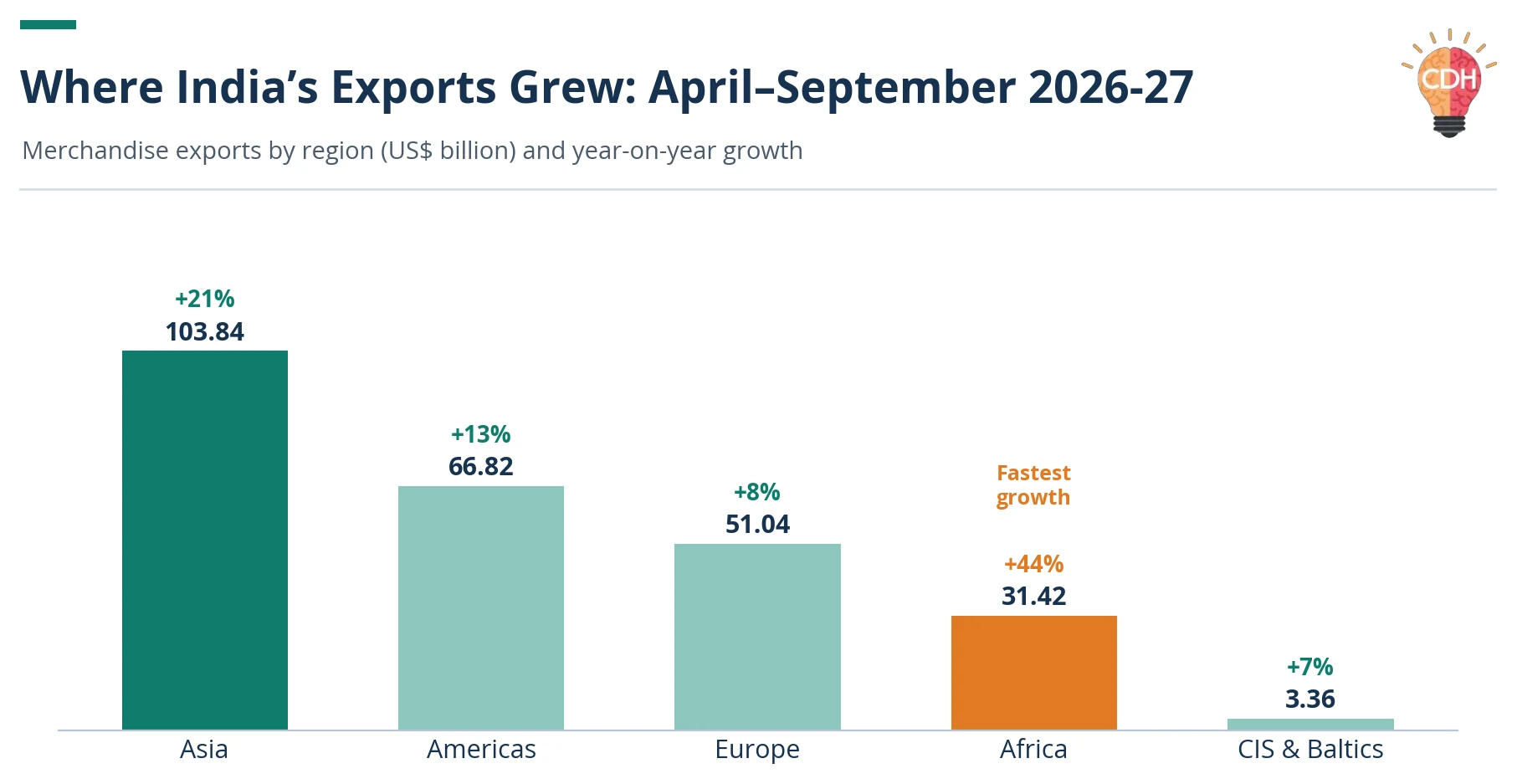
| Region | Lead markets | Main drivers |
|---|---|---|
| Asia | China $11.39 bn (+36%); Singapore $11.07 bn (+103%) | Engineering $27.47 bn; petroleum $17.05 bn; electronics $10.54 bn (+91%) |
| Americas | USA $50.80 bn (+11%); Mexico +26%; Canada +18% | Engineering $19.19 bn; electronics $15.35 bn; pharma $6.59 bn |
| Europe | UK $7.32 bn; Germany $6.34 bn; Türkiye +72% | Engineering $15.88 bn; electronics $5.44 bn (+52%) |
| Africa | South Africa $5.69 bn (+52%); Tanzania +121%; Kenya +101% | Petroleum products $11.85 bn (+137%); engineering $7.48 bn |
| CIS & Baltics | Russia $2.39 bn (+7%) | Chemicals (+33%); meat, dairy and poultry (+36%) |
Reading the Trend
- Diversification: growth is spread across regions, cutting dependence on a few rich markets.
- Electronics as an engine: electronics nearly doubled to Asia and grew strongly to Europe and the Americas.
- Africa’s surge is petroleum-led: refined products made up about 38% of exports to Africa, so the gain is exposed to oil-price swings.
Sustaining the momentum needs higher domestic value addition, MSME links to global value chains, cheaper logistics and well-negotiated trade agreements in line with the Foreign Trade Policy 2023.
📖 Read More: India’s International Trade: A Dynamic Landscape • Foreign Trade Policy 2023
5. World Fisheries Day: Decent Work in the Blue Economy
(ECONOMICS) (PIB) World Fisheries Day was observed on 21 November 2026. The global theme was ‘Empowering People for Change: Advancing Decent Work in Fisheries and Aquaculture, particularly for Youth and Women’. In India, ICAR–Central Inland Fisheries Research Institute (CIFRI), Barrackpore, marked the day by focusing on inland fisheries.
Origin of the Day
The day dates to 21 November 1997 in New Delhi, when fishworker representatives from 18 countries set up the World Forum of Fish Harvesters and Fish Workers. It links to SDG 14 (Life Below Water).
India’s Fisheries Snapshot
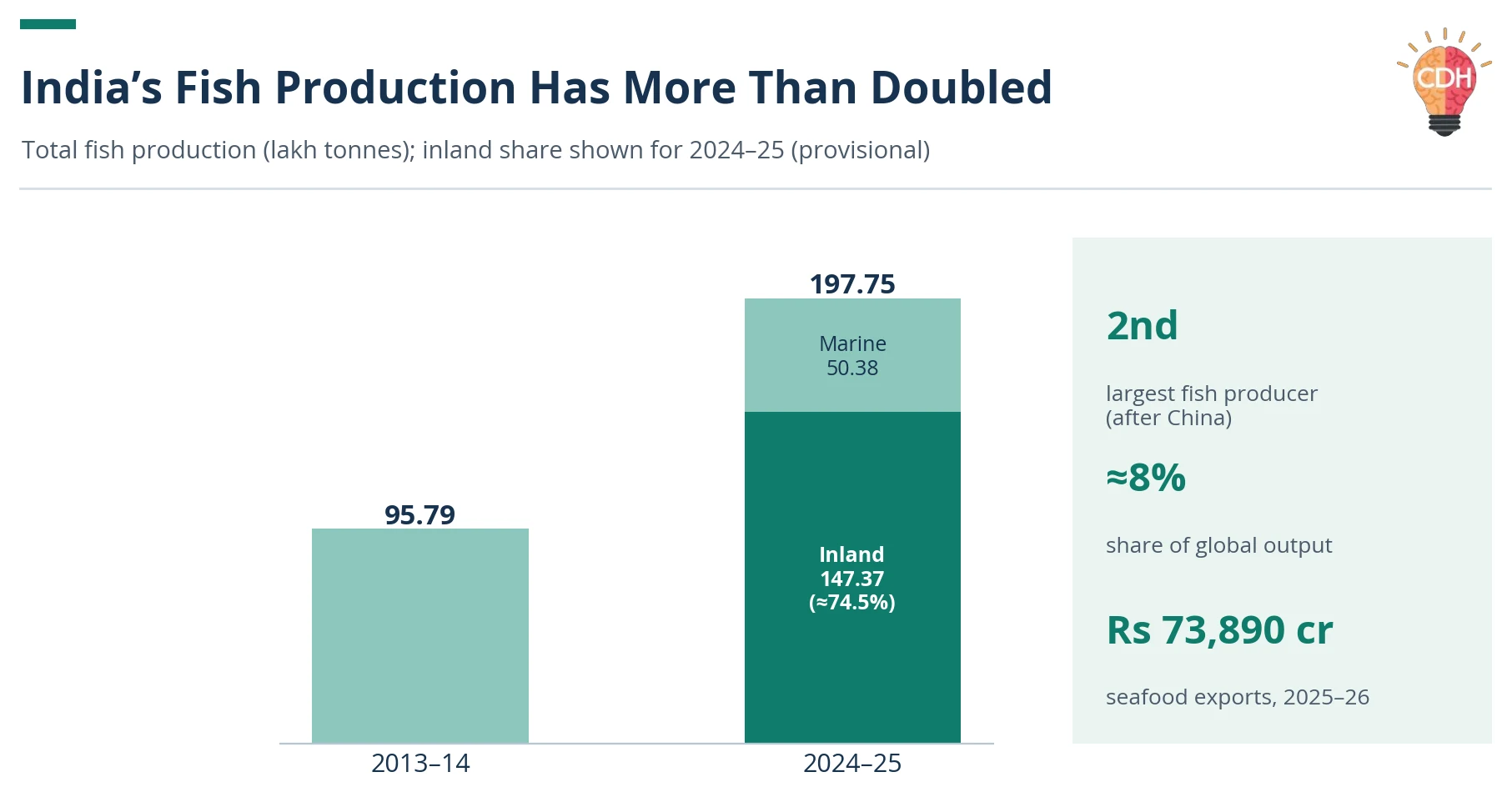
- Output: about 197.75 lakh tonnes in 2024–25 (provisional), of which inland fisheries gave 147.37 lakh tonnes (≈ 74.5%).
- Exports: a record ₹73,890.46 crore (US$ 8.46 billion) in 2025–26, led by frozen shrimp.
- Women: about 9.14 lakh women work full-time in fisheries, in harvesting, net-making, processing and marketing.
- Resource base: a coastline of over 11,000 km and an Exclusive Economic Zone of about 23 lakh sq km.
Key Government Schemes
| Scheme | Focus |
|---|---|
| Blue Revolution (2015–16) | Integrated development and management of fisheries |
| Fisheries and Aquaculture Infrastructure Development Fund (2018–19) | Concessional finance for harbours, landing centres and cold chains |
| Kisan Credit Card for fishers | Working capital for fishers and fish farmers |
| PM Matsya Sampada Yojana (2020) | Production, post-harvest infrastructure and welfare |
| PM-MKSSY (2023–24) | Formalisation, credit, insurance and fish-farmer cooperatives |
Challenges and Way Forward
- Crowded inshore waters: most effort is near the coast, while high-value deep-sea stocks such as oceanic tuna remain under-used.
- Destructive gear: bull and pair trawling, LED-light fishing and small-mesh nets catch juveniles despite the monsoon fishing ban.
- Split jurisdiction: States govern territorial waters up to 12 nautical miles, and the Union governs the EEZ beyond, so enforcement is uneven (see Law of the Sea).
- Post-harvest losses and disease: weak cold chains and shrimp diseases in aquaculture hurt incomes.
Priorities include cooperative deep-sea fishing, digital traceability, climate-resilient aquaculture, recovery of ghost gear and decent-work standards for fishworkers.
📖 Read More: Fishing Industry • Pradhan Mantri Matsya Sampada Yojana • Blue Revolution Initiative
6. National Gopal Ratna Awards 2026 Honour Indigenous Breeds
About the Award
- Purpose: honours farmers, dairy bodies and Artificial Insemination Technicians (AITs) who conserve and develop indigenous bovine breeds. It is given under the Rashtriya Gokul Mission.
- Categories: Best Dairy Farmer rearing indigenous cattle or buffalo; Best Dairy Cooperative Society, Milk Producer Company or Dairy Farmer Producer Organisation; Best AIT.
- Prizes: in the first two categories, ₹5 lakh, ₹3 lakh and ₹2 lakh for the top three, plus a ₹2 lakh special award for the North-Eastern Region (NER) and Himalayan States. AITs get a certificate and memento.
- Applications: 1,583 entries came through the national awards portal (awards.gov.in).
Winners of 2026 (First Rank)
| Category | First rank (non-NER) | NER/Himalayan special award |
|---|---|---|
| Dairy farmer | Muralidharan Nair, Kottayam (Keralam) | Sagar Singh Rawat, Udham Singh Nagar (Uttarakhand) |
| Dairy cooperative / MPC / FPO | TND 93 Thatchur MPCS, Kallakurichi (Tamil Nadu) | Chak Devia Dairy Cooperative, Kathua (J&K) |
| AI Technician | Subhankar Nandi, Hooghly (West Bengal) | Sudhesh Kumar, Udham Singh Nagar (Uttarakhand) |
Rashtriya Gokul Mission in Brief
- Launch: December 2014, to conserve and develop indigenous bovine breeds scientifically.
- Tools: nationwide artificial insemination, sex-sorted semen, IVF and genomic selection of bulls, and rural AI technicians (MAITRIs).
- National Milk Day: marks the birth anniversary of Dr Verghese Kurien, architect of the White Revolution.
📖 Read More: Rashtriya Gokul Mission • Livestock Resources and White Revolution • Dairy Farming
7. Purana Qila Hosts First SCO Civilisational Dialogue Forum
(INTERNATIONAL RELATIONS) (PIB) The Prime Minister inaugurated the first Shanghai Cooperation Organisation (SCO) Civilisational Dialogue Forum at Purana Qila, New Delhi, on 20 November 2026. He said that cultural connect is the strongest guarantee of world peace. The forum adopted the Indraprastha Communiqué on cultural and heritage cooperation.
About the Forum
- Origin: India proposed it at the 2025 Tianjin SCO Summit, and it coincides with the SCO’s 25th anniversary.
- Organisers: the Ministry of Culture, with the Ministry of External Affairs.
- Communiqué themes: civilisational equality, heritage protection, action against illicit trafficking of antiquities, responsible use of AI and youth participation.
Threads of Shared Heritage Highlighted
| Exchange | Example |
|---|---|
| Trade | Indus Valley links with Mesopotamia about 5,000 years ago; Silk Route networks |
| Pilgrim-scholars | Faxian, Xuanzang, Yijing and Kumarajiva; centres such as Nalanda, Kucha and Dunhuang |
| Literature | Panchatantra became Kalila wa Dimna; Ramayana became Reamker in Cambodia |
| Science | Brahmagupta’s mathematics reached Baghdad and influenced Al-Khwarizmi |
| Arts | Central Asian Maqam and Indian Raga; Charbagh gardens from Samarkand and Herat |
India’s Proposals
- AI-assisted digitisation and translation of ancient manuscripts, with joint research on shared history.
- Joint museum exhibitions and exchanges of scholars, artists and artisans.
- Heritage circuits linking Silk Route and Buddhist sites, together with cultural tourism and festivals.
Why Purana Qila?
Excavations by the Archaeological Survey of India have found remains going back to about 1000 BCE, including Painted Grey Ware, and tradition links the site to Indraprastha of the Mahajanapada era. The present fort rose on Humayun’s Dinpanah, rebuilt by Sher Shah Suri in the 16th century (see Humayun and Sher Shah Suri).
Significance
The forum adds a people-centric, soft-power pillar to an SCO that is otherwise focused on security. It lets India project civilisational pluralism (Vasudhaiva Kutumbakam) and offers a channel for dialogue even among members with strained ties. It also builds on Varanasi’s term as the first SCO Tourism and Cultural Capital (2022–23).
📖 Read More: Shanghai Cooperation Organisation (SCO) • Soft Power, Cultural Diplomacy and the Global South
8. India–Bulgaria Talks Turn to Black Sea Security
(INTERNATIONAL RELATIONS) (DD) Bulgarian Foreign Minister Velislava Petrova-Chamova met External Affairs Minister S. Jaishankar in New Delhi on 21 November 2026. It was the first visit by a Bulgarian Foreign Minister to India in 17 years. She praised India’s efforts towards a lasting solution to insecurity in the Black Sea.
Key Takeaways
- Supply-chain security: safe Black Sea shipping matters for the global flow of food grains, fertilisers and oil.
- Seafarers: Bulgaria highlighted its search-and-rescue support for Indian seafarers hit by the escalating conflict.
- Trade: Bulgaria welcomed the India–EU Free Trade Agreement and pitched itself as a gateway to Europe for Indian business.
- Connectivity: the sides discussed corridors such as the India–Middle East–Europe Economic Corridor (IMEC).
The Black Sea in Focus
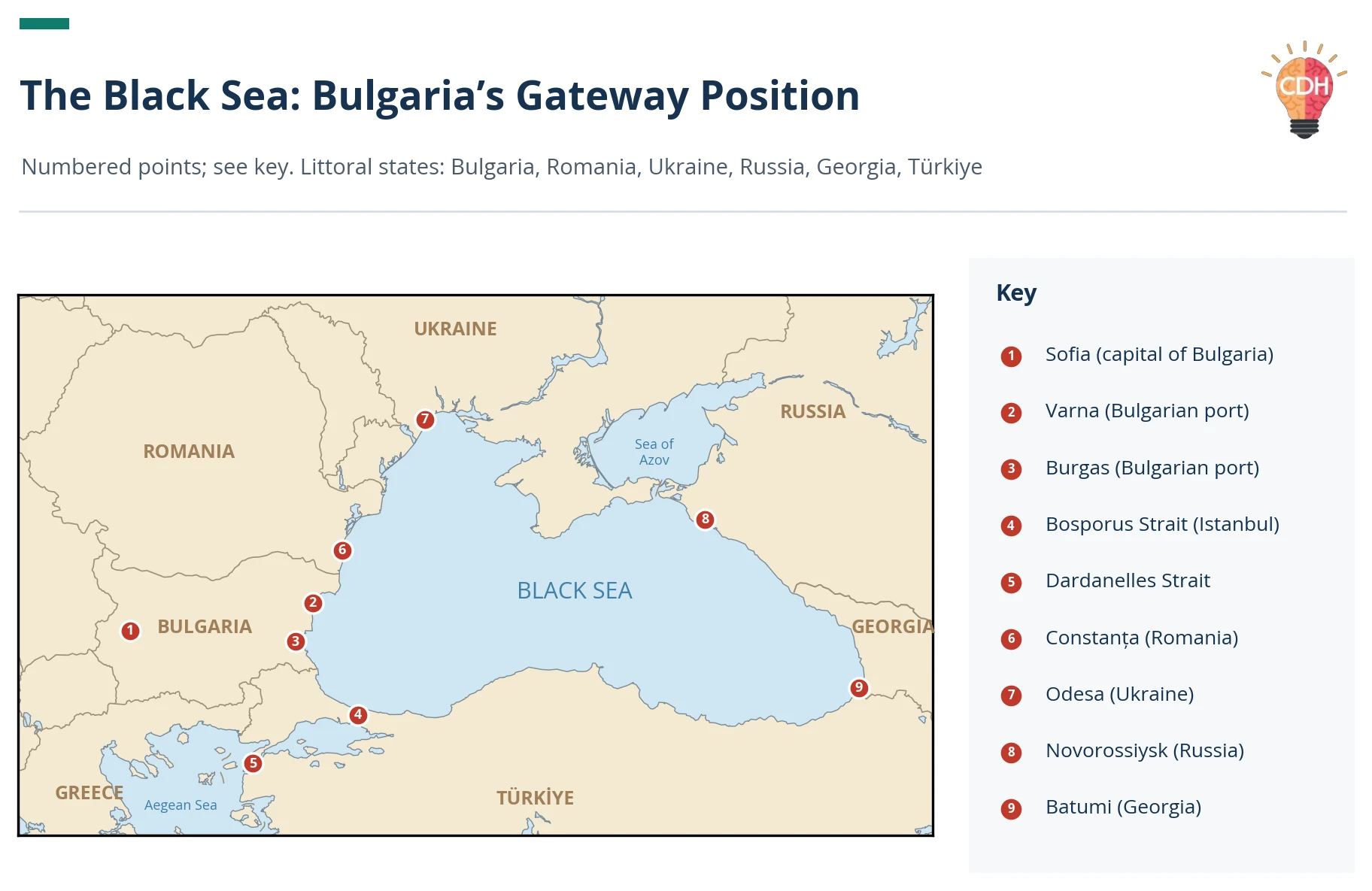
- Location: an inland sea between south-eastern Europe and western Asia.
- Outlet: reaches the Mediterranean through the Bosporus, the Sea of Marmara, the Dardanelles and the Aegean Sea; it is linked to the Sea of Azov through the Kerch Strait.
- Littoral states: Bulgaria, Romania, Ukraine, Russia, Georgia and Türkiye.
- Special features: below about 150–200 m its waters are oxygen-poor and rich in hydrogen sulphide, making it one of the world’s largest anoxic water bodies. Passage through the Turkish Straits is governed by the Montreux Convention (1936).
For India, Bulgaria, an EU and NATO member on the Black Sea, is a useful partner for India–Europe trade and maritime-security dialogue.
📖 Read More: India and Europe • Political Map of Europe
9. Operation Monsoon Thunder: NCB and DEA Bust Drug Network
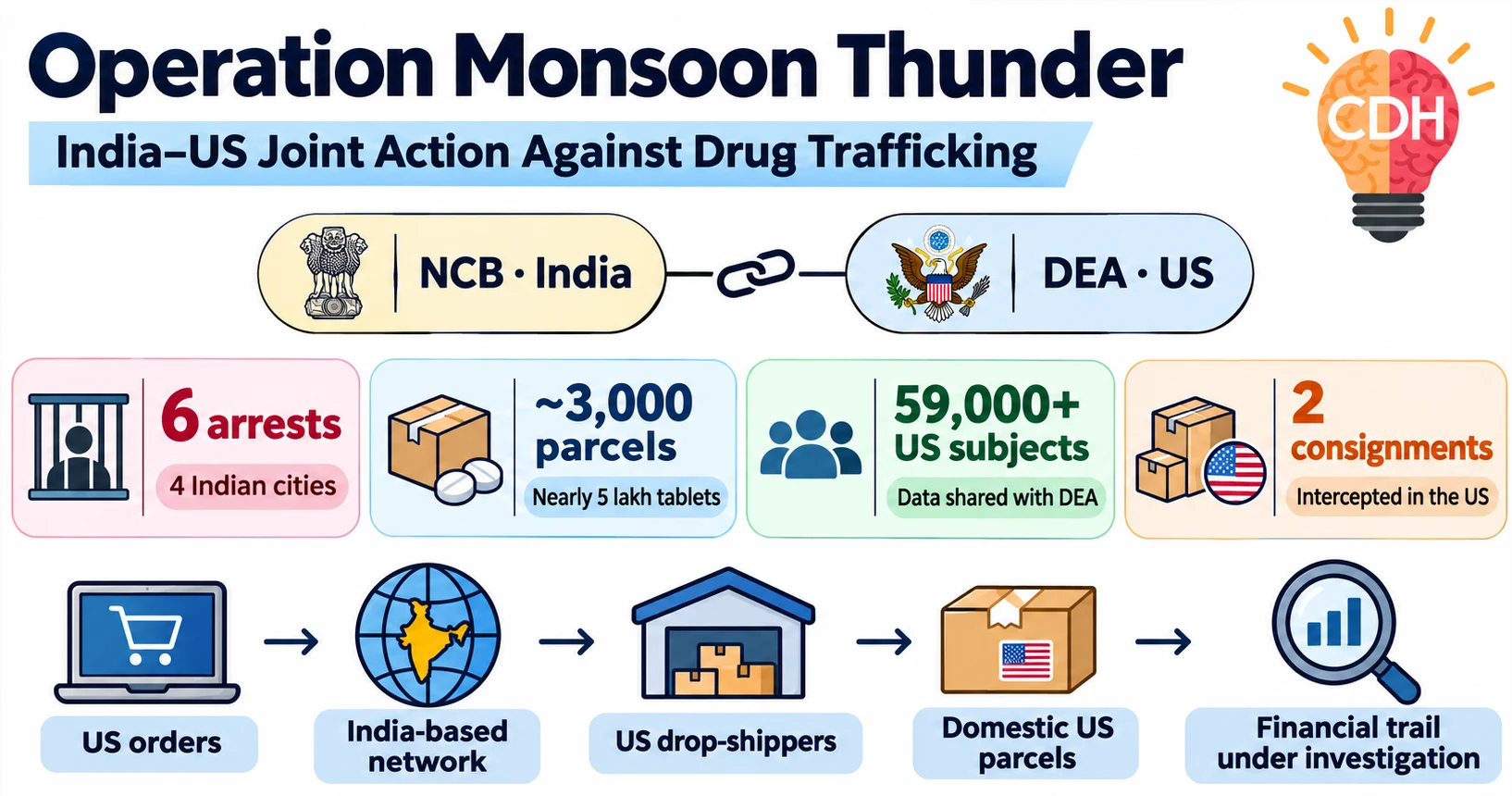
(INTERNAL SECURITY) (PIB) The Narcotics Control Bureau (NCB), working closely with the US Drug Enforcement Administration (DEA), carried out Operation Monsoon Thunder. It disrupted a transnational network supplying illegal drugs to consumers across the United States, and the Union Home Minister congratulated both agencies.
Operational Outcomes
- Arrests: 6 persons held across 4 Indian cities.
- Scale: about 3,000 parcels carrying nearly 5 lakh tablets, shipped within the USA, were identified.
- Intelligence sharing: data on over 59,000 US subjects passed to the DEA, and 2 live consignments intercepted in the US.
- Next steps: investigators are tracing the masterminds, drop-shippers, money trails and wider international links.
About the NCB
| Aspect | Details |
|---|---|
| Established | 17 March 1986 |
| Legal basis | Section 4(3) of the Narcotic Drugs and Psychotropic Substances (NDPS) Act, 1985 |
| Ministry / HQ | Ministry of Home Affairs; New Delhi |
| Role | Nodal agency for drug law enforcement, intelligence coordination and international cooperation |
| Treaty duties | UN Single Convention (1961), Psychotropic Substances Convention (1971) and Convention against Illicit Traffic (1988) |
Why It Matters
The case shows how organised crime now uses online marketplaces, courier networks and cross-border payments. Joint operations, real-time data sharing and financial tracking (see money laundering) are vital, and the case deepens security cooperation in India–US relations.
📖 Read More: Organised Crime • Money Laundering as an Internal Security Threat
10. COP31 Ends Without a Deal; Second Stocktake Begins
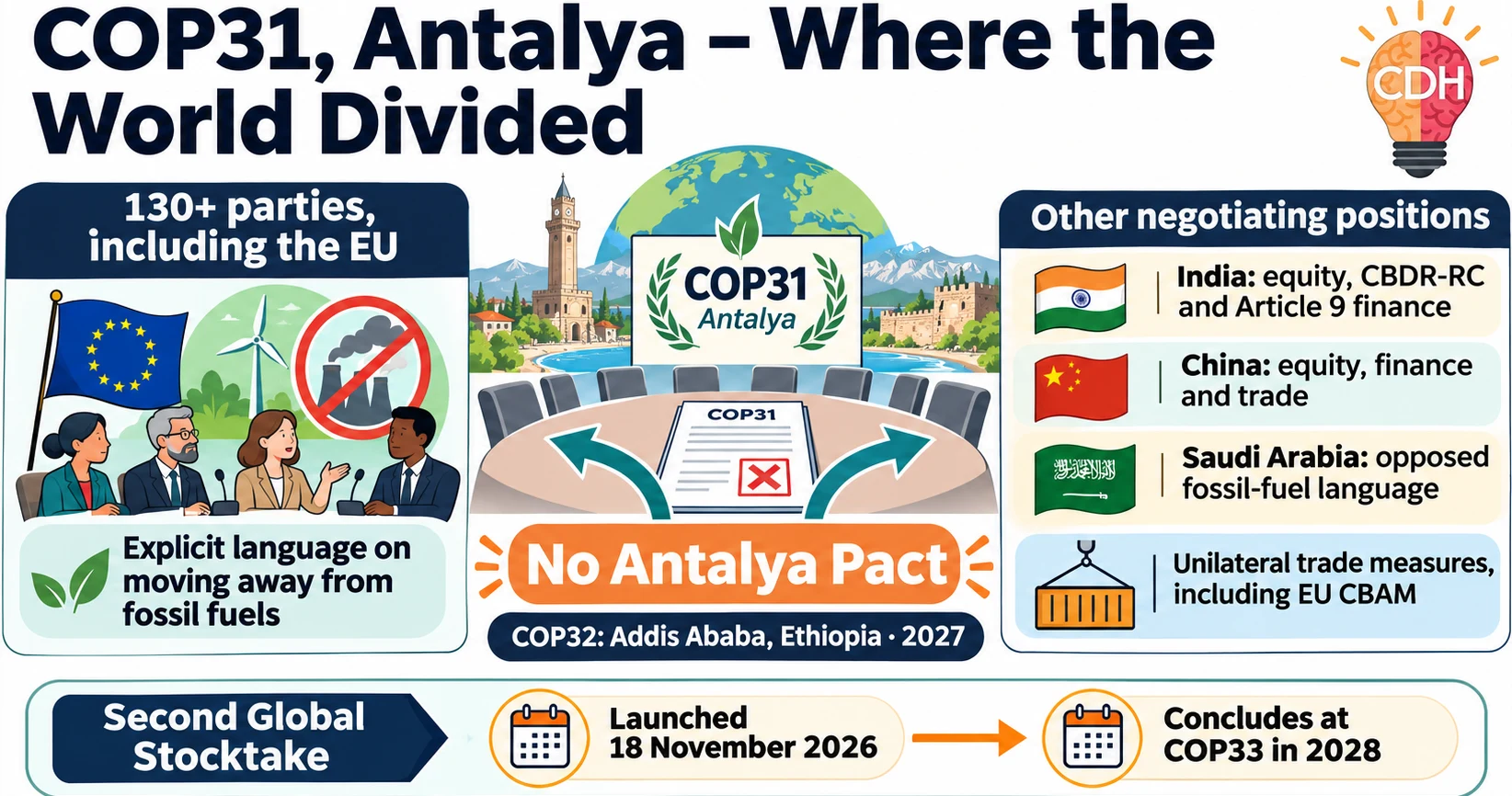
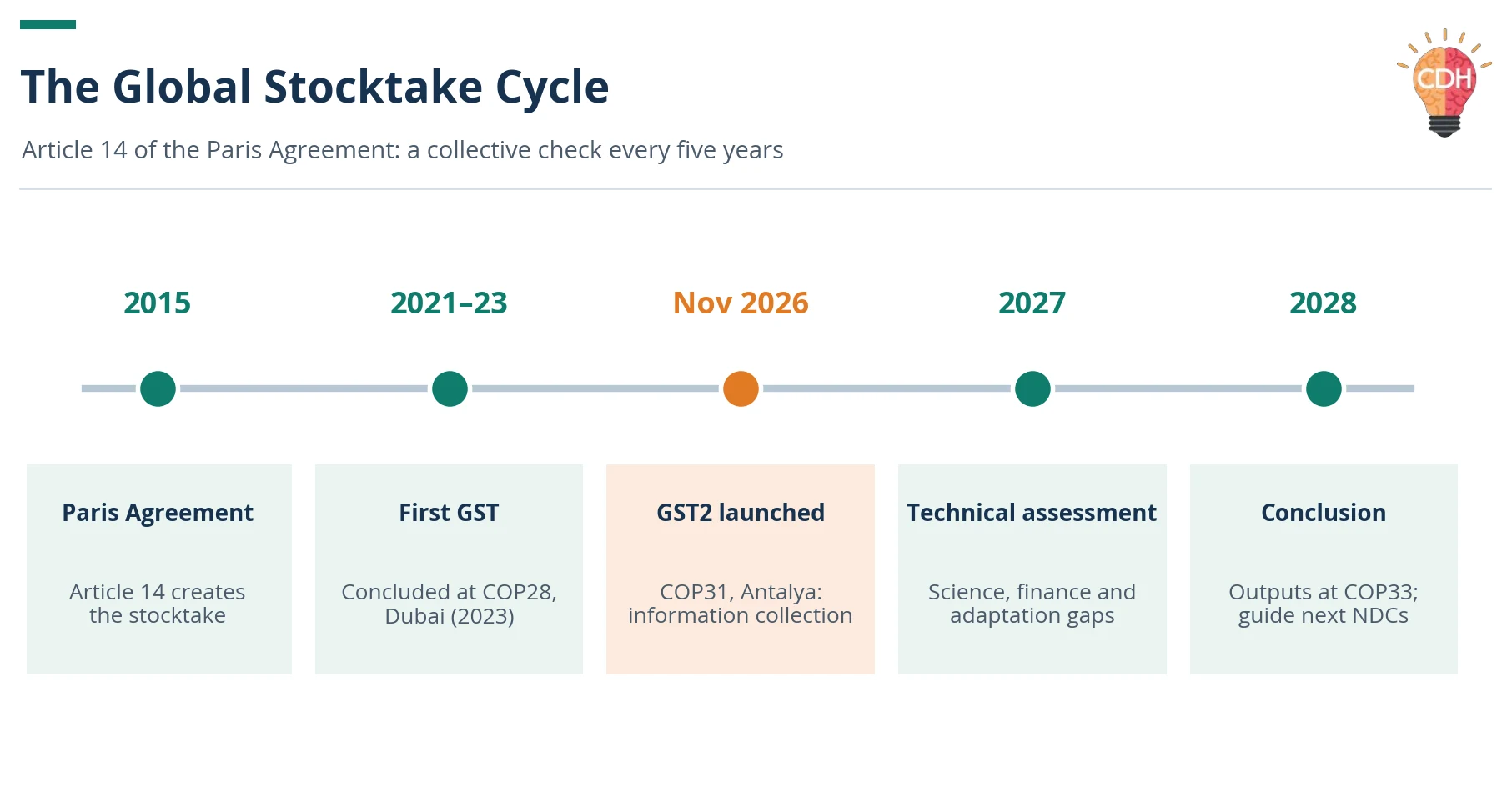
(ENVIRONMENT) (TH) (DTE) COP31 of the UNFCCC in Antalya, Türkiye, closed on 22 November 2026 without a consensus cover decision (the proposed ‘Antalya Pact’). Earlier, on 18 November, it formally launched the Second Global Stocktake (GST2) under the Paris Agreement.
Why Antalya Stalled
- Fossil-fuel standoff: the EU-led bloc rejected COP President Murat Kurum’s cover text because it had no explicit language on moving away from fossil fuels. Around 130 parties backed this stand, even after talks ran a record 48 hours into overtime.
- Other side: India, China and Saudi Arabia were on the other side of this divide, wary of top-down mandates.
- Carry-over: under the UNFCCC rules of procedure, unresolved items move to COP32 in Addis Ababa, Ethiopia (2027).
India’s Position
- Equity first: climate action must rest on Common But Differentiated Responsibilities and Respective Capabilities (CBDR-RC) and historical responsibility.
- Finance: developed countries must honour Article 9 of the Paris Agreement and replenish the Green Climate Fund.
- No unilateral trade barriers: India raised concerns over measures such as the EU’s Carbon Border Adjustment Mechanism (CBAM).
- Just transition: it should be country-driven and backed by finance, not a set of prescriptive global targets.
The Second Global Stocktake
The Global Stocktake is created by Article 14 of the Paris Agreement. It is a collective, five-yearly check of progress on mitigation, adaptation and means of support, and it informs the next round of Nationally Determined Contributions (NDCs). The first stocktake ended at COP28, Dubai (2023).
| Fault line | Developed countries / LDCs | Major developing economies |
|---|---|---|
| 1.5 °C overshoot | Keep any overshoot short, shallow and reversible | Root cause is unmet finance and historical gaps |
| Finance | Resisted a fixed numeric floor for adaptation finance | Grants and technology transfer, not more debt |
| Science timing | IPCC Seventh Assessment Report (AR7) findings before key decisions | India, China, Saudi Arabia and Russia oppose compressed deadlines |
📖 Read More: United Nations Framework Convention on Climate Change (UNFCCC) • Paris Climate Change Conference 2015 (COP21) • Climate and Environment Diplomacy
11. Northern Shoveler Joins Delhi Zoo’s Bird Checklist
(ENVIRONMENT) (NOA) The Northern Shoveler (Spatula clypeata), a migratory duck, has been added to the bird checklist of the National Zoological Park (NZP), New Delhi. It was recorded during the 21st Sunday Bird Walk, which encourages public participation in biodiversity monitoring.
Species Profile
| Feature | Details |
|---|---|
| Type | Medium-sized dabbling duck (feeds at the surface, not by diving) |
| Signature bill | Broad, spoon-shaped bill with comb-like lamellae that filter plankton, small invertebrates and seeds |
| Sexual dimorphism | Breeding male: green head, white breast, chestnut flanks; female: mottled brown |
| Migration | Breeds in northern Eurasia and North America; a common winter visitor to India |
| Habitat | Shallow freshwater wetlands, marshes, lakes, lagoons and flooded fields |
| IUCN status | Least Concern |
Why Urban Bird Walks Matter
Waterbirds such as the shoveler are good indicators of wetland health. Regular, recorded walks turn visitors into citizen scientists, build long-term data on urban biodiversity and reveal how small water bodies in cities serve as stopovers for winter migrants.
📖 Read More: Wetland Ecosystem • Species of Conservation Concern: Birds
12. RAPP-8 Cleared to Approach Criticality
(SCIENCE AND TECHNOLOGY) (TOI) The Atomic Energy Regulatory Board (AERB) has permitted the First Approach to Criticality (FAC) at Unit-8 of the Rajasthan Atomic Power Project (RAPP-8), Rawatbhata. It is the fourth of India’s indigenous 700 MWe Pressurised Heavy Water Reactors (PHWRs), after Kakrapar Units 3 and 4 (Gujarat) and RAPP-7.
Where RAPP-8 Stands
Hot conditioning (Jan 2026) ➜ Initial fuel loading (19 Sep 2026) ➜ First Approach to Criticality (Nov 2026) ➜ Low-power physics tests ➜ Grid synchronisation ➜ Commercial operation
- FAC is the stage at which a new reactor sustains a controlled nuclear fission chain reaction for the first time, before it generates power.
- Fleet mode: RAPP-8 belongs to a planned series of 16 indigenous 700 MWe PHWRs; its sister unit RAPP-7 began commercial operation in April 2025.
AERB in Brief
- Origin: set up in 1983 by a presidential order under the Atomic Energy Act, 1962; headquartered in Mumbai.
- Statutory status: the SHANTI Act, 2025 (Sustainable Harnessing and Advancement of Nuclear Energy for Transforming India) repealed the Atomic Energy Act, 1962 and the Civil Liability for Nuclear Damage Act, 2010. It made AERB a statutory body under Section 17.
- Scope: regulates nuclear power plants, research reactors, fuel-cycle facilities and radiation sources in medicine, industry and agriculture. BARC facilities are overseen by the BARC Safety Council.
| Aspect | Before SHANTI Act | After SHANTI Act, 2025 |
|---|---|---|
| Legal footing | Executive order | Statutory board (Section 17) |
| Licensing | AERB consents under AEA rules | Central Government licence plus AERB safety authorisation for radiation-risk activities |
| Rule-making | Safety codes and guides only | Power to frame regulations |
| Appeals | Within the atomic energy establishment | Atomic Energy Redressal Advisory Council (Section 47) and onward appeal |
| Answerable to | Mainly the executive | Greater accountability to Parliament |
📖 Read More: Nuclear Energy in India • Basic Concepts of Nuclear Energy • International Nuclear Governance
13. India’s First Indigenous H5N1 Vaccine for Poultry
(SCIENCE AND TECHNOLOGY) (PIB) The Union Agriculture Minister dedicated India’s first indigenous H5N1 bird flu vaccine for chickens to the nation at ICAR–National Institute of High Security Animal Diseases (NIHSAD), Bhopal, on 20 November 2026. He also announced a ₹300-crore animal disease research laboratory in Bhopal.
About the Vaccine
- Type: an inactivated vaccine against Highly Pathogenic Avian Influenza (HPAI) H5N1, Clade 2.3.2.1a, the strain behind most outbreaks in Indian chickens.
- First of its kind: no commercial vaccine had specifically targeted this clade until now.
- Affordable: priced at ₹1–2 per dose; a single dose is reported to protect layers and breeders for up to six months.
- Need: India has reported over 500 combined H5N1 and H5N8 outbreaks since the first detection at Navapur, Maharashtra (2006).
Bird Flu Basics
| Aspect | Key points |
|---|---|
| Cause | Influenza A viruses; H5 and H7 subtypes can be highly pathogenic |
| Impact on birds | Near-total mortality in infected flocks; mass culling and trade bans follow |
| Zoonotic risk | Occasional spill-over to mammals and humans; a One Health concern |
| Control | Biosecurity, surveillance, culling and, now, targeted vaccination |
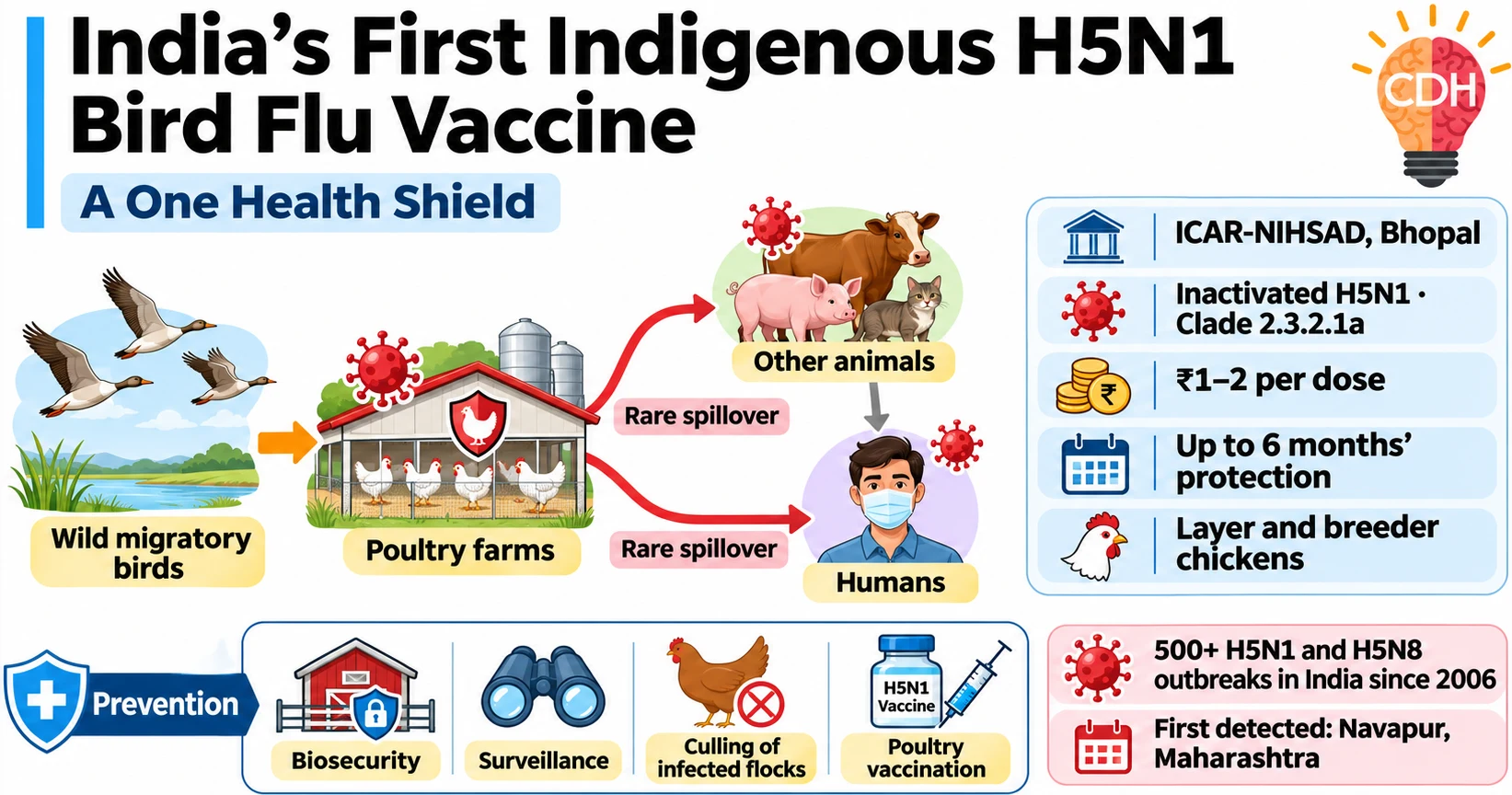
The vaccine strengthens self-reliance in animal health. It protects small poultry farmers’ livelihoods and lowers the chance of the virus jumping to other species (see important diseases).
📖 Read More: Poultry • Important Diseases Explained • Biotechnology in Healthcare
14. BHASHINI Brings Multilingual AI to Hospitals
(SCIENCE AND TECHNOLOGY) (PIB) The Digital India BHASHINI Division (DIBD), under the Digital India Corporation, MeitY, showcased multilingual AI tools for healthcare at the Global Digital Health Summit (GDHS) 2026. The summit was held at Bharat Mandapam, New Delhi (20–21 November) on the theme ‘Implementing Artificial Intelligence – AI in Action’.
Healthcare Use Cases Shown
| Institution | How BHASHINI is used |
|---|---|
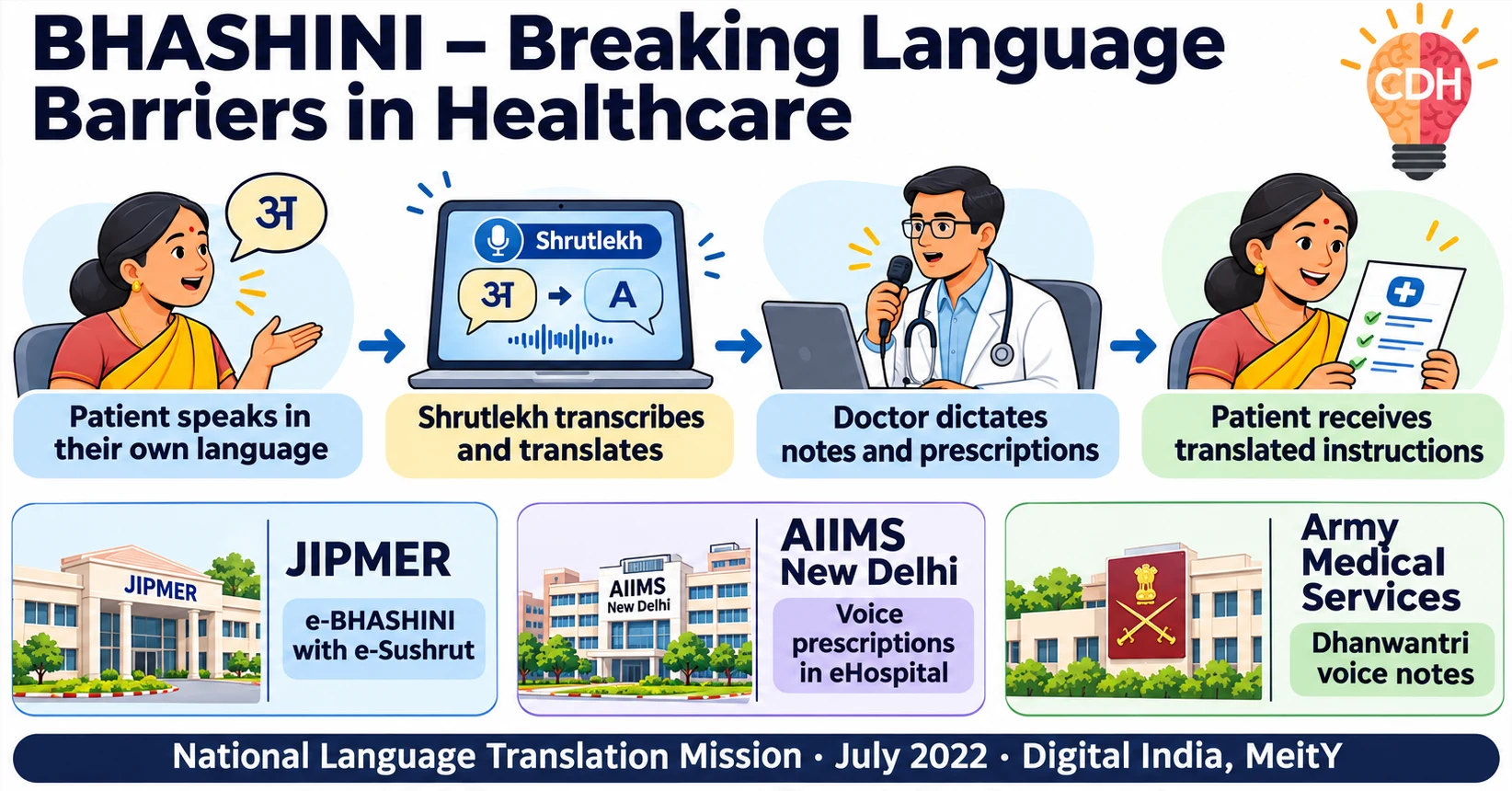
| JIPMER | e-BHASHINI integrated with the e-Sushrut hospital system for voice-based case histories, ward notes and discharge instructions |
| AIIMS, New Delhi | Speech-to-text linked to NIC’s eHospital prescription module, so doctors dictate prescriptions |
| DGMS (Army) | Dhanwantri converts doctors’ spoken clinical notes into typed text |
Tools in the BHASHINI Ecosystem
- Shrutlekh: speech-to-text for real-time multilingual transcription and translation.
- Data Daan: community contribution of language data to improve Indian-language AI.
- Granthika: guided platform to collect and digitise written and oral language resources.
About BHASHINI
BHASHINI (BHASHa INterface for India) is India’s National Language Translation Mission, launched in July 2022 under the Digital India programme. It uses artificial intelligence and natural language processing to let citizens use digital services in their own languages.
In health care, language barriers can mean wrong histories and poor compliance. Voice-first, multilingual tools can cut documentation time and support the Ayushman Bharat Digital Mission.
📖 Read More: Digital India Programme • Artificial Intelligence (AI) • Generative AI and LLMs
15. Rhenium and Iridium: The New Gold Adulterants
(SCIENCE AND TECHNOLOGY) (TH) The All India Gem and Jewellery Domestic Council (GJC) has urged traders and buyers to stay vigilant but not panic after reports of an alleged ‘gold scam’. In it, rhenium- and iridium-based alloys are said to be used to increase the weight of gold without a matching rise in purity.
How the Trick Works
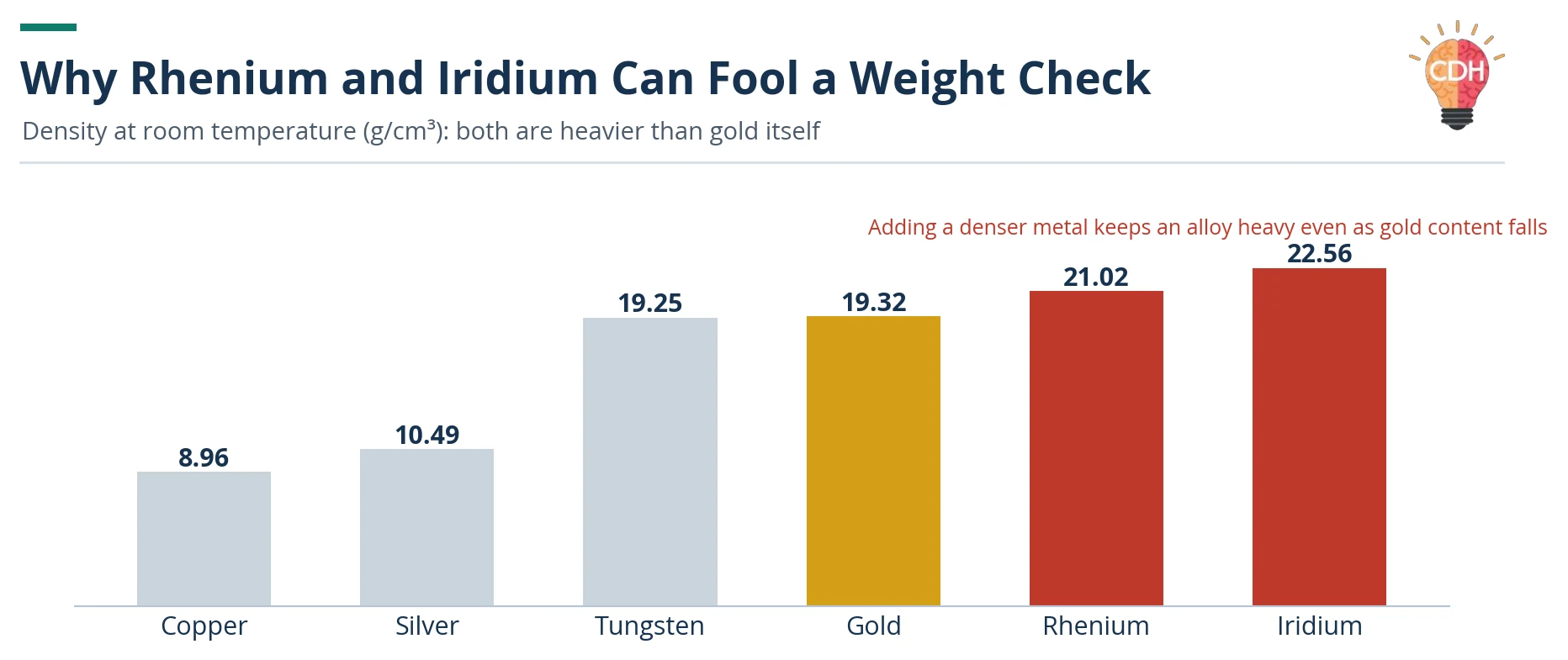
Simple purity checks often rely on density: pure gold is about 19.3 g/cm³. Rhenium and iridium are even denser, so a small hidden amount can keep a diluted piece heavy enough to pass weight and density checks. Destructive tests such as fire assay remain the most reliable; see metals and alloys.
The Two Metals Compared
| Parameter | Rhenium (Re) | Iridium (Ir) |
|---|---|---|
| Atomic number / group | 75 / Group 7 | 77 / Group 9 (platinum group metal) |
| Melting point | About 3,186 °C, among the highest of all elements | About 2,446 °C |
| Key property | Very dense (≈ 21.0 g/cm³), heat-resistant | Second-densest element (≈ 22.6 g/cm³), highly corrosion-resistant |
| Main uses | Jet-engine superalloys, refinery (reforming) catalysts, thermocouples | Spark plugs, crucibles, electrodes; Ir-192 in radiotherapy |
Consumer Safeguards
- Hallmarking: BIS hallmarking is mandatory for gold jewellery in notified districts, and each piece carries a 6-digit HUID (Hallmark Unique Identification) code.
- Verification: buyers can check the HUID on the BIS CARE app and get suspect items assayed at BIS-recognised centres.
📖 Read More: Gold • Metals, Non-Metals and Metallurgy • Ores of Metals Used in Alloys