
The Sudan
Next, we move on with our discussion to Sudan, a nation that the UN once categorized as the “worst” crisis point in the world. Sudan’s history is a heartbreaking masterclass in how religious and ethnic differences, when weaponized by a central government, can tear a massive country in two.
Sudan is essentially two different worlds forced into one border by colonial history: the Arabic-speaking, Islamic North and the Black African, predominantly Christian and Animist South.
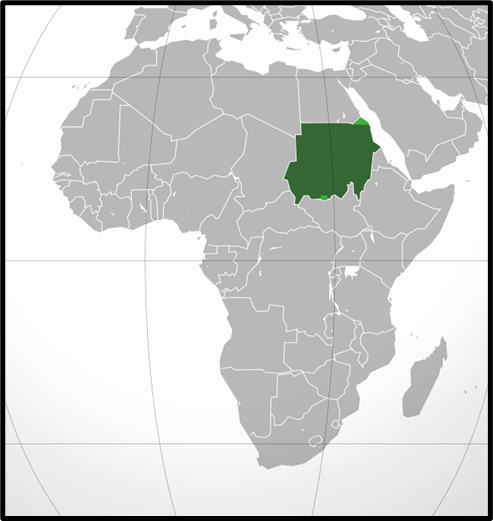
The Root of the Conflict: Identity and Law
Since independence in 1956, Sudan has been in a state of near-constant civil war. The tension boils down to three major factors:
- Political Marginalization: The North (Khartoum) held all the power and wealth, while the South was treated like a neglected colony.
- The Sharia Rift (1983): The government in Khartoum introduced fundamentalist Islamic law (Sharia). For the Christians and Animists in the South, this was the final straw. They didn’t just want a fair deal; they wanted to defend their way of life.
- The SPLA: Led by John Garang (and later Salva Kiir), the Sudan People’s Liberation Army began a long, bloody struggle for autonomy.
Omar al-Bashir and the Darfur Genocide
In 1989, Omar al-Bashir seized power in a military coup. Under his rule, the conflict reached a horrifying new level, specifically in the western region of Darfur.
- The Janjaweed: When Darfurian rebels rose up in 2003, Bashir didn’t just send the army. He unleashed the Janjaweed—Arab militias on horseback. This was “ethnic cleansing” under the guise of counter-insurgency.
- The Human Toll: The statistics are staggering—300,000 dead and millions homeless. The world watched in horror as Darfur became synonymous with 21st-century genocide.
- The ICC Warrant: In a historic move, the International Criminal Court (ICC) issued an arrest warrant for Bashir for war crimes. He became a “fugitive president,” though he continued to rule for years, often traveling to friendly nations that refused to arrest him.
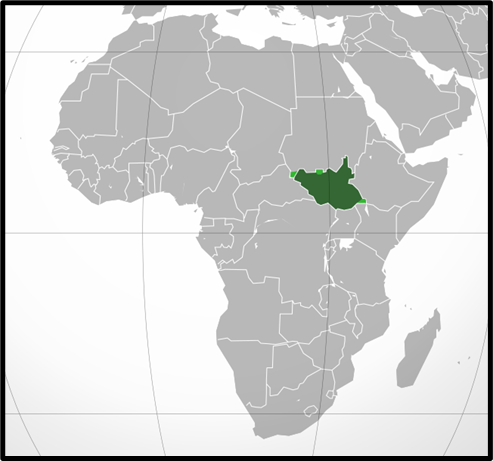
The Birth of South Sudan (2011)
After decades of war, a 2005 peace deal finally offered a light at the end of the tunnel: a referendum on independence.
- The 98% Vote: In 2011, the people of the South voted almost unanimously to leave. President Bashir, surprisingly, accepted the result.
- Africa’s 54th State: In July 2011, South Sudan was born. It was a moment of immense joy, but the “divorce” from the North was messy.
- The Oil Trap: Most of the oil is in the South, but the pipelines and refineries are in the North. This creates a “toxic interdependence.” Neither side can make money without the other, yet they continue to clash over disputed border regions like Abyei.
The Paradox of Abundance
Sudan is a tragedy of “What If?”
- The Breadbasket: The soil around the Nile is so fertile it could have fed the entire continent.
- The Oil Wealth: Instead of building schools and hospitals, the billions of dollars from oil were spent on tanks, jets, and militias to fight domestic wars.
- Underdevelopment: Because of the war, the South was left “desperately backward.” In 2004, trade was still being done by barter because there was no currency or infrastructure.
Critical Analysis: The Failure of the “Unitary State”
Sudan’s history suggests that some colonial borders were simply too “unnatural” to survive.
- Federation vs. Secession: Early on, the South asked for a federal system (shared power). The North’s refusal to share power made secession the only remaining option.
- Religious Extremism as a Tool: By using Islamic fundamentalism to unify the North, the Khartoum government effectively “evicted” the South from the national identity.
The Descent into Fragmentation: By 2026, the tension has transcended the “North-South” border dispute of the 2010s, spiraling into a total collapse of the Sudanese state.
The “international” friction with South Sudan has been eclipsed by a brutal, multi-factional civil war within Sudan itself—primarily between the Sudanese Armed Forces (SAF) and the Rapid Support Forces (RSF).
The country is no longer just divided; it is shattered, creating the world’s largest displacement crisis and a humanitarian vacuum that threatens to destabilize the entire Horn of Africa.
Conclusion:
Sudan’s story is a reminder that a nation is more than just a line on a map; it requires a shared sense of belonging. Without that, even the richest resources—the Nile and the Oil—become weapons of war rather than tools for progress.
Looking at the 98% vote for independence, do you think South Sudan’s secession was the only way to end the bloodshed, or did it simply create two smaller, unstable countries that will continue to fight over oil forever?